
NEGOCOACH
310
Origin : Sales & commercial methods

💼 Sales & commercial methods

B2B sales methods

Structured sales methods: SPIN (N. Rackham), The Challenger Sale (M. Dixon & B. Adamson), Solution Selling (M. Bosworth), MEDDIC, Sandler, SNAP (J. Konrath).

Full detail in the “Origin & history” section below.

310

The MEDDIC Method

Sales & commercial methods Technique 310 / 360
Alexandre Baumberger

Author of the library

Alexandre Baumberger

Negotiation lecturer at KEDGE Business School

A rare threefold background serving negotiation: teaching, commercial justice and audit, backed by experience as a company director in Bordeaux.

  • Teaching, KEDGE Business School Negotiation lecturer since 2014 (12 years).
  • Commercial justice, Commercial Court Judge from 2018 to 2026: litigation, then insolvency proceedings.
  • Audit & advisory, over 20 years Tax, employment and financial audit in major firms, for large groups.
In brief

MEDDIC is a qualification framework for complex B2B opportunities structured around six variables: Metrics (value metrics), Economic buyer (budget-holding decision-maker), Decision criteria, Decision process, Identify pain and Champion (internal ally). Its promise is not to “sell more” but to qualify better: to concentrate the negotiating effort on genuinely winnable deals and on the right counterparts. Applied to negotiation, it turns relational improvisation into a rigorous diagnosis of the other party's decision-making terrain. It serves as much to prepare a negotiation as to decide whether to pursue it, delay it or abandon it.

Reading level

At a glance

Its family profile at a glance

Effectiveness Psychologicalimpact Discretion Preparation Relationalrisk Ethics
7.0 / 10 Tactical potential

Vigilance: moderate (4.5/10) · Preparation required: 7/10

Grounding in the source school Documented school

Indicative profile: it situates the “Sales & commercial methods” family as the Sales & commercial methods school practises it, not this technique taken in isolation. Techniques from the same family and school therefore share the same profile. NEGOCOACH editorial rating out of 10, non-experimental · the higher the “relational risk” value, the more costly the technique is to the relationship.

NEGOCOACH assessment

How to read this rating

Tactical potential 7.0/10 (effectiveness, impact, discretion) and vigilance moderate (relational and ethical risk): two distinct readings, deliberately never merged into a single score that would reward risk. NEGOCOACH editorial rating calibrated from the “Sales & commercial methods” family and the “Sales & commercial methods” school. Each criterion is rated out of 10; click to understand what it measures.

  • Effectiveness 8/10 · Very high

    How far the technique can carry the negotiation in the intended direction when it is well executed.

  • Psychological impact 7/10 · High

    Strength of the effect produced on the counterpart's perceptions, emotions and decisions.

  • Discretion 6/10 · High

    How hard it is for the other party to notice the technique is being used. A high value = very discreet.

  • Preparation 7/10 · High

    The information, analysis and rehearsal required upfront to use it effectively.

  • Relational risk 4/10 · Moderate

    Potential cost to the relationship and to trust if the technique is spotted, refused or fails. A high value = riskier.

  • Ethics 6/10 · High

    Moral acceptability: fairness, transparency and respect for the counterpart's autonomy. A high value = more defensible.

Level of evidence

Documented school

The school this technique stems from is documented by recognised work and established practice, without experimental consensus. This indicator qualifies the school, not this technique taken in isolation.

Indicative NEGOCOACH editorial rating, for teaching purposes. For “Relational risk”, a high value signals a cost to the relationship, not a quality.

Overview of the MEDDIC Method


Origin & history

MEDDIC was created in 1996 within PTC (Parametric Technology Corporation), an industrial software vendor, by Dick Dunkel and Jack Napoli, under the direction of VP of Sales John McMahon. Faced with high sales-force attrition and an unreliable pipeline, they observed in hindsight that every deal won or lost could be explained by the same six factors, which they codified into an acronym. The method accompanied PTC's growth from roughly 300 million to 1 billion dollars in revenue over four years. It has since spread through B2B tech and been enriched into the MEDDICC and later MEDDPICC variants.


Definition and principle

MEDDIC is an opportunity-qualification methodology that consists of gathering, verifying and documenting six pieces of information before and during a complex negotiation: (1) Metrics, the quantified indicators of the economic value the customer expects; (2) Economic buyer, the person holding final budgetary authority; (3) Decision criteria, the formal and informal criteria on which the decision will be made; (4) Decision process, the steps, sign-offs, deadlines and stakeholders in the decision circuit; (5) Identify pain, the measurable business or technical pain that justifies the purchase; (6) Champion, the influential internal ally who has a personal stake in the project's success and who “sells” on your behalf inside the organisation. Operationally, each letter is a set of questions to ask and a status to record (known / assumption / unknown), which produces a robustness score for the deal.


Objectives of the technique

  • Objectively qualify a negotiating opportunity and decide whether or not to invest one's energy in it
  • Identify the true budget-holder and the internal ally, rather than negotiating with a counterpart who holds no power
  • Anchor the discussion on quantified value (metrics, measured pain) in order to move beyond a debate about price alone
  • Map the decision process and criteria in order to anticipate objections, hidden sign-off parties and deadlines
  • Reduce the risk of phantom deals, cycles that drag on and concessions made at the wrong moment

Concrete examples of application

Application by context

The same technique, across every negotiation settings

Context 1 / 8

Sales negotiation

Before negotiating a SaaS contract, the vendor documents the prospect's quantified pain and expected ROI (Metrics), validates who actually signs (Economic buyer) and relies on an internal Champion to carry the offer through to budgetary approval.
Context 2 / 8

Procurement negotiation

A buyer turns the framework against the supplier: they clarify their own decision criteria, lock down their internal process and refuse to grant the salesperson access to their decision-maker until quantified proof of value has been provided.

Context 3 / 8

Labour negotiation

In negotiations with staff representatives, management identifies the employees' real pain (Identify pain), the criteria for an acceptable agreement (Decision criteria) and pinpoints the credible union representative able to have the agreement ratified by their base (Champion).

Context 4 / 8

Crisis management

In a crisis negotiation (hostages, major conflict), the negotiator maps who holds genuine decision-making authority on the opposing side, what sign-off steps exist and which internal counterpart can argue in favour of de-escalation.

Context 5 / 8

Political negotiation

To get a reform adopted, a minister qualifies the parliamentary decision process (shuttle readings, committees), the voting criteria of the groups and identifies the rapporteurs and committee chairs who will act as champions of the text.

Context 6 / 8

Real-estate negotiation

Before negotiating for a building, the investor identifies who, within a joint ownership or a property holding company, actually holds the power to sign (Economic buyer), the seller's pain (inheritance, debt, vacancy) and the family's decision timeline.

Context 7 / 8

Cross-cultural negotiation

In a negotiation in Asia or the Middle East, the Decision process letter is crucial: the decision runs through a collective consensus or an invisible hierarchy; the local Champion becomes the indispensable guide for reading unstated decision criteria.

Context 8 / 8

Family negotiation

During an inheritance settlement, the framework helps to distinguish who really decides (the parent, the eldest child, the notary), the underlying emotional pain and the family member able to rally the others around a compromise.


Counter-techniques

Spot and neutralise this technique

Negotiation is also played on defence. Here is how to recognise this technique when it is used against you, and turn it around.

Detect

The signals that give it away

  • A sudden imbalance in the exchange
  • Pressure to decide quickly
  • An argument you cannot verify

Neutralise

The counters that defuse it

  • Slow down and reformulate
  • Ask for facts and sources
  • Concede nothing without a counterpart

Turn around

Turn it into an advantage

Name the manoeuvre: said out loud, a technique loses most of its power.

The trap to avoid

Reacting emotionally instead of coming back to the facts.

Strengths and weaknesses

Strengths: MEDDIC imposes a diagnostic discipline that replaces intuition with verifiable facts; it drastically reduces deals lost on powerless counterparts or ill-founded needs; it refocuses the negotiation on value rather than price; it is easy to memorise, shareable across a team and compatible with a CRM (each letter = a field to complete). Weaknesses: it is a qualification tool, not one of persuasion or concession tactics; it does not say how to argue or how to handle an objection; it can become a bureaucratic box-ticking exercise disconnected from the relationship; it is calibrated for long, complex B2B cycles and proves oversized for simple or transactional deals; misused, it pushes towards manipulative instrumentalisation of the “Champion”.


When to use this technique?

Particularly suited to complex B2B negotiations with long cycles, high financial stakes, multiple stakeholders and a formalised decision circuit (large-account procurement, software contracts, tenders, industrial markets). Useful whenever one must distinguish a “likeable” counterpart from a genuine decision-maker, or decide which opportunities merit the investment of preparation. Of little relevance for an over-the-counter sale, a single fast transaction, or a purely distributive negotiation between two players with no internal process.


Famous cases

Company · PTC: from 300 million to 1 billion dollars, At PTC in the 1990s, growth was held back by an unreliable pipeline and high sales-force turnover. Dick Dunkel and Jack Napoli, under the direction of John McMahon, analysed the deals won and lost and found that six recurring factors explained the outcome of each deal. By turning this observation into a systematic qualification framework (MEDDIC), enforced at every pipeline review, PTC made its forecasts reliable and concentrated its efforts on genuinely winnable deals, accompanying growth from roughly 300 million to 1 billion dollars in revenue over four years. This is the founding case, documented by the creators themselves.

Sales · The deal saved by the right Economic Buyer (representative scenario), Representative, unattributed scenario: a sales team has been negotiating for three months with an enthusiastic business director and believes the deal is secured. Applying MEDDIC, it discovers that the budget in fact depends on the finance director, never met, and that the decisive criterion is not functionality but the timeline for regulatory compliance. By redirecting the negotiation towards that decision-maker and that quantified pain, and by arming its internal champion with an ROI case, it unlocks a signature that, without this diagnosis, would have failed in the home straight. This scenario illustrates the typical mechanism without claiming to recount a specific identified deal.


Common mistakes

  • Mistaking an accessible, well-disposed counterpart for the real Economic buyer, and negotiating for months with someone who holds no budgetary authority
  • Filling in the six letters as boxes to tick in the CRM without verifying the information from several sources
  • Neglecting quantified pain (Identify pain / Metrics) and falling back into a debate centred purely on price
  • Designating a “Champion” who in reality has neither influence nor a personal stake in defending the project internally
  • Ignoring the Decision process and being caught out by a hidden sign-off party, a committee or a year-end budgetary deadline

How to recognise and counter this technique

Recognising that a counterpart is applying MEDDIC against you: they ask insistent questions about your budget, your final decision-maker, your internal timeline and your selection criteria, and seek to identify your allies and your pain points before conceding anything. To defend yourself: control your own information (reveal your decision-maker, your budget and your deadline only strategically), avoid letting a vendor reach your management directly without a counterpart, and remember that prematurely revealing acute pain or a tight deadline weakens your position. The most robust counter is to do the symmetrical qualification work yourself: apply the same diagnostic rigour to the other party.


Limits and ethics

MEDDIC is a qualification framework, not a complete doctrine of negotiation: it replaces neither the preparation of a BATNA, nor the mastery of concessions, nor active listening. Its limits stem from its tech-B2B origin: it presupposes a rational buyer, a formalisable process and quantifiable value, fragile assumptions in emotional, cultural or low-information negotiations. Ethically, the notion of “Champion” must not drift into the instrumentalisation or manipulation of a person without their knowledge or against the interest of their organisation; the search for “pain” must not become the artificial creation of anxiety. The framework remains in the service of a transaction where both parties win; otherwise it loses its legitimacy and its relational robustness.


Variants and related techniques

Direct extensions: MEDDICC (adding Competition) and MEDDPICC (adding Paper process, the contractual/legal circuit, and Competition), today the most widely used. Neighbouring qualification methods: BANT (Budget, Authority, Need, Timing), older and lighter; SPIN Selling (Situation, Problem, Implication, Need-payoff) by Neil Rackham, centred on questioning; Challenger Sale (Dixon & Adamson) on selling posture; SPICED, GPCTBA/C&I (HubSpot). All share the idea of diagnosing before negotiating.


Going further

  • Andy Whyte, MEDDICC: The ultimate guide to staying one step ahead in the complex sale (2020), the contemporary reference work on the method and its variants
  • John McMahon, The Qualified Sales Leader (2021), by the leader under whom MEDDIC was created at PTC
  • MEDDICC.com and MEDDIC Academy, online teaching resources and checklists maintained by practitioners of the method
  • Neil Rackham, SPIN Selling (1988), to place MEDDIC within the genealogy of qualification methods based on questioning

Scientific foundations

  • Andy Whyte (2020) MEDDICC: The ultimate guide to staying one step ahead in the complex sale Independently published / MEDDICC Ltd
  • John McMahon (2021) The Qualified Sales Leader: Proven Lessons from a Five Time CRO MEDDICC Media LLC
  • Neil Rackham (1988) SPIN Selling McGraw-Hill

Quick exercise

Test yourself before answering

Answer in your head, then reveal the solution. Memory is built through active recall.

1 Quels signaux doivent vous alerter ?
  • A sudden imbalance in the exchange
  • Pressure to decide quickly
  • An argument you cannot verify
2 Quelles parades appliquer ?
  • Slow down and reformulate
  • Ask for facts and sources
  • Concede nothing without a counterpart

Frequently asked questions

The questions we get most

What is the "The MEDDIC Method" technique?

MEDDIC is a qualification framework for complex B2B opportunities structured around six variables: Metrics (value metrics), Economic buyer (budget-holding decision-maker), Decision criteria, Decision process, Identify pain and Champion (internal ally). Its promise is not to “sell more” but to qualify better: to concentrate the negotiating effort on genuinely winnable deals and on the right counterparts. Applied to negotiation, it turns relational improvisation into a rigorous diagnosis of the other party's decision-making terrain. It serves as much to prepare a negotiation as to decide whether to pursue it, delay it or abandon it.

Is the "The MEDDIC Method" technique ethical?

It sits on the line: effective, but it can tip into manipulation if it exploits an information asymmetry. Use it with measure and without deliberate deceit.

How do you defend against "The MEDDIC Method"?

Reacting emotionally instead of coming back to the facts. The right reflex: slow down and reformulate.

What is the "The MEDDIC Method" technique based on?

NEGOCOACH does not assess the experimental validation of this technique in isolation. What we document is the grounding of its source school (Sales & commercial methods): documented school. Full detail is in the "At a glance" section of this page.

Practise with AI

Three ready-to-use prompts

Copy, paste into your assistant, replace the [brackets]. Works with ChatGPT, Claude, Gemini, Mistral, Perplexity.

Prepare

Build your plan before the meeting

You are an expert negotiation coach. Help me prepare to use the "The MEDDIC Method" technique in the following situation: [describe your situation]. Give me: the conditions for success, a 3-step script, my counterpart's likely objections and how to answer them.

Simulate

Rehearse against an AI counterpart

Play the role of my counterpart in a negotiation. I am going to test the "The MEDDIC Method" technique. React realistically and with resistance, do not give in too quickly, then at the end analyse my performance and suggest 3 concrete improvements.

Debrief

Analyse a past negotiation

Here is how my negotiation went: [paste the exchanges]. Analyse whether the "The MEDDIC Method" technique was used well, what worked, the mistakes made, and spell out precisely what I could have done better.

References

Bibliography & credible sources

Founding works of the 💼 Sales & commercial methods school this technique belongs to.

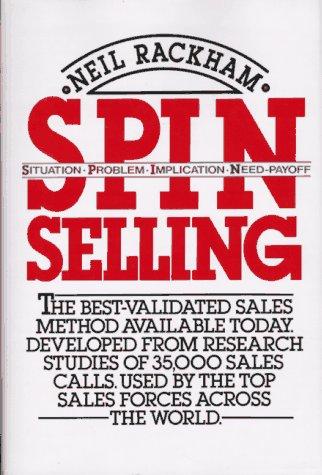
  • Cover: SPIN Selling

    SPIN Selling

    Book

    N. Rackham · 1988

    Grounded in the analysis of thousands of sales calls, the SPIN method structures customer discovery through four types of question (Situation, Problem, Implication, Need-payoff) for complex sales.

  • The Challenger Sale

    Book

    M. Dixon & B. Adamson · 2011

  • Solution Selling

    Book

    M. Bosworth · 1994

  • SNAP Selling

    Book

    J. Konrath · 2010

Structured sales methods: SPIN (N. Rackham), The Challenger Sale (M. Dixon & B. Adamson), Solution Selling (M. Bosworth), MEDDIC, Sandler, SNAP (J. Konrath).

On video

See the technique in action

Videos to picture The MEDDIC Method and anchor it through examples.

A verified video selection is being enriched; the search above already surfaces the best videos on the topic.

Technique map

Where this technique sits

Every technique sits within a network: what it draws on, what it combines with, where it applies, and how to defend against it.

Levers engaged

biases & emotions

Countered by

Spot its signals, neutralise it and turn it around with the defensive playbook on this page.

See the counter-techniques

Key takeaways

  • En une phrase

    MEDDIC is a qualification framework for complex B2B opportunities structured around six variables: Metrics (value metrics), Economic buyer (budget-holding decision-maker), Decision criteria, Decision process, Identify pain and Champion (internal ally). Its promise is not to “sell more” but to qualify better: to concentrate the negotiating effort on genuinely winnable deals and on the right counterparts. Applied to negotiation, it turns relational improvisation into a rigorous diagnosis of the other party's decision-making terrain. It serves as much to prepare a negotiation as to decide whether to pursue it, delay it or abandon it.

  • The right reflex

    Name the manoeuvre: said out loud, a technique loses most of its power.

  • Never do this

    Reacting emotionally instead of coming back to the facts.

7.0/10 tactical potential Moderate vigilance Documented school

Master this technique in real situations?

Our programmes turn theory into a concrete advantage.

Explore our programmes
Call Book a call