
NEGOCOACH
311
Origin : Sales & commercial methods

💼 Sales & commercial methods

B2B sales methods

Structured sales methods: SPIN (N. Rackham), The Challenger Sale (M. Dixon & B. Adamson), Solution Selling (M. Bosworth), MEDDIC, Sandler, SNAP (J. Konrath).

Full detail in the “Origin & history” section below.

311

The Sandler Method

Sales & commercial methods Technique 311 / 360
Alexandre Baumberger

Author of the library

Alexandre Baumberger

Negotiation lecturer at KEDGE Business School

A rare threefold background serving negotiation: teaching, commercial justice and audit, backed by experience as a company director in Bordeaux.

  • Teaching, KEDGE Business School Negotiation lecturer since 2014 (12 years).
  • Commercial justice, Commercial Court Judge from 2018 to 2026: litigation, then insolvency proceedings.
  • Audit & advisory, over 20 years Tax, employment and financial audit in major firms, for large groups.
In brief

The Sandler Method (Sandler Selling System) is a consultative selling approach that reverses the traditional pressure between seller and buyer: instead of “chasing” the prospect, the seller adopts an equal-to-equal posture, actively disqualifies poor deals and surfaces the client’s “pain” before any demonstration. It rests on an “upfront contract” that explicitly sets the ground rules at each stage, on an in-depth exploration of the problem (pain funnel) and on verifying the budget and the decision-making process BEFORE presenting the solution. Applied to negotiation, it teaches you never to give value (a demonstration, a concession, a proposal) without first establishing a shared framework and qualifying the other party’s genuine interest. It is a method of emotional discipline as much as of commercial technique.

Reading level

At a glance

Its family profile at a glance

Effectiveness Psychologicalimpact Discretion Preparation Relationalrisk Ethics
7.0 / 10 Tactical potential

Vigilance: moderate (4.5/10) · Preparation required: 7/10

Grounding in the source school Documented school

Indicative profile: it situates the “Sales & commercial methods” family as the Sales & commercial methods school practises it, not this technique taken in isolation. Techniques from the same family and school therefore share the same profile. NEGOCOACH editorial rating out of 10, non-experimental · the higher the “relational risk” value, the more costly the technique is to the relationship.

NEGOCOACH assessment

How to read this rating

Tactical potential 7.0/10 (effectiveness, impact, discretion) and vigilance moderate (relational and ethical risk): two distinct readings, deliberately never merged into a single score that would reward risk. NEGOCOACH editorial rating calibrated from the “Sales & commercial methods” family and the “Sales & commercial methods” school. Each criterion is rated out of 10; click to understand what it measures.

  • Effectiveness 8/10 · Very high

    How far the technique can carry the negotiation in the intended direction when it is well executed.

  • Psychological impact 7/10 · High

    Strength of the effect produced on the counterpart's perceptions, emotions and decisions.

  • Discretion 6/10 · High

    How hard it is for the other party to notice the technique is being used. A high value = very discreet.

  • Preparation 7/10 · High

    The information, analysis and rehearsal required upfront to use it effectively.

  • Relational risk 4/10 · Moderate

    Potential cost to the relationship and to trust if the technique is spotted, refused or fails. A high value = riskier.

  • Ethics 6/10 · High

    Moral acceptability: fairness, transparency and respect for the counterpart's autonomy. A high value = more defensible.

Level of evidence

Documented school

The school this technique stems from is documented by recognised work and established practice, without experimental consensus. This indicator qualifies the school, not this technique taken in isolation.

Indicative NEGOCOACH editorial rating, for teaching purposes. For “Relational risk”, a high value signals a cost to the relationship, not a quality.

The Sandler Method in Brief


Origin & history

Created by David H. Sandler (1930-1995), an American entrepreneur who founded the Sandler Selling System in 1967 and then the Sandler Sales Institute (today Sandler Training, Owings Mills, Maryland). Sandler formalised his method from his own experience as a salesman and from his reading of Eric Berne’s Transactional Analysis (the Parent-Adult-Child ego states). The body of work was popularised by his posthumous book “You Can’t Teach a Kid to Ride a Bike at a Seminar” (1995), which sets out the system in seven stages symbolised by the compartments of a submarine, hence the name “submarine approach”. The method is now taught worldwide through a network of training franchises.


Definition and principle

A structured selling and negotiation system in seven stages (the “submarine” compartments): (1) Bonding and rapport; (2) Upfront contract, an explicit agreement on the flow, the objectives and the possible outcomes of the exchange, including the right to say no; (3) Pain, exploration through funnel questioning of the real problem, its cost and its emotional impact; (4) Budget, verifying the ability and the willingness to invest in solving that problem; (5) Decision, mapping the process, the decision-makers and the criteria; (6) Fulfilment, presenting the solution only once stages 3-4-5 have been validated; (7) Post-Sell, securing the deal against buyer’s remorse and later challenges. The central operational principle is “reversal”: the seller asks questions, keeps calm (emotional “nurturing”) and lets the other party convince themselves, rather than pushing, arguing or giving in to pressure.


Aims of the technique

  • Reverse the pressure dynamic: stop pursuing the other party and lead them to express their own need and their own interest in closing
  • Qualify (or disqualify) early and honestly, so as not to invest time and concessions in a negotiation with no real outcome
  • Surface the “pain”, the deep, quantified and emotional problem that justifies the deal, before any value proposal
  • Secure the budget and the decision-making process upfront to avoid last-minute blockages and false buyers
  • Maintain an equal-to-equal posture and an emotional neutrality that protect the seller from pressure tactics and reflex concessions

Concrete examples of application

Application by context

The same technique, across every negotiation settings

Context 1 / 8

Sales negotiation

The salesperson opens with an upfront contract (“Here is what I propose for the next 30 minutes; at the end you’ll tell me yes, no, or let’s continue, anything but maybe”), then digs into the prospect’s pain and verifies their budget before even mentioning the product, refusing any demo until the real need and the buying capacity have been established.
Context 2 / 8

Procurement negotiation

The professional buyer turns the method against the supplier: he sets the rules of the meeting himself, refuses to reveal his budget, questions the seller at length about their costs and flexibility, and lets them “demonstrate” without ever committing, applying the pressure reversal to his own advantage.

Context 3 / 8

Labour negotiation

In a trade union negotiation, the HR director first establishes a clear session contract (agenda, what is or is not negotiable, finishing time), then, rather than announcing his pay offer at the outset, explores the representatives’ real “pain” (fear of redundancies? recognition? working conditions?) in order to target the concession that will carry the highest perceived value at the lowest cost.

Context 4 / 8

Crisis management

A crisis negotiator applies Sandler-style “nurturing”: he keeps an absolute emotional neutrality, does not give in to the hostage-taker’s pressure, sets micro-contracts (“if I get you this, you give me that”) and gets the pain and the underlying demand verbalised before proposing anything at all.

Context 5 / 8

Political negotiation

A minister leading a reform sets an “upfront contract” with the stakeholders (scope, timetable, open and closed points), disqualifies unrealistic demands early so as not to waste his capital on them, and gets the intermediary bodies to express the cost of the status quo (the pain) in order to make compromise desirable.

Context 6 / 8

Real-estate negotiation

The agent or the seller of a property qualifies the buyer before any in-depth viewing: upfront contract (“if the property suits you and the price is within your budget, are you ready to make an offer this week?”), verification of the financing (budget) and of the decision chain (couple, bank), sparing themselves the “tourists” and keeping control of the price.

Context 7 / 8

Cross-cultural negotiation

Facing a partner from a high-context culture, the negotiator adapts the upfront contract by first investing heavily in the bond (stage 1) and exploring the pain through indirect and patient questions, the pressure reversal taking the form of prolonged listening rather than an explicit verbal framing.

Context 8 / 8

Family negotiation

In an inheritance dispute, the family mediator sets discussion rules accepted by all (upfront contract), gets each party to express the underlying emotional need, to be recognised, not to be short-changed (the true pain), before proposing a division, and checks that each party has the power to decide, to avoid an agreement revoked the next day.


Counter-techniques

Spot and neutralise this technique

Negotiation is also played on defence. Here is how to recognise this technique when it is used against you, and turn it around.

Detect

The signals that give it away

  • A sudden imbalance in the exchange
  • Pressure to decide quickly
  • An argument you cannot verify

Neutralise

The counters that defuse it

  • Slow down and reformulate
  • Ask for facts and sources
  • Concede nothing without a counterpart

Turn around

Turn it into an advantage

Name the manoeuvre: said out loud, a technique loses most of its power.

The trap to avoid

Reacting emotionally instead of coming back to the facts.

Strengths and Weaknesses

Strengths: it protects the negotiator from pressure and reflex concessions by restoring them to a position of equals; it saves considerable time by disqualifying dead-end deals early; the upfront contract removes the ambiguity and the “maybes” that drain energy; anchoring on the pain creates authentic motivation rather than artificial pressure; upfront verification of the budget and of the decision sharply reduces failures at the end of the cycle; the emotional neutrality it teaches is an asset in tense negotiations. Weaknesses: the method can seem rigid or manipulative if the scripts are applied mechanically; questioning around pain may be experienced as intrusive; it demands genuine emotional discipline and long training (Sandler insisted: you don’t learn it in a single seminar); it is calibrated for B2B selling and transfers imperfectly to highly emotional relationships; and finally, faced with a counterpart trained in the same method, the “reversal” loses its element of surprise.


When to use this technique?

Particularly effective in long-cycle, high-stakes B2B negotiations, where qualifying early avoids wasting resources; when you face an asymmetry of pressure (a dominant buyer, a “demo-hunting” prospect) and the posture needs rebalancing; when the risk of deals revoked at the end of the process (no budget, wrong decision-maker) is high; when the negotiator tends to talk, argue or concede too much; and, more generally, whenever a real need must be surfaced rather than a preconceived solution “sold”. Less suited to ultra-fast transactions, to purely emotional relationships, or where the culture forbids early explicit framing.


Famous cases

Sales · The upfront contract that kills “I’ll think about it”, A B2B software vendor, faced with a high rate of proposals left unanswered, trains its salespeople never again to send a quote without a prior upfront contract. Before each demonstration, the seller explicitly agrees with the prospect: “At the end of this demo, you’ll tell me either yes or no; the only word I ask you to avoid is maybe.” At the same time, he refuses the demo until he has had the prospect quantify the cost of their current problem (the pain) and confirmed the budget envelope and the decision chain. The structural result of this discipline, widely documented in the Sandler literature, is a collapse of “phantom” deals: fewer proposals, but a markedly higher close rate, because every proposal is made only to a qualified, motivated and solvent counterpart. This case illustrates the heart of the method: a quick no is worth more than a costly maybe.

Everyday life · Reversing the pressure with a salesperson, A private individual negotiating the purchase of a car consciously applies the Sandler reversal. Rather than being drawn into the seller’s emotional tunnel, he sets an upfront contract himself (“I can leave today without buying anything, are you happy for us to proceed anyway?”), stays emotionally neutral in the face of urgency techniques (“I’ve only got one left at this price”), and turns the questions around: he gets the seller talking about their room for manoeuvre instead of revealing his own budget. By occupying the calm, qualifying position usually held by the seller, the buyer inverts the balance of pressure and negotiates better terms. A representative scenario of the defensive use of the method by the very party the system was originally designed to convince.


Common mistakes

  • Reciting the scripts and questions mechanically, which makes the “upfront contract” rigid and makes the pressure reversal ring false
  • Jumping to the solution stage (Fulfilment) before genuinely establishing the pain, the budget and the decision-making process, the most frequent error and the one the method fights first
  • Confusing emotional neutrality with coldness or indifference, and breaking the bond (stage 1) that makes everything else possible
  • Using the “pain funnel” as an aggressive interrogation rather than empathetic questioning, which puts the counterpart on the defensive
  • Forgetting the Post-Sell and leaving the deal exposed to buyer’s remorse, counter-offers or internal challenges

How to recognise and counter this technique

Recognising the method: a counterpart who, very early, explicitly sets the rules of the exchange (“at the end you’ll tell me yes or no”), who asks many questions about your problems and their cost, who enquires about your budget and your decision-makers before presenting anything, and who stays surprisingly calm in the face of your pressure, is probably applying Sandler. Defending yourself: bear in mind that the upfront contract is negotiable, you can refuse to be boxed into an immediate “yes/no” and reserve the right to think it over. Do not reveal your pain or your real budget until you have obtained information in return: apply the reversal yourself by turning the questions around. Finally, do not take the displayed neutrality for genuine indifference: it is a technical posture, not a sign of weakness in the other side’s position.


Limits and ethics

Limits: the method is optimised for complex selling and transfers imperfectly to highly emotional negotiations, to mediations where the framed expression of need must remain free, or to cultures where early explicit framing is perceived as brutal. Its effectiveness assumes long training and real emotional mastery, failing which it becomes hollow formalism. Ethics: the pressure reversal and the exploration of pain remain acceptable as long as they serve to honestly qualify a real need and to protect the negotiator from abusive concessions. The line is crossed when the “pain funnel” is used to artificially amplify an anxiety, create a non-existent need, or exploit the other party’s emotional vulnerability, which Sandler himself placed outside the consultative spirit of his method. The intention (helping someone decide vs. forcing them to buy) makes the ethical difference.


Variants and related techniques

Close to consultative selling (Consultative Selling, Mack Hanan) and to SPIN selling (Neil Rackham), which share the exploration of need through questioning; the “pain funnel” overlaps with the logic of SPIN’s Implication/Need-payoff questions. The upfront contract is a form of framing and shared agenda found in the Harvard negotiation method (setting the process before the substance). The pressure reversal and the equal-to-equal posture echo Jim Camp’s “No” (Start With No) and Chris Voss’s principle of tactical neutrality (Never Split the Difference). Upfront qualification overlaps with the BANT/MEDDIC frameworks used in B2B selling. Finally, the grounding in Eric Berne’s Transactional Analysis (the Parent-Adult-Child states) links Sandler to the psychological approaches to relationships.


Going further

  • David H. Sandler & John Hayes, “You Can’t Teach a Kid to Ride a Bike at a Seminar” (2nd ed., McGraw-Hill, 2015), the founding work setting out the 7-stage system
  • David Mattson, “The Sandler Rules: 49 Timeless Selling Principles and How to Apply Them” (2009), a practical codification of the method’s rules
  • Official Sandler Training website and blog (sandler.com), resources on the “Sandler Submarine”, the pain funnel and the upfront contract
  • Neil Rackham, “SPIN Selling” (1988), a neighbouring questioning method, useful for situating and complementing the Sandler approach

Scientific foundations

  • David H. Sandler, John Hayes (2015) You Can’t Teach a Kid to Ride a Bike at a Seminar: Sandler Training’s 7-Step System for Successful Selling (2nd Edition) McGraw-Hill Education (ISBN 9780071847827)
  • David Mattson (2009) The Sandler Rules: 49 Timeless Selling Principles and How to Apply Them Pegasus Media World
  • Neil Rackham (1988) SPIN Selling McGraw-Hill

Quick exercise

Test yourself before answering

Answer in your head, then reveal the solution. Memory is built through active recall.

1 Quels signaux doivent vous alerter ?
  • A sudden imbalance in the exchange
  • Pressure to decide quickly
  • An argument you cannot verify
2 Quelles parades appliquer ?
  • Slow down and reformulate
  • Ask for facts and sources
  • Concede nothing without a counterpart

Frequently asked questions

The questions we get most

What is the "The Sandler Method" technique?

The Sandler Method (Sandler Selling System) is a consultative selling approach that reverses the traditional pressure between seller and buyer: instead of “chasing” the prospect, the seller adopts an equal-to-equal posture, actively disqualifies poor deals and surfaces the client’s “pain” before any demonstration. It rests on an “upfront contract” that explicitly sets the ground rules at each stage, on an in-depth exploration of the problem (pain funnel) and on verifying the budget and the decision-making process BEFORE presenting the solution. Applied to negotiation, it teaches you never to give value (a demonstration, a concession, a proposal) without first establishing a shared framework and qualifying the other party’s genuine interest. It is a method of emotional discipline as much as of commercial technique.

Is the "The Sandler Method" technique ethical?

It sits on the line: effective, but it can tip into manipulation if it exploits an information asymmetry. Use it with measure and without deliberate deceit.

How do you defend against "The Sandler Method"?

Reacting emotionally instead of coming back to the facts. The right reflex: slow down and reformulate.

What is the "The Sandler Method" technique based on?

NEGOCOACH does not assess the experimental validation of this technique in isolation. What we document is the grounding of its source school (Sales & commercial methods): documented school. Full detail is in the "At a glance" section of this page.

Practise with AI

Three ready-to-use prompts

Copy, paste into your assistant, replace the [brackets]. Works with ChatGPT, Claude, Gemini, Mistral, Perplexity.

Prepare

Build your plan before the meeting

You are an expert negotiation coach. Help me prepare to use the "The Sandler Method" technique in the following situation: [describe your situation]. Give me: the conditions for success, a 3-step script, my counterpart's likely objections and how to answer them.

Simulate

Rehearse against an AI counterpart

Play the role of my counterpart in a negotiation. I am going to test the "The Sandler Method" technique. React realistically and with resistance, do not give in too quickly, then at the end analyse my performance and suggest 3 concrete improvements.

Debrief

Analyse a past negotiation

Here is how my negotiation went: [paste the exchanges]. Analyse whether the "The Sandler Method" technique was used well, what worked, the mistakes made, and spell out precisely what I could have done better.

References

Bibliography & credible sources

Founding works of the 💼 Sales & commercial methods school this technique belongs to.

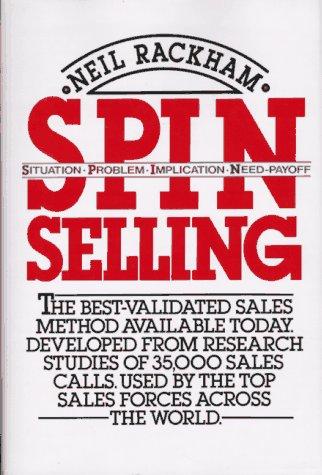
  • Cover: SPIN Selling

    SPIN Selling

    Book

    N. Rackham · 1988

    Grounded in the analysis of thousands of sales calls, the SPIN method structures customer discovery through four types of question (Situation, Problem, Implication, Need-payoff) for complex sales.

  • The Challenger Sale

    Book

    M. Dixon & B. Adamson · 2011

  • Solution Selling

    Book

    M. Bosworth · 1994

  • SNAP Selling

    Book

    J. Konrath · 2010

Structured sales methods: SPIN (N. Rackham), The Challenger Sale (M. Dixon & B. Adamson), Solution Selling (M. Bosworth), MEDDIC, Sandler, SNAP (J. Konrath).

On video

See the technique in action

Videos to picture The Sandler Method and anchor it through examples.

A verified video selection is being enriched; the search above already surfaces the best videos on the topic.

Technique map

Where this technique sits

Every technique sits within a network: what it draws on, what it combines with, where it applies, and how to defend against it.

Levers engaged

biases & emotions

Countered by

Spot its signals, neutralise it and turn it around with the defensive playbook on this page.

See the counter-techniques

Key takeaways

  • En une phrase

    The Sandler Method (Sandler Selling System) is a consultative selling approach that reverses the traditional pressure between seller and buyer: instead of “chasing” the prospect, the seller adopts an equal-to-equal posture, actively disqualifies poor deals and surfaces the client’s “pain” before any demonstration. It rests on an “upfront contract” that explicitly sets the ground rules at each stage, on an in-depth exploration of the problem (pain funnel) and on verifying the budget and the decision-making process BEFORE presenting the solution. Applied to negotiation, it teaches you never to give value (a demonstration, a concession, a proposal) without first establishing a shared framework and qualifying the other party’s genuine interest. It is a method of emotional discipline as much as of commercial technique.

  • The right reflex

    Name the manoeuvre: said out loud, a technique loses most of its power.

  • Never do this

    Reacting emotionally instead of coming back to the facts.

7.0/10 tactical potential Moderate vigilance Documented school

Master this technique in real situations?

Our programmes turn theory into a concrete advantage.

Explore our programmes
Call Book a call