
NEGOCOACH
313
Origin : Sales & commercial methods

💼 Sales & commercial methods

B2B sales methods

Structured sales methods: SPIN (N. Rackham), The Challenger Sale (M. Dixon & B. Adamson), Solution Selling (M. Bosworth), MEDDIC, Sandler, SNAP (J. Konrath).

Full detail in the “Origin & history” section below.

313

Solution Selling

Sales & commercial methods Technique 313 / 360
Alexandre Baumberger

Author of the library

Alexandre Baumberger

Negotiation lecturer at KEDGE Business School

A rare threefold background serving negotiation: teaching, commercial justice and audit, backed by experience as a company director in Bordeaux.

  • Teaching, KEDGE Business School Negotiation lecturer since 2014 (12 years).
  • Commercial justice, Commercial Court Judge from 2018 to 2026: litigation, then insolvency proceedings.
  • Audit & advisory, over 20 years Tax, employment and financial audit in major firms, for large groups.
In brief

Solution Selling is a consultative sales method that reverses the traditional logic: instead of presenting a product and its features, the seller begins by diagnosing in depth the customer's real "pain", then co-builds with them the vision of a solution. Formalised by Michael Bosworth in the 1980s, it rests on structured questioning (open, control and confirmation questions) that moves the other party from a latent pain to an acknowledged and quantified pain. In negotiation, this approach shifts the debate from price to value: you no longer discuss a rate, but the cost of the unresolved problem. It is the posture of a consulting physician rather than a merchant.

Reading level

At a glance

Its family profile at a glance

Effectiveness Psychologicalimpact Discretion Preparation Relationalrisk Ethics
7.0 / 10 Tactical potential

Vigilance: moderate (4.5/10) · Preparation required: 7/10

Grounding in the source school Documented school

Indicative profile: it situates the “Sales & commercial methods” family as the Sales & commercial methods school practises it, not this technique taken in isolation. Techniques from the same family and school therefore share the same profile. NEGOCOACH editorial rating out of 10, non-experimental · the higher the “relational risk” value, the more costly the technique is to the relationship.

NEGOCOACH assessment

How to read this rating

Tactical potential 7.0/10 (effectiveness, impact, discretion) and vigilance moderate (relational and ethical risk): two distinct readings, deliberately never merged into a single score that would reward risk. NEGOCOACH editorial rating calibrated from the “Sales & commercial methods” family and the “Sales & commercial methods” school. Each criterion is rated out of 10; click to understand what it measures.

  • Effectiveness 8/10 · Very high

    How far the technique can carry the negotiation in the intended direction when it is well executed.

  • Psychological impact 7/10 · High

    Strength of the effect produced on the counterpart's perceptions, emotions and decisions.

  • Discretion 6/10 · High

    How hard it is for the other party to notice the technique is being used. A high value = very discreet.

  • Preparation 7/10 · High

    The information, analysis and rehearsal required upfront to use it effectively.

  • Relational risk 4/10 · Moderate

    Potential cost to the relationship and to trust if the technique is spotted, refused or fails. A high value = riskier.

  • Ethics 6/10 · High

    Moral acceptability: fairness, transparency and respect for the counterpart's autonomy. A high value = more defensible.

Level of evidence

Documented school

The school this technique stems from is documented by recognised work and established practice, without experimental consensus. This indicator qualifies the school, not this technique taken in isolation.

Indicative NEGOCOACH editorial rating, for teaching purposes. For “Relational risk”, a high value signals a cost to the relationship, not a quality.

Solution Selling in brief


Origin & history

The method was created by Michael T. Bosworth, formerly of Xerox Computer Services, who founded the company Solution Selling® in 1983 after observing and documenting the behaviours of Xerox's best salespeople. His work was informed by his collaboration with Neil Rackham on the SPIN Selling project. He formalised the approach in the book "Solution Selling: Creating Buyers in Difficult Selling Markets" (McGraw-Hill, 1994). The method was subsequently taken up, updated and spread worldwide by Keith M. Eades (Sales Performance International) in "The New Solution Selling" (McGraw-Hill, 2003).


Definition and principle

Solution Selling is a consultative sales process in which the seller (or negotiator) forbids themselves from putting forward an offer until they have diagnosed the underlying problem, its scale and its cost, and made the customer acknowledge them. In practice, it unfolds in three stages: (1) bring out the latent pain that the customer has come to regard as normal; (2) transform it into acknowledged pain, quantified in business impact; (3) help the customer build for themselves a "vision" of the solution, of which the seller's offer becomes the natural translation. The transaction then hinges on the value of the problem solved, not on the product. Eades's synthetic formula illustrates it: Pain x Power (decision-maker) x Vision x Value x Control = Sale.


Objectives of the technique

  • Shift the conversation from the product and its price towards the customer's problem and its real cost
  • Bring out and quantify a latent pain in order to create a legitimate sense of urgency
  • Position the seller as a trusted adviser (diagnostic posture) rather than a mere supplier
  • Lead the customer to formulate the vision of the solution themselves, reducing their resistance and their objection on price
  • Qualify early on access to the true decision-maker (Power) and the seriousness of the need, so as not to waste negotiating effort

Concrete examples of application

Application by context

The same technique, across every negotiation settings

Context 1 / 8

Sales negotiation

Faced with a purchasing director who asks for "your best price", the salesperson refuses to quote and first probes current stock-outs, supplier delays and their annual cost, then quantifies this pain (e.g. €180k/year) before presenting the offer as the answer to that figure, rather than as a price line to be negotiated.
Context 2 / 8

Procurement negotiation

A buyer turns the method against their suppliers: instead of asking for a discount, they have the seller diagnose the additional costs that their own volumes generate at their end (logistics, forecasting), turning the negotiation into the joint resolution of a shared problem that justifies a target price.

Context 3 / 8

Labour negotiation

In negotiation with employee representatives, management does not immediately defend its plan but first has the representatives acknowledge the shared pain (a falling order book, a quantified risk to jobs within 18 months) in order to co-build a vision of an agreement that becomes the natural solution rather than an imposed measure.

Context 4 / 8

Crisis management

In a crisis-exit negotiation (hostage-taking, major conflict), the negotiator diagnoses the deep need behind the stated demand (recognition, security, fear) before any counter-proposal, and builds with the other party an outcome that answers this real pain rather than the surface demand.

Context 5 / 8

Political negotiation

An elected official who wants a reform adopted does not hammer home the measure but first has their counterparts publicly acknowledge the problem (a service's shortfall, the quantified social cost of the status quo), so that the reform appears as the vision of a solution emerging from a shared diagnosis.

Context 6 / 8

Real-estate negotiation

An agent facing a seller who overvalues their property does not contest the price but diagnoses the pain (a lengthening time to sell, a double burden, a blocked project) and quantifies it as a monthly carrying cost, bringing out in the owner the vision of a realistic price as a solution to THEIR pain, not as a concession to the buyer.

Context 7 / 8

Cross-cultural negotiation

In an international negotiation, the negotiator invests time in diagnosing the other party's real issues and constraints (internal political imperatives, face-saving constraints) beyond the stated positions, adapting the pace of questioning to the cultural codes before proposing an agreement architecture perceived as jointly built.

Context 8 / 8

Family negotiation

During a tense inheritance settlement, rather than imposing a division, one of the heirs first has each person express and acknowledge their true pain (attachment to the house, a sense of injustice, a need for liquidity) then co-builds a solution that addresses these underlying needs, defusing the conflict of positions over the assets.


Counter-techniques

Spot and neutralise this technique

Negotiation is also played on defence. Here is how to recognise this technique when it is used against you, and turn it around.

Detect

The signals that give it away

  • A sudden imbalance in the exchange
  • Pressure to decide quickly
  • An argument you cannot verify

Neutralise

The counters that defuse it

  • Slow down and reformulate
  • Ask for facts and sources
  • Concede nothing without a counterpart

Turn around

Turn it into an advantage

Name the manoeuvre: said out loud, a technique loses most of its power.

The trap to avoid

Reacting emotionally instead of coming back to the facts.

Strengths and weaknesses

Strengths: the method creates genuine differentiation against product-based competition; it legitimises a high price by anchoring it on the value of the problem solved; it establishes a lasting relationship of trust (an advisory posture); it reduces price objections since the customer has themselves formulated the need; it qualifies serious deals early and saves time. Weaknesses: it is time-consuming and ill-suited to simple transactional sales or commodities; it demands an experienced seller who is very good at listening and questioning; poorly executed, the "diagnosis" turns into a mechanical interrogation that irritates the customer; it assumes real decision-making power on the other side and a genuinely customisable solution; it may fail if the customer, already an expert on their need, simply wants to compare offers.


When to use this technique?

Particularly favourable in complex, long-cycle B2B sales, bespoke offers or those with a strong service component, situations where the price gap with competitors must be justified by value, and negotiations where stated positions mask deeper issues (labour, family, diplomatic). Relevant when the other party is unaware of the real scale of their problem (latent pain) or when the decision-maker is accessible. Poorly suited to standardised purchases, purely price-based tenders, commodity sales, and hurried counterparts who have already made up their mind on the "what".


Famous cases

Sales · Xerox: the field origin of the method, Michael Bosworth built Solution Selling by directly observing, at Xerox Computer Services in the 1980s, what distinguished the best salespeople from the rest. He found that the top performers did not recite the machines' features: they spent most of the meeting getting the customer to talk about their operational malfunctions, quantifying them, then letting the customer conclude for themselves that they needed the solution. Bosworth documented and systematised these behaviours, enriched them with his work alongside Neil Rackham (SPIN Selling), and turned them into a licensed method: when he sold his company in 1999, more than 50 affiliates were generating over $2.8M in annual royalties, proof of the model's robustness. (A real, documented case; source: biographies and publishers.)

Business · The IT supplier who refuses to quote too soon (representative scenario), A management-software vendor is put into competition on an ERP. The buyer opens with "send me your price". The salesperson, trained in Solution Selling, responds with a diagnosis: how many hours are lost each month re-keying data between the current tools? what is the invoicing error rate? what is the cost of late accounting closes? In answering, the customer discovers that the problem costs them roughly €220k/year, far more than the price gap between the two candidate offers. The discussion then swings from the rate to the return on investment, and the vendor, though more expensive, wins because the customer has themselves built the vision of the solution. (A representative scenario, not attributed to a named company.)


Common mistakes

  • Turning the diagnosis into a mechanical interrogation of chained questions, with no real listening or empathy, which puts the customer on the defensive
  • Skipping the pain stage to present the solution too quickly, out of impatience or commercial pressure, and falling back into product selling
  • Failing to quantify the pain: without a quantified cost, there is neither urgency nor justification of value
  • Diagnosing with the wrong counterpart (without decision-making power), and having to start all over again with the real decision-maker
  • Forcing the method onto a simple transactional sale where the customer just wants a price and a date, generating frustration and wasted time

How to recognise and counter this technique

Recognising that Solution Selling is being used on you: your counterpart asks many open questions about your problems, carefully avoids talking about price or product, and seeks to have you quantify the cost of your current situation. To defend yourself: keep control of your own diagnosis (you know your need better than they do), do not let your pain be exaggerated or artificially inflated, and insist on comparing their solution with concrete alternatives. Meet the diagnosis with a counter-diagnosis: "your solution also generates costs (integration, dependency), let's quantify those too." Finally, separate the acknowledgement of the problem (which you can concede) from the acceptance of THEIR solution as the only answer.


Limits and ethics

Limits: the method assumes a real problem and a genuinely suitable solution; applying it to a need fabricated from scratch amounts to manipulation. The quantification of the pain can be biased to over-dramatise and force the decision. Ethics: the line is clear between helping a customer become aware of a genuine problem they were underestimating (legitimate, high value-added) and instilling exaggerated fear or inventing an urgency in order to sell (fear-based selling, disloyal). Solution Selling remains ethical as long as the diagnosed pain is verifiable, the quantification is honest, and the proposed solution genuinely serves the customer's interest as much as the seller's. In a sensitive context (labour, family, crisis), instrumentalising the other party's pain is particularly damaging to the relationship.


Variants and related techniques

Related and kindred techniques: Neil Rackham's SPIN Selling (Situation, Problem, Implication, Need-payoff), a direct source of inspiration and complementary for questioning; consultative selling, of which Solution Selling is a formalisation; Customer-Centric Selling (another evolution co-authored by Bosworth); the Challenger Sale by Dixon & Adamson, which goes further by teaching the customer to see their problem differently; Value Selling; and the MEDDIC method for qualifying the decision-maker (Power) and the decision criteria. All share the shift from product to need.


Going further

  • Michael T. Bosworth, "Solution Selling: Creating Buyers in Difficult Selling Markets", McGraw-Hill, 1994 (the founding work)
  • Keith M. Eades, "The New Solution Selling: The Revolutionary Sales Process That Is Changing the Way People Sell", McGraw-Hill, 2003 (the reference update)
  • Neil Rackham, "SPIN Selling", McGraw-Hill, 1988 (a complementary questioning method and source of inspiration)
  • Online practical guides (Gong, Pipedrive, ARPEDIO) summarising the operational steps of Solution Selling for implementation

Scientific foundations

  • Bosworth, Michael T. (1994) Solution Selling: Creating Buyers in Difficult Selling Markets McGraw-Hill, New York (ISBN 978-0786303151)
  • Eades, Keith M. (2003) The New Solution Selling: The Revolutionary Sales Process That Is Changing the Way People Sell McGraw-Hill, New York (ISBN 978-0071435390)
  • Rackham, Neil (1988) SPIN Selling McGraw-Hill, New York (ISBN 978-0070511132)

Quick exercise

Test yourself before answering

Answer in your head, then reveal the solution. Memory is built through active recall.

1 Quels signaux doivent vous alerter ?
  • A sudden imbalance in the exchange
  • Pressure to decide quickly
  • An argument you cannot verify
2 Quelles parades appliquer ?
  • Slow down and reformulate
  • Ask for facts and sources
  • Concede nothing without a counterpart

Frequently asked questions

The questions we get most

What is the "Solution Selling" technique?

Solution Selling is a consultative sales method that reverses the traditional logic: instead of presenting a product and its features, the seller begins by diagnosing in depth the customer's real "pain", then co-builds with them the vision of a solution. Formalised by Michael Bosworth in the 1980s, it rests on structured questioning (open, control and confirmation questions) that moves the other party from a latent pain to an acknowledged and quantified pain. In negotiation, this approach shifts the debate from price to value: you no longer discuss a rate, but the cost of the unresolved problem. It is the posture of a consulting physician rather than a merchant.

Is the "Solution Selling" technique ethical?

It sits on the line: effective, but it can tip into manipulation if it exploits an information asymmetry. Use it with measure and without deliberate deceit.

How do you defend against "Solution Selling"?

Reacting emotionally instead of coming back to the facts. The right reflex: slow down and reformulate.

What is the "Solution Selling" technique based on?

NEGOCOACH does not assess the experimental validation of this technique in isolation. What we document is the grounding of its source school (Sales & commercial methods): documented school. Full detail is in the "At a glance" section of this page.

Practise with AI

Three ready-to-use prompts

Copy, paste into your assistant, replace the [brackets]. Works with ChatGPT, Claude, Gemini, Mistral, Perplexity.

Prepare

Build your plan before the meeting

You are an expert negotiation coach. Help me prepare to use the "Solution Selling" technique in the following situation: [describe your situation]. Give me: the conditions for success, a 3-step script, my counterpart's likely objections and how to answer them.

Simulate

Rehearse against an AI counterpart

Play the role of my counterpart in a negotiation. I am going to test the "Solution Selling" technique. React realistically and with resistance, do not give in too quickly, then at the end analyse my performance and suggest 3 concrete improvements.

Debrief

Analyse a past negotiation

Here is how my negotiation went: [paste the exchanges]. Analyse whether the "Solution Selling" technique was used well, what worked, the mistakes made, and spell out precisely what I could have done better.

References

Bibliography & credible sources

Founding works of the 💼 Sales & commercial methods school this technique belongs to.

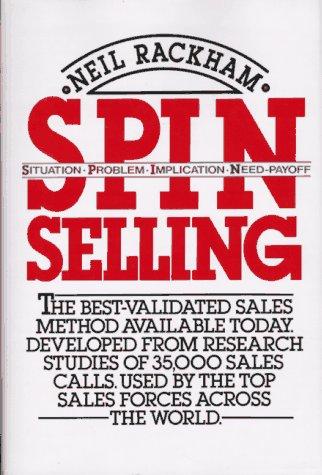
  • Cover: SPIN Selling

    SPIN Selling

    Book

    N. Rackham · 1988

    Grounded in the analysis of thousands of sales calls, the SPIN method structures customer discovery through four types of question (Situation, Problem, Implication, Need-payoff) for complex sales.

  • The Challenger Sale

    Book

    M. Dixon & B. Adamson · 2011

  • Solution Selling

    Book

    M. Bosworth · 1994

  • SNAP Selling

    Book

    J. Konrath · 2010

Structured sales methods: SPIN (N. Rackham), The Challenger Sale (M. Dixon & B. Adamson), Solution Selling (M. Bosworth), MEDDIC, Sandler, SNAP (J. Konrath).

On video

See the technique in action

Videos to picture Solution Selling and anchor it through examples.

A verified video selection is being enriched; the search above already surfaces the best videos on the topic.

Technique map

Where this technique sits

Every technique sits within a network: what it draws on, what it combines with, where it applies, and how to defend against it.

Levers engaged

biases & emotions

Countered by

Spot its signals, neutralise it and turn it around with the defensive playbook on this page.

See the counter-techniques

Key takeaways

  • En une phrase

    Solution Selling is a consultative sales method that reverses the traditional logic: instead of presenting a product and its features, the seller begins by diagnosing in depth the customer's real "pain", then co-builds with them the vision of a solution. Formalised by Michael Bosworth in the 1980s, it rests on structured questioning (open, control and confirmation questions) that moves the other party from a latent pain to an acknowledged and quantified pain. In negotiation, this approach shifts the debate from price to value: you no longer discuss a rate, but the cost of the unresolved problem. It is the posture of a consulting physician rather than a merchant.

  • The right reflex

    Name the manoeuvre: said out loud, a technique loses most of its power.

  • Never do this

    Reacting emotionally instead of coming back to the facts.

7.0/10 tactical potential Moderate vigilance Documented school

Master this technique in real situations?

Our programmes turn theory into a concrete advantage.

Explore our programmes
Call Book a call