
NEGOCOACH
266
Origin : FBI · Chris Voss

🕵️ FBI · Chris Voss

Tactical empathy

Chris Voss, "Never Split the Difference", 2016, FBI crisis negotiation.

Full detail in the “Origin & history” section below.

266

Relational Calibration

Emotional intelligence Technique 266 / 360
Alexandre Baumberger

Author of the library

Alexandre Baumberger

Negotiation lecturer at KEDGE Business School

A rare threefold background serving negotiation: teaching, commercial justice and audit, backed by experience as a company director in Bordeaux.

  • Teaching, KEDGE Business School Negotiation lecturer since 2014 (12 years).
  • Commercial justice, Commercial Court Judge from 2018 to 2026: litigation, then insolvency proceedings.
  • Audit & advisory, over 20 years Tax, employment and financial audit in major firms, for large groups.
In brief

Relational calibration is the art of continuously adjusting your style, pace and register to the state and temperament of your counterpart, read through a fine attention to verbal and non-verbal signals. It is the thermostat of a negotiation: you measure the relational temperature and adapt your conduct to keep the channel open.

Reading level

At a glance

Its family profile at a glance

Effectiveness Psychologicalimpact Discretion Preparation Relationalrisk Ethics
8.0 / 10 Tactical potential

Vigilance: moderate (4.0/10) · Preparation required: 6/10

Grounding in the source school School grounded in research and field practice

Indicative profile: it situates the “Emotional intelligence” family as the FBI · Chris Voss school practises it, not this technique taken in isolation. Techniques from the same family and school therefore share the same profile. NEGOCOACH editorial rating out of 10, non-experimental · the higher the “relational risk” value, the more costly the technique is to the relationship.

NEGOCOACH assessment

How to read this rating

Tactical potential 8.0/10 (effectiveness, impact, discretion) and vigilance moderate (relational and ethical risk): two distinct readings, deliberately never merged into a single score that would reward risk. NEGOCOACH editorial rating calibrated from the “Emotional intelligence” family and the “FBI · Chris Voss” school. Each criterion is rated out of 10; click to understand what it measures.

  • Effectiveness 8/10 · Very high

    How far the technique can carry the negotiation in the intended direction when it is well executed.

  • Psychological impact 10/10 · Very high

    Strength of the effect produced on the counterpart's perceptions, emotions and decisions.

  • Discretion 6/10 · High

    How hard it is for the other party to notice the technique is being used. A high value = very discreet.

  • Preparation 6/10 · High

    The information, analysis and rehearsal required upfront to use it effectively.

  • Relational risk 3/10 · Low

    Potential cost to the relationship and to trust if the technique is spotted, refused or fails. A high value = riskier.

  • Ethics 6/10 · High

    Moral acceptability: fairness, transparency and respect for the counterpart's autonomy. A high value = more defensible.

Level of evidence

School grounded in research and field practice

The school this technique stems from combines academic work with long field practice. This indicator qualifies the school, not this technique taken in isolation.

Indicative NEGOCOACH editorial rating, for teaching purposes. For “Relational risk”, a high value signals a cost to the relationship, not a quality.

Relational Calibration in brief


Origin and history

The term comes from NLP, where to "calibrate" means the precise observation of a counterpart's micro-signals (Bandler and Grinder). It connects with the work of Albert Mehrabiani on non-verbal communication and the notion of interpersonal synchronisation.


Definition and principle

To calibrate is to establish the other party's baseline (their pace, their tone, their posture at rest), then to detect the deviations that signal a change of state, and to adjust your own conduct accordingly. The underlying mechanism is behavioural synchrony, which creates an unconscious sense of affinity and smooths the exchange.i


Concrete examples of application

Application by context

The same technique, across every negotiation settings

Context 1 / 8

Sales negotiation

A salesperson notices that his client, initially voluble, stiffens and shortens his answers when the budget comes up. He calibrates: he slows down, softens his tone, and returns to price later. The adjustment avoids a deadlock.

How to apply it

Spot the change of state (delivery, posture, tone) and adapt your pace immediately rather than running through your script.

Strengths

Detects the tipping point and lets you delay or rephrase before the client closes down.

Weaknesses

A misreading of the signals leads to a counter-productive adjustment (slowing down a client who is in fact in a hurry).
Context 2 / 8

Procurement negotiation

On the buyer's side, the buyer observes that at the mention of a tight deadline the salesperson hesitates and looks away. He calibrates a point of tension and presses gently on it to obtain a concession on delivery times.

How to apply it

Use calibration to locate the seller's points of tension (where the non-verbal betrays a constraint) and negotiate on them.

Strengths

Reveals the zones of flexibility that the seller's words do not disclose.

Weaknesses

Possible over-reading: an innocuous gesture taken as a signal leads to negotiating on a false premise.

Context 3 / 8

Labour negotiation

A labour mediator senses that the tone is rising on one side of the table while it drops on the other. He calibrates the imbalance and gives the floor to the side that is closing down, rebalancing the dynamic before a breakdown.

How to apply it

Calibrate the balance of the group (who is closing down, who is dominating) and adjust how you distribute the floor to keep everyone in the exchange.

Strengths

Prevents parties from disengaging and keeps all sides in the negotiation.

Weaknesses

Hard to sustain in a large group where signals multiply and contradict one another.

Context 4 / 8

Crisis management

A crisis negotiator finely tunes his delivery to that of the barricaded person: when she becomes agitated, he slows down; when she calms, he moves forward. This continuous calibration guides de-escalation step by step.

How to apply it

First synchronise with the other's state (pacing), then lead gradually towards calm (leading); never force the pace.

Strengths

Allows graduated de-escalation by matching then redirecting the other's emotional state.

Weaknesses

Synchronising with a state of extreme agitation risks amplifying rather than soothing if the leading comes too late.

Context 5 / 8

Political negotiation

In diplomatic negotiation, an envoy calibrates the degree of formality expected by his counterpart and adjusts protocol, distance and register accordingly. The fine adaptation avoids the faux pas that would have soured the talks.

How to apply it

Calibrate the expected register (formality, distance, precedence) and align yourself with it before introducing your own style.

Strengths

Prevents protocol blunders that can freeze a sensitive negotiation.

Weaknesses

Excessive adaptation may be read as a lack of backbone or as submission.

Context 6 / 8

Real-estate negotiation

An agent calibrates the temperament of his buyers: the husband decides quickly, the wife needs time. He slows down and goes into detail for her without wearying the husband, holding both in the exchange until a joint agreement.

How to apply it

Calibrate the distinct decision-making styles of a couple or a pair and adjust your conduct to each without losing either.

Strengths

Keeps both decision-makers engaged, often the key to a property sale.

Weaknesses

Adapting two opposing paces at once is delicate and can give an impression of drift.

Context 7 / 8

Cross-cultural negotiation

A negotiator calibrates that one culture favours the implicit and long relational preambles before business. He adjusts his pace, delays the transactional topic and invests in the bond, earning the trust required.

How to apply it

Calibrate the target culture's relationship to time and to the relationship itself and align your sequencing (relationship before transaction, or the reverse).

Strengths

Avoids the impression of bluntness or disrespect that would sink a cross-cultural negotiation.

Weaknesses

Rests on a cultural reading which, generalised into a stereotype, can misjudge the individual.

Context 8 / 8

Family negotiation

In a tense family meeting, an elder calibrates that his sister closes down as soon as voices are raised. He systematically softens his register with her and reserves firmness for the brother who, in turn, respects it. Everyone stays in the exchange.

How to apply it

Calibrate each person's particular sensitivity and modulate tone and firmness person by person, with no single register for the whole family.

Strengths

Keeps every member in the discussion despite differing thresholds of emotional tolerance.

Weaknesses

Adapting your register to each person can be perceived as duplicity if the others notice it.


Counter-techniques

Spot and neutralise this technique

Negotiation is also played on defence. Here is how to recognise this technique when it is used against you, and turn it around.

Detect

The signals that give it away

  • Displayed empathy that lowers your guard
  • Mirroring of your gestures and words
  • A systematic "I understand you"

Neutralise

The counters that defuse it

  • Appreciate the warmth without relaxing
  • Keep your objectives in mind
  • Distinguish being heard from being satisfied

Turn around

Turn it into an advantage

Use active listening in turn to gather information.

The trap to avoid

Mistaking being understood for having won your case.

In brief

  • Difficulty: Advanced
  • Estimated effectiveness: High
  • Time to implement: Continuous, requires constant observation
  • Fields of application: Sales, Crisis negotiation, Mediation, Diplomacy, Management
  • Synonyms: Relational adjustment, Attunement, Interpersonal synchronisation
  • Tags: NLP, non-verbal, Mehrabian, pacing-leading, synchrony

Strengths and weaknesses

Relational calibration makes the conduct of a negotiation adaptive: it detects changes of state in real time and lets you adjust before the channel closes. Done well, it creates an unconscious affinity that smooths everything. Its limit: it rests on a fallible reading of signals, demands sustained attention and, pushed too far, tips into suspect mimicry.


When to use this technique

To be practised continuously, and sharply at emotional or decisional tipping points. To be avoided as crude mimicry (copying posture and gestures conspicuously), which produces the opposite effect. Less decisive in a purely written or depersonalised exchange.


How to recognise and counter this technique

Recognise it: the other party seems to match your pace, your tone, your posture, and adjusts their conduct to your slightest reactions. Neutralise it: deliberately vary your signals (pace, register) to blur their reading, and bring the exchange back to the written substance. Turn it around: in turn, calibrate their points of tension to regain the informational advantage.


Limits and ethics

Calibration verges on manipulation when the synchronisation is feigned to manufacture a false affinity and exploit the drop in vigilance it induces. Instrumentalising the distress micro-signals of a vulnerable person is ethically indefensible. The right line: adjusting to better understand and serve the relationship, not to trap it.


Variants and related techniques

Combines with Mirroring (reflecting posture and language) and Pacing-Leading. Complementary to Tactical Empathy and Strategic Validation. It stands opposed to the rigid, uniform style that is deaf to the counterpart.


Further reading

  • Albert Mehrabian, Silent Messages: Implicit Communication of Emotions and Attitudes, 1971.
  • Richard Bandler & John Grinder, Frogs into Princes: Neuro Linguistic Programming, 1979.
  • Joe Navarro, What Every BODY Is Saying, 2008.

Objectives of the technique

  • Establish the counterpart's behavioural baseline (tone, pace, posture, expressions) during the neutral phases of the exchange, so as to hold a reference frame specific to that person.
  • Detect in real time the deviations from that baseline (tension, interest, discomfort, hesitation) as the discussion reaches the sensitive points.
  • Check the consistency between the spoken words and the non-verbal signals in order to spot the zones of reluctance or of the unsaid to be explored.
  • Adjust your own relational style (pace, register, proximity, timing of requests) according to the state observed in the other, in order to preserve the rapport.
  • Choose the right moment to advance a proposal, a concession or a delicate question, relying on the emotional state actually observed rather than assumed.

Famous cases

Sales - The renewal that stalled on an unspoken clause (representative scenario): Representative scenario: a key-account manager negotiates the renewal of a services contract. During the opening phase, she observes her counterpart relaxed: steady delivery, broad gestures, stable eye contact. That is his baseline. Each time the maintenance clause is mentioned, she notes a clear deviation: shorter answers, averted gaze, the torso drawing back. Yet the client insists that "everything is acceptable". Rather than settling on those words, she reopens the subject with an open question: "What, concretely, would concern you in the way the maintenance is delivered?" The client then reveals a poor past experience with a provider. By addressing this point that had remained tacit, she unlocks the signature that listening to the words alone would have missed.

Workplace - Calibrating your manager before asking for a raise (representative scenario): Representative scenario: an employee prepares a request for a pay rise. Instead of putting it cold, he calibrates his manager over several weeks: he notices that early in the day the manager is curt and tense (brief answers, multitasking), whereas after the Thursday committees he is available and open (asks questions back, relaxed tone). He also observes that his manager closes down as soon as a request is framed as an ultimatum, but readily commits when presented with a problem to solve. So he picks a Thursday after the committee and frames his request as a question of fairness to examine together. The conversation unfolds within the favourable relational window he had identified, and results in an agreement on a two-stage revaluation.


Common mistakes

  • Interpreting an isolated signal (crossed arms, averted gaze) as a universal code, without having compared it to the person's own baseline: some cross their arms simply because they are cold or out of habit.
  • Skipping the calibration step in the neutral phase and "reading" the signals directly in the phase of tension: without a reference frame, any interpretation is a projection.
  • Concentrating so hard on observing the non-verbal that you no longer listen to the substance of what is said, at the risk of missing a decisive explicit piece of information.
  • Sliding from calibration into manipulation: over-adjusting your behaviour to the point of appearing artificial or insincere, which destroys precisely the rapport the technique is meant to protect.
  • Freezing the initial diagnosis and never recalibrating: the counterpart's emotional state evolves over the course of the negotiation, and the baseline must be continuously updated.

Scientific foundations

  • Richard Bandler & John Grinder (1979) Frogs into Princes: Neuro Linguistic Programming Real People Press
  • Joe Navarro (with Marvin Karlins) (2008) What Every BODY Is Saying: An Ex-FBI Agent's Guide to Speed-Reading People HarperCollins
  • Paul Ekman (2003) Emotions Revealed: Recognizing Faces and Feelings to Improve Communication and Emotional Life Times Books / Henry Holt

Quick exercise

Test yourself before answering

Answer in your head, then reveal the solution. Memory is built through active recall.

1 Quels signaux doivent vous alerter ?
  • Displayed empathy that lowers your guard
  • Mirroring of your gestures and words
  • A systematic "I understand you"
2 Quelles parades appliquer ?
  • Appreciate the warmth without relaxing
  • Keep your objectives in mind
  • Distinguish being heard from being satisfied

Frequently asked questions

The questions we get most

What is the "Relational Calibration" technique?

Relational calibration is the art of continuously adjusting your style, pace and register to the state and temperament of your counterpart, read through a fine attention to verbal and non-verbal signals. It is the thermostat of a negotiation: you measure the relational temperature and adapt your conduct to keep the channel open.

Is the "Relational Calibration" technique ethical?

It sits on the line: effective, but it can tip into manipulation if it exploits an information asymmetry. Use it with measure and without deliberate deceit.

How do you defend against "Relational Calibration"?

Mistaking being understood for having won your case. The right reflex: appreciate the warmth without relaxing.

What is the "Relational Calibration" technique based on?

NEGOCOACH does not assess the experimental validation of this technique in isolation. What we document is the grounding of its source school (FBI · Chris Voss): school grounded in research and field practice. Full detail is in the "At a glance" section of this page.

Practise with AI

Three ready-to-use prompts

Copy, paste into your assistant, replace the [brackets]. Works with ChatGPT, Claude, Gemini, Mistral, Perplexity.

Prepare

Build your plan before the meeting

You are an expert negotiation coach. Help me prepare to use the "Relational Calibration" technique in the following situation: [describe your situation]. Give me: the conditions for success, a 3-step script, my counterpart's likely objections and how to answer them.

Simulate

Rehearse against an AI counterpart

Play the role of my counterpart in a negotiation. I am going to test the "Relational Calibration" technique. React realistically and with resistance, do not give in too quickly, then at the end analyse my performance and suggest 3 concrete improvements.

Debrief

Analyse a past negotiation

Here is how my negotiation went: [paste the exchanges]. Analyse whether the "Relational Calibration" technique was used well, what worked, the mistakes made, and spell out precisely what I could have done better.

References

Bibliography & credible sources

Founding works of the 🕵️ FBI · Chris Voss school this technique belongs to.

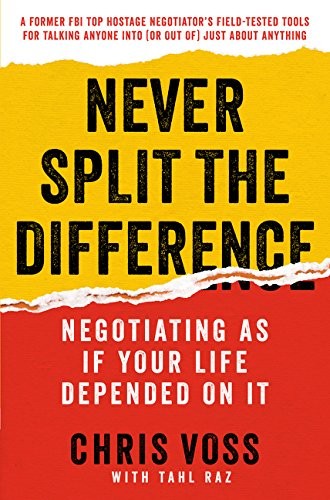
  • Cover: Never Split the Difference

    Never Split the Difference

    Book

    C. Voss & T. Raz · 2016

    The FBI's hostage-negotiation methods transposed to business and everyday life: tactical empathy, mirroring, labeling, calibrated questions. An emotional, counter-intuitive approach to persuasion.

  • Cover: Stalling for Time, My Life as an FBI Hostage Negotiator

    Stalling for Time, My Life as an FBI Hostage Negotiator

    Book

    G. Noesner · 2010

    The account of twenty-three years of crisis negotiation at the FBI by the head of its unit. A demonstration of the power of listening, patience and de-escalation in the most tense situations.

Chris Voss, "Never Split the Difference", 2016, FBI crisis negotiation.

On video

See the technique in action

Videos to picture Relational Calibration and anchor it through examples.

A verified video selection is being enriched; the search above already surfaces the best videos on the topic.

Technique map

Where this technique sits

Every technique sits within a network: what it draws on, what it combines with, where it applies, and how to defend against it.

Levers engaged

biases & emotions

Countered by

Spot its signals, neutralise it and turn it around with the defensive playbook on this page.

See the counter-techniques

Key takeaways

  • En une phrase

    Relational calibration is the art of continuously adjusting your style, pace and register to the state and temperament of your counterpart, read through a fine attention to verbal and non-verbal signals. It is the thermostat of a negotiation: you measure the relational temperature and adapt your conduct to keep the channel open.

  • The right reflex

    Use active listening in turn to gather information.

  • Never do this

    Mistaking being understood for having won your case.

8.0/10 tactical potential Moderate vigilance School grounded in research and field practice

Master this technique in real situations?

Our programmes turn theory into a concrete advantage.

Explore our programmes
Call Book a call