Context 1 / 6
Sales negotiation
A salesperson stresses what the client "risks losing" by not acting (market share, savings, opportunity) rather than what they would gain, which prompts a quicker decision.

🧠 Cognitive science
Behavioural economics & social psychology
R. Cialdini ("Influence", 1984), D. Kahneman & A. Tversky, R. Thaler, D. Ariely.
Full detail in the “Origin & history” section below.

Author of the library
Negotiation lecturer at KEDGE Business School
A rare threefold background serving negotiation: teaching, commercial justice and audit, backed by experience as a company director in Bordeaux.
Loss aversion refers to the fact that losing 100 pounds hurts about twice as much as gaining 100 pounds feels good. In negotiation, framing a stake as a loss to be avoided ("you are going to miss out on…") mobilises far more powerfully than framing it as a gain to be secured.
At a glance
Vigilance: high (6.0/10) · Preparation required: 6/10
Indicative profile: it situates the “Psychological influence” family as the Cognitive science school practises it, not this technique taken in isolation. Techniques from the same family and school therefore share the same profile. NEGOCOACH editorial rating out of 10, non-experimental · the higher the “relational risk” value, the more costly the technique is to the relationship.
NEGOCOACH assessment
Tactical potential 8.3/10 (effectiveness, impact, discretion) and vigilance high (relational and ethical risk): two distinct readings, deliberately never merged into a single score that would reward risk. NEGOCOACH editorial rating calibrated from the “Psychological influence” family and the “Cognitive science” school. Each criterion is rated out of 10; click to understand what it measures.
How far the technique can carry the negotiation in the intended direction when it is well executed.
Strength of the effect produced on the counterpart's perceptions, emotions and decisions.
How hard it is for the other party to notice the technique is being used. A high value = very discreet.
The information, analysis and rehearsal required upfront to use it effectively.
Potential cost to the relationship and to trust if the technique is spotted, refused or fails. A high value = riskier.
Moral acceptability: fairness, transparency and respect for the counterpart's autonomy. A high value = more defensible.
School grounded in experimental research
The school this technique stems from is grounded in replicated, peer-reviewed experimental work. This indicator qualifies the school, not the experimental validation of this technique taken in isolation.
Indicative NEGOCOACH editorial rating, for teaching purposes. For “Relational risk”, a high value signals a cost to the relationship, not a quality.
The concept lies at the heart of "prospect theory", published in 1979 by Daniel Kahneman and Amos Tversky, a body of work that would earn Kahneman the Nobel Prize in Economics in 2002. Studying decisions made under risk, they demonstrated that human beings do not reason in absolute terms but in gains and losses relative to a reference point, and that the pain of a loss weighs roughly twice as heavily as the pleasure of an equivalent gain. This asymmetry overturned classical economics and underpins much of modern negotiation.
The technique consists of framing the stakes in terms of potential losses rather than gains, because the fear of losing drives action more reliably than the hope of gaining. The reference point chosen determines what will be experienced as a loss or a gain.
Application by context
A salesperson stresses what the client "risks losing" by not acting (market share, savings, opportunity) rather than what they would gain, which prompts a quicker decision.
Management presents an agreement as protecting threatened entitlements rather than as a mere new benefit, thereby securing greater buy-in.
A negotiator highlights what the opposing party has already obtained and risks losing should talks fail, encouraging them to preserve the agreement.
A reform is defended as a bulwark against a coming deterioration, the fear of losing weighing more than the promise of improvement.
An agent notes that "another buyer is interested": the fear of losing the property speeds up the decision far more than any argument about its merits.
In dividing an estate, one highlights what each party risks losing in the event of a judicial deadlock, which pushes towards compromise.
Counter-techniques
Negotiation is also played on defence. Here is how to recognise this technique when it is used against you, and turn it around.
The signals that give it away
The counters that defuse it
Turn it into an advantage
Verbalise the lever: "I feel you're playing on guilt", and naming it defuses it.
Mistaking an emotional bond for an objective argument.
Loss aversion is one of the most firmly established psychological levers scientifically and one of the most powerful. Its limits: by stirring up fear too much, you may provoke resistance or appear threatening; ethically, it plays on an emotion and must remain in the service of a genuine stake, not of artificial pressure.
Effective for triggering a decision when facing someone who is prevaricating, by highlighting a concrete and credible risk. To be avoided when the relationship requires calm, or when the "loss" being brandished is not real.
Sales · The subscription renewal reframed as a loss: A B2B software provider sees a client hesitating to renew. Rather than extolling the new features ('gain' framing), the salesperson reframes: 'By not renewing this week, you lose your historic rate locked in for three years, your integrations already configured, and the priority support access your teams use daily.' By making salient what would be lost, an asset already owned, rather than what would be gained, the renewal decision is perceived as protecting an entitlement, and hesitation diminishes. A representative scenario illustrating loss framing.
Everyday life · The salary negotiation through the cost of leaving: An employee courted by a competitor requests a pay rise. Instead of insisting solely on their future results, they make visible what the company would lose: the memory of client files, the cost of recruiting and training a replacement, the loss of continuity on ongoing projects. The employer then assesses the counter-offer not as additional expenditure but as the avoidance of a concrete loss. A representative scenario, not attributed to any real person.
Loss framing adds no value to the offer: it shifts the reference point from which the other party judges. This does not condemn it, for the reference point must be set by someone, and setting it explicitly is often an aid to decision-making: when the risk is real and documented (a market share genuinely under threat, a dated contractual deadline), naming the loss informs the interlocutor rather than deceives them. The tipping point occurs on two precise counts. It becomes deceptive as soon as the loss is fabricated, the deadline is fictitious, or the scarcity is staged: the effect then rests on a false belief that you have sown. It becomes coercive when the framing slides towards explicit threat, which incidentally destroys it, reactance taking precedence over aversion. One further limit, which the power of the lever makes easy to forget: this mechanism acts on a documented cognitive asymmetry, not on reasoning, and exploiting it repeatedly installs an anxiety-inducing climate that drives the relationship away before it secures a signature. Framing a real loss is information; fabricating the loss in order to frame it is a lie.
Quick exercise
Answer in your head, then reveal the solution. Memory is built through active recall.
Frequently asked questions
Loss aversion refers to the fact that losing 100 pounds hurts about twice as much as gaining 100 pounds feels good. In negotiation, framing a stake as a loss to be avoided ("you are going to miss out on…") mobilises far more powerfully than framing it as a gain to be secured.
It sits on the line: effective, but it can tip into manipulation if it exploits an information asymmetry. Use it with measure and without deliberate deceit.
Mistaking an emotional bond for an objective argument. The right reflex: separate the emotion from the substance.
NEGOCOACH does not assess the experimental validation of this technique in isolation. What we document is the grounding of its source school (Cognitive science): school grounded in experimental research. Full detail is in the "At a glance" section of this page.
Practise with AI
Copy, paste into your assistant, replace the [brackets]. Works with ChatGPT, Claude, Gemini, Mistral, Perplexity.
Build your plan before the meeting
You are an expert negotiation coach. Help me prepare to use the "The Loss Aversion Technique" technique in the following situation: [describe your situation]. Give me: the conditions for success, a 3-step script, my counterpart's likely objections and how to answer them.
Rehearse against an AI counterpart
Play the role of my counterpart in a negotiation. I am going to test the "The Loss Aversion Technique" technique. React realistically and with resistance, do not give in too quickly, then at the end analyse my performance and suggest 3 concrete improvements.
Analyse a past negotiation
Here is how my negotiation went: [paste the exchanges]. Analyse whether the "The Loss Aversion Technique" technique was used well, what worked, the mistakes made, and spell out precisely what I could have done better.
References
Founding works of the 🧠 Cognitive science school this technique belongs to.
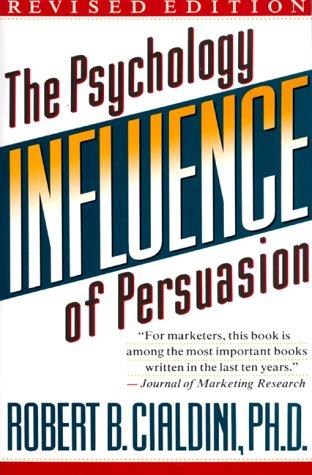
Influence, The Psychology of Persuasion
BookR. Cialdini · 1984
The founding work on the mechanisms of persuasion: six universal principles (reciprocity, consistency, social proof, authority, liking, scarcity) illustrated with striking experiments. A landmark in social psychology.

Thinking, Fast and Slow
BookD. Kahneman · 2011
The sum of Kahneman's work on decision-making: two systems of thought, one fast and intuitive, the other slow and analytical, and the long list of biases that distort our judgements. Essential to understanding others... and yourself.

Nudge
BookR. Thaler & C. Sunstein · 2008
How to steer choices without constraint, by acting on the "choice architecture". The book popularised the nudge and behavioural economics applied to public policy as much as to management.
Judgment under Uncertainty: Heuristics and Biases (Science)
ArticleA. Tversky & D. Kahneman · 1974
The founding paper (Science, 1974) that uncovered the heuristics and biases of judgement, including anchoring. The starting point of the behavioural-economics revolution.
R. Cialdini ("Influence", 1984), D. Kahneman & A. Tversky, R. Thaler, D. Ariely.
On video
Videos to picture The Loss Aversion Technique and anchor it through examples.
A verified video selection is being enriched; the search above already surfaces the best videos on the topic.
Technique map
Every technique sits within a network: what it draws on, what it combines with, where it applies, and how to defend against it.
Spot its signals, neutralise it and turn it around with the defensive playbook on this page.
See the counter-techniquesLoss aversion refers to the fact that losing 100 pounds hurts about twice as much as gaining 100 pounds feels good. In negotiation, framing a stake as a loss to be avoided ("you are going to miss out on…") mobilises far more powerfully than framing it as a gain to be secured.
Verbalise the lever: "I feel you're playing on guilt", and naming it defuses it.
Mistaking an emotional bond for an objective argument.
Our programmes turn theory into a concrete advantage.