Context 1 / 6
Sales negotiation
A seller insists heavily on the payment terms (which matter little to them), only to soften them « reluctantly » in exchange for a volume commitment which, for its part, changes everything for their margin.

🛠️ Methods & tactics
Anglo-Saxon schools of negotiation
C. Karrass, R. Dawson, H. Cohen, N. Rackham (SPIN), T. Gordon (DESC / active listening).
Full detail in the “Origin & history” section below.

Author of the library
Negotiation lecturer at KEDGE Business School
A rare threefold background serving negotiation: teaching, commercial justice and audit, backed by experience as a company director in Bordeaux.
The bogey consists in pretending that a point of no real importance to you is absolutely crucial, so that you can later « concede » it in exchange for a genuine counterpart. You artificially create a bargaining chip in order to protect what truly matters to you.
At a glance
Vigilance: moderate (4.0/10) · Preparation required: 5/10
Indicative profile: it situates the “Framing & justification” family as the Methods & tactics school practises it, not this technique taken in isolation. Techniques from the same family and school therefore share the same profile. NEGOCOACH editorial rating out of 10, non-experimental · the higher the “relational risk” value, the more costly the technique is to the relationship.
NEGOCOACH assessment
Tactical potential 6.3/10 (effectiveness, impact, discretion) and vigilance moderate (relational and ethical risk): two distinct readings, deliberately never merged into a single score that would reward risk. NEGOCOACH editorial rating calibrated from the “Framing & justification” family and the “Methods & tactics” school. Each criterion is rated out of 10; click to understand what it measures.
How far the technique can carry the negotiation in the intended direction when it is well executed.
Strength of the effect produced on the counterpart's perceptions, emotions and decisions.
How hard it is for the other party to notice the technique is being used. A high value = very discreet.
The information, analysis and rehearsal required upfront to use it effectively.
Potential cost to the relationship and to trust if the technique is spotted, refused or fails. A high value = riskier.
Moral acceptability: fairness, transparency and respect for the counterpart's autonomy. A high value = more defensible.
School grounded in research and field practice
The school this technique stems from combines academic work with long field practice. This indicator qualifies the school, not this technique taken in isolation.
Indicative NEGOCOACH editorial rating, for teaching purposes. For “Relational risk”, a high value signals a cost to the relationship, not a quality.
The « bogey » was formalised by the American negotiation theorists of the 1960s and 1970s, notably Chester Karrass, a pioneer of corporate negotiation training with Give and Take, and Herb Cohen. Their insight: in any negotiation, information about each party's real priorities is asymmetrical, and that asymmetry can be manufactured. By overplaying attachment to a secondary point, you equip yourself with a spectacular yet painless concession. The technique illustrates a founding principle of modern negotiation: what costs one party little may be worth a great deal to the other, and trading these differences creates value.
A great classic of strategic bargaining, the technique rests on information asymmetry: the other side is unaware of your real priorities. By overplaying attachment to a detail, you engineer a spectacular yet painless concession, which you then trade for a genuinely decisive advantage.
Application by context
A seller insists heavily on the payment terms (which matter little to them), only to soften them « reluctantly » in exchange for a volume commitment which, for its part, changes everything for their margin.
Management pretends to be dead set on a secondary working-hours clause, then gives it up with great fanfare in order to obtain in return the wage restraint it was really aiming for.
A negotiator forcefully demands a symbolic point of no consequence, so as to be able to abandon it visibly and wring out in exchange the real concession they were after.
A party dramatises its opposition to a minor measure, then « sacrifices » it in the media in order to win its case on the central point of the agreement.
A buyer turns taking over the furniture into a feigned sticking point, then generously drops it in order to secure a genuine reduction in price.
In a division of assets, one party fights tooth and nail over an object of no sentimental value to them, in order to then give it up for an asset that really matters.
Counter-techniques
Negotiation is also played on defence. Here is how to recognise this technique when it is used against you, and turn it around.
The signals that give it away
The counters that defuse it
Turn it into an advantage
Impose your own frame of reference before the other side sets theirs.
Accepting the implicit frame without naming it.
The bogey manufactures material for concession and protects your essential interests while giving the other side the feeling of having won. Its danger: if the bluff is uncovered, credibility collapses; the other party may also « accept » your bogey, trapping you at your own game.
To be used when your real priorities differ markedly from what the other side imagines, and when you need a bargaining chip. To be avoided when facing an interlocutor who knows your interests well, or in a relationship demanding total transparency.
Commercial · The lead-time clause one 'sacrifices': A buyer wants above all to obtain an 8% discount on a supply contract. At the start of the negotiation, they insist at length and firmly on a 48-hour delivery lead time, presented as a non-negotiable requirement from their logistics department, whereas their stock levels in fact leave them ample margin. After several tense exchanges over this lead time, they finally 'concede' a 72-hour lead time with reluctance. The seller, relieved to have preserved their industrial constraint and feeling indebted, grants the price discount in return, which had been the buyer's true objective from the outset.
Everyday life · The colour of the car: A buyer of a second-hand vehicle appears very preoccupied by a minor paintwork defect, keeps coming back to it and threatens to walk away from the purchase on that account. The seller, convinced this is the sticking point, offers a touch-up or a small gesture on the paintwork. The buyer 'agrees to let the defect go' on condition of obtaining in exchange a reduction in price or the addition of a set of new tyres, their real objective, which they had never put forward.
The thing must be named exactly: the bogey does not consist in keeping your priorities quiet, it consists in simulating a false one. The distinction is decisive, for reticence is legitimate whereas simulation is not. You are in no way obliged to reveal what matters to you, and information asymmetry is the ordinary stuff of any negotiation. But overplaying attachment to a point you do not care about is to manufacture worthless currency and have it paid for in real currency: the other side believes they are buying a painful concession, they are buying nothing, and their sense of having negotiated well rests on a piece of theatre. A practical limit tempers the matter and deserves to be known: the bogey frequently backfires. By dint of defending an unimportant point, you expose yourself to the other side granting it straight away in order to lock down what truly matters, and you end up having won exactly what you did not want. Keeping your priorities quiet is reticence; simulating attachment in order to sell a hollow concession is the forging of false currency.
Quick exercise
Answer in your head, then reveal the solution. Memory is built through active recall.
Frequently asked questions
The bogey consists in pretending that a point of no real importance to you is absolutely crucial, so that you can later « concede » it in exchange for a genuine counterpart. You artificially create a bargaining chip in order to protect what truly matters to you.
It sits on the line: effective, but it can tip into manipulation if it exploits an information asymmetry. Use it with measure and without deliberate deceit.
Accepting the implicit frame without naming it. The right reflex: reframe with another reference.
NEGOCOACH does not assess the experimental validation of this technique in isolation. What we document is the grounding of its source school (Methods & tactics): school grounded in research and field practice. Full detail is in the "At a glance" section of this page.
Practise with AI
Copy, paste into your assistant, replace the [brackets]. Works with ChatGPT, Claude, Gemini, Mistral, Perplexity.
Build your plan before the meeting
You are an expert negotiation coach. Help me prepare to use the "The False Stake Technique" technique in the following situation: [describe your situation]. Give me: the conditions for success, a 3-step script, my counterpart's likely objections and how to answer them.
Rehearse against an AI counterpart
Play the role of my counterpart in a negotiation. I am going to test the "The False Stake Technique" technique. React realistically and with resistance, do not give in too quickly, then at the end analyse my performance and suggest 3 concrete improvements.
Analyse a past negotiation
Here is how my negotiation went: [paste the exchanges]. Analyse whether the "The False Stake Technique" technique was used well, what worked, the mistakes made, and spell out precisely what I could have done better.
References
Founding works of the 🛠️ Methods & tactics school this technique belongs to.
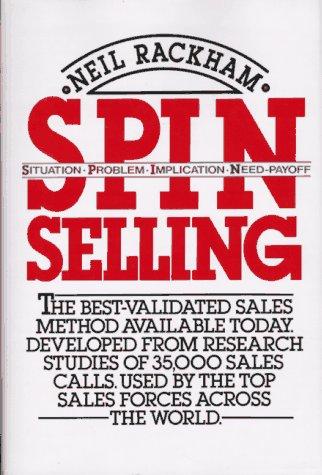
SPIN Selling
BookN. Rackham · 1988
Grounded in the analysis of thousands of sales calls, the SPIN method structures customer discovery through four types of question (Situation, Problem, Implication, Need-payoff) for complex sales.

The Negotiating Game
BookC. L. Karrass · 1970
A pragmatic classic of business negotiation: tactics, power balance and preparation. Karrass sums up his motto, you get what you negotiate, not what you deserve.

Secrets of Power Negotiating
BookR. Dawson · 1987
An arsenal of opening, middle and closing "gambits" to gain the upper hand in commercial negotiation, explained step by step.
C. Karrass, R. Dawson, H. Cohen, N. Rackham (SPIN), T. Gordon (DESC / active listening).
On video
Videos to picture The False Stake Technique and anchor it through examples.
A verified video selection is being enriched; the search above already surfaces the best videos on the topic.
Technique map
Every technique sits within a network: what it draws on, what it combines with, where it applies, and how to defend against it.
Spot its signals, neutralise it and turn it around with the defensive playbook on this page.
See the counter-techniquesThe bogey consists in pretending that a point of no real importance to you is absolutely crucial, so that you can later « concede » it in exchange for a genuine counterpart. You artificially create a bargaining chip in order to protect what truly matters to you.
Impose your own frame of reference before the other side sets theirs.
Accepting the implicit frame without naming it.
Our programmes turn theory into a concrete advantage.