
NEGOCOACH
211
Origin : Cognitive science

🧠 Cognitive science

Behavioural economics & social psychology

R. Cialdini ("Influence", 1984), D. Kahneman & A. Tversky, R. Thaler, D. Ariely.

Full detail in the “Origin & history” section below.

211

The Status Quo Bias

Exploitable cognitive biases Technique 211 / 360
Alexandre Baumberger

Author of the library

Alexandre Baumberger

Negotiation lecturer at KEDGE Business School

A rare threefold background serving negotiation: teaching, commercial justice and audit, backed by experience as a company director in Bordeaux.

  • Teaching, KEDGE Business School Negotiation lecturer since 2014 (12 years).
  • Commercial justice, Commercial Court Judge from 2018 to 2026: litigation, then insolvency proceedings.
  • Audit & advisory, over 20 years Tax, employment and financial audit in major firms, for large groups.
In brief

Status quo bias is the irrational preference for the existing state of affairs: when the advantage is equal, we choose to change nothing. Inaction feels safer than change, even when change would be beneficial. Described by Samuelson and Zeckhauseri, it turns the default option into a considerable force in negotiation.

Reading level

At a glance

Its family profile at a glance

Effectiveness Psychologicalimpact Discretion Preparation Relationalrisk Ethics
8.0 / 10 Tactical potential

Vigilance: high (6.0/10) · Preparation required: 5/10

Grounding in the source school School grounded in experimental research

Indicative profile: it situates the “Exploitable cognitive biases” family as the Cognitive science school practises it, not this technique taken in isolation. Techniques from the same family and school therefore share the same profile. NEGOCOACH editorial rating out of 10, non-experimental · the higher the “relational risk” value, the more costly the technique is to the relationship.

NEGOCOACH assessment

How to read this rating

Tactical potential 8.0/10 (effectiveness, impact, discretion) and vigilance high (relational and ethical risk): two distinct readings, deliberately never merged into a single score that would reward risk. NEGOCOACH editorial rating calibrated from the “Exploitable cognitive biases” family and the “Cognitive science” school. Each criterion is rated out of 10; click to understand what it measures.

  • Effectiveness 8/10 · Very high

    How far the technique can carry the negotiation in the intended direction when it is well executed.

  • Psychological impact 10/10 · Very high

    Strength of the effect produced on the counterpart's perceptions, emotions and decisions.

  • Discretion 6/10 · High

    How hard it is for the other party to notice the technique is being used. A high value = very discreet.

  • Preparation 5/10 · Moderate

    The information, analysis and rehearsal required upfront to use it effectively.

  • Relational risk 5/10 · Moderate

    Potential cost to the relationship and to trust if the technique is spotted, refused or fails. A high value = riskier.

  • Ethics 4/10 · Moderate

    Moral acceptability: fairness, transparency and respect for the counterpart's autonomy. A high value = more defensible.

Level of evidence

School grounded in experimental research

The school this technique stems from is grounded in replicated, peer-reviewed experimental work. This indicator qualifies the school, not the experimental validation of this technique taken in isolation.

Indicative NEGOCOACH editorial rating, for teaching purposes. For “Relational risk”, a high value signals a cost to the relationship, not a quality.

Status Quo at a Glance


Origin & history

The bias was formalised in 1988 by William Samuelson and Richard Zeckhauser in the Journal of Risk and Uncertainty, drawing on experiments showing that individuals overwhelmingly stick with the starting option. It feeds on loss aversion and the endowment effect, and underpins much of the behavioural economics of default choicesi popularised by Thaler and Sunstein.


Definition and principle

The status quo acts as a privileged reference point: any departure is perceived as a risk, and regret over a failed change weighs more heavily than regret over an opportunity missed through inertia. It grows stronger with the complexity of the choice, with uncertainty and with the number of options. In negotiation it cuts both ways: it makes it hard to shift the other party from an established position, but it also lets you defend the existing order, or make one option the "default solution" that prevails without ever really being chosen.


Concrete examples of application

Application by context

The same technique, across every negotiation settings

Context 1 / 8

Sales negotiation

A SaaS vendor sets up automatic renewal and pre-ticks the premium option by default. Most customers, out of inertia, change nothing: renewal and the higher tier become the path that requires no active decision.

How to apply it

Make the desired offer the default option (renewal, recommended plan pre-selected); keep change possible but slightly more effortful.

Strengths

Maximises retention and average basket without argument; inertia works for you.

Weaknesses

Defaults deemed abusive expose you to sanction (consumer law) and to distrust.
Context 2 / 8

Procurement negotiation

A buyer renews the same supplier every year "because it works", without putting the contract back out to tender. The supplier takes advantage of this to let its prices drift, knowing that the effort of switching deters its client.

How to apply it

Impose a systematic periodic re-tendering on yourself; frame keeping the supplier as an active decision to be justified, not as the comfortable default.

Strengths

Recovers the margins lost to inertia and restores a healthy balance of power.

Weaknesses

Switching has a real cost (transition, learning) that must be factored in, on pain of over-correcting.

Context 3 / 8

Labour negotiation

Faced with a proposed reorganisation, employees prefer "the current system, which we know" even if it is imperfect. To break the deadlock, management presents the change as a simple evolution of the existing order rather than a rupture, reducing the fear of losing familiar bearings.

How to apply it

Minimise the perceived rupture: present the new arrangement as an extension of the existing one, introduce it in reversible steps to lower the psychological cost.

Strengths

Gets a change accepted by stripping it of its anxiety-inducing dimension.

Weaknesses

Softening the rupture too much can dilute the ambition of the transformation.

Context 4 / 8

Crisis management

In a deadlocked negotiation, one party refuses any movement, standing still seeming less risky than an uncertain agreement. The negotiator makes visible the hidden cost of the status quo (the conflict that drags on and worsens) so that inaction ceases to look like the safe option.

How to apply it

Demonstrate that doing nothing is not neutral but actively costly; quantify the ongoing deterioration of the situation for want of an agreement.

Strengths

Undermines the illusion of safety in standing still, the main obstacle in a deadlocked situation.

Weaknesses

An exhausted counterpart may prefer to endure the status quo rather than face the decision.

Context 5 / 8

Political negotiation

In a referendum or a constitutional negotiation, the "no to change" camp enjoys a structural advantage: in doubt, the voter prefers the existing order. Reformers must overcome this status quo premium with a clear demonstration of the cost of inaction.

How to apply it

To defend the existing order, cultivate uncertainty about the reform; to reform, turn the status quo into a tangible, documented risk.

Strengths

The status quo premium is a major asset for whoever defends the established order.

Weaknesses

Playing on the fear of change can entrench a situation that is objectively untenable.

Context 6 / 8

Real-estate negotiation

A landlord hesitates to renovate or sell: keeping the property "as it is" seems safer, even if inaction costs him in rental voids and depreciation. The agent quantifies this cost of standing still to trigger the decision.

How to apply it

Faced with an immobile client, make the cost of the non-choice concrete (lost rent, deterioration, taxation); conversely, to reassure, present the chosen option as the prudent continuation.

Strengths

Unlocks decisions postponed out of sheer inertia.

Weaknesses

Attachment to the property can make the cost of inaction psychologically invisible.

Context 7 / 8

Cross-cultural negotiation

Some business cultures (Japan, Korea) place a high value on continuity and the established relationship: proposing a change of partner or process there runs up against a relational status quo far stronger than in an Anglo-Saxon context, where the supplier is more readily challenged.

How to apply it

Calibrate the pressure to change to the cultural relationship with continuity; in relational cultures, frame any evolution within respect for the long-term bond rather than as a rupture.

Strengths

Avoids clashing with norms of loyalty that would make any proposal of change offensive.

Weaknesses

A culturally sacralised status quo can close the door to any innovation.

Context 8 / 8

Family negotiation

A group of siblings indefinitely postpones the decision to sell the family home: no one wants to own the change, and inaction, costly (charges, upkeep), sets in by default for want of an active choice. The status quo becomes a decision that no one has taken.

How to apply it

Name the status quo as an implicit choice that carries a real cost; set a decision deadline to stop inertia from settling the matter on everyone's behalf.

Strengths

Makes a decision endured by default visible again and reopens the possibility of acting.

Weaknesses

Forcing the decision can reignite conflicts that inertia allowed the family to avoid.


Counter-techniques

Spot and neutralise this technique

Negotiation is also played on defence. Here is how to recognise this technique when it is used against you, and turn it around.

Detect

The signals that give it away

  • An extreme first figure (anchoring)
  • A framing as loss rather than gain
  • The endowment effect ("it's already yours")

Neutralise

The counters that defuse it

  • Reject the anchor and set your own
  • Reframe the decision as a gain
  • Assess out of context, on the facts

Turn around

Turn it into an advantage

Set your own anchor first: it will structure the discussion.

The trap to avoid

Reasoning from the other side's figure.

In brief

  • Difficulty: Beginner
  • Estimated effectiveness: High
  • Time to implement: Passive, plays out over time
  • Fields of application: Subscription sales, Procurement, Labour negotiation, Politics, Real estate
  • Synonyms: Status quo bias, Inertia bias, Incumbency premium
  • Tags: status quo, default option, inertia, Samuelson, change

Strengths and Weaknesses

Status quo bias is a passive and free ally for whoever defends the existing order or sets the default option: human inertia does the work without any argument. It also sheds light on the other party's resistance to change and on how to work around it. Its limit: it works against the negotiator who wants to shift the lines, and its exploitation through abusive defaults (concealed renewal) is sanctioned both legally and ethically.


When to use this technique?

Exploit it to build loyalty, get a default option adopted or defend an established position. Combat it, by making the cost of inaction visible, when you are instead seeking to provoke a decision or a change. It is particularly decisive in complex or uncertain choices, where inertia almost always prevails.


How to recognise and counter this technique

Recognise it: you are left free to "do nothing" and the option the other party wants is pre-ticked or renewed automatically. Neutralise it: treat keeping things as they are as an active decision to be justified, and put the matter back out to tender. Turn it around: quantify the real cost of the status quo (price drift, deterioration) to turn inaction into a manifest risk.


Limits and ethics

Making an option the default is legitimate when change remains simple and transparent. The ethical, and often legal, drift appears with abusive defaults: concealed renewal, opt-out made difficult, misleading pre-ticked boxes. Consumer law regulates these practices. The rule: the default option must serve the other party's convenience, not trap their inattention.


Variants and related techniques

It draws on loss aversion and the endowment effect, and combines with regret aversion. Exploited by the nudge and by default choices (Thaler, Sunstein). A relative of the sunk cost bias. It stands opposed to "active decision" mechanisms designed precisely to neutralise inertia.


Going further

  • William Samuelson & Richard Zeckhauser, "Status Quo Bias in Decision Making", Journal of Risk and Uncertainty, 1988.
  • Richard Thaler & Cass Sunstein, Nudge: Improving Decisions About Health, Wealth, and Happiness, 2008.
  • Daniel Kahneman, Jack Knetsch & Richard Thaler, "Anomalies: The Endowment Effect, Loss Aversion, and Status Quo Bias", Journal of Economic Perspectives, 1991.

Objectives of the technique

  • Understand and exploit the other party's natural preference for the existing situation in order to steer the negotiation.
  • Position your proposal as the continuation or the securing of the status quo, rather than as an anxiety-inducing rupture.
  • Conversely, when you want to shift the other party, make keeping the status quo more costly or more risky than the change you propose.
  • Reduce the counterpart's fear of change by breaking the agreement down into small reversible steps.
  • Spot your own status quo bias to avoid refusing, out of inertia, an offer that is objectively better.

Famous cases

Sales · Automatic renewal as a bulwark: An incumbent software supplier facing a cheaper competitor plays on the customer's status quo bias: it stresses the costs and risks of migration (team training, service interruption, loss of history) rather than the price. By turning change into a source of uncertainty and staying put into the "safe" choice, it keeps the contract despite a nominally more attractive rival offer. A scenario representative of a common commercial dynamic.

Everyday life · The default option in an insurance policy: At renewal, the insurer presents the automatic rollover of the current plan as the default option, the policyholder having nothing to do to keep it. With the burden of acting (comparing, cancelling, subscribing elsewhere) falling on change, many stay by inertia on a less competitive offer. A representative illustration of the default-choice effect.


Common mistakes

  • placeholder

Scientific foundations

  • William Samuelson, Richard Zeckhauser (1988) Status Quo Bias in Decision Making Journal of Risk and Uncertainty, 1(1), 7-59, DOI: 10.1007/BF00055564
  • Daniel Kahneman, Jack L. Knetsch, Richard H. Thaler (1991) Anomalies: The Endowment Effect, Loss Aversion, and Status Quo Bias Journal of Economic Perspectives, 5(1), 193-206, DOI: 10.1257/jep.5.1.193

Quick exercise

Test yourself before answering

Answer in your head, then reveal the solution. Memory is built through active recall.

1 Quels signaux doivent vous alerter ?
  • An extreme first figure (anchoring)
  • A framing as loss rather than gain
  • The endowment effect ("it's already yours")
2 Quelles parades appliquer ?
  • Reject the anchor and set your own
  • Reframe the decision as a gain
  • Assess out of context, on the facts

Frequently asked questions

The questions we get most

What is the "The Status Quo Bias" technique?

Status quo bias is the irrational preference for the existing state of affairs: when the advantage is equal, we choose to change nothing. Inaction feels safer than change, even when change would be beneficial. Described by Samuelson and Zeckhauseri, it turns the default option into a considerable force in negotiation.

Is the "The Status Quo Bias" technique ethical?

It sits on the line: effective, but it can tip into manipulation if it exploits an information asymmetry. Use it with measure and without deliberate deceit.

How do you defend against "The Status Quo Bias"?

Reasoning from the other side's figure. The right reflex: reject the anchor and set your own.

What is the "The Status Quo Bias" technique based on?

NEGOCOACH does not assess the experimental validation of this technique in isolation. What we document is the grounding of its source school (Cognitive science): school grounded in experimental research. Full detail is in the "At a glance" section of this page.

Practise with AI

Three ready-to-use prompts

Copy, paste into your assistant, replace the [brackets]. Works with ChatGPT, Claude, Gemini, Mistral, Perplexity.

Prepare

Build your plan before the meeting

You are an expert negotiation coach. Help me prepare to use the "The Status Quo Bias" technique in the following situation: [describe your situation]. Give me: the conditions for success, a 3-step script, my counterpart's likely objections and how to answer them.

Simulate

Rehearse against an AI counterpart

Play the role of my counterpart in a negotiation. I am going to test the "The Status Quo Bias" technique. React realistically and with resistance, do not give in too quickly, then at the end analyse my performance and suggest 3 concrete improvements.

Debrief

Analyse a past negotiation

Here is how my negotiation went: [paste the exchanges]. Analyse whether the "The Status Quo Bias" technique was used well, what worked, the mistakes made, and spell out precisely what I could have done better.

References

Bibliography & credible sources

Founding works of the 🧠 Cognitive science school this technique belongs to.

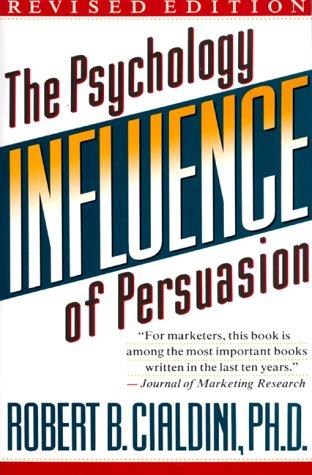
  • Cover: Influence, The Psychology of Persuasion

    Influence, The Psychology of Persuasion

    Book

    R. Cialdini · 1984

    The founding work on the mechanisms of persuasion: six universal principles (reciprocity, consistency, social proof, authority, liking, scarcity) illustrated with striking experiments. A landmark in social psychology.

  • Cover: Thinking, Fast and Slow

    Thinking, Fast and Slow

    Book

    D. Kahneman · 2011

    The sum of Kahneman's work on decision-making: two systems of thought, one fast and intuitive, the other slow and analytical, and the long list of biases that distort our judgements. Essential to understanding others... and yourself.

  • Cover: Nudge

    Nudge

    Book

    R. Thaler & C. Sunstein · 2008

    How to steer choices without constraint, by acting on the "choice architecture". The book popularised the nudge and behavioural economics applied to public policy as much as to management.

  • Judgment under Uncertainty: Heuristics and Biases (Science)

    Article

    A. Tversky & D. Kahneman · 1974

    The founding paper (Science, 1974) that uncovered the heuristics and biases of judgement, including anchoring. The starting point of the behavioural-economics revolution.

R. Cialdini ("Influence", 1984), D. Kahneman & A. Tversky, R. Thaler, D. Ariely.

On video

See the technique in action

Videos to picture The Status Quo Bias and anchor it through examples.

Technique map

Where this technique sits

Every technique sits within a network: what it draws on, what it combines with, where it applies, and how to defend against it.

Levers engaged

biases & emotions

Countered by

Spot its signals, neutralise it and turn it around with the defensive playbook on this page.

See the counter-techniques

Key takeaways

  • En une phrase

    Status quo bias is the irrational preference for the existing state of affairs: when the advantage is equal, we choose to change nothing. Inaction feels safer than change, even when change would be beneficial. Described by Samuelson and Zeckhauseri, it turns the default option into a considerable force in negotiation.

  • The right reflex

    Set your own anchor first: it will structure the discussion.

  • Never do this

    Reasoning from the other side's figure.

8.0/10 tactical potential High vigilance School grounded in experimental research

Master this technique in real situations?

Our programmes turn theory into a concrete advantage.

Explore our programmes
Call Book a call