
NEGOCOACH
316
Origin : Sales & commercial methods

💼 Sales & commercial methods

B2B sales methods

Structured sales methods: SPIN (N. Rackham), The Challenger Sale (M. Dixon & B. Adamson), Solution Selling (M. Bosworth), MEDDIC, Sandler, SNAP (J. Konrath).

Full detail in the “Origin & history” section below.

316

Gap Selling

Sales & commercial methods Technique 316 / 360
Alexandre Baumberger

Author of the library

Alexandre Baumberger

Negotiation lecturer at KEDGE Business School

A rare threefold background serving negotiation: teaching, commercial justice and audit, backed by experience as a company director in Bordeaux.

  • Teaching, KEDGE Business School Negotiation lecturer since 2014 (12 years).
  • Commercial justice, Commercial Court Judge from 2018 to 2026: litigation, then insolvency proceedings.
  • Audit & advisory, over 20 years Tax, employment and financial audit in major firms, for large groups.
In brief

Gap Selling is a “problem-centric” sales method whereby you no longer sell a product but rather the gap between the customer's current state and the future state they desire. The seller becomes a diagnostician: they surface the present situation and its quantified consequences, then the desired state, and make the distance between the two tangible and costly enough to justify change. The wider, more quantified and more painful the gap, the greater the perceived value of the solution, and therefore the greater the customer's willingness to negotiate favourably. Applied to negotiation, this approach shifts the debate away from price and towards the value of the transformation achieved.

Reading level

At a glance

Its family profile at a glance

Effectiveness Psychologicalimpact Discretion Preparation Relationalrisk Ethics
7.0 / 10 Tactical potential

Vigilance: moderate (4.5/10) · Preparation required: 7/10

Grounding in the source school Documented school

Indicative profile: it situates the “Sales & commercial methods” family as the Sales & commercial methods school practises it, not this technique taken in isolation. Techniques from the same family and school therefore share the same profile. NEGOCOACH editorial rating out of 10, non-experimental · the higher the “relational risk” value, the more costly the technique is to the relationship.

NEGOCOACH assessment

How to read this rating

Tactical potential 7.0/10 (effectiveness, impact, discretion) and vigilance moderate (relational and ethical risk): two distinct readings, deliberately never merged into a single score that would reward risk. NEGOCOACH editorial rating calibrated from the “Sales & commercial methods” family and the “Sales & commercial methods” school. Each criterion is rated out of 10; click to understand what it measures.

  • Effectiveness 8/10 · Very high

    How far the technique can carry the negotiation in the intended direction when it is well executed.

  • Psychological impact 7/10 · High

    Strength of the effect produced on the counterpart's perceptions, emotions and decisions.

  • Discretion 6/10 · High

    How hard it is for the other party to notice the technique is being used. A high value = very discreet.

  • Preparation 7/10 · High

    The information, analysis and rehearsal required upfront to use it effectively.

  • Relational risk 4/10 · Moderate

    Potential cost to the relationship and to trust if the technique is spotted, refused or fails. A high value = riskier.

  • Ethics 6/10 · High

    Moral acceptability: fairness, transparency and respect for the counterpart's autonomy. A high value = more defensible.

Level of evidence

Documented school

The school this technique stems from is documented by recognised work and established practice, without experimental consensus. This indicator qualifies the school, not this technique taken in isolation.

Indicative NEGOCOACH editorial rating, for teaching purposes. For “Relational risk”, a high value signals a cost to the relationship, not a quality.

Gap Selling in brief


Origin and history

The method was formalised by Keenan (Jim Keenan), founder and CEO of A Sales Guy Consulting / A Sales Growth Company, in his book “Gap Selling: Getting the Customer to Yes” (A Sales Guy Publishing, 2018). It sits within the lineage of “problem-centric selling” and extends the approaches of consultative selling and value selling (Michael Bosworth's Solution Selling, Neil Rackham's SPIN Selling), taking to its logical conclusion the idea that diagnosing the problem takes precedence over presenting the solution.


Definition and principle

Gap Selling is a structured approach that articulates three elements: (1) the “current state”, the customer's present situation, their technical problems and their business and emotional impact; (2) the “future state”, the desired, measurable state the customer is seeking to reach; (3) the “gap”, the distance between the two, which constitutes the true value being sold. In practical terms, the seller conducts an in-depth diagnosis through questioning (root cause), quantifies the cost of inaction (“cost of the problem”), gets the customer to articulate the desired future state, then positions their solution as the bridge that closes the gap. The size and the quantified nature of the gap determine the urgency, the budget that can be mobilised and the negotiating power.


Objectives of the technique

  • Shift the conversation away from the product and price towards the value of the transformation (current state future state)
  • Make the customer aware of the scale, cost and urgency of their problem, which are often underestimated
  • Objectify and quantify the gap in order to justify the investment and neutralise the price objection
  • Establish the seller's credibility as an expert diagnostician rather than a persuader
  • Strengthen one's negotiating position by anchoring the discussion on the value created, not on the cost incurred

Concrete examples of application

Application by context

The same technique, across every negotiation settings

Context 1 / 8

Sales negotiation

Instead of presenting the software's features, the salesperson gets the prospect to quantify what their current manual processes are really costing them (hours lost, errors, missed sales) and compares this with the target state, then sells the gap thus made tangible.
Context 2 / 8

Procurement negotiation

The buyer reverses the logic: they diagnose the supplier's current state (overcapacity, dormant stock, cost of not renewing the contract) and the gap with their desired situation, in order to show that closing this gap on the seller's side is worth a price concession.

Context 3 / 8

Labour negotiation

In labour negotiation, management or the employee representatives objectify the gap between the current social climate (turnover, absenteeism, disputes) and the target state (engagement, productivity), so as to base the agreement on the value of a settled climate rather than on the cost of the measures alone.

Context 4 / 8

Crisis management

Faced with a crisis, the negotiator diagnoses the present state (escalation, ongoing losses, damaged reputation) and projects the stabilised future state, making the cost of inertia so high that the other party agrees to move towards resolving the crisis.

Context 5 / 8

Political negotiation

A political leader builds their negotiating case by documenting the gap between the current situation of a territory or an issue and the promised state, making this measurable gap the lever that legitimises the proposed reform or compromise.

Context 6 / 8

Real-estate negotiation

The seller of a property highlights the gap between the buyer's current situation (unsuitable home, rent paid to no avail, long commutes) and the life they envisage, transforming the negotiation over price per square metre into a negotiation over the value of the change of life.

Context 7 / 8

Cross-cultural negotiation

In a cross-cultural context, the negotiator first invests in a shared diagnosis of the present state and the state desired by each party, since misunderstandings often stem from divergent implicit future states, so that the gap is defined by mutual agreement before any proposal is made.

Context 8 / 8

Family negotiation

During a family dispute (inheritance, organisation, joint project), each person is invited to express their actual lived situation and what they truly want to achieve, and the negotiation then centres on narrowing the gap rather than on entrenched positions.


Counter-techniques

Spot and neutralise this technique

Negotiation is also played on defence. Here is how to recognise this technique when it is used against you, and turn it around.

Detect

The signals that give it away

  • A sudden imbalance in the exchange
  • Pressure to decide quickly
  • An argument you cannot verify

Neutralise

The counters that defuse it

  • Slow down and reformulate
  • Ask for facts and sources
  • Concede nothing without a counterpart

Turn around

Turn it into an advantage

Name the manoeuvre: said out loud, a technique loses most of its power.

The trap to avoid

Reacting emotionally instead of coming back to the facts.

Strengths and weaknesses

Strengths: it refocuses the negotiation on value rather than price, which reduces the pressure on margins and the price objection; it creates legitimate urgency by objectifying the cost of inaction; it positions the negotiator as a credible, differentiating expert; it relies on quantified data, which holds up well before a rational decision-maker; it strengthens the quality of the relationship through a sincere diagnosis of needs. Weaknesses: it is very demanding in terms of time and questioning skill; it is ineffective if the customer refuses to share their information or has no real gap; it can slide into manipulation if the gap is artificially dramatised; it assumes an interlocutor with the authority and data to objectify the gap; it is ill-suited to low-stakes transactional sales where the diagnostic effort is not worthwhile.


When to use this technique

Particularly effective in complex, high-stakes negotiations, long cycles, B2B solution sales, and any situation where the decision-maker can be led to quantify their problems and where value (rather than price) is the real terrain of discussion. It is favourable when the interlocutor has the data and the authority to objectify the current state and the future state, and when the negotiator has the time to conduct a serious diagnosis. It is less relevant for impulse purchases, undifferentiated commodities or purely distributive negotiations over a single price.


Famous cases

Sales · Selling the gap rather than the quote, A management-software vendor faces an industrial prospect fixated on price, deemed “too expensive” against a lower-cost competitor. Rather than matching the discount, the salesperson applies Gap Selling: through a series of diagnostic questions, they get the operations director to quantify the real cost of the current situation, manual re-keying, stockouts, lost orders, amounting to an annual shortfall far greater than the price difference between the two offers. The desired future state (real-time traceability, zero stockouts) is articulated and quantified. The negotiation then shifts from the price of the licence to the value of the gap closed, and the prospect accepts the initial offer, the discount ceasing to be the topic. This sequence illustrates the mechanism described by Keenan; it is a representative scenario and not a documented named case.

Business · A diagnosis that turns the price objection around, In an outsourcing negotiation, the buyer opens by announcing a capped budget well below the offer. The provider, instead of defending their price line by line, reconstructs the current state with the buying committee (unresolved incidents, hidden costs of in-house management, user dissatisfaction) and the expected target state. The gap, once framed in euros and in risk, far exceeds the additional cost of the premium offer; the initial budget is revised because it did not cover the true cost of the problem. A representative scenario illustrating the pricevalue shift characteristic of Gap Selling, without attribution to a named company.


Common mistakes

  • Skipping the diagnosis to go straight to presenting the solution, which strips the method of its substance
  • Settling for a superficial current state without quantifying its business and emotional impact, leaving the gap too abstract to create urgency
  • Leaving the future state vague or unmeasurable, so that the gap cannot be objectified
  • Exaggerating or artificially dramatising the problem, which destroys credibility and verges on manipulation
  • Asking closed or leading questions instead of genuine discovery questions, cutting off access to the information needed for the diagnosis

How to recognise and counter this technique

To recognise the technique: your interlocutor asks a great many diagnostic questions, seeks to get you to quantify your current problems and to project an ideal future state even before mentioning their offer, a sign that they are building a gap to anchor value. To defend yourself without shutting down: accept the diagnosis (it is often useful) but keep control of the figures you disclose, check the assumptions behind the cost-of-inaction calculation yourself, distinguish the real problem from the amplified problem, and remember that the urgency invoked must be substantiated. Counter-questioning on the reliability of the data and on the alternatives (including the status quo) helps to deflate an exaggerated gap and bring the discussion back to a shared, honest assessment of value.


Limits and ethics

Limits: the method assumes the existence of a real and significant gap; without a material problem, it does not work or pushes one to fabricate one. It requires data and an interlocutor willing to share it, conditions rarely met in a distrustful or distributive negotiation. Ethical issues: the line between making a problem visible and unduly amplifying it is thin; exploiting the emotional charge of the “current state” to force a decision amounts to manipulation. Responsible use requires grounding the gap in verifiable facts, leaving the status quo as a legitimate option, and aiming at value genuinely created for the customer, not merely a closing lever.


Variants and related techniques

Related techniques and approaches: Neil Rackham's SPIN Selling (Situation-Problem-Implication-Need-payoff questions, a conceptual matrix close to the Gap diagnosis); Michael Bosworth's Solution Selling; the Challenger Sale (Dixon & Adamson), which “teaches, tailors and takes control”; value selling; implication questioning and the “cost of inaction”; and, in negotiation, reframing around interests rather than positions (Fisher & Ury) and anchoring on the value created.


Further reading

  • Keenan, Gap Selling: Getting the Customer to Yes (A Sales Guy Publishing, 2018), the reference work
  • Blog and podcast of A Sales Growth Company (salesgrowth.com), articles and videos by Keenan on implementing Gap Selling
  • Neil Rackham, SPIN Selling (1988), for the questioning matrix to which Gap Selling is close
  • Matthew Dixon & Brent Adamson, The Challenger Sale (2011), a complementary approach based on challenging the customer

Scientific foundations

  • Keenan (Jim Keenan) (2018) Gap Selling: Getting the Customer to Yes: How Problem-Centric Selling Increases Sales by Changing Everything You Know About Relationships, Overcoming Objections, Closing and Price A Sales Guy Publishing
  • Rackham, Neil (1988) SPIN Selling McGraw-Hill
  • Dixon, Matthew & Adamson, Brent (2011) The Challenger Sale: Taking Control of the Customer Conversation Portfolio / Penguin

Quick exercise

Test yourself before answering

Answer in your head, then reveal the solution. Memory is built through active recall.

1 Quels signaux doivent vous alerter ?
  • A sudden imbalance in the exchange
  • Pressure to decide quickly
  • An argument you cannot verify
2 Quelles parades appliquer ?
  • Slow down and reformulate
  • Ask for facts and sources
  • Concede nothing without a counterpart

Frequently asked questions

The questions we get most

What is the "Gap Selling" technique?

Gap Selling is a “problem-centric” sales method whereby you no longer sell a product but rather the gap between the customer's current state and the future state they desire. The seller becomes a diagnostician: they surface the present situation and its quantified consequences, then the desired state, and make the distance between the two tangible and costly enough to justify change. The wider, more quantified and more painful the gap, the greater the perceived value of the solution, and therefore the greater the customer's willingness to negotiate favourably. Applied to negotiation, this approach shifts the debate away from price and towards the value of the transformation achieved.

Is the "Gap Selling" technique ethical?

It sits on the line: effective, but it can tip into manipulation if it exploits an information asymmetry. Use it with measure and without deliberate deceit.

How do you defend against "Gap Selling"?

Reacting emotionally instead of coming back to the facts. The right reflex: slow down and reformulate.

What is the "Gap Selling" technique based on?

NEGOCOACH does not assess the experimental validation of this technique in isolation. What we document is the grounding of its source school (Sales & commercial methods): documented school. Full detail is in the "At a glance" section of this page.

Practise with AI

Three ready-to-use prompts

Copy, paste into your assistant, replace the [brackets]. Works with ChatGPT, Claude, Gemini, Mistral, Perplexity.

Prepare

Build your plan before the meeting

You are an expert negotiation coach. Help me prepare to use the "Gap Selling" technique in the following situation: [describe your situation]. Give me: the conditions for success, a 3-step script, my counterpart's likely objections and how to answer them.

Simulate

Rehearse against an AI counterpart

Play the role of my counterpart in a negotiation. I am going to test the "Gap Selling" technique. React realistically and with resistance, do not give in too quickly, then at the end analyse my performance and suggest 3 concrete improvements.

Debrief

Analyse a past negotiation

Here is how my negotiation went: [paste the exchanges]. Analyse whether the "Gap Selling" technique was used well, what worked, the mistakes made, and spell out precisely what I could have done better.

References

Bibliography & credible sources

Founding works of the 💼 Sales & commercial methods school this technique belongs to.

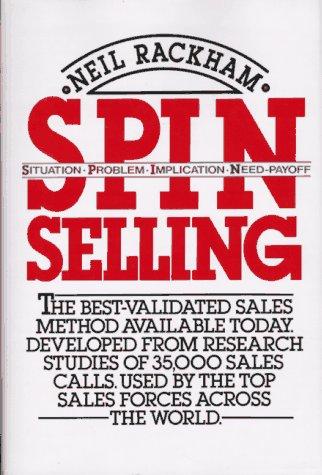
  • Cover: SPIN Selling

    SPIN Selling

    Book

    N. Rackham · 1988

    Grounded in the analysis of thousands of sales calls, the SPIN method structures customer discovery through four types of question (Situation, Problem, Implication, Need-payoff) for complex sales.

  • The Challenger Sale

    Book

    M. Dixon & B. Adamson · 2011

  • Solution Selling

    Book

    M. Bosworth · 1994

  • SNAP Selling

    Book

    J. Konrath · 2010

Structured sales methods: SPIN (N. Rackham), The Challenger Sale (M. Dixon & B. Adamson), Solution Selling (M. Bosworth), MEDDIC, Sandler, SNAP (J. Konrath).

On video

See the technique in action

Videos to picture Gap Selling and anchor it through examples.

A verified video selection is being enriched; the search above already surfaces the best videos on the topic.

Technique map

Where this technique sits

Every technique sits within a network: what it draws on, what it combines with, where it applies, and how to defend against it.

Levers engaged

biases & emotions

Countered by

Spot its signals, neutralise it and turn it around with the defensive playbook on this page.

See the counter-techniques

Key takeaways

  • En une phrase

    Gap Selling is a “problem-centric” sales method whereby you no longer sell a product but rather the gap between the customer's current state and the future state they desire. The seller becomes a diagnostician: they surface the present situation and its quantified consequences, then the desired state, and make the distance between the two tangible and costly enough to justify change. The wider, more quantified and more painful the gap, the greater the perceived value of the solution, and therefore the greater the customer's willingness to negotiate favourably. Applied to negotiation, this approach shifts the debate away from price and towards the value of the transformation achieved.

  • The right reflex

    Name the manoeuvre: said out loud, a technique loses most of its power.

  • Never do this

    Reacting emotionally instead of coming back to the facts.

7.0/10 tactical potential Moderate vigilance Documented school

Master this technique in real situations?

Our programmes turn theory into a concrete advantage.

Explore our programmes
Call Book a call