
NEGOCOACH
223
Origin : Cognitive science

🧠 Cognitive science

Behavioural economics & social psychology

R. Cialdini ("Influence", 1984), D. Kahneman & A. Tversky, R. Thaler, D. Ariely.

Full detail in the “Origin & history” section below.

223

The Scarcity Effect

Social influence Technique 223 / 360
Alexandre Baumberger

Author of the library

Alexandre Baumberger

Negotiation lecturer at KEDGE Business School

A rare threefold background serving negotiation: teaching, commercial justice and audit, backed by experience as a company director in Bordeaux.

  • Teaching, KEDGE Business School Negotiation lecturer since 2014 (12 years).
  • Commercial justice, Commercial Court Judge from 2018 to 2026: litigation, then insolvency proceedings.
  • Audit & advisory, over 20 years Tax, employment and financial audit in major firms, for large groups.
In brief

The scarcity effect is the principle whereby whatever is rare, limited or about to disappear strikes us as more desirable. “Last units”, “offer valid for 24h”, “limited edition”: the restriction triggers urgency and inflates perceived value. We hate losing an opportunityi, and this fear of missing out often outweighs a rational appraisal of the good.

Reading level

At a glance

Its family profile at a glance

Effectiveness Psychologicalimpact Discretion Preparation Relationalrisk Ethics
8.0 / 10 Tactical potential

Vigilance: high (6.0/10) · Preparation required: 4/10

Grounding in the source school School grounded in experimental research

Indicative profile: it situates the “Social influence” family as the Cognitive science school practises it, not this technique taken in isolation. Techniques from the same family and school therefore share the same profile. NEGOCOACH editorial rating out of 10, non-experimental · the higher the “relational risk” value, the more costly the technique is to the relationship.

NEGOCOACH assessment

How to read this rating

Tactical potential 8.0/10 (effectiveness, impact, discretion) and vigilance high (relational and ethical risk): two distinct readings, deliberately never merged into a single score that would reward risk. NEGOCOACH editorial rating calibrated from the “Social influence” family and the “Cognitive science” school. Each criterion is rated out of 10; click to understand what it measures.

  • Effectiveness 8/10 · Very high

    How far the technique can carry the negotiation in the intended direction when it is well executed.

  • Psychological impact 9/10 · Very high

    Strength of the effect produced on the counterpart's perceptions, emotions and decisions.

  • Discretion 7/10 · High

    How hard it is for the other party to notice the technique is being used. A high value = very discreet.

  • Preparation 4/10 · Moderate

    The information, analysis and rehearsal required upfront to use it effectively.

  • Relational risk 5/10 · Moderate

    Potential cost to the relationship and to trust if the technique is spotted, refused or fails. A high value = riskier.

  • Ethics 4/10 · Moderate

    Moral acceptability: fairness, transparency and respect for the counterpart's autonomy. A high value = more defensible.

Level of evidence

School grounded in experimental research

The school this technique stems from is grounded in replicated, peer-reviewed experimental work. This indicator qualifies the school, not the experimental validation of this technique taken in isolation.

Indicative NEGOCOACH editorial rating, for teaching purposes. For “Relational risk”, a high value signals a cost to the relationship, not a quality.

Scarcity in Brief


Origin & history

Scarcity is one of the six principles of influence formalised by Robert Cialdini in Influence (1984). It draws on two well-established psychological mechanisms: Jack Brehm’s reactance theory (1966), whereby when a freedom (here, the freedom to buy) is threatened we desire it all the more, and Kahneman and Tversky’s loss aversion, according to which the pain of losing weighs more heavily than the pleasure of an equivalent gain.


Definition and principle

Scarcity operates through two channels. First, it serves as a value heuristic: what is rare is assumed to be good, precious, coveted by others. Second, it activates reactance and the fear of missing out (FOMO): the prospect of no longer being able to obtain the thing creates an urgency that short-circuits deliberation. Scarcity is most effective when it is recent (a good that is becoming rare) and when competition with other buyers is perceptible.


Concrete examples of application

Application by context

The same technique, across every negotiation settings

Context 1 / 8

Sales negotiation

An e-commerce site displays “Only 2 left in stock” and “8 people are viewing this item”. Seized by urgency and the fear of seeing it go, the customer completes the purchase without taking the time to compare elsewhere.

How to apply it

Signal a credible limited availability (stock, deadline, places) to trigger the decision; urgency shortens deliberation.

Strengths

A powerful conversion accelerator; reduces abandonment and procrastination.

Weaknesses

Repeated artificial scarcity = total loss of credibility and lasting customer distrust.
Context 2 / 8

Procurement negotiation

A professional buyer is told that “the terms expire on Friday” and that “other clients are after the same lot”. The scarcity pressure is designed to make them sign quickly, before any calm assessment.

How to apply it

Faced with declared scarcity, check whether it is real (does the stock actually exist? is the deadline firm?) and refuse to let urgency dictate the decision.

Strengths

Exposing false scarcity restores bargaining power and time to think.

Weaknesses

The felt urgency persists even when you doubt the announced scarcity.

Context 3 / 8

Labour negotiation

A manager offers only a single sought-after post to a pool of talent. The scarcity of the opportunity intensifies the commitment of internal candidates, who redouble their efforts to secure it.

How to apply it

An opportunity made scarce (promotion, exceptional assignment) increases its perceived value and the commitment of those who aim for it.

Strengths

Stimulates effort and mobilisation around a limited prize.

Weaknesses

Creates frustration and damaging competition if the scarcity appears arbitrary or unfair.

Context 4 / 8

Crisis management

During an announced shortage (fuel, foodstuffs), the fear of running out triggers panic buying: everyone rushes to stockpile, which worsens the real scarcity in a self-reinforcing spiral.

How to apply it

Be aware that announcing a shortage can cause one through the rush it triggers; in crisis communication, gauge the scarcity effect before activating it unintentionally.

Strengths

Understanding the mechanism helps avoid fuelling panic through clumsy communication.

Weaknesses

Very hard to contain once the fear of missing out has taken hold collectively.

Context 5 / 8

Political negotiation

An aid measure is presented as “exceptional and limited in time” to spark support and eagerness. Its displayed scarcity heightens its appeal and pushes beneficiaries to seize it without delay.

How to apply it

The exceptional and time-limited character of a scheme increases its perceived value and the eagerness to take advantage of it.

Strengths

Rapidly mobilises around an opportunity presented as unique.

Weaknesses

The effect erodes if “exceptional measures” multiply and lose their singularity.

Context 6 / 8

Real-estate negotiation

An agent stresses that a property is “already attracting several offers” and “sells very fast in this sought-after area”. The perceived scarcity and competition push the buyer to move without waiting, sometimes above their initial intention.

How to apply it

Highlight the scarcity of the property and the genuine competition (offers received, tension in the sector) to accelerate and secure the purchase decision.

Strengths

Sharply shortens the decision time in a tight market.

Weaknesses

Invented competition that turns out to be false ruins trust and drives the buyer away.

Context 7 / 8

Cross-cultural negotiation

In some cultures, the scarcity argument (“limited edition”, “exclusivity”) works as a marker of prestige and status; in others, more wary of aggressive marketing, it arouses suspicion.

How to apply it

Adapt the use of scarcity to the cultural relationship to status and to commercial pressure; a powerful marker of prestige here, a turn-off elsewhere.

Strengths

A strong lever of desirability in cultures sensitive to exclusivity and status.

Weaknesses

Counterproductive in cultures that value restraint and distrust commercial urgency.

Context 8 / 8

Family negotiation

A parent announces that there is “only one slice of cake left”: at once, several children claim it, though none wanted it while it was plentiful. Scarcity alone created the desire.

How to apply it

Notice how scarcity manufactures covetousness even for something that left people indifferent; useful to understand in order to defuse pointless conflicts.

Strengths

Sheds light on dynamics of covetousness and rivalry among siblings.

Weaknesses

Stoking scarcity (“hurry up, or else…”) sustains rivalries and disputes.


Counter-techniques

Spot and neutralise this technique

Negotiation is also played on defence. Here is how to recognise this technique when it is used against you, and turn it around.

Detect

The signals that give it away

  • "Everyone does it"
  • An authority invoked to close the debate
  • A gift followed by a request (forced reciprocity)

Neutralise

The counters that defuse it

  • Check the real norm
  • Question the authority's legitimacy
  • Refuse the debt created by the gift

Turn around

Turn it into an advantage

Turn social proof around: "Actually, the best do the opposite."

The trap to avoid

Conforming for fear of being the only dissenter.

In short

  • Difficulty: Easy
  • Estimated effectiveness: Very high
  • Implementation time: Instant
  • Areas of application: Sales, Marketing, Real estate, Negotiation, Luxury
  • Synonyms: Scarcity principle, Shortage effect, FOMO (fear of missing out)
  • Tags: scarcity, urgency, Cialdini, reactance, loss aversion

Strengths and Weaknesses

The scarcity effect is one of the most powerful triggers of action: it turns hesitation into an immediate decision by activating the fear of losing. It inflates perceived value without changing the product and structures entire swathes of marketing and luxury. Its strength: acting on emotion more than on reason. Its main weakness: repeated fake scarcity lastingly destroys trust, for nothing turns sour faster than an urgency that has been unmasked.


When to use this technique?

Use it when scarcity is real and credible: limited stock, a firm deadline, genuine exclusivity. Ideal for overcoming procrastination and triggering a decision. Absolutely avoid it in a deceptive form (false “last pieces”, fake countdowns): the short-term gain is paid for with lasting distrust. Of little use against a cool, methodical and well-informed buyer.


How to recognise and counter this technique

Recognise it: you are pressed with “last units”, countdowns and talk of competition. Neutralise it: check whether the scarcity is real (stock, deadline, other buyers) and impose a non-negotiable thinking period on yourself. Turn it around: show that you have available alternatives, which cancels out the power of the other side’s urgency.


Limits and ethics

Scarcity tips into manipulation as soon as it is manufactured: fake stocks, fake deadlines, fake competition. This practice, besides being ineffective in the long run, is legally regulated (misleading commercial practices). The ethical rule: invoke only genuine restrictions. Creating artificial urgency to force an ill-considered decision is unfair, especially towards vulnerable audiences.


Variants and related techniques

One of Cialdini’s six principles, alongside social proof, authority and reciprocity. Underpinned by reactance (Brehm) and loss aversion (Kahneman). It combines with time urgency and social proof (“others are viewing it”).


Going further

  • Robert B. Cialdini, Influence: The Psychology of Persuasion, 1984.
  • Jack W. Brehm, A Theory of Psychological Reactance, 1966.
  • Daniel Kahneman & Amos Tversky, “Prospect Theory: An Analysis of Decision under Risk”, Econometrica, 1979.

Objectives of the technique

  • Increase the perceived value of an offer or a concession by signalling its limited availability in time or in quantity
  • Speed up the other party’s decision-making by curbing their tendency to stall or to multiply rounds of talks
  • Strengthen your position by making the existence of alternatives credible and tangible (other buyers, other suppliers, a window that is closing)
  • Protect a concession by presenting it as exceptional and non-repeatable, so that it does not become a low anchoring point
  • Detect and neutralise the other party’s artificial scarcity (fake urgency, fake exclusivity) so as not to decide under undue pressure

Famous cases

Sales · The pricing window that closes: A SaaS vendor offers a 20% discount to a hesitant client but makes it conditional on signing before the end of the quarter, after which the new annual price list applies. The constraint is real and verifiable (a public list to come), which turns a negotiation that was dragging on into a swift decision: the client, unwilling to lose the advantage, stops comparing endlessly and signs. Here the scarcity is not manufactured; it rests on a genuine timeline, which preserves the relationship.

Everyday life · The flat coveted by several applications: In a tight rental market, an applicant learns that another application has already been submitted for the same property. This scarcity (a single home, several applicants) prompts them to complete their file immediately and to give up negotiating certain ancillary clauses. The landlord invented nothing: the tension is structural. The example shows how objective scarcity shifts the balance of power and reduces the negotiating margin of the party in surplus.


Common mistakes

  • Manufacturing false scarcity (a fake deadline, a fake other buyer): if the bluff is discovered, trust and the whole negotiation collapse
  • Overusing the lever: repeating artificial urgencies wears out the effect and makes the negotiator look like a manipulator
  • Confusing scarcity with brute pressure: the effect works when the constraint is credible and justified, not when it is experienced as a threat
  • Submitting to the other side’s scarcity without checking it: accepting an announced urgency or exclusivity without cross-checking leads to deciding under stress and conceding too quickly
  • Making the wrong thing scarce: insisting on the scarcity of an item the other party places no value on creates no leverage

Scientific foundations

  • Robert B. Cialdini (2021) Influence: The Psychology of Persuasion (New and Expanded) Harper Business
  • Daniel Kahneman & Amos Tversky (1979) Prospect Theory: An Analysis of Decision under Risk Econometrica, 47(2), 263-291, DOI: 10.2307/1914185
  • Stephen Worchel, Jerry Lee & Akanbi Adewole (1975) Effects of supply and demand on ratings of object value Journal of Personality and Social Psychology, 32(5), 906-914, DOI: 10.1037/0022-3514.32.5.906

Quick exercise

Test yourself before answering

Answer in your head, then reveal the solution. Memory is built through active recall.

1 Quels signaux doivent vous alerter ?
  • "Everyone does it"
  • An authority invoked to close the debate
  • A gift followed by a request (forced reciprocity)
2 Quelles parades appliquer ?
  • Check the real norm
  • Question the authority's legitimacy
  • Refuse the debt created by the gift

Frequently asked questions

The questions we get most

What is the "The Scarcity Effect" technique?

The scarcity effect is the principle whereby whatever is rare, limited or about to disappear strikes us as more desirable. “Last units”, “offer valid for 24h”, “limited edition”: the restriction triggers urgency and inflates perceived value. We hate losing an opportunityi, and this fear of missing out often outweighs a rational appraisal of the good.

Is the "The Scarcity Effect" technique ethical?

It sits on the line: effective, but it can tip into manipulation if it exploits an information asymmetry. Use it with measure and without deliberate deceit.

How do you defend against "The Scarcity Effect"?

Conforming for fear of being the only dissenter. The right reflex: check the real norm.

What is the "The Scarcity Effect" technique based on?

NEGOCOACH does not assess the experimental validation of this technique in isolation. What we document is the grounding of its source school (Cognitive science): school grounded in experimental research. Full detail is in the "At a glance" section of this page.

Practise with AI

Three ready-to-use prompts

Copy, paste into your assistant, replace the [brackets]. Works with ChatGPT, Claude, Gemini, Mistral, Perplexity.

Prepare

Build your plan before the meeting

You are an expert negotiation coach. Help me prepare to use the "The Scarcity Effect" technique in the following situation: [describe your situation]. Give me: the conditions for success, a 3-step script, my counterpart's likely objections and how to answer them.

Simulate

Rehearse against an AI counterpart

Play the role of my counterpart in a negotiation. I am going to test the "The Scarcity Effect" technique. React realistically and with resistance, do not give in too quickly, then at the end analyse my performance and suggest 3 concrete improvements.

Debrief

Analyse a past negotiation

Here is how my negotiation went: [paste the exchanges]. Analyse whether the "The Scarcity Effect" technique was used well, what worked, the mistakes made, and spell out precisely what I could have done better.

References

Bibliography & credible sources

Founding works of the 🧠 Cognitive science school this technique belongs to.

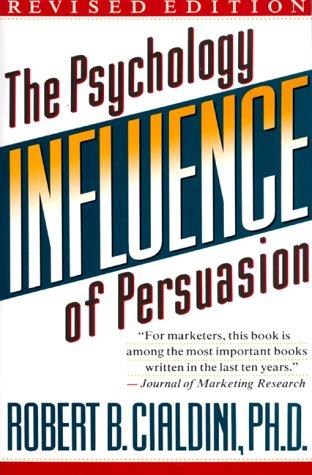
  • Cover: Influence, The Psychology of Persuasion

    Influence, The Psychology of Persuasion

    Book

    R. Cialdini · 1984

    The founding work on the mechanisms of persuasion: six universal principles (reciprocity, consistency, social proof, authority, liking, scarcity) illustrated with striking experiments. A landmark in social psychology.

  • Cover: Thinking, Fast and Slow

    Thinking, Fast and Slow

    Book

    D. Kahneman · 2011

    The sum of Kahneman's work on decision-making: two systems of thought, one fast and intuitive, the other slow and analytical, and the long list of biases that distort our judgements. Essential to understanding others... and yourself.

  • Cover: Nudge

    Nudge

    Book

    R. Thaler & C. Sunstein · 2008

    How to steer choices without constraint, by acting on the "choice architecture". The book popularised the nudge and behavioural economics applied to public policy as much as to management.

  • Judgment under Uncertainty: Heuristics and Biases (Science)

    Article

    A. Tversky & D. Kahneman · 1974

    The founding paper (Science, 1974) that uncovered the heuristics and biases of judgement, including anchoring. The starting point of the behavioural-economics revolution.

R. Cialdini ("Influence", 1984), D. Kahneman & A. Tversky, R. Thaler, D. Ariely.

On video

See the technique in action

Videos to picture The Scarcity Effect and anchor it through examples.

Technique map

Where this technique sits

Every technique sits within a network: what it draws on, what it combines with, where it applies, and how to defend against it.

Levers engaged

biases & emotions

Countered by

Spot its signals, neutralise it and turn it around with the defensive playbook on this page.

See the counter-techniques

Key takeaways

  • En une phrase

    The scarcity effect is the principle whereby whatever is rare, limited or about to disappear strikes us as more desirable. “Last units”, “offer valid for 24h”, “limited edition”: the restriction triggers urgency and inflates perceived value. We hate losing an opportunityi, and this fear of missing out often outweighs a rational appraisal of the good.

  • The right reflex

    Turn social proof around: "Actually, the best do the opposite."

  • Never do this

    Conforming for fear of being the only dissenter.

8.0/10 tactical potential High vigilance School grounded in experimental research

Master this technique in real situations?

Our programmes turn theory into a concrete advantage.

Explore our programmes
Call Book a call