Context 1 / 6
Sales negotiation
A salesperson presents three packages, one intermediate option deliberately made less advantageous, so that the premium package stands out as the best value for money.

🧠 Cognitive science
Behavioural economics & social psychology
R. Cialdini ("Influence", 1984), D. Kahneman & A. Tversky, R. Thaler, D. Ariely.
Full detail in the “Origin & history” section below.

Author of the library
Negotiation lecturer at KEDGE Business School
A rare threefold background serving negotiation: teaching, commercial justice and audit, backed by experience as a company director in Bordeaux.
The decoy effect consists of introducing a third, deliberately unattractive option to steer the choice towards the option you want to see selected. The decoy will not be chosen: it serves only as a reference point that makes another option appear obviously superior.
At a glance
Vigilance: very high (8.0/10) · Preparation required: 7/10
Indicative profile: it situates the “Perception management” family as the Cognitive science school practises it, not this technique taken in isolation. Techniques from the same family and school therefore share the same profile. NEGOCOACH editorial rating out of 10, non-experimental · the higher the “relational risk” value, the more costly the technique is to the relationship.
NEGOCOACH assessment
Tactical potential 8.7/10 (effectiveness, impact, discretion) and vigilance very high (relational and ethical risk): two distinct readings, deliberately never merged into a single score that would reward risk. NEGOCOACH editorial rating calibrated from the “Perception management” family and the “Cognitive science” school. Each criterion is rated out of 10; click to understand what it measures.
How far the technique can carry the negotiation in the intended direction when it is well executed.
Strength of the effect produced on the counterpart's perceptions, emotions and decisions.
How hard it is for the other party to notice the technique is being used. A high value = very discreet.
The information, analysis and rehearsal required upfront to use it effectively.
Potential cost to the relationship and to trust if the technique is spotted, refused or fails. A high value = riskier.
Moral acceptability: fairness, transparency and respect for the counterpart's autonomy. A high value = more defensible.
School grounded in experimental research
The school this technique stems from is grounded in replicated, peer-reviewed experimental work. This indicator qualifies the school, not the experimental validation of this technique taken in isolation.
Indicative NEGOCOACH editorial rating, for teaching purposes. For “Relational risk”, a high value signals a cost to the relationship, not a quality.
The decoy effect (also known as asymmetric dominance) was demonstrated by marketing researchers in the 1980s and later popularised by behavioural economist Dan Ariely in Predictably Irrational (2008). His now-famous example: a magazine offering a web subscription at $59, a print subscription at $125 and a web+print subscription at $125, the second option, absurd as it is, existing solely to make the third irresistible. Ariely shows that our preferences are not stable but manufactured by the context of the options presented.
The technique rests on the fact that we judge by comparison, not in absolute terms. By adding a dominated option (clearly inferior to the target but not to the others), you mechanically increase the appeal of the intended option.
Application by context
A salesperson presents three packages, one intermediate option deliberately made less advantageous, so that the premium package stands out as the best value for money.
Management puts a manifestly unfavourable option on the table alongside its target proposal, the latter then appearing reasonable by contrast.
A mediator proposes three scenarios, one of them clearly penalising, in order to make the parties converge on the desired middle scenario.
Three measures are put up for debate, one serving as a scarecrow to make the one you want adopted acceptable.
An agent shows an overpriced property before the one they actually want to sell, the latter then appearing an excellent choice by comparison.
In an arrangement, a deliberately lopsided split is raised to make the intended proposal appear the most balanced.
Counter-techniques
Negotiation is also played on defence. Here is how to recognise this technique when it is used against you, and turn it around.
The signals that give it away
The counters that defuse it
Turn it into an advantage
Calmly show that you have seen the staging: it loses all effect.
Taking appearance for reality.
The decoy effect steers the choice without coercion and appears to leave the other party entirely free. Its limits: an attentive counterpart spots the sham option and grows wary of the whole set; if poorly calibrated, the decoy may be chosen by mistake or undermine the credibility of the offer.
Useful when you present several options and want to favour one without pushing it openly. To be avoided with an analytical decision-maker or in a setting where transparency of the options is expected.
Commercial · The three subscription packages (the textbook press-subscription case): A scenario that has become a classic in the teaching of behavioural economics illustrates the decoy effect. A magazine offers three packages: digital edition only at $59, print edition only at $125, and print + digital at $125. The 'print only' option at the same price as 'print + digital' holds no rational appeal: it is the decoy. Its sole function is to make the combined package appear self-evident ('you might as well have everything for the same price'). When the decoy is removed, the majority of people choose the cheapest option; when it is added, they switch en masse to the offer most profitable for the seller. The choice is manipulated not by pressure but by the very structure of the menu.
Everyday life · The popcorn size at the cinema: Faced with a small popcorn at €3 and a large at €7, many customers find the large too dear and take the small. The vendor then introduces a medium size at €6.50. This intermediate size, barely cheaper than the large for far less content, acts as a decoy: by comparison, the large at €7 suddenly appears to be 'the good deal'. The average basket rises without any original price having moved, merely the addition of a dominated option having reconfigured perception.
What is peculiar about the decoy is that it is not an option, it is a stage set: it is introduced never to be chosen. The technique therefore acts not on what you offer but on the architecture of the choice, exploiting the fact that we judge by comparison and not in absolute terms. One must first acknowledge that broadening a choice is often a service: presenting several packages helps someone decide according to their own priorities, and an option that suits only a minority is not a decoy, it is an option. The tipping point is precise: it arises the moment a proposal is built to be set aside, calibrated just enough below the target to make it shine. The other party's consent remains free in appearance, but it is exercised within a set you have staged, and they will choose what you had decided they should choose. The test is immediate: remove the decoy. If your target offer loses its self-evidence, then it never held that quality on its own. Broadening the choice is a service; adding an option designed never to be taken is a stage set the other party pays for.
Quick exercise
Answer in your head, then reveal the solution. Memory is built through active recall.
Frequently asked questions
The decoy effect consists of introducing a third, deliberately unattractive option to steer the choice towards the option you want to see selected. The decoy will not be chosen: it serves only as a reference point that makes another option appear obviously superior.
It is mainly manipulation and can lastingly damage the relationship. Its main value is learning to recognise it so you do not fall victim to it.
Taking appearance for reality. The right reflex: verify the information independently.
NEGOCOACH does not assess the experimental validation of this technique in isolation. What we document is the grounding of its source school (Cognitive science): school grounded in experimental research. Full detail is in the "At a glance" section of this page.
Practise with AI
Copy, paste into your assistant, replace the [brackets]. Works with ChatGPT, Claude, Gemini, Mistral, Perplexity.
Build your plan before the meeting
You are an expert negotiation coach. Help me prepare to use the "The Decoy Effect Technique" technique in the following situation: [describe your situation]. Give me: the conditions for success, a 3-step script, my counterpart's likely objections and how to answer them.
Rehearse against an AI counterpart
Play the role of my counterpart in a negotiation. I am going to test the "The Decoy Effect Technique" technique. React realistically and with resistance, do not give in too quickly, then at the end analyse my performance and suggest 3 concrete improvements.
Analyse a past negotiation
Here is how my negotiation went: [paste the exchanges]. Analyse whether the "The Decoy Effect Technique" technique was used well, what worked, the mistakes made, and spell out precisely what I could have done better.
References
Founding works of the 🧠 Cognitive science school this technique belongs to.
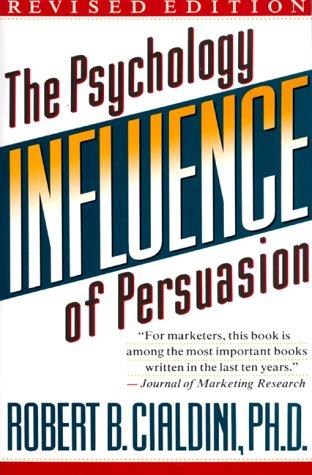
Influence, The Psychology of Persuasion
BookR. Cialdini · 1984
The founding work on the mechanisms of persuasion: six universal principles (reciprocity, consistency, social proof, authority, liking, scarcity) illustrated with striking experiments. A landmark in social psychology.

Thinking, Fast and Slow
BookD. Kahneman · 2011
The sum of Kahneman's work on decision-making: two systems of thought, one fast and intuitive, the other slow and analytical, and the long list of biases that distort our judgements. Essential to understanding others... and yourself.

Nudge
BookR. Thaler & C. Sunstein · 2008
How to steer choices without constraint, by acting on the "choice architecture". The book popularised the nudge and behavioural economics applied to public policy as much as to management.
Judgment under Uncertainty: Heuristics and Biases (Science)
ArticleA. Tversky & D. Kahneman · 1974
The founding paper (Science, 1974) that uncovered the heuristics and biases of judgement, including anchoring. The starting point of the behavioural-economics revolution.
R. Cialdini ("Influence", 1984), D. Kahneman & A. Tversky, R. Thaler, D. Ariely.
On video
Videos to picture The Decoy Effect Technique and anchor it through examples.
Technique map
Every technique sits within a network: what it draws on, what it combines with, where it applies, and how to defend against it.
Spot its signals, neutralise it and turn it around with the defensive playbook on this page.
See the counter-techniquesThe decoy effect consists of introducing a third, deliberately unattractive option to steer the choice towards the option you want to see selected. The decoy will not be chosen: it serves only as a reference point that makes another option appear obviously superior.
Calmly show that you have seen the staging: it loses all effect.
Taking appearance for reality.
Our programmes turn theory into a concrete advantage.