
NEGOCOACH
213
Origin : Cognitive science

🧠 Cognitive science

Behavioural economics & social psychology

R. Cialdini ("Influence", 1984), D. Kahneman & A. Tversky, R. Thaler, D. Ariely.

Full detail in the “Origin & history” section below.

213

The Availability Bias

Exploitable cognitive biases Technique 213 / 360
Alexandre Baumberger

Author of the library

Alexandre Baumberger

Negotiation lecturer at KEDGE Business School

A rare threefold background serving negotiation: teaching, commercial justice and audit, backed by experience as a company director in Bordeaux.

  • Teaching, KEDGE Business School Negotiation lecturer since 2014 (12 years).
  • Commercial justice, Commercial Court Judge from 2018 to 2026: litigation, then insolvency proceedings.
  • Audit & advisory, over 20 years Tax, employment and financial audit in major firms, for large groups.
In brief

The availability bias is the tendency to judge the probability or importance of a fact by the ease with which examples come to mind. What is recent, striking or heavily reported in the media seems more frequent than it actually is. Described by Tversky and Kahnemani, it makes it possible, in negotiation, to sway perceptions through the choice of the examples one makes salient.

Reading level

At a glance

Its family profile at a glance

Effectiveness Psychologicalimpact Discretion Preparation Relationalrisk Ethics
8.0 / 10 Tactical potential

Vigilance: high (6.0/10) · Preparation required: 5/10

Grounding in the source school School grounded in experimental research

Indicative profile: it situates the “Exploitable cognitive biases” family as the Cognitive science school practises it, not this technique taken in isolation. Techniques from the same family and school therefore share the same profile. NEGOCOACH editorial rating out of 10, non-experimental · the higher the “relational risk” value, the more costly the technique is to the relationship.

NEGOCOACH assessment

How to read this rating

Tactical potential 8.0/10 (effectiveness, impact, discretion) and vigilance high (relational and ethical risk): two distinct readings, deliberately never merged into a single score that would reward risk. NEGOCOACH editorial rating calibrated from the “Exploitable cognitive biases” family and the “Cognitive science” school. Each criterion is rated out of 10; click to understand what it measures.

  • Effectiveness 8/10 · Very high

    How far the technique can carry the negotiation in the intended direction when it is well executed.

  • Psychological impact 10/10 · Very high

    Strength of the effect produced on the counterpart's perceptions, emotions and decisions.

  • Discretion 6/10 · High

    How hard it is for the other party to notice the technique is being used. A high value = very discreet.

  • Preparation 5/10 · Moderate

    The information, analysis and rehearsal required upfront to use it effectively.

  • Relational risk 5/10 · Moderate

    Potential cost to the relationship and to trust if the technique is spotted, refused or fails. A high value = riskier.

  • Ethics 4/10 · Moderate

    Moral acceptability: fairness, transparency and respect for the counterpart's autonomy. A high value = more defensible.

Level of evidence

School grounded in experimental research

The school this technique stems from is grounded in replicated, peer-reviewed experimental work. This indicator qualifies the school, not the experimental validation of this technique taken in isolation.

Indicative NEGOCOACH editorial rating, for teaching purposes. For “Relational risk”, a high value signals a cost to the relationship, not a quality.

Availability in Brief


Origins & history

The availability heuristic was formalised in 1973 by Amos Tversky and Daniel Kahneman in Cognitive Psychology. Their experiments show that we overestimate the frequency of events that are easy to recall, spectacular accidents and news stories, at the expense of the actual statisticsi. It is one of the three great heuristics of the "heuristics and biases" programme.


Definition and principle

The availability bias conflates ease of recall with actual frequency. A vivid, recent, emotionally charged or frequently repeated example becomes a shortcut for estimating a risk or a value. In negotiation, the point is not to lie but to make salient what serves your case: a concrete example well told carries more weight, in the other party's mind, than abstract data. Conversely, ignoring this bias means letting an isolated news story or a single bad experience dictate a decision out of all proportion.


Concrete examples of application

Application by context

The same technique, across every negotiation settings

Context 1 / 8

Sales negotiation

An insurance salesperson does not reel off claims-frequency rates: they tell the specific and recent case of an uninsured client ruined by water damage. That story, more available in memory than any statistic, prompts the prospect to take out cover.

How to apply it

Replace abstract data with a concrete and memorable case, recent and close to the client's situation; the vivid story sticks where the figure slips away.

Strengths

Makes a risk tangible and triggers the decision more effectively than statistics.

Weaknesses

A case that is too anecdotal or dramatised loses credibility if the client perceives it as a scare tactic.
Context 2 / 8

Procurement negotiation

A buyer has been marked by an isolated incident with a supplier and overweights that bad memory in their assessment, wrongly ruling out solid offers. The clear-sighted seller counters this bias by bringing aggregated data that places the incident in its true frequency.

How to apply it

As a buyer, be wary of the striking example that crowds out everything else; ask for rates and volumes, not anecdotes. As a seller, defuse an isolated bad memory with statistics.

Strengths

Restores a proportionate assessment where a salient case distorted judgement.

Weaknesses

Cold data struggles to erase an emotionally powerful experience.

Context 3 / 8

Labour negotiation

In labour negotiation, a representative invokes the recent case known to all of a wronged employee to support a demand. The example, present in everyone's memory, carries more weight than averages, which would remain abstract.

How to apply it

Draw on a recent, emblematic case shared by the audience to embody the demand; the collective availability of the example rallies support.

Strengths

Puts a face to a demand and unites through shared emotion.

Weaknesses

The opposing side may argue that the case is exceptional and not representative.

Context 4 / 8

Crisis management

A negotiator reminds a party tempted by escalation of a recent and well-known precedent that went badly ("remember what happened last time"). The vivid memory of the disaster weighs more heavily than any abstract reasoning about risks.

How to apply it

Bring up a striking precedent aligned with your message (the cost of a past escalation); its vividness in memory curbs the repetition of the mistake.

Strengths

A lived or well-known example deters where the theoretical argument goes unheard.

Weaknesses

A precedent perceived as not comparable is dismissed and weakens your credibility.

Context 5 / 8

Political negotiation

After a heavily reported news story, public opinion massively overestimates the phenomenon and demands measures. An official who wants to push through a security reform draws on the availability of the event in people's minds; the one who wants to avoid it recalls the long-term statistics.

How to apply it

To mobilise, capitalise on a salient event; to temper, reintroduce the underlying trends that put the event back to its true scale.

Strengths

An event available in public opinion creates a powerful window for action.

Weaknesses

Legislating in the heat of emotion produces disproportionate and unstable decisions.

Context 6 / 8

Real-estate negotiation

A buyer, marked by a news report on a market "that is collapsing", fears buying at the wrong time when their specific area remains stable. The agent counters with real local figures to dispel a fear fed by an irrelevant media example.

How to apply it

Identify the media example distorting the client's perception and counter it with local and recent data specific to their market.

Strengths

Reframes a decision biased by general information unrelated to the case at hand.

Weaknesses

Anxiety fuelled by the media resists reassuring figures.

Context 7 / 8

Cross-cultural negotiation

A negotiator judges a partner from another country on the basis of a media-driven stereotype or an isolated experience, both more available than the nuanced reality. In doing so they project false expectations ("they are always tough in business") that poison the relationship from the outset.

How to apply it

Hunt down the available stereotypes that stand in for genuine knowledge of the other culture; replace them with verified facts about the actual counterpart.

Strengths

Prevents posture errors born of caricatured images.

Weaknesses

Ingrained cultural clichés are especially available and therefore stubborn.

Context 8 / 8

Family negotiation

During a discussion about family assets, one member repeatedly invokes a striking episode from the past ("the last time we lent money, it ended badly") to block any new decision, that single case eclipsing all the counter-examples.

How to apply it

Name the overweighted event governing the decision and put it in perspective with the other, forgotten episodes; widen the mental sample.

Strengths

Frees the decision from the grip of an isolated yet ever-present memory.

Weaknesses

Painful family memories retain an emotional charge that resists being put in perspective.


Counter-techniques

Spot and neutralise this technique

Negotiation is also played on defence. Here is how to recognise this technique when it is used against you, and turn it around.

Detect

The signals that give it away

  • An extreme first figure (anchoring)
  • A framing as loss rather than gain
  • The endowment effect ("it's already yours")

Neutralise

The counters that defuse it

  • Reject the anchor and set your own
  • Reframe the decision as a gain
  • Assess out of context, on the facts

Turn around

Turn it into an advantage

Set your own anchor first: it will structure the discussion.

The trap to avoid

Reasoning from the other side's figure.

In short

  • Difficulty: Intermediate
  • Estimated effectiveness: High
  • Time to implement: Fast, hinges on the vividness of the example
  • Fields of application: Insurance, Sales, Politics, Communication, Mediation
  • Synonyms: Availability heuristic, Salience bias
  • Tags: availability, Kahneman, storytelling, salience, narrative

Strengths and Weaknesses

The availability bias turns a concrete, vivid case into a means of persuasion superior to statistics: a good story sticks, stirs emotion and prompts a decision. It also makes it possible to reframe a distorted perception by reintroducing the right data. Its limit: an example perceived as anecdotal, dramatised or unrepresentative backfires, and the bias leads to disproportionate decisions when you fall prey to it without seeing it.


When to use this technique?

Use it to make tangible an abstract risk or value, to embody a demand, or to capitalise on a salient event. Invaluable when figures alone fail to land. To be neutralised, with underlying data, when a decision is being dictated by a news story or an isolated memory out of all proportion.


How to recognise and counter this technique

Recognise: the other side argues through a striking case, recent or dramatic, rather than through data. Neutralise: ask for the actual frequency and volumes; place the example back in its true statistical proportion. Turn it around: counter with an equally vivid counter-example, or with underlying data that regains the upper hand over the anecdote.


Limits and ethics

Making a fact salient to leave a mark is sound communication; the ethical drift lies in misleading dramatisation, scare tactics, exceptional cases presented as the norm, exploiting emotion to distort the perception of risk. The most common danger is falling prey to the bias: legislating or deciding in the heat of a striking event produces disproportionate choices. The rule: the example must illustrate a reality, not misrepresent it.


Variants and related techniques

Part of the heuristics of Tversky and Kahneman, it combines with storytelling and the recency effect. Close to the salience bias and the mere-exposure effect. It feeds media panic and reactive political decisions. It runs counter to reasoning based on base rates, which the shrewd negotiator reintroduces as a safeguard.


Further reading

  • Amos Tversky & Daniel Kahneman, "Availability: A Heuristic for Judging Frequency and Probability", Cognitive Psychology, 1973.
  • Daniel Kahneman, Thinking, Fast and Slow, 2011.
  • Cass Sunstein, Laws of Fear: Beyond the Precautionary Principle, 2005.

Objectives of the technique

  • Make salient, in the other party's mind, a concrete risk or precedent (lawsuit, breakdown, publicised dispute) to steer their perception of probability in your favour
  • Counter an opponent who exploits the bias by demanding base-rate data (actual frequencies) rather than striking anecdotes
  • Protect your own preparation against recent or spectacular examples that distort the assessment of the stakes and of the BATNA
  • Structure an argument around easily memorable and verifiable cases to anchor a demand
  • Detect when a concession is being requested on the basis of an isolated media event rather than an underlying trend

Famous cases

Sales · The recent loss that sells the insurance: A commercial insurance broker is negotiating a cyber-cover extension with the head of an SME who has been reluctant so far. Rather than lining up abstract statistics, they mention a ransomware attack widely covered in the press a few weeks earlier, which had paralysed a company in the same sector and of comparable size. The example, fresh and vivid in the executive's mind, makes the risk seem far more probable than they had assessed, and the negotiation shifts from 'should we take cover' to 'at what level'. A savvy buyer would have refocused the discussion on the actual frequency of losses in their category of company rather than on an isolated, media-driven case.

Enterprise · The security budget voted after the incident: During an internal budget arbitration, an IT manager secures funding for a long-deferred backup project by recalling a recent outage that cost a neighbouring department two days of activity. The event, recent and experienced at close hand by the decision-makers, crowds out of the discussion risks that are statistically more significant but less memorable. The technique works because it is the mental availability of the incident, not its representativeness, that guides the estimate of risk.


Common mistakes

  • Confusing availability with anchoring: anchoring plays on a reference figure, availability on the ease of recalling examples; treating them as identical weakens the counter
  • Relying on a spectacular but false or unverifiable example: if the other party dismantles the case, the whole credibility of the argument collapses
  • Piling on anecdotes to the point of saturation: beyond two or three striking cases, the salience effect dilutes and the audience switches off
  • Falling prey to the bias yourself during preparation: overrating a risk because a recent case is fresh in memory, and underrating more probable but quieter threats
  • Using the bias manipulatively on a vulnerable counterpart, which, once discovered, destroys trust and the long-term relationship

Scientific foundations

  • Amos Tversky & Daniel Kahneman (1973) Availability: A heuristic for judging frequency and probability Cognitive Psychology, 5(2), 207-232
  • Daniel Kahneman (2011) Thinking, Fast and Slow Farrar, Straus and Giroux
  • Amos Tversky & Daniel Kahneman (1974) Judgment under Uncertainty: Heuristics and Biases Science, 185(4157), 1124-1131, DOI: 10.1126/science.185.4157.1124

Quick exercise

Test yourself before answering

Answer in your head, then reveal the solution. Memory is built through active recall.

1 Quels signaux doivent vous alerter ?
  • An extreme first figure (anchoring)
  • A framing as loss rather than gain
  • The endowment effect ("it's already yours")
2 Quelles parades appliquer ?
  • Reject the anchor and set your own
  • Reframe the decision as a gain
  • Assess out of context, on the facts

Frequently asked questions

The questions we get most

What is the "The Availability Bias" technique?

The availability bias is the tendency to judge the probability or importance of a fact by the ease with which examples come to mind. What is recent, striking or heavily reported in the media seems more frequent than it actually is. Described by Tversky and Kahnemani, it makes it possible, in negotiation, to sway perceptions through the choice of the examples one makes salient.

Is the "The Availability Bias" technique ethical?

It sits on the line: effective, but it can tip into manipulation if it exploits an information asymmetry. Use it with measure and without deliberate deceit.

How do you defend against "The Availability Bias"?

Reasoning from the other side's figure. The right reflex: reject the anchor and set your own.

What is the "The Availability Bias" technique based on?

NEGOCOACH does not assess the experimental validation of this technique in isolation. What we document is the grounding of its source school (Cognitive science): school grounded in experimental research. Full detail is in the "At a glance" section of this page.

Practise with AI

Three ready-to-use prompts

Copy, paste into your assistant, replace the [brackets]. Works with ChatGPT, Claude, Gemini, Mistral, Perplexity.

Prepare

Build your plan before the meeting

You are an expert negotiation coach. Help me prepare to use the "The Availability Bias" technique in the following situation: [describe your situation]. Give me: the conditions for success, a 3-step script, my counterpart's likely objections and how to answer them.

Simulate

Rehearse against an AI counterpart

Play the role of my counterpart in a negotiation. I am going to test the "The Availability Bias" technique. React realistically and with resistance, do not give in too quickly, then at the end analyse my performance and suggest 3 concrete improvements.

Debrief

Analyse a past negotiation

Here is how my negotiation went: [paste the exchanges]. Analyse whether the "The Availability Bias" technique was used well, what worked, the mistakes made, and spell out precisely what I could have done better.

References

Bibliography & credible sources

Founding works of the 🧠 Cognitive science school this technique belongs to.

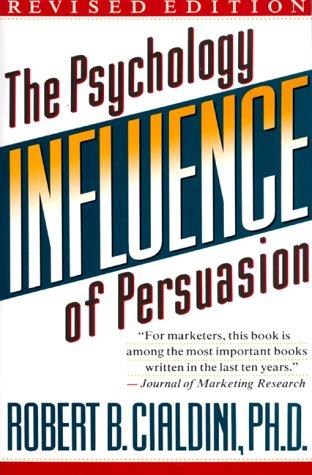
  • Cover: Influence, The Psychology of Persuasion

    Influence, The Psychology of Persuasion

    Book

    R. Cialdini · 1984

    The founding work on the mechanisms of persuasion: six universal principles (reciprocity, consistency, social proof, authority, liking, scarcity) illustrated with striking experiments. A landmark in social psychology.

  • Cover: Thinking, Fast and Slow

    Thinking, Fast and Slow

    Book

    D. Kahneman · 2011

    The sum of Kahneman's work on decision-making: two systems of thought, one fast and intuitive, the other slow and analytical, and the long list of biases that distort our judgements. Essential to understanding others... and yourself.

  • Cover: Nudge

    Nudge

    Book

    R. Thaler & C. Sunstein · 2008

    How to steer choices without constraint, by acting on the "choice architecture". The book popularised the nudge and behavioural economics applied to public policy as much as to management.

  • Judgment under Uncertainty: Heuristics and Biases (Science)

    Article

    A. Tversky & D. Kahneman · 1974

    The founding paper (Science, 1974) that uncovered the heuristics and biases of judgement, including anchoring. The starting point of the behavioural-economics revolution.

R. Cialdini ("Influence", 1984), D. Kahneman & A. Tversky, R. Thaler, D. Ariely.

On video

See the technique in action

Videos to picture The Availability Bias and anchor it through examples.

Technique map

Where this technique sits

Every technique sits within a network: what it draws on, what it combines with, where it applies, and how to defend against it.

Levers engaged

biases & emotions

Countered by

Spot its signals, neutralise it and turn it around with the defensive playbook on this page.

See the counter-techniques

Key takeaways

  • En une phrase

    The availability bias is the tendency to judge the probability or importance of a fact by the ease with which examples come to mind. What is recent, striking or heavily reported in the media seems more frequent than it actually is. Described by Tversky and Kahnemani, it makes it possible, in negotiation, to sway perceptions through the choice of the examples one makes salient.

  • The right reflex

    Set your own anchor first: it will structure the discussion.

  • Never do this

    Reasoning from the other side's figure.

8.0/10 tactical potential High vigilance School grounded in experimental research

Master this technique in real situations?

Our programmes turn theory into a concrete advantage.

Explore our programmes
Call Book a call