Context 1 / 6
Sales negotiation
A negotiator first raises a very strong requirement which, once settled into the discussion, makes their real demand seem moderate by comparison.

🛠️ Methods & tactics
Anglo-Saxon schools of negotiation
C. Karrass, R. Dawson, H. Cohen, N. Rackham (SPIN), T. Gordon (DESC / active listening).
Full detail in the “Origin & history” section below.

Author of the library
Negotiation lecturer at KEDGE Business School
A rare threefold background serving negotiation: teaching, commercial justice and audit, backed by experience as a company director in Bordeaux.
The Overton window refers to the range of ideas deemed « acceptable » at a given moment. The technique consists in shifting that window: by first advancing an extreme position, you make acceptable what looked radical yesterday, and you draw the negotiation's centre of gravity towards yourself.
At a glance
Vigilance: moderate (4.0/10) · Preparation required: 5/10
Indicative profile: it situates the “Framing & justification” family as the Methods & tactics school practises it, not this technique taken in isolation. Techniques from the same family and school therefore share the same profile. NEGOCOACH editorial rating out of 10, non-experimental · the higher the “relational risk” value, the more costly the technique is to the relationship.
NEGOCOACH assessment
Tactical potential 6.3/10 (effectiveness, impact, discretion) and vigilance moderate (relational and ethical risk): two distinct readings, deliberately never merged into a single score that would reward risk. NEGOCOACH editorial rating calibrated from the “Framing & justification” family and the “Methods & tactics” school. Each criterion is rated out of 10; click to understand what it measures.
How far the technique can carry the negotiation in the intended direction when it is well executed.
Strength of the effect produced on the counterpart's perceptions, emotions and decisions.
How hard it is for the other party to notice the technique is being used. A high value = very discreet.
The information, analysis and rehearsal required upfront to use it effectively.
Potential cost to the relationship and to trust if the technique is spotted, refused or fails. A high value = riskier.
Moral acceptability: fairness, transparency and respect for the counterpart's autonomy. A high value = more defensible.
School grounded in research and field practice
The school this technique stems from combines academic work with long field practice. This indicator qualifies the school, not this technique taken in isolation.
Indicative NEGOCOACH editorial rating, for teaching purposes. For “Relational risk”, a high value signals a cost to the relationship, not a quality.
The concept was formulated in the 1990s by Joseph Overton, of the American think tank the Mackinac Center, to describe the range of public policies an elected official can support without being disqualified. The idea: what is « thinkable » is not fixed, it shifts over time and with discourse. By introducing an idea that is first perceived as extreme, you gradually widen the field of the acceptable, so that a once-radical position eventually comes to seem moderate. Widely used in political communication, the mechanism also sheds light on the art of anchoring in negotiation.
The technique consists in widening the frame of what is negotiable by advancing a deliberately extreme position, which shifts the reference point: the real demand, now compared with that extreme, appears reasonable and « in the middle ».
Application by context
A negotiator first raises a very strong requirement which, once settled into the discussion, makes their real demand seem moderate by comparison.
A maximalist claim, by dint of being tabled, shifts the field of the debatable and makes acceptable what seemed excessive.
One party introduces a radical option to widen the range of conceivable solutions and slide the compromise towards itself.
An idea first judged unthinkable, once carried into the debate, eventually enters the field of acceptable positions.
A seller first displays a very high price which, by becoming the reference, makes a still-steep amount appear reasonable.
In a division of assets, advancing a high claim shifts the frame and makes acceptable a demand that would have been shocking straight away.
Counter-techniques
Negotiation is also played on defence. Here is how to recognise this technique when it is used against you, and turn it around.
The signals that give it away
The counters that defuse it
Turn it into an advantage
Impose your own frame of reference before the other side sets theirs.
Accepting the implicit frame without naming it.
The Overton window acts on the very frame of what is negotiable, a deeper lever than a mere argument. Its limits: a position that is too extreme discredits its author and closes down dialogue; the shift takes time and a degree of consistency, and it may be perceived as a manoeuvre.
Useful for widening the field of the negotiable and anchoring high, over time. To be handled with measure: the extreme must remain within the bounds of the credible so as not to backfire.
Political · The gradual shifting of the frame of public debate: A reform judged unthinkable is first raised by peripheral relays (think tanks, op-eds, « trial-balloon » statements). By dint of being repeated and discussed, it moves from the status of « unthinkable » to « radical », then « acceptable », then « reasonable ». When the decision-maker formally proposes it, it appears as a moderate compromise. This is the original mechanism described by Joseph Overton: it is not the decision-maker who shifts the window, it is the upstream debate that makes the measure admissible.
Sales · Reframing the negotiable across several meetings: A supplier ultimately aiming for an 8% price increase knows that a head-on demand would be rejected. Over several exchanges, they first establish the idea that the market is undergoing « double-digit » cost inflation, mention competitors that have raised their prices by 15%, then evoke a scenario of partial supply disruption. When they finally state their 8% demand, it appears reasonable against the frame they have patiently installed, whereas it would have been judged abusive at the first meeting.
The Overton window is not a technique for a single session, it is a long-term manoeuvre, and its distinctive feature is that it acts not on an interlocutor but on what a group holds to be debatable. It does not merely shift a figure, as anchoring does: it shifts the limit of the acceptable, and it does so through repetition rather than argument. That is where its particular difficulty lies. Defending a position that is a minority view today because you believe it right, and arguing for it, is a perfectly legitimate fight, and many of today's certainties were yesterday on the edge of the window. Advancing the unacceptable not to defend it but so that it becomes commonplace, so that the position actually targeted appears moderate by comparison, is to obtain a shift without ever having held the debate. No one has been persuaded, habit has done the work. It must be added that the technique cannot be controlled: whoever shifts the window also legitimises what they had advanced in order to withdraw it, and they master neither who will seize upon it nor how far it will slide. Defending a minority position you believe to be right is a fight; advancing the unacceptable so that it becomes commonplace is shifting the limit without having debated it.
Quick exercise
Answer in your head, then reveal the solution. Memory is built through active recall.
Frequently asked questions
The Overton window refers to the range of ideas deemed « acceptable » at a given moment. The technique consists in shifting that window: by first advancing an extreme position, you make acceptable what looked radical yesterday, and you draw the negotiation's centre of gravity towards yourself.
It sits on the line: effective, but it can tip into manipulation if it exploits an information asymmetry. Use it with measure and without deliberate deceit.
Accepting the implicit frame without naming it. The right reflex: reframe with another reference.
NEGOCOACH does not assess the experimental validation of this technique in isolation. What we document is the grounding of its source school (Methods & tactics): school grounded in research and field practice. Full detail is in the "At a glance" section of this page.
Practise with AI
Copy, paste into your assistant, replace the [brackets]. Works with ChatGPT, Claude, Gemini, Mistral, Perplexity.
Build your plan before the meeting
You are an expert negotiation coach. Help me prepare to use the "The Overton Window Technique" technique in the following situation: [describe your situation]. Give me: the conditions for success, a 3-step script, my counterpart's likely objections and how to answer them.
Rehearse against an AI counterpart
Play the role of my counterpart in a negotiation. I am going to test the "The Overton Window Technique" technique. React realistically and with resistance, do not give in too quickly, then at the end analyse my performance and suggest 3 concrete improvements.
Analyse a past negotiation
Here is how my negotiation went: [paste the exchanges]. Analyse whether the "The Overton Window Technique" technique was used well, what worked, the mistakes made, and spell out precisely what I could have done better.
References
Founding works of the 🛠️ Methods & tactics school this technique belongs to.
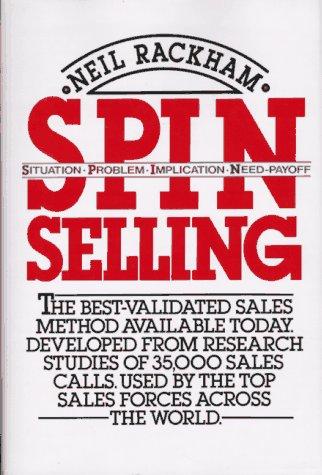
SPIN Selling
BookN. Rackham · 1988
Grounded in the analysis of thousands of sales calls, the SPIN method structures customer discovery through four types of question (Situation, Problem, Implication, Need-payoff) for complex sales.

The Negotiating Game
BookC. L. Karrass · 1970
A pragmatic classic of business negotiation: tactics, power balance and preparation. Karrass sums up his motto, you get what you negotiate, not what you deserve.

Secrets of Power Negotiating
BookR. Dawson · 1987
An arsenal of opening, middle and closing "gambits" to gain the upper hand in commercial negotiation, explained step by step.
C. Karrass, R. Dawson, H. Cohen, N. Rackham (SPIN), T. Gordon (DESC / active listening).
On video
Videos to picture The Overton Window Technique and anchor it through examples.
A verified video selection is being enriched; the search above already surfaces the best videos on the topic.
Technique map
Every technique sits within a network: what it draws on, what it combines with, where it applies, and how to defend against it.
Spot its signals, neutralise it and turn it around with the defensive playbook on this page.
See the counter-techniquesThe Overton window refers to the range of ideas deemed « acceptable » at a given moment. The technique consists in shifting that window: by first advancing an extreme position, you make acceptable what looked radical yesterday, and you draw the negotiation's centre of gravity towards yourself.
Impose your own frame of reference before the other side sets theirs.
Accepting the implicit frame without naming it.
Our programmes turn theory into a concrete advantage.