Context 1 / 6
Sales negotiation
A buyer running a tender disciplines themselves so as not to overpay a supplier "won" in the heat of competition.

🛠️ Methods & tactics
Anglo-Saxon schools of negotiation
C. Karrass, R. Dawson, H. Cohen, N. Rackham (SPIN), T. Gordon (DESC / active listening).
Full detail in the “Origin & history” section below.

Author of the library
Negotiation lecturer at KEDGE Business School
A rare threefold background serving negotiation: teaching, commercial justice and audit, backed by experience as a company director in Bordeaux.
In an auction or a competition, the party who prevails is often the one who has most overestimated the value of the asset: they "win" but pay too much. Understanding the winner's curse means knowing how to discipline yourself so as not to secure a victory that costs more than it yields, and how to push the other side into that trap.
At a glance
Vigilance: low (3.5/10) · Preparation required: 8/10
Indicative profile: it situates the “Structural negotiation” family as the Methods & tactics school practises it, not this technique taken in isolation. Techniques from the same family and school therefore share the same profile. NEGOCOACH editorial rating out of 10, non-experimental · the higher the “relational risk” value, the more costly the technique is to the relationship.
NEGOCOACH assessment
Tactical potential 6.3/10 (effectiveness, impact, discretion) and vigilance low (relational and ethical risk): two distinct readings, deliberately never merged into a single score that would reward risk. NEGOCOACH editorial rating calibrated from the “Structural negotiation” family and the “Methods & tactics” school. Each criterion is rated out of 10; click to understand what it measures.
How far the technique can carry the negotiation in the intended direction when it is well executed.
Strength of the effect produced on the counterpart's perceptions, emotions and decisions.
How hard it is for the other party to notice the technique is being used. A high value = very discreet.
The information, analysis and rehearsal required upfront to use it effectively.
Potential cost to the relationship and to trust if the technique is spotted, refused or fails. A high value = riskier.
Moral acceptability: fairness, transparency and respect for the counterpart's autonomy. A high value = more defensible.
School grounded in research and field practice
The school this technique stems from combines academic work with long field practice. This indicator qualifies the school, not this technique taken in isolation.
Indicative NEGOCOACH editorial rating, for teaching purposes. For “Relational risk”, a high value signals a cost to the relationship, not a quality.
The concept of the "winner's curse" was identified in 1971 by three petroleum engineers, Capen, Clapp and Campbell, while studying auctions for exploration leases: the companies that won the fields achieved disappointing returns, because winning the auction meant they had overvalued the reserve. The economist Richard Thaler later popularised and generalised it. The lesson: in any auction situation involving uncertainty, the mere fact of winning is bad news about your own estimate, so you should bid cautiously, below your own valuation.
The technique consists, defensively, in revising your own estimate downwards in auction situations (the winner is statistically the optimist who got it wrong), and offensively, in creating a competitive dynamic that pushes the other side to bid against themselves.
The winner's curse lurks in distributive settings and auctions: you "win" by paying too much.
Understand distributive vs integrative →Application by context
A buyer running a tender disciplines themselves so as not to overpay a supplier "won" in the heat of competition.
A negotiator is wary of an agreement secured too easily amid one-upmanship, a sign that they may have conceded too much.
A party avoids "winning" a standoff at a cost that would exceed any real benefit.
A state competing in auctions (frequencies, contracts) bids cautiously so as not to win an overpaid asset.
Faced with a bidding war between buyers, one of them sets a firm ceiling so as not to win the property at the price of the winner's curse.
At an auction of family assets, one takes care not to carry off a lot in the heat of emotion at an unreasonable price.
Counter-techniques
Negotiation is also played on defence. Here is how to recognise this technique when it is used against you, and turn it around.
The signals that give it away
The counters that defuse it
Turn it into an advantage
Propose an alternative frame that favours you, rather than enduring theirs.
Accepting the other side's ground without ever discussing it.
Understanding the winner's curse guards against ruinous victories and makes it possible to lure the opponent into the trap of overbidding. Its limits: it mainly concerns auction and uncertainty situations; it demands an emotional discipline that competition puts to a severe test.
Essential in auctions, tenders and situations of competition between several buyers. Less relevant in a one-to-one setting with no auction dynamic.
Business · Oil auctions and the origin of the concept: The concept of the "winner's curse" was formalised in 1971 by three Atlantic Richfield engineers (Capen, Clapp and Campbell) on the basis of auctions for offshore drilling rights in the Gulf of Mexico. Each company independently estimated the quantity of oil in a block whose real value was unknown. Statistically, the company that won the auction was often the one that had most overestimated the reserves: it "won" the block but then achieved disappointing returns. The practical remedy proposed was "bid shading": bidding below your own estimate, all the more so as competitors are numerous.
Commercial · Buying a company at auction: A representative scenario. An investment fund takes part in an organised sale process (M&A auction) in which several acquirers submit sealed bids on a target whose future EBITDA is uncertain. The acquirer who prevails is often the one who adopted the most optimistic growth assumptions. A shrewd negotiator revises their offer downwards, demands an earn-out indexed to actual results and a warranty on assets and liabilities, rather than "winning" the target at a price they will regret once the synergies are reassessed.
The winner's curse is first and foremost a piece of defensive knowledge, and that is its most valuable use: identified in 1971 by petroleum engineers who observed that auctions won ruined the winners, it teaches the discipline of not securing a victory that costs more than it yields. Knowing when to walk away is a skill here, and the negotiator who exits an auction at the right moment has done better work than the one who prevails. Yet the definition contains a second intention that must be examined: "pushing the other side into the trap". Overbidding with no intention to buy, sustaining a competition so that the rival pays too much, is no longer about seeking to win but about engineering a third party's loss, and calling it victory. The practice is common; it is not neutral: it destroys value, often at the expense of people who will perform the contract in poor conditions, sometimes to the detriment of the principal itself, who will discover that its ruined provider cannot honour its commitments. Disciplining yourself so as not to win at any cost is lucidity; pushing the other side to overbid, knowing they will lose their margin in the process, is engineering their loss.
Quick exercise
Answer in your head, then reveal the solution. Memory is built through active recall.
Frequently asked questions
In an auction or a competition, the party who prevails is often the one who has most overestimated the value of the asset: they "win" but pay too much. Understanding the winner's curse means knowing how to discipline yourself so as not to secure a victory that costs more than it yields, and how to push the other side into that trap.
Yes. Used in good faith it stays within a fair negotiation: it structures the exchange without deceiving the other party. Being transparent about your intentions strengthens the long-term relationship.
Accepting the other side's ground without ever discussing it. The right reflex: negotiate the frame before the substance.
NEGOCOACH does not assess the experimental validation of this technique in isolation. What we document is the grounding of its source school (Methods & tactics): school grounded in research and field practice. Full detail is in the "At a glance" section of this page.
Practise with AI
Copy, paste into your assistant, replace the [brackets]. Works with ChatGPT, Claude, Gemini, Mistral, Perplexity.
Build your plan before the meeting
You are an expert negotiation coach. Help me prepare to use the "The Winner's Curse Technique" technique in the following situation: [describe your situation]. Give me: the conditions for success, a 3-step script, my counterpart's likely objections and how to answer them.
Rehearse against an AI counterpart
Play the role of my counterpart in a negotiation. I am going to test the "The Winner's Curse Technique" technique. React realistically and with resistance, do not give in too quickly, then at the end analyse my performance and suggest 3 concrete improvements.
Analyse a past negotiation
Here is how my negotiation went: [paste the exchanges]. Analyse whether the "The Winner's Curse Technique" technique was used well, what worked, the mistakes made, and spell out precisely what I could have done better.
References
Founding works of the 🛠️ Methods & tactics school this technique belongs to.
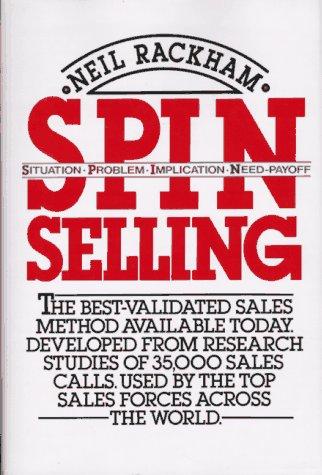
SPIN Selling
BookN. Rackham · 1988
Grounded in the analysis of thousands of sales calls, the SPIN method structures customer discovery through four types of question (Situation, Problem, Implication, Need-payoff) for complex sales.

The Negotiating Game
BookC. L. Karrass · 1970
A pragmatic classic of business negotiation: tactics, power balance and preparation. Karrass sums up his motto, you get what you negotiate, not what you deserve.

Secrets of Power Negotiating
BookR. Dawson · 1987
An arsenal of opening, middle and closing "gambits" to gain the upper hand in commercial negotiation, explained step by step.
C. Karrass, R. Dawson, H. Cohen, N. Rackham (SPIN), T. Gordon (DESC / active listening).
On video
Videos to picture The Winner's Curse Technique and anchor it through examples.
A verified video selection is being enriched; the search above already surfaces the best videos on the topic.
Technique map
Every technique sits within a network: what it draws on, what it combines with, where it applies, and how to defend against it.
Spot its signals, neutralise it and turn it around with the defensive playbook on this page.
See the counter-techniquesIn an auction or a competition, the party who prevails is often the one who has most overestimated the value of the asset: they "win" but pay too much. Understanding the winner's curse means knowing how to discipline yourself so as not to secure a victory that costs more than it yields, and how to push the other side into that trap.
Propose an alternative frame that favours you, rather than enduring theirs.
Accepting the other side's ground without ever discussing it.
Our programmes turn theory into a concrete advantage.