
NEGOCOACH
315
Origin : Sales & commercial methods

💼 Sales & commercial methods

B2B sales methods

Structured sales methods: SPIN (N. Rackham), The Challenger Sale (M. Dixon & B. Adamson), Solution Selling (M. Bosworth), MEDDIC, Sandler, SNAP (J. Konrath).

Full detail in the “Origin & history” section below.

315

Customer-Centric Selling

Sales & commercial methods Technique 315 / 360
Alexandre Baumberger

Author of the library

Alexandre Baumberger

Negotiation lecturer at KEDGE Business School

A rare threefold background serving negotiation: teaching, commercial justice and audit, backed by experience as a company director in Bordeaux.

  • Teaching, KEDGE Business School Negotiation lecturer since 2014 (12 years).
  • Commercial justice, Commercial Court Judge from 2018 to 2026: litigation, then insolvency proceedings.
  • Audit & advisory, over 20 years Tax, employment and financial audit in major firms, for large groups.
In brief

Customer-Centric Selling reverses the logic of the sales pitch: instead of presenting a product and its features, the seller conducts situational conversations in which they ask questions to help the other party visualise how a solution solves a concrete problem in THEIR context. The technique rests on “conversations” scripted by job role rather than on generic pitches, and on the conviction that people buy when they feel understood, not when they are persuaded. Transposed to negotiation, it consists in drawing out the other party’s real needs through questioning before making any proposal, so that the negotiated solution appears as the answer to THEIR problem. It is a posture of shared diagnosis that increases buy-in and reduces resistance.

Reading level

At a glance

Its family profile at a glance

Effectiveness Psychologicalimpact Discretion Preparation Relationalrisk Ethics
7.0 / 10 Tactical potential

Vigilance: moderate (4.5/10) · Preparation required: 7/10

Grounding in the source school Documented school

Indicative profile: it situates the “Sales & commercial methods” family as the Sales & commercial methods school practises it, not this technique taken in isolation. Techniques from the same family and school therefore share the same profile. NEGOCOACH editorial rating out of 10, non-experimental · the higher the “relational risk” value, the more costly the technique is to the relationship.

NEGOCOACH assessment

How to read this rating

Tactical potential 7.0/10 (effectiveness, impact, discretion) and vigilance moderate (relational and ethical risk): two distinct readings, deliberately never merged into a single score that would reward risk. NEGOCOACH editorial rating calibrated from the “Sales & commercial methods” family and the “Sales & commercial methods” school. Each criterion is rated out of 10; click to understand what it measures.

  • Effectiveness 8/10 · Very high

    How far the technique can carry the negotiation in the intended direction when it is well executed.

  • Psychological impact 7/10 · High

    Strength of the effect produced on the counterpart's perceptions, emotions and decisions.

  • Discretion 6/10 · High

    How hard it is for the other party to notice the technique is being used. A high value = very discreet.

  • Preparation 7/10 · High

    The information, analysis and rehearsal required upfront to use it effectively.

  • Relational risk 4/10 · Moderate

    Potential cost to the relationship and to trust if the technique is spotted, refused or fails. A high value = riskier.

  • Ethics 6/10 · High

    Moral acceptability: fairness, transparency and respect for the counterpart's autonomy. A high value = more defensible.

Level of evidence

Documented school

The school this technique stems from is documented by recognised work and established practice, without experimental consensus. This indicator qualifies the school, not this technique taken in isolation.

Indicative NEGOCOACH editorial rating, for teaching purposes. For “Relational risk”, a high value signals a cost to the relationship, not a quality.

Customer-Centric Selling in a nutshell


Origin & history

A method developed by Michael T. Bosworth (author of “Solution Selling”, 1994) and John R. Holland, a former IBM executive. The CustomerCentric Selling® brand and methodology were launched in 2002, formalised in the book “CustomerCentric Selling” published by McGraw-Hill in 2004, then in a second edition (2010) co-written with Frank Visgatis. It extends and corrects “Solution Selling” by insisting on situational conversations by job role rather than on feature presentation.


Definition and principle

A structured approach to selling and negotiation in which the interaction is organised around the other party’s context and objectives rather than the seller’s product. In practice: (1) feature presentation is replaced by situational questions calibrated to each type of buyer; (2) the other party is helped to describe their problem and measure its impact; (3) each capability of the solution is then linked to a specific use expressed by the other party (“usage” rather than “feature”); (4) the other party is left to conclude for themselves that the solution meets their need. The proposal is made only once the need has been verbalised and quantified by the other side.


Objectives of the technique

  • Draw out and verbalise the other party’s real need through questioning rather than assertion
  • Position the solution in terms of concrete uses for the other party (not generic features)
  • Create buy-in by letting the other party conclude for themselves that the solution is relevant
  • Reduce resistance and objections by avoiding a head-on posture of persuasion
  • Align the exchange with the other party’s objectives and context to build an agreement perceived as mutually beneficial

Concrete examples of application

Application by context

The same technique, across every negotiation settings

Context 1 / 8

Sales negotiation

The salesperson does not open with their catalogue but with a situational conversation (“How do you currently handle chasing unpaid invoices? What happens when a customer goes beyond 60 days?”), then links each capability of their offer to the specific use described by the prospect.
Context 2 / 8

Procurement negotiation

The buyer turns the technique around: instead of demanding a discount, they question the supplier about their cost structure and production constraints to surface the value levers, then co-build a solution (volumes, payment terms) that reduces cost without attacking the price head-on.

Context 3 / 8

Labour negotiation

In labour negotiation, management opens with questions about the teams’ concrete experience (“On which tasks do you lose the most time?”) to pinpoint the real need behind the pay demand, and proposes an agreement (work organisation, targeted bonuses) that addresses the expressed problem rather than the raw demand.

Context 4 / 8

Crisis management

A crisis negotiator abandons injunctions in favour of calibrated situational questions (“What brought you to this point? What do you need now?”), leading the person to formulate for themselves what would unblock the situation, which turns confrontation into shared resolution.

Context 5 / 8

Political negotiation

An elected official building a coalition does not impose their programme but questions each partner about their local priorities and electorate constraints, then presents their project as the answer to the specific uses raised by each, increasing support.

Context 6 / 8

Real-estate negotiation

The agent does not recite the square footage but explores the buyer’s life plans (“How do you picture your weekends here? Does the school run matter?”), then links each asset of the property to an expressed use, so that the purchase decision comes from the client’s own mouth.

Context 7 / 8

Cross-cultural negotiation

Faced with a partner from another culture, the negotiator favours questioning listening to understand the implicit stakes (relationship to hierarchy, to time, to the relationship itself) before proposing, avoiding imposing a standard pitch ill-suited to the other party’s context.

Context 8 / 8

Family negotiation

During the division of an estate, one member steers the discussion with questions about what each person truly attaches to a given asset (use value, sentimental memory) rather than about amounts, drawing out exchange solutions that address the real needs and defuse the conflict.


Counter-techniques

Spot and neutralise this technique

Negotiation is also played on defence. Here is how to recognise this technique when it is used against you, and turn it around.

Detect

The signals that give it away

  • A sudden imbalance in the exchange
  • Pressure to decide quickly
  • An argument you cannot verify

Neutralise

The counters that defuse it

  • Slow down and reformulate
  • Ask for facts and sources
  • Concede nothing without a counterpart

Turn around

Turn it into an advantage

Name the manoeuvre: said out loud, a technique loses most of its power.

The trap to avoid

Reacting emotionally instead of coming back to the facts.

Strengths and Weaknesses

"Strengths: creates strong buy-in because the other party concludes for themselves; reduces objections by avoiding head-on persuasion; establishes a climate of trust and shared diagnosis; particularly effective on complex issues where the need is poorly formulated at the outset; transferable to any integrative negotiation. Weaknesses: time-consuming and ill-suited to simple or transactional deals where the other party just wants a price; requires genuine skill in questioning and listening (poorly executed, it turns into an artificial or manipulative interrogation); assumes a solution genuinely adaptable to the other party’s need, otherwise the diagnosis leads to a dead end; ineffective against a party who is in a hurry, mistrustful, or unwilling to reveal their context."


When to use this technique?

"Favourable for high-stakes, lengthy or relationship-based negotiations (B2B, solution selling, partnerships, labour negotiations) where the other party’s need is poorly expressed and there is room for co-construction. Also favourable when trust and a long-term relationship take priority. Of little relevance for a simple, standardised or purely distributive transaction (a single issue, the price), where extensive questioning is perceived as a waste of time."


Famous cases

Sales · From “Solution Selling” to “CustomerCentric”: Bosworth’s correction, Michael Bosworth, after the success of Solution Selling (1994), observed with John Holland that many sales forces remained focused on demonstrating features and “sold” instead of helping to buy. In launching CustomerCentric Selling® in 2002, they formalised the idea that high-performing salespeople do not present their product but conduct conversations scripted by job role, in which they ask questions to have the buyer describe their problem and its impact before linking each capability to an expressed use. The method, rolled out to hundreds of sales organisations in the United States, Europe and elsewhere, illustrates the shift from the pitch to situational questioning.

Everyday life · The inheritance defused by questions (representative scenario), Representative scenario, with no real attribution: during a tense division of an estate around the family home, one of the heirs stops discussing amounts and asks each person what they truly associate with the house. One is attached to the father’s workshop, another to the land for their children, a third above all to the financial value. By having the real usage needs verbalised rather than the numerical positions, the family builds an arrangement (partial buy-out, right of use of the workshop, cash compensation) that each perceives as addressing THEIR need, avoiding a forced sale and litigation.


Common mistakes

  • Turning the questioning into a mechanical interrogation or “fake interest” that sounds manipulative and destroys trust
  • Asking questions then launching into a generic product pitch anyway, without linking capabilities to the expressed uses
  • Proposing a solution before the other party has verbalised and quantified their need
  • Using uncalibrated questions, identical whoever the other party is, instead of situational conversations by role/job
  • Neglecting active listening: asking the question but not using the answer to steer what follows

How to recognise and counter this technique

"To recognise it: the other party asks many open questions about your context, avoids setting out their own solution, and gradually leads you to formulate a need yourself. To defend yourself without closing off: respond in a measured way, do not over-expose your internal constraints (budget, urgency, alternatives) until reciprocity is established; turn the questions back (“And on your side, what is your room for manoeuvre?”) to restore the symmetry of information; keep your own objectives and BATNA in mind so as not to be led towards a conclusion that primarily serves the other party. The right reflex is not to refuse dialogue but to make it a reciprocal diagnosis."


Limits and ethics

"Limits: the technique assumes a genuine ability of the solution to adapt to the need; using it without a relevant solution leads to a dead end or an unsustainable promise. It is costly in time and skill, unsuited to transactional exchanges. Ethics: the line is thin between helping the other party clarify their need (legitimate, integrative) and instrumentalising the questioning to artificially create a need or extract asymmetric information (manipulative). The ethical line lies in the genuine intention to serve the other party’s need and in the sincerity of the listening; used cynically, it becomes a form of soft manipulation, all the more effective for being hard to detect."


Variants and related techniques

"Related techniques: Solution Selling (Bosworth, direct predecessor); Neil Rackham’s SPIN Selling (Situation/Problem/Implication/Need-payoff questions, very close in questioning logic); consultative selling; the Challenger Sale (a variant that, conversely, actively reframes the customer); in negotiation, Harvard’s principled negotiation (interests vs positions) and Chris Voss’s active listening / calibrated questions."


Going further

  • Bosworth M. T. & Holland J. R., “CustomerCentric Selling”, McGraw-Hill, 2004 (and 2nd ed. 2010 with F. Visgatis)
  • Rackham N., “SPIN Selling”, McGraw-Hill, 1988 (complementary questioning framework)
  • CustomerCentric Selling® website and training programmes (methodology, situational-conversation playbooks)
  • Bosworth M. T., “Solution Selling”, McGraw-Hill, 1994 (the earlier founding work)

Scientific foundations

  • Michael T. Bosworth, John R. Holland (2004) CustomerCentric Selling McGraw-Hill, New York (ISBN 0071425454)
  • Michael T. Bosworth, John R. Holland, Frank Visgatis (2010) CustomerCentric Selling, Second Edition McGraw-Hill, New York (ISBN 0071637087)
  • Michael T. Bosworth (1994) Solution Selling: Creating Buyers in Difficult Selling Markets McGraw-Hill, New York

Quick exercise

Test yourself before answering

Answer in your head, then reveal the solution. Memory is built through active recall.

1 Quels signaux doivent vous alerter ?
  • A sudden imbalance in the exchange
  • Pressure to decide quickly
  • An argument you cannot verify
2 Quelles parades appliquer ?
  • Slow down and reformulate
  • Ask for facts and sources
  • Concede nothing without a counterpart

Frequently asked questions

The questions we get most

What is the "Customer-Centric Selling" technique?

Customer-Centric Selling reverses the logic of the sales pitch: instead of presenting a product and its features, the seller conducts situational conversations in which they ask questions to help the other party visualise how a solution solves a concrete problem in THEIR context. The technique rests on “conversations” scripted by job role rather than on generic pitches, and on the conviction that people buy when they feel understood, not when they are persuaded. Transposed to negotiation, it consists in drawing out the other party’s real needs through questioning before making any proposal, so that the negotiated solution appears as the answer to THEIR problem. It is a posture of shared diagnosis that increases buy-in and reduces resistance.

Is the "Customer-Centric Selling" technique ethical?

It sits on the line: effective, but it can tip into manipulation if it exploits an information asymmetry. Use it with measure and without deliberate deceit.

How do you defend against "Customer-Centric Selling"?

Reacting emotionally instead of coming back to the facts. The right reflex: slow down and reformulate.

What is the "Customer-Centric Selling" technique based on?

NEGOCOACH does not assess the experimental validation of this technique in isolation. What we document is the grounding of its source school (Sales & commercial methods): documented school. Full detail is in the "At a glance" section of this page.

Practise with AI

Three ready-to-use prompts

Copy, paste into your assistant, replace the [brackets]. Works with ChatGPT, Claude, Gemini, Mistral, Perplexity.

Prepare

Build your plan before the meeting

You are an expert negotiation coach. Help me prepare to use the "Customer-Centric Selling" technique in the following situation: [describe your situation]. Give me: the conditions for success, a 3-step script, my counterpart's likely objections and how to answer them.

Simulate

Rehearse against an AI counterpart

Play the role of my counterpart in a negotiation. I am going to test the "Customer-Centric Selling" technique. React realistically and with resistance, do not give in too quickly, then at the end analyse my performance and suggest 3 concrete improvements.

Debrief

Analyse a past negotiation

Here is how my negotiation went: [paste the exchanges]. Analyse whether the "Customer-Centric Selling" technique was used well, what worked, the mistakes made, and spell out precisely what I could have done better.

References

Bibliography & credible sources

Founding works of the 💼 Sales & commercial methods school this technique belongs to.

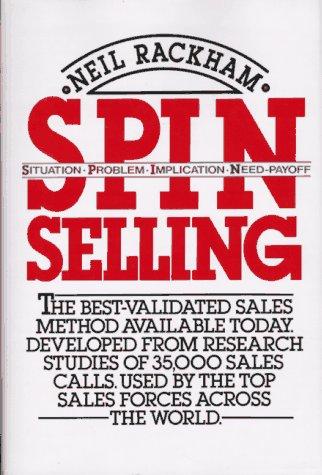
  • Cover: SPIN Selling

    SPIN Selling

    Book

    N. Rackham · 1988

    Grounded in the analysis of thousands of sales calls, the SPIN method structures customer discovery through four types of question (Situation, Problem, Implication, Need-payoff) for complex sales.

  • The Challenger Sale

    Book

    M. Dixon & B. Adamson · 2011

  • Solution Selling

    Book

    M. Bosworth · 1994

  • SNAP Selling

    Book

    J. Konrath · 2010

Structured sales methods: SPIN (N. Rackham), The Challenger Sale (M. Dixon & B. Adamson), Solution Selling (M. Bosworth), MEDDIC, Sandler, SNAP (J. Konrath).

On video

See the technique in action

Videos to picture Customer-Centric Selling and anchor it through examples.

A verified video selection is being enriched; the search above already surfaces the best videos on the topic.

Technique map

Where this technique sits

Every technique sits within a network: what it draws on, what it combines with, where it applies, and how to defend against it.

Levers engaged

biases & emotions

Countered by

Spot its signals, neutralise it and turn it around with the defensive playbook on this page.

See the counter-techniques

Key takeaways

  • En une phrase

    Customer-Centric Selling reverses the logic of the sales pitch: instead of presenting a product and its features, the seller conducts situational conversations in which they ask questions to help the other party visualise how a solution solves a concrete problem in THEIR context. The technique rests on “conversations” scripted by job role rather than on generic pitches, and on the conviction that people buy when they feel understood, not when they are persuaded. Transposed to negotiation, it consists in drawing out the other party’s real needs through questioning before making any proposal, so that the negotiated solution appears as the answer to THEIR problem. It is a posture of shared diagnosis that increases buy-in and reduces resistance.

  • The right reflex

    Name the manoeuvre: said out loud, a technique loses most of its power.

  • Never do this

    Reacting emotionally instead of coming back to the facts.

7.0/10 tactical potential Moderate vigilance Documented school

Master this technique in real situations?

Our programmes turn theory into a concrete advantage.

Explore our programmes
Call Book a call