
NEGOCOACH
260
Origin : FBI · Chris Voss

🕵️ FBI · Chris Voss

Tactical empathy

Chris Voss, "Never Split the Difference", 2016, FBI crisis negotiation.

Full detail in the “Origin & history” section below.

260

Future Pacing

Emotional intelligence Technique 260 / 360
Alexandre Baumberger

Author of the library

Alexandre Baumberger

Negotiation lecturer at KEDGE Business School

A rare threefold background serving negotiation: teaching, commercial justice and audit, backed by experience as a company director in Bordeaux.

  • Teaching, KEDGE Business School Negotiation lecturer since 2014 (12 years).
  • Commercial justice, Commercial Court Judge from 2018 to 2026: litigation, then insolvency proceedings.
  • Audit & advisory, over 20 years Tax, employment and financial audit in major firms, for large groups.
In brief

Future pacing (projecting into the future) consists in getting the other party to mentally experience the situation after the agreement, as if they had already accepted it, in order to make the decision more concrete and desirable. By leading the other party to project themselves into the future benefits, you turn a contractual abstraction into an anticipated experience that makes it easier to commit.

Reading level

At a glance

Its family profile at a glance

Effectiveness Psychologicalimpact Discretion Preparation Relationalrisk Ethics
8.0 / 10 Tactical potential

Vigilance: moderate (4.0/10) · Preparation required: 6/10

Grounding in the source school School grounded in research and field practice

Indicative profile: it situates the “Emotional intelligence” family as the FBI · Chris Voss school practises it, not this technique taken in isolation. Techniques from the same family and school therefore share the same profile. NEGOCOACH editorial rating out of 10, non-experimental · the higher the “relational risk” value, the more costly the technique is to the relationship.

NEGOCOACH assessment

How to read this rating

Tactical potential 8.0/10 (effectiveness, impact, discretion) and vigilance moderate (relational and ethical risk): two distinct readings, deliberately never merged into a single score that would reward risk. NEGOCOACH editorial rating calibrated from the “Emotional intelligence” family and the “FBI · Chris Voss” school. Each criterion is rated out of 10; click to understand what it measures.

  • Effectiveness 8/10 · Very high

    How far the technique can carry the negotiation in the intended direction when it is well executed.

  • Psychological impact 10/10 · Very high

    Strength of the effect produced on the counterpart's perceptions, emotions and decisions.

  • Discretion 6/10 · High

    How hard it is for the other party to notice the technique is being used. A high value = very discreet.

  • Preparation 6/10 · High

    The information, analysis and rehearsal required upfront to use it effectively.

  • Relational risk 3/10 · Low

    Potential cost to the relationship and to trust if the technique is spotted, refused or fails. A high value = riskier.

  • Ethics 6/10 · High

    Moral acceptability: fairness, transparency and respect for the counterpart's autonomy. A high value = more defensible.

Level of evidence

School grounded in research and field practice

The school this technique stems from combines academic work with long field practice. This indicator qualifies the school, not this technique taken in isolation.

Indicative NEGOCOACH editorial rating, for teaching purposes. For “Relational risk”, a high value signals a cost to the relationship, not a quality.

Future Pacing in a Nutshell


Origin & history

The term comes from neuro-linguistic programmingi (Bandler and Grinder), where it denotes the anchoring of a future behaviour. Its effects tie in with psychological research on mental simulation: concretely imagining a future action increases the likelihood of its being carried out, a mechanism close to the implementation intentions of Peter Gollwitzeri (1999).


Definition and principle

Where a sales pitch describes a product, future pacing makes the other party experience the outcome: you take them to the day after the decision ('Imagine, in six months, your teams...'). Two mechanisms are at work: sensory projection makes the benefit tangible, and anticipated commitment creates a consistency that the mind will seek to honour. The agreement then becomes the logical continuation of a future already mentally inhabited.


Concrete examples of application

Application by context

The same technique, across every negotiation settings

Context 1 / 8

Sales negotiation

A vendor of management software invites the prospect: 'Picture your next end-of-month review: instead of three days of spreadsheets, a report ready in one click, and your team freed up for analysis.' The prospect visualises the gain and moves closer to a decision.

How to apply it

Once you have pinpointed the pain point, project the prospect into a precise future scene in which that point has disappeared; summon concrete details, not features.

Strengths

Makes the benefit tangible and emotional where the spec sheet stays abstract.

Weaknesses

A projection that is too rosy or unrealistic arouses scepticism and rings like a hollow sales promise.
Context 2 / 8

Procurement negotiation

A buyer who wants to commit the supplier projects the relationship: 'Let's imagine a year from now: if this partnership goes well, we triple the volumes. What terms would that open up as early as today?' The shared future makes the supplier more inclined to concede now.

How to apply it

Project a profitable shared future for the other party in order to justify an immediate gesture in the name of that potential.

Strengths

Secures present concessions by trading on the prospect of future volume.

Weaknesses

If the promised future fails to materialise, trust and subsequent negotiations suffer.

Context 3 / 8

Labour negotiation

To gain acceptance of a reorganisation, a manager projects the team forward: 'In three months, imagine meetings half as long and decisions taken on the spot.' Having people visualise the improved daily routine reduces resistance to change.

How to apply it

Bring the concrete future daily routine to life rather than laying out the logic of the change; people buy into an experience, not an org chart.

Strengths

Diminishes the fear of change by replacing it with a desirable image.

Weaknesses

An idealised future contradicted by the facts then feeds collective cynicism.

Context 4 / 8

Crisis management

In de-escalation, the negotiator projects a way out: 'Imagine: in an hour, you're outside, you're talking to your loved ones, and all this is behind you.' Opening up a liveable future gives a concrete alternative to the present deadlock.

How to apply it

Paint an achievable positive outcome step by step; the aim is to make the future thinkable again for someone who no longer sees one.

Strengths

Restores a perspective where the other party feels there is no way out, a key driver of de-escalation.

Weaknesses

Promising a future you cannot deliver in a crisis destroys all credibility and worsens the danger.

Context 5 / 8

Political negotiation

A diplomat projects the signatories: 'Picture the signing scene, your respective constituencies hailing a historic agreement rather than yet another failure.' The image of a future that flatters each camp makes the final concession easier.

How to apply it

Project the future reputational benefit for each party; the anticipation of the reputational gain weighs as much as the content.

Strengths

Mobilises the stake of legacy and recognition, powerful in political negotiation.

Weaknesses

May seem manipulative or naive if the real balance of power contradicts the projected image.

Context 6 / 8

Real-estate negotiation

An agent invites the buyer: 'Picture yourself here next summer, a coffee on this terrace, the children in the garden.' By having them mentally inhabit the place, the agent turns a property to be assessed into a home already emotionally invested in.

How to apply it

Have the buyer inhabit the place through sensory projection (light, season, uses) rather than reeling off floor areas.

Strengths

Creates an emotional attachment that overrides the cold analysis of square metres.

Weaknesses

An overly insistent projection can be felt as sales pressure and put the buyer on the defensive.

Context 7 / 8

Cross-cultural negotiation

With a partner from a culture that values the long term and the relationship, a negotiator projects the cooperation over years: 'Let's imagine what our two houses will have built in ten years.' This relational future resonates more than an immediate gain.

How to apply it

Adjust the horizon of the projection to the culture: long term and relationship in patient cultures, quick results in short-term-oriented cultures.

Strengths

Aligns the pitch with the other party's temporal values, which strengthens buy-in.

Weaknesses

A projection horizon out of step with the cultural norm (too short or too distant) rings false.

Context 8 / 8

Family negotiation

To defuse an inheritance dispute, a mediator projects the aftermath: 'Picture the next family gatherings: do you want us to meet there at peace, or with this quarrel between us?' The relational future steers towards agreement.

How to apply it

Project the future relational cost or benefit rather than the division alone; in families, the relationship often takes precedence over the estate.

Strengths

Refocuses on what truly matters in the long term and encourages compromise.

Weaknesses

May be experienced as emotional blackmail if the projection dwells on guilt.


Counter-techniques

Spot and neutralise this technique

Negotiation is also played on defence. Here is how to recognise this technique when it is used against you, and turn it around.

Detect

The signals that give it away

  • Displayed empathy that lowers your guard
  • Mirroring of your gestures and words
  • A systematic "I understand you"

Neutralise

The counters that defuse it

  • Appreciate the warmth without relaxing
  • Keep your objectives in mind
  • Distinguish being heard from being satisfied

Turn around

Turn it into an advantage

Use active listening in turn to gather information.

The trap to avoid

Mistaking being understood for having won your case.

In brief

  • Difficulty: Intermediate
  • Estimated effectiveness: High
  • Implementation time: Short
  • Fields of application: Sales, Management, Coaching, Mediation, Real estate
  • Synonyms: Future projection, Future anchoring, Directed mental simulation
  • Tags: future pacing, projection, NLP, mental simulation, commitment

Strengths and Weaknesses

Future pacing makes a decision concrete and desirable by having it experienced before it is taken: it converts an abstract pitch into an anticipated experience and creates a mental commitment. Its weakness: it rests on the credibility of the projection, an idealised future contradicted by the facts turns into scepticism, or even lasting cynicism.


When to use this technique?

To be used after identifying the real need, in order to anchor the benefits and lift the fear of change, in sales, in management or in de-escalation. To be avoided when no tangible benefit can be honoured, and to be dosed carefully: too insistent, it tips into pressure. Unsuited to purely technical, figure-driven decisions.


How to recognise and counter this technique

Recognise: you are made to imagine a bright future in detail ('imagine, in six months...') before any objections have even been addressed. Neutralise: bring the projection back to the verifiable present ('Concretely, what do you commit to in writing as of today?'). Turn it around: project in turn a future that includes the risks to rebalance the image and test the soundness of the promise.


Limits and ethics

Future pacing becomes manipulation when it dangles a future known to be improbable, or when it exploits vulnerability (emotional blackmail in a family context, false promises in a crisis). Ethics requires a sincere and deliverable projection: having someone imagine a real benefit is legitimate, selling unverifiable dreams is not.


Variants and related techniques

Close to anchoring and to benefit selling; combines with storytelling and the projection question. The defensive variant consists in projecting the future of disagreement (the costs of a failure) rather than that of the agreement. To be distinguished from the mere description of features, which does not engage the imagination.


Going further

  • Peter Gollwitzer, 'Implementation Intentions: Strong Effects of Simple Plans', American Psychologist, 1999.
  • Richard Bandler & John Grinder, Frogs into Princes: Neuro Linguistic Programming, 1979.
  • Robert Cialdini, Pre-Suasion: A Revolutionary Way to Influence and Persuade, 2016.

Objectives of the technique

  • Get the other party to mentally experience the situation following the agreement so as to make the benefits concrete, sensory and desirable rather than abstract.
  • Reduce the perception of risk: a decision already 'experienced' in imagination seems more familiar, more likely and less daunting to take.
  • Increase the likelihood of closing by exploiting the simulation heuristic: what is easily imagined seems more plausible and more attainable.
  • Bring hidden objections to the surface: it is often by projecting themselves into implementation that the other party voices their real reservations (budget, internal sign-off, timeline).
  • Place the relationship within a future continuity that goes beyond the one-off transaction and paves the way for retention.

Famous cases

Sales · The cable experiment in Tempe (Gregory, Cialdini and Carpenter, 1982): A real, documented case. In a field study carried out in Tempe (Arizona), researchers compared two canvassing pitches for a cable television subscription. The first group of households received a classic presentation of the service's advantages. The second was invited to imagine themselves concretely enjoying it ('Picture yourself one evening, at home, choosing among these programmes...'). A few weeks later, when the actual commercial offer was made, the households that had practised this projection into the future subscribed in a markedly higher proportion (roughly double) than those who had received only the information. This study is regarded as the reference experimental demonstration of the mechanism underlying future pacing: imagining a future scenario that concerns us increases both its perceived probability and the move to act.

Business · Representative scenario: negotiating a software deal by making the next quarter come alive: Representative scenario (not attributed to real people). A software vendor is negotiating with an operations director who is reluctant on price. Rather than defending her rate, she shifts the conversation into the future: 'Let's place ourselves next March. Your three planning officers arrive on Monday morning: the week's schedule is already generated, the team conflicts flagged automatically. Concretely, what would they do with the half-day recovered each week?' The director gets caught up in it, describes the use he would make of it, then raises the real objection himself: change management with the teams. The negotiation then swings from price to deployment support, ground on which an agreement is reached. Future pacing made the value tangible and brought the real objection, hidden behind the pricing discussion, to the surface.


Common mistakes

  • Projecting too early, before genuinely diagnosing the needs: the projection rings hollow, seems tacked on and triggers mistrust instead of buy-in.
  • Staying generic ('you'll see, it'll be wonderful') instead of building a precise, dated and sensory future, fed by the information given by the other party themselves.
  • Painting an excessively idyllic future: overselling creates a dissonance at the first real friction and destroys trust, and thus the long-term relationship.
  • Imposing the scenario instead of co-building it: a hammered-out 'once you've signed...' is experienced as manipulative pressure; effective future pacing invites the other party to describe that future themselves.
  • Never confronting the promised future with reality after the agreement: without follow-up, the technique becomes an empty promise and jeopardises any future negotiation.

Scientific foundations

  • W. Larry Gregory, Robert B. Cialdini, Kathleen M. Carpenter (1982) Self-relevant scenarios as mediators of likelihood estimates and compliance: Does imagining make it so? Journal of Personality and Social Psychology, 43(1), 89-99, DOI: 10.1037/0022-3514.43.1.89
  • Daniel Kahneman, Amos Tversky (1982) The simulation heuristic in Kahneman, Slovic & Tversky (eds.), Judgment under Uncertainty: Heuristics and Biases, Cambridge University Press
  • Robert B. Cialdini (2016) Pre-Suasion: A Revolutionary Way to Influence and Persuade Simon & Schuster, New York

Quick exercise

Test yourself before answering

Answer in your head, then reveal the solution. Memory is built through active recall.

1 Quels signaux doivent vous alerter ?
  • Displayed empathy that lowers your guard
  • Mirroring of your gestures and words
  • A systematic "I understand you"
2 Quelles parades appliquer ?
  • Appreciate the warmth without relaxing
  • Keep your objectives in mind
  • Distinguish being heard from being satisfied

Frequently asked questions

The questions we get most

What is the "Future Pacing" technique?

Future pacing (projecting into the future) consists in getting the other party to mentally experience the situation after the agreement, as if they had already accepted it, in order to make the decision more concrete and desirable. By leading the other party to project themselves into the future benefits, you turn a contractual abstraction into an anticipated experience that makes it easier to commit.

Is the "Future Pacing" technique ethical?

It sits on the line: effective, but it can tip into manipulation if it exploits an information asymmetry. Use it with measure and without deliberate deceit.

How do you defend against "Future Pacing"?

Mistaking being understood for having won your case. The right reflex: appreciate the warmth without relaxing.

What is the "Future Pacing" technique based on?

NEGOCOACH does not assess the experimental validation of this technique in isolation. What we document is the grounding of its source school (FBI · Chris Voss): school grounded in research and field practice. Full detail is in the "At a glance" section of this page.

Practise with AI

Three ready-to-use prompts

Copy, paste into your assistant, replace the [brackets]. Works with ChatGPT, Claude, Gemini, Mistral, Perplexity.

Prepare

Build your plan before the meeting

You are an expert negotiation coach. Help me prepare to use the "Future Pacing" technique in the following situation: [describe your situation]. Give me: the conditions for success, a 3-step script, my counterpart's likely objections and how to answer them.

Simulate

Rehearse against an AI counterpart

Play the role of my counterpart in a negotiation. I am going to test the "Future Pacing" technique. React realistically and with resistance, do not give in too quickly, then at the end analyse my performance and suggest 3 concrete improvements.

Debrief

Analyse a past negotiation

Here is how my negotiation went: [paste the exchanges]. Analyse whether the "Future Pacing" technique was used well, what worked, the mistakes made, and spell out precisely what I could have done better.

References

Bibliography & credible sources

Founding works of the 🕵️ FBI · Chris Voss school this technique belongs to.

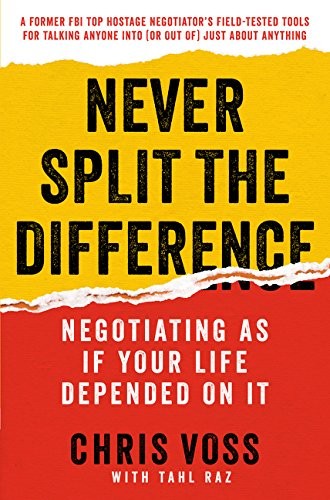
  • Cover: Never Split the Difference

    Never Split the Difference

    Book

    C. Voss & T. Raz · 2016

    The FBI's hostage-negotiation methods transposed to business and everyday life: tactical empathy, mirroring, labeling, calibrated questions. An emotional, counter-intuitive approach to persuasion.

  • Cover: Stalling for Time, My Life as an FBI Hostage Negotiator

    Stalling for Time, My Life as an FBI Hostage Negotiator

    Book

    G. Noesner · 2010

    The account of twenty-three years of crisis negotiation at the FBI by the head of its unit. A demonstration of the power of listening, patience and de-escalation in the most tense situations.

Chris Voss, "Never Split the Difference", 2016, FBI crisis negotiation.

On video

See the technique in action

Videos to picture Future Pacing and anchor it through examples.

A verified video selection is being enriched; the search above already surfaces the best videos on the topic.

Technique map

Where this technique sits

Every technique sits within a network: what it draws on, what it combines with, where it applies, and how to defend against it.

Levers engaged

biases & emotions

Countered by

Spot its signals, neutralise it and turn it around with the defensive playbook on this page.

See the counter-techniques

Key takeaways

  • En une phrase

    Future pacing (projecting into the future) consists in getting the other party to mentally experience the situation after the agreement, as if they had already accepted it, in order to make the decision more concrete and desirable. By leading the other party to project themselves into the future benefits, you turn a contractual abstraction into an anticipated experience that makes it easier to commit.

  • The right reflex

    Use active listening in turn to gather information.

  • Never do this

    Mistaking being understood for having won your case.

8.0/10 tactical potential Moderate vigilance School grounded in research and field practice

Master this technique in real situations?

Our programmes turn theory into a concrete advantage.

Explore our programmes
Call Book a call