
NEGOCOACH
312
Origin : Sales & commercial methods

💼 Sales & commercial methods

B2B sales methods

Structured sales methods: SPIN (N. Rackham), The Challenger Sale (M. Dixon & B. Adamson), Solution Selling (M. Bosworth), MEDDIC, Sandler, SNAP (J. Konrath).

Full detail in the “Origin & history” section below.

312

SNAP Selling

Sales & commercial methods Technique 312 / 360
Alexandre Baumberger

Author of the library

Alexandre Baumberger

Negotiation lecturer at KEDGE Business School

A rare threefold background serving negotiation: teaching, commercial justice and audit, backed by experience as a company director in Bordeaux.

  • Teaching, KEDGE Business School Negotiation lecturer since 2014 (12 years).
  • Commercial justice, Commercial Court Judge from 2018 to 2026: litigation, then insolvency proceedings.
  • Audit & advisory, over 20 years Tax, employment and financial audit in major firms, for large groups.
In brief

SNAP Selling is a sales method designed to win over overloaded, distracted and time-poor counterparts, whose attention is the truly scarce resource. It rests on four principles applied to every interaction: staying Simple, making yourself iNvaluable (immediate value), staying Aligned with the client's real concerns, and raising the Priority of your proposal. Transposed to negotiation, it teaches you to reduce the other party's cognitive load and to make the agreement easy to accept at the right moment. It is an approach centred on the overwhelmed buyer rather than on the seller's process.

Reading level

At a glance

Its family profile at a glance

Effectiveness Psychologicalimpact Discretion Preparation Relationalrisk Ethics
7.0 / 10 Tactical potential

Vigilance: moderate (4.5/10) · Preparation required: 7/10

Grounding in the source school Documented school

Indicative profile: it situates the “Sales & commercial methods” family as the Sales & commercial methods school practises it, not this technique taken in isolation. Techniques from the same family and school therefore share the same profile. NEGOCOACH editorial rating out of 10, non-experimental · the higher the “relational risk” value, the more costly the technique is to the relationship.

NEGOCOACH assessment

How to read this rating

Tactical potential 7.0/10 (effectiveness, impact, discretion) and vigilance moderate (relational and ethical risk): two distinct readings, deliberately never merged into a single score that would reward risk. NEGOCOACH editorial rating calibrated from the “Sales & commercial methods” family and the “Sales & commercial methods” school. Each criterion is rated out of 10; click to understand what it measures.

  • Effectiveness 8/10 · Very high

    How far the technique can carry the negotiation in the intended direction when it is well executed.

  • Psychological impact 7/10 · High

    Strength of the effect produced on the counterpart's perceptions, emotions and decisions.

  • Discretion 6/10 · High

    How hard it is for the other party to notice the technique is being used. A high value = very discreet.

  • Preparation 7/10 · High

    The information, analysis and rehearsal required upfront to use it effectively.

  • Relational risk 4/10 · Moderate

    Potential cost to the relationship and to trust if the technique is spotted, refused or fails. A high value = riskier.

  • Ethics 6/10 · High

    Moral acceptability: fairness, transparency and respect for the counterpart's autonomy. A high value = more defensible.

Level of evidence

Documented school

The school this technique stems from is documented by recognised work and established practice, without experimental consensus. This indicator qualifies the school, not this technique taken in isolation.

Indicative NEGOCOACH editorial rating, for teaching purposes. For “Relational risk”, a high value signals a cost to the relationship, not a quality.

SNAP Selling in brief


Origin & history

The method was formalised by Jill Konrath, an American sales strategist, in her book "SNAP Selling: Speed Up Sales and Win More Business with Today's Frazzled Customers" (Portfolio/Penguin, 2010). Konrath extends her earlier book "Selling to Big Companies" (2005), starting from a single observation: information overload and the barrage of solicitations have turned decision-makers into "frazzled customers". SNAP is the acronym for Simple, iNvaluable, Aligned, Priority.


Definition and principle

A decision framework that structures every contact with an overwhelmed counterpart around four operational requirements: (1) Simple, remove all needless complexity, effort or friction from the message and the process; (2) iNvaluable, deliver distinctive value and expertise that make you a resource rather than an interchangeable supplier; (3) Aligned, stay permanently in step with the other party's real needs, priorities and objectives; (4) Priority, demonstrate why your topic deserves to be dealt with now rather than deferred to the "status quo". Konrath also links them to the buyer's three decisions: granting access, choosing to change, and selecting the resources.


Objectives of the technique

  • Capture and hold the attention of an overloaded counterpart by drastically reducing their cognitive load and the effort required to say yes
  • Position yourself as a high value-added resource rather than a mere seller or an interchangeable opposing party
  • Continuously align the proposal with the other party's real priorities, constraints and objectives to avoid a reflex rejection
  • Turn the status quo (inertia, the "let's see later") into a decision to act now by raising the perceived priority
  • Shorten the decision cycle and make a clear agreement easier by eliminating friction, jargon and superfluous steps

Concrete examples of application

Application by context

The same technique, across every negotiation settings

Context 1 / 8

Sales negotiation

The salesperson condenses their proposal into an ultra-clear message (Simple), demonstrates a quantified ROI from the very first exchange (iNvaluable), ties it to the client's exact quarterly KPI (Aligned) and shows the cost of waiting to justify an immediate decision (Priority).
Context 2 / 8

Procurement negotiation

The buyer applies SNAP to their suppliers by framing a simple, unambiguous request, by making themselves valuable as a reliable long-term partner, by aligning the request with the seller's industrial constraints and by signalling budgetary urgency to secure priority handling.

Context 3 / 8

Labour negotiation

In labour negotiation, the union representative sums up their demands in crisp, ranked points (Simple), draws on payroll/absenteeism data useful to management (iNvaluable), links them to the performance and industrial climate the employer is seeking (Aligned) and points to the risk of imminent conflict to push the issue up the agenda (Priority).

Context 4 / 8

Crisis management

Faced with a party under acute stress and saturated with information, the negotiator pares their message down to the essentials, makes themselves indispensable by offering a credible and safe way out, aligns strictly with the primary need (safety, time, dignity) and makes the next micro-decision the only priority of the moment.

Context 5 / 8

Political negotiation

An elected official secures the backing of an overloaded coalition partner by reducing a complex text to three readable commitments, by offering useful expertise or a lever of influence, by aligning the measure with the interests of their constituency and by invoking the parliamentary window that is closing.

Context 6 / 8

Real-estate negotiation

The agent or the buyer simplifies the offer down to its decisive terms, makes themselves valuable by clearing uncertainties from the outset (financing, surveys), aligns with the seller's real motivation (speed, price, timeline) and creates a priority through a clean offer coupled with a short deadline.

Context 7 / 8

Cross-cultural negotiation

In a multicultural context, you simplify by avoiding idioms and unspoken assumptions, you make yourself iNvaluable by demonstrating a fine understanding of the other culture's codes, you align the proposal with the counterpart's values and relationship to time, and you adjust the notion of priority to the local decision-making rhythm rather than imposing urgency.

Context 8 / 8

Family negotiation

For a sensitive family decision (dividing an estate, choosing care for an elderly parent), you present a clear option instead of a sprawling debate, you make a concrete contribution that relieves loved ones, you align with what matters emotionally to each person and you show why deciding now is better than letting the situation drift.


Counter-techniques

Spot and neutralise this technique

Negotiation is also played on defence. Here is how to recognise this technique when it is used against you, and turn it around.

Detect

The signals that give it away

  • A sudden imbalance in the exchange
  • Pressure to decide quickly
  • An argument you cannot verify

Neutralise

The counters that defuse it

  • Slow down and reformulate
  • Ask for facts and sources
  • Concede nothing without a counterpart

Turn around

Turn it into an advantage

Name the manoeuvre: said out loud, a technique loses most of its power.

The trap to avoid

Reacting emotionally instead of coming back to the facts.

Strengths and weaknesses

Strengths: a method centred on the real psychological state of modern decision-makers (overload, fragmented attention), and therefore highly current; it reduces the rate of reflex rejection by lowering friction and perceived effort; the SNAP framework is memorable and applicable to every micro-interaction, not just to the full sale; it forces the negotiator to decentre towards the other party's priorities. Weaknesses: designed first and foremost for B2B selling, its transposition to hard distributive or highly conflictual negotiations is only partial; the "Priority" principle can slide into artificial and manipulative urgency; "Simple", misunderstood, leads to over-simplifying genuinely complex matters; the approach assumes a rationally hurried counterpart, and is less suited to power games or ideological deadlocks; finally, its foundations are mainly practitioner-based, with little direct experimental academic validation.


When to use this technique?

Particularly effective with very busy counterparts, saturated with solicitations and working to tight schedules (senior executives, professional buyers, decision-makers juggling many files); in decision cycles where the real competitor is inertia and the status quo; in first contact and cold follow-up; when value must be demonstrated quickly just to obtain access. Less relevant in long, highly relational negotiations under low time pressure, or in purely distributive confrontations where the lever is the balance of power rather than cognitive load.


Famous cases

Sales · Selling to the buyer who "has no time", Konrath grounds SNAP in her own field observation: after the launch of "Selling to Big Companies", she notes that salespeople fail not for lack of arguments but because overwhelmed decision-makers filter out anything that demands effort. The illustrative principle she popularises is that of the seller who, instead of a long pitch, opens with a concrete, quantified benefit relevant to that specific client, proposes a minimal first step (a 15-minute exchange, a free assessment) and links the solution to a deadline already present for the buyer. The response rate rises because each solicitation costs less mental energy to process and aligns with an existing priority.

Business · Framing a supplier renegotiation under SNAP (representative scenario), Representative scenario, without real attribution: an SME wants to renegotiate a maintenance contract with an unreachable, overloaded provider. Rather than a ten-page file, the buyer sends a one-page request (Simple): three pre-calculated pricing options. She attaches usage data that will also help the provider size its offer more accurately (iNvaluable), frames the request in line with the supplier's known margins and technical constraints (Aligned) and sets a deadline tied to the budget close to secure priority handling (Priority). The provider, whose analysis effort is minimal, replies within a few days and the agreement is reached faster than with the usual procedure.


Common mistakes

  • Confusing "Simple" with "simplistic" and cutting down a genuinely complex file, which destroys credibility and loses alignment
  • Distorting "Priority" into manufactured urgency and artificial pressure, which tips into manipulation and breeds distrust
  • Staying focused on your own value pitch instead of continuously checking alignment with the other party's shifting priorities
  • Applying SNAP mechanically without listening, reciting the four principles rather than adapting them to the counterpart's real state
  • Neglecting to build relationship and trust by betting everything on speed and efficiency, at the risk of a fragile agreement

How to recognise and counter this technique

To recognise SNAP being used against you: spot the extreme simplification (pre-chewed options, binary choices), value pushed very early and a deadline that presses you to decide quickly. Defence: deliberately slow the tempo and refuse unfounded urgency by asking "what makes this a priority today, precisely?"; insist on seeing the complexity hidden behind the offered "simplicity" (hidden costs, options set aside); check that the displayed alignment matches your real priorities and not those attributed to you; and distinguish genuine value creation from mere packaging. Regaining control of the timetable neutralises most of the "Priority" lever.


Limits and ethics

Limits: a primarily practitioner framework, born of B2B selling, whose effectiveness rests on field feedback more than on controlled trials; it assumes a hurried and broadly rational counterpart, and accounts poorly for negotiations dominated by power, ideology or deep emotion. Ethics: the line between "raising the priority" and manufacturing false urgency is thin; reducing the other party's effort must not amount to concealing decisive information. Used with integrity, SNAP respects the decision-maker's autonomy by saving them time; misused, it exploits cognitive overload to force a poorly informed consent, which is manipulative.


Variants and related techniques

Close to consultative and "buyer-centric" selling methods: SPIN Selling (Rackham), Solution Selling, The Challenger Sale (Dixon & Adamson, whose notion of delivering a disruptive idea is close to iNvaluable), Value Selling. On the cognitive-load and decision-facilitation side, it connects with work on the simplicity of the buying effort ("The Effortless Experience") and, in negotiation, with the interest-based logic of "Getting to Yes" (Fisher & Ury) through alignment. Konrath herself extends SNAP with "Agile Selling" (2014) on the seller's adaptability.


Going further

  • Jill Konrath, "SNAP Selling", Portfolio/Penguin, 2010 (the reference work)
  • The author's official site: jillkonrath.com/snap-selling (summaries, tools, cheat sheets)
  • Jill Konrath, "Agile Selling", Portfolio/Penguin, 2014 (an extension on adaptability)
  • SNAP Selling summary sheets published by CRM vendors and B2B sales blogs (e.g. recaps of the 4 principles and the buyer's 3 decisions)

Scientific foundations

  • Jill Konrath (2010) SNAP Selling: Speed Up Sales and Win More Business with Today's Frazzled Customers Portfolio / Penguin Group, New York (ISBN 9781591844709)
  • Jill Konrath (2014) Agile Selling: Get Up to Speed Quickly in Today's Ever-Changing Sales World Portfolio / Penguin Group, New York
  • Neil Rackham (1988) SPIN Selling McGraw-Hill, New York

Quick exercise

Test yourself before answering

Answer in your head, then reveal the solution. Memory is built through active recall.

1 Quels signaux doivent vous alerter ?
  • A sudden imbalance in the exchange
  • Pressure to decide quickly
  • An argument you cannot verify
2 Quelles parades appliquer ?
  • Slow down and reformulate
  • Ask for facts and sources
  • Concede nothing without a counterpart

Frequently asked questions

The questions we get most

What is the "SNAP Selling" technique?

SNAP Selling is a sales method designed to win over overloaded, distracted and time-poor counterparts, whose attention is the truly scarce resource. It rests on four principles applied to every interaction: staying Simple, making yourself iNvaluable (immediate value), staying Aligned with the client's real concerns, and raising the Priority of your proposal. Transposed to negotiation, it teaches you to reduce the other party's cognitive load and to make the agreement easy to accept at the right moment. It is an approach centred on the overwhelmed buyer rather than on the seller's process.

Is the "SNAP Selling" technique ethical?

It sits on the line: effective, but it can tip into manipulation if it exploits an information asymmetry. Use it with measure and without deliberate deceit.

How do you defend against "SNAP Selling"?

Reacting emotionally instead of coming back to the facts. The right reflex: slow down and reformulate.

What is the "SNAP Selling" technique based on?

NEGOCOACH does not assess the experimental validation of this technique in isolation. What we document is the grounding of its source school (Sales & commercial methods): documented school. Full detail is in the "At a glance" section of this page.

Practise with AI

Three ready-to-use prompts

Copy, paste into your assistant, replace the [brackets]. Works with ChatGPT, Claude, Gemini, Mistral, Perplexity.

Prepare

Build your plan before the meeting

You are an expert negotiation coach. Help me prepare to use the "SNAP Selling" technique in the following situation: [describe your situation]. Give me: the conditions for success, a 3-step script, my counterpart's likely objections and how to answer them.

Simulate

Rehearse against an AI counterpart

Play the role of my counterpart in a negotiation. I am going to test the "SNAP Selling" technique. React realistically and with resistance, do not give in too quickly, then at the end analyse my performance and suggest 3 concrete improvements.

Debrief

Analyse a past negotiation

Here is how my negotiation went: [paste the exchanges]. Analyse whether the "SNAP Selling" technique was used well, what worked, the mistakes made, and spell out precisely what I could have done better.

References

Bibliography & credible sources

Founding works of the 💼 Sales & commercial methods school this technique belongs to.

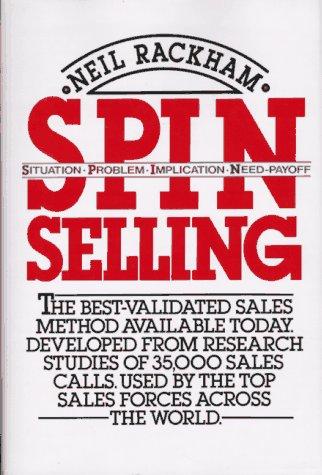
  • Cover: SPIN Selling

    SPIN Selling

    Book

    N. Rackham · 1988

    Grounded in the analysis of thousands of sales calls, the SPIN method structures customer discovery through four types of question (Situation, Problem, Implication, Need-payoff) for complex sales.

  • The Challenger Sale

    Book

    M. Dixon & B. Adamson · 2011

  • Solution Selling

    Book

    M. Bosworth · 1994

  • SNAP Selling

    Book

    J. Konrath · 2010

Structured sales methods: SPIN (N. Rackham), The Challenger Sale (M. Dixon & B. Adamson), Solution Selling (M. Bosworth), MEDDIC, Sandler, SNAP (J. Konrath).

On video

See the technique in action

Videos to picture SNAP Selling and anchor it through examples.

A verified video selection is being enriched; the search above already surfaces the best videos on the topic.

Technique map

Where this technique sits

Every technique sits within a network: what it draws on, what it combines with, where it applies, and how to defend against it.

Levers engaged

biases & emotions

Countered by

Spot its signals, neutralise it and turn it around with the defensive playbook on this page.

See the counter-techniques

Key takeaways

  • En une phrase

    SNAP Selling is a sales method designed to win over overloaded, distracted and time-poor counterparts, whose attention is the truly scarce resource. It rests on four principles applied to every interaction: staying Simple, making yourself iNvaluable (immediate value), staying Aligned with the client's real concerns, and raising the Priority of your proposal. Transposed to negotiation, it teaches you to reduce the other party's cognitive load and to make the agreement easy to accept at the right moment. It is an approach centred on the overwhelmed buyer rather than on the seller's process.

  • The right reflex

    Name the manoeuvre: said out loud, a technique loses most of its power.

  • Never do this

    Reacting emotionally instead of coming back to the facts.

7.0/10 tactical potential Moderate vigilance Documented school

Master this technique in real situations?

Our programmes turn theory into a concrete advantage.

Explore our programmes
Call Book a call