Context 1 / 8
Sales negotiation
A B2B salesperson does not present his 40,000-euro software as an expense but demonstrates that it will save 180,000 euros a year in processing time, positioning the price as a four-month return on investment.

💼 Sales & commercial methods
B2B sales methods
Structured sales methods: SPIN (N. Rackham), The Challenger Sale (M. Dixon & B. Adamson), Solution Selling (M. Bosworth), MEDDIC, Sandler, SNAP (J. Konrath).
Full detail in the “Origin & history” section below.

Author of the library
Negotiation lecturer at KEDGE Business School
A rare threefold background serving negotiation: teaching, commercial justice and audit, backed by experience as a company director in Bordeaux.
Value Selling consists in shifting the conversation from price to the economic value created for the other party: instead of extolling features, one quantifies the return on investment, the gains and the cost of inaction. In negotiation, the technique turns a debate about “how much it costs” into a figures-backed demonstration of “how much it earns, or how much it saves you from losing”. It anchors the agreement on shared numbers (ROI, savings, risks avoided) rather than on positions. Handled well, it justifies a premium price and shortens negotiations by making the offer rationally hard to refuse.
At a glance
Vigilance: moderate (4.5/10) · Preparation required: 7/10
Indicative profile: it situates the “Sales & commercial methods” family as the Sales & commercial methods school practises it, not this technique taken in isolation. Techniques from the same family and school therefore share the same profile. NEGOCOACH editorial rating out of 10, non-experimental · the higher the “relational risk” value, the more costly the technique is to the relationship.
NEGOCOACH assessment
Tactical potential 7.0/10 (effectiveness, impact, discretion) and vigilance moderate (relational and ethical risk): two distinct readings, deliberately never merged into a single score that would reward risk. NEGOCOACH editorial rating calibrated from the “Sales & commercial methods” family and the “Sales & commercial methods” school. Each criterion is rated out of 10; click to understand what it measures.
How far the technique can carry the negotiation in the intended direction when it is well executed.
Strength of the effect produced on the counterpart's perceptions, emotions and decisions.
How hard it is for the other party to notice the technique is being used. A high value = very discreet.
The information, analysis and rehearsal required upfront to use it effectively.
Potential cost to the relationship and to trust if the technique is spotted, refused or fails. A high value = riskier.
Moral acceptability: fairness, transparency and respect for the counterpart's autonomy. A high value = more defensible.
Documented school
The school this technique stems from is documented by recognised work and established practice, without experimental consensus. This indicator qualifies the school, not this technique taken in isolation.
Indicative NEGOCOACH editorial rating, for teaching purposes. For “Relational risk”, a high value signals a cost to the relationship, not a quality.
Value-based selling has its conceptual roots in the B2B marketing of the 1990s and 2000s, notably the work of James C. Anderson and James A. Narus on value propositions in business markets (Harvard Business Review, 2006) and their book “Value Merchants” (2007). On the commercial-methodology side, the “ValueSelling Framework” was formalised by Julie Thomas and ValueSelling Associates from the 1990s and 2000s onwards, extending consultative selling. The academic conceptualisation of “value-based selling” was later refined by Terho, Haas, Eggert and Ulaga (Industrial Marketing Management, 2012). The common thread is the idea of anchoring the decision on the customer’s total cost and productivity, rather than on the product.
Value Selling is a negotiation and sales approach that consists in identifying, quantifying and documenting the net economic value a solution brings to the other party (revenue gains, cost reductions, risks and losses avoided), then using this quantified value as the benchmark for the discussion on price and terms. Operationally, it rests on three pillars: (1) diagnosing the interlocutor’s real economic stakes, (2) building a differentiated, quantified value proposition (ROI, payback period, cost of inaction), (3) translating each of the other party’s requirements into its impact on this value equation. Price is no longer an expense but a percentage of the value created.
Application by context
A B2B salesperson does not present his 40,000-euro software as an expense but demonstrates that it will save 180,000 euros a year in processing time, positioning the price as a four-month return on investment.
A buyer turns the technique back on the seller by requiring the latter to prove the claimed value with figures, then negotiates a clause indexing the price on the gains actually observed (payment on performance).
During a collective pay negotiation, an HR director quantifies the cost of absenteeism and staff turnover to show that a targeted pay increase pays for itself through fewer departures, turning a demand into an investment.
In a crisis negotiation, a mediator quantifies for each party the real cost of continuing the conflict (lost operating income, reputation, time) so that the cost of inaction makes the agreement obviously preferable.
An elected official defends an unpopular reform by precisely quantifying the budget savings and the jobs created over five years, setting this measurable value against the cost, likewise quantified, of maintaining the status quo.
A property seller justifies an above-market price by documenting the annual energy savings, the low rental vacancy and the expected capital gain, turning the purchase price into a calculated net yield.
Facing an interlocutor from a culture where head-on haggling dominates, the negotiator anchors the discussion on a shared, quantified value matrix, a universal economic language that limits misunderstandings and relational biases.
During the division of an estate, an heir proposes to keep the family home by quantifying the sale costs avoided, the possible rental income and the future asset value, in order to bring objectivity to an emotionally charged decision.
Counter-techniques
Negotiation is also played on defence. Here is how to recognise this technique when it is used against you, and turn it around.
The signals that give it away
The counters that defuse it
Turn it into an advantage
Name the manoeuvre: said out loud, a technique loses most of its power.
Reacting emotionally instead of coming back to the facts.
Strengths: the technique shifts the balance of power from price to value, which legitimises high margins and reduces commoditisation; it rationalises the decision and makes price objections arguable; it creates urgency through the cost of inaction; it builds partner credibility founded on figures. Weaknesses: it requires an in-depth diagnosis and reliable data, both time-consuming; ROI figures can be perceived as inflated or manipulative if they are not prudent and verifiable; it assumes a rational interlocutor with economic decision-making power, which is not always the case; it is less effective on emotional, low-stakes or highly standardised purchases; finally, a savvy buyer can turn the demonstration around to demand a share of the value created.
Value Selling is particularly favourable in complex, high-stakes B2B sales and negotiations, with long cycles and several decision-makers, where the solution has a measurable economic impact (productivity, costs, revenue, risks). It excels against a rational interlocutor who has a budget and is sensitive to ROI, especially when the offer is differentiated and one must escape pure price comparison. It is also powerful for overcoming the inertia of the status quo by quantifying the cost of inaction. It is, however, ill-suited to purely transactional, emotional or low-value deals, or when no reliable data is available to substantiate the value.
Business · Rockwell Automation: selling total cost, not price, The textbook case documented by Anderson, Kumar and Narus in “Value Merchants” (2007) illustrates Value Selling: facing a distributor who could buy a competing pump more cheaply per unit, Rockwell Automation did not fight on list price. The salespeople built a quantified comparison of the total cost of ownership over the lifecycle (energy consumption, maintenance, reliability) demonstrating a net saving of several thousand dollars despite a higher purchase price. By documenting this differential value rather than conceding a discount, Rockwell won the contract and preserved its margin. This case is regularly cited as the archetype of demonstrating and documenting superior value.
Sales · SaaS and the cost of inaction, A scenario representative of the software sector (not attributed to a named company). A SaaS vendor negotiates an annual subscription of 60,000 euros with a prospect who considers the price high. Rather than lowering it, the negotiator co-builds a value spreadsheet with the client: 12,000 hours of manual data entry eliminated, 4% of billing errors avoided, a collection period shortened by 15 days. The total exceeds 250,000 euros of annual benefit, and above all it quantifies that each month of postponement costs the prospect roughly 20,000 euros. The cost of inaction, made tangible, turns the price objection into urgency to sign and the deal closes without a discount.
To recognise Value Selling being used against you: the interlocutor systematically substitutes “value” figures for any discussion of price, quantifies the cost of your inaction and presents you with a very favourable ROI. To defend yourself: demand transparency on the assumptions and sources behind every figure, test their sensitivity (“what happens to the ROI if the gain is twice as small?”), and distinguish potential value from guaranteed value. Turn the logic around by demanding a share of the value created (“if your solution generates that much, your price should represent only a fraction of it”) or a performance-based remuneration clause. Also recall the hidden costs left out (implementation, training, risk of failure) to rebalance the equation.
Limits: Value Selling assumes the existence of reliable data and of an interlocutor able and willing to reason in economic terms; it loses its force on emotional, symbolic or low-stakes decisions, and comes up against cultures or situations where price remains the only criterion. It is time-consuming and demands financial-analysis skills. On the ethical plane, the line is thin between honest quantification and manipulation: presenting knowingly optimistic ROIs, cherry-picking favourable assumptions or concealing hidden costs amounts to deception and exposes one to a lasting loss of trust, or even to legal action if quantified commitments are not met. Rigour requires documenting prudent, verifiable and, ideally, jointly built figures.
Related techniques: consultative selling (Neil Rackham’s SPIN Selling), which prepares the ground through questioning; Solution Selling, centred on the client’s problem; the “Challenger Sale”, which brings a fresh economic perspective and reframes the stakes; the Total Cost of Ownership demonstration; the value matrix and ROI calculation; anchoring (shifting the reference point); and the creation of urgency through the cost of the status quo. Upstream, BATNA preparation helps to situate the value of the agreement relative to the best alternative.
Quick exercise
Answer in your head, then reveal the solution. Memory is built through active recall.
Frequently asked questions
Value Selling consists in shifting the conversation from price to the economic value created for the other party: instead of extolling features, one quantifies the return on investment, the gains and the cost of inaction. In negotiation, the technique turns a debate about “how much it costs” into a figures-backed demonstration of “how much it earns, or how much it saves you from losing”. It anchors the agreement on shared numbers (ROI, savings, risks avoided) rather than on positions. Handled well, it justifies a premium price and shortens negotiations by making the offer rationally hard to refuse.
It sits on the line: effective, but it can tip into manipulation if it exploits an information asymmetry. Use it with measure and without deliberate deceit.
Reacting emotionally instead of coming back to the facts. The right reflex: slow down and reformulate.
NEGOCOACH does not assess the experimental validation of this technique in isolation. What we document is the grounding of its source school (Sales & commercial methods): documented school. Full detail is in the "At a glance" section of this page.
Practise with AI
Copy, paste into your assistant, replace the [brackets]. Works with ChatGPT, Claude, Gemini, Mistral, Perplexity.
Build your plan before the meeting
You are an expert negotiation coach. Help me prepare to use the "Value Selling" technique in the following situation: [describe your situation]. Give me: the conditions for success, a 3-step script, my counterpart's likely objections and how to answer them.
Rehearse against an AI counterpart
Play the role of my counterpart in a negotiation. I am going to test the "Value Selling" technique. React realistically and with resistance, do not give in too quickly, then at the end analyse my performance and suggest 3 concrete improvements.
Analyse a past negotiation
Here is how my negotiation went: [paste the exchanges]. Analyse whether the "Value Selling" technique was used well, what worked, the mistakes made, and spell out precisely what I could have done better.
References
Founding works of the 💼 Sales & commercial methods school this technique belongs to.
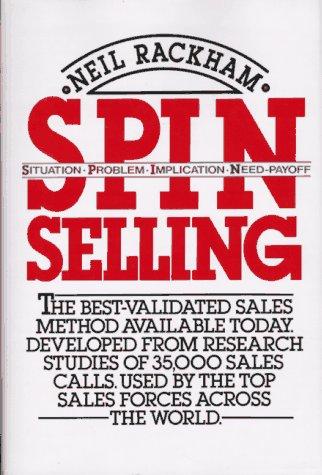
SPIN Selling
BookN. Rackham · 1988
Grounded in the analysis of thousands of sales calls, the SPIN method structures customer discovery through four types of question (Situation, Problem, Implication, Need-payoff) for complex sales.
The Challenger Sale
BookM. Dixon & B. Adamson · 2011
Solution Selling
BookM. Bosworth · 1994
SNAP Selling
BookJ. Konrath · 2010
Structured sales methods: SPIN (N. Rackham), The Challenger Sale (M. Dixon & B. Adamson), Solution Selling (M. Bosworth), MEDDIC, Sandler, SNAP (J. Konrath).
On video
Videos to picture Value Selling and anchor it through examples.
A verified video selection is being enriched; the search above already surfaces the best videos on the topic.
Technique map
Every technique sits within a network: what it draws on, what it combines with, where it applies, and how to defend against it.
Spot its signals, neutralise it and turn it around with the defensive playbook on this page.
See the counter-techniquesValue Selling consists in shifting the conversation from price to the economic value created for the other party: instead of extolling features, one quantifies the return on investment, the gains and the cost of inaction. In negotiation, the technique turns a debate about “how much it costs” into a figures-backed demonstration of “how much it earns, or how much it saves you from losing”. It anchors the agreement on shared numbers (ROI, savings, risks avoided) rather than on positions. Handled well, it justifies a premium price and shortens negotiations by making the offer rationally hard to refuse.
Name the manoeuvre: said out loud, a technique loses most of its power.
Reacting emotionally instead of coming back to the facts.
Our programmes turn theory into a concrete advantage.