
NEGOCOACH
268
Origin : Methods & tactics

🛠️ Methods & tactics

Anglo-Saxon schools of negotiation

C. Karrass, R. Dawson, H. Cohen, N. Rackham (SPIN), T. Gordon (DESC / active listening).

Full detail in the “Origin & history” section below.

268

The Assumptive Close

Sales closing Technique 268 / 360
Alexandre Baumberger

Author of the library

Alexandre Baumberger

Negotiation lecturer at KEDGE Business School

A rare threefold background serving negotiation: teaching, commercial justice and audit, backed by experience as a company director in Bordeaux.

  • Teaching, KEDGE Business School Negotiation lecturer since 2014 (12 years).
  • Commercial justice, Commercial Court Judge from 2018 to 2026: litigation, then insolvency proceedings.
  • Audit & advisory, over 20 years Tax, employment and financial audit in major firms, for large groups.
In brief

The assumptive close consists in acting as though the purchasing decision had already been made and steering the discussion towards implementation rather than towards the principle itself. The seller does not ask “do you want to buy?” but “which day shall we deliver?”i. This presumption of agreement, carried with assurance, reduces the buyer’s decision anxiety.

Reading level

At a glance

Its family profile at a glance

Effectiveness Psychologicalimpact Discretion Preparation Relationalrisk Ethics
7.0 / 10 Tactical potential

Vigilance: moderate (5.0/10) · Preparation required: 4/10

Grounding in the source school School grounded in research and field practice

Indicative profile: it situates the “Sales closing” family as the Methods & tactics school practises it, not this technique taken in isolation. Techniques from the same family and school therefore share the same profile. NEGOCOACH editorial rating out of 10, non-experimental · the higher the “relational risk” value, the more costly the technique is to the relationship.

NEGOCOACH assessment

How to read this rating

Tactical potential 7.0/10 (effectiveness, impact, discretion) and vigilance moderate (relational and ethical risk): two distinct readings, deliberately never merged into a single score that would reward risk. NEGOCOACH editorial rating calibrated from the “Sales closing” family and the “Methods & tactics” school. Each criterion is rated out of 10; click to understand what it measures.

  • Effectiveness 8/10 · Very high

    How far the technique can carry the negotiation in the intended direction when it is well executed.

  • Psychological impact 7/10 · High

    Strength of the effect produced on the counterpart's perceptions, emotions and decisions.

  • Discretion 6/10 · High

    How hard it is for the other party to notice the technique is being used. A high value = very discreet.

  • Preparation 4/10 · Moderate

    The information, analysis and rehearsal required upfront to use it effectively.

  • Relational risk 4/10 · Moderate

    Potential cost to the relationship and to trust if the technique is spotted, refused or fails. A high value = riskier.

  • Ethics 5/10 · Moderate

    Moral acceptability: fairness, transparency and respect for the counterpart's autonomy. A high value = more defensible.

Level of evidence

School grounded in research and field practice

The school this technique stems from combines academic work with long field practice. This indicator qualifies the school, not this technique taken in isolation.

Indicative NEGOCOACH editorial rating, for teaching purposes. For “Relational risk”, a high value signals a cost to the relationship, not a quality.

Summary of The Assumptive Close


Origin & history

The assumptive close is a classic of American selling popularised by Brian Tracy and Zig Ziglar. It rests on a documented psychological mechanism: the projected confidence conveyed by the seller acts as a social signali that lowers doubt and eases the move to action for a buyer already largely convinced.


Definition and principle

Where the classic close asks for a decision, the assumptive close takes it as given and shifts the conversation towards the arrangements: delivery, options, commissioning. The principle is that of the path of least resistance: rejecting a hypothesis already laid down (“shall we go with the annual plan?”) takes more effort than letting it run its course. It only works if the buying signals are genuine; applied too early, it comes across as arrogance and triggers rejection.


Concrete examples of application

Application by context

The same technique, across every negotiation settings

Context 1 / 8

Sales negotiation

At the end of the meeting, the seller does not ask whether the client is buying: he takes out the order form and says, “Shall I set the delivery for the Lyon site, or do you prefer head office?” The client, whose objections have all been addressed, answers about the location, and thereby confirms the purchase without having had to utter a “yes” that would have made him hesitate.

How to apply it

Reserve the assumptive close for meetings where the buying signals are clear (questions about after-sales support, financing, lead times). Phrase the implementation in the present indicative (“we install”, “I’ll sign you up”), never in the conditional, which would reopen doubt. Keep a natural and helpful tone, not a triumphant one.

Strengths

Spares the buyer the anguish of the final “yes”; capitalises on the momentum of the meeting; closes quickly when the decision is ripe.

Weaknesses

Used on an unconvinced client, it is perceived as pressure and a lack of respect, and provokes a defensive stiffening.
Context 2 / 8

Procurement negotiation

An experienced buyer senses the seller switching into “logistics” mode even though no decision has been taken. He cuts in sharply: “I didn’t say yes. Let’s go back to the price and the guarantee before we talk about delivery.” He refuses to be carried along by the presumption and reasserts his control over the tempo.

How to apply it

To neutralise the assumptive close, the buyer explicitly names the logical leap (“you’re presuming my agreement”) and reopens the substantive debate, refusing to deal with the arrangements until the principle has been settled.

Strengths

By exposing the presumption, the buyer regains control of the pace and signals that he will not be swept along.

Weaknesses

Reacting too sharply to every assumptive phrasing can sour a relationship where the seller was acting in good faith on genuine signals.

Context 3 / 8

Labour negotiation

A director closes a tense meeting: “Right, so we’re going with the revised timetable, I’ll have the memorandum of agreement drafted.” By treating the outcome as settled, he avoids reopening an uncertain vote and crystallises a fragile but real consensus.

How to apply it

In collective bargaining, the assumptive close locks in an emerging agreement before it comes undone; reserve it for the moment when buy-in is perceptible but not yet formalised.

Strengths

Turns an implicit agreement into a commitment, preventing the erosion of a consensus that hesitates to declare itself.

Weaknesses

If the agreement is only apparent, forcing it through breeds resentment and later disavowal.

Context 4 / 8

Crisis management

A mediator, sensing both parties exhausted and ready, proposes: “So we’re agreeing to resume work on Monday, and I’ll note the follow-up points.” Framing the way out of the crisis as settled helps drained players take the step they did not dare to name.

How to apply it

In resolving a crisis, the assumptive close names and fixes the outcome everyone wants without daring to state it, provided the calming is genuine.

Strengths

Gives the final nudge to a ripe agreement while sparing the parties the admission of a capitulation.

Weaknesses

Premature, it reopens the crisis: parties still under tension see it as a strong-arm move.

Context 5 / 8

Political negotiation

A party leader declares to the press “We have reached an agreement in principle, only the technical arrangements remain” when nothing has been signed. The public presumption creates a fait accompli that makes disavowal costly for the other side.

How to apply it

The political assumptive close manufactures a media fait accompli: announcing the agreement as settled in order to lock in the players through the cost of reneging.

Strengths

Powerful for crystallising a fragile compromise by committing the parties publicly.

Weaknesses

Risky and sometimes disloyal: an immediate denial from the other side discredits the author of the presumption.

Context 6 / 8

Real-estate negotiation

After a convincing viewing, the agent presses on: “What amount shall I prepare the offer at, and which day are you free for the preliminary contract?” The buyer, already won over, moves into the logistics and confirms his intention without having had to make a solemn ruling.

How to apply it

Move to the concrete steps (offer, financing, notary appointment) as soon as the buyer’s intention is clear, to turn enthusiasm into commitment before it fades.

Strengths

Capitalises on the moment of infatuation before reflection cools it; smooths the move to action.

Weaknesses

On a high-stakes financial purchase, too rapid a presumption awakens the fear of having one’s hand forced.

Context 7 / 8

Cross-cultural negotiation

An American negotiator concludes “Perfect, we’ll sign tomorrow morning” facing German partners who, for their part, expect a methodical and detailed verification phase. The presumption, perceived as offhandedness, arouses distrust instead of reassurance.

How to apply it

Adjust to the culture’s relationship with time and risk: in cultures with strong uncertainty avoidance, the assumptive close must be preceded by explicit, documented validation.

Strengths

Effective in action- and speed-oriented cultures, where the seller’s assurance is reassuring.

Weaknesses

Counterproductive in methodical or hierarchical cultures, where it short-circuits an expected decision process.

Context 8 / 8

Family negotiation

One partner organises the holidays: “I’ve booked the house in Brittany, we leave on the 3rd.” Framing the plan as decided may win over an undecided partner, or, if they did not feel consulted, provoke a conflict about the method more than about the substance.

How to apply it

Reserve the family assumptive close for decisions where the agreement is tacit but real; on a sensitive topic, it must remain a proposal, not an imposed fact.

Strengths

Unblocks everyday indecision and avoids endless dithering.

Weaknesses

On a matter where the other person expected to be involved, it is experienced as a denial of their voice and damages trust.


Counter-techniques

Spot and neutralise this technique

Negotiation is also played on defence. Here is how to recognise this technique when it is used against you, and turn it around.

Detect

The signals that give it away

  • A false "final offer"
  • A "only now" bonus
  • An assumed agreement ("shall we go with that?")

Neutralise

The counters that defuse it

  • Test the "final" offer by pretending to leave
  • Ignore the artificial bonus
  • Validate nothing by default

Turn around

Turn it into an advantage

Set your own closing condition: "I'll sign if…"

The trap to avoid

Signing so as not to "miss" the offer.

In brief

  • Difficulty: Intermediate
  • Estimated effectiveness: High
  • Implementation time: Brief, at the moment of closing
  • Fields of application: Sales, Real estate, Collective bargaining, Political communication
  • Synonyms: Assumptive close, Assumed close, Presumptive closing
  • Tags: closing, assumptive close, presumption, Brian Tracy, projected confidence

Strengths and weaknesses

The assumptive close spares the buyer the weight of the final “yes” by sliding them towards the arrangements. It capitalises on the momentum of the meeting and on the contagion of the seller’s assurance. Well calibrated on genuine signals, it closes quickly and without friction. Its fragility: it demands an accurate reading of the buying signals; applied at the wrong moment, it comes across as arrogance and destroys the relationship.


When to use this technique?

Reserve it for the moment when the buying signals are clear and objections have been addressed. Avoid it absolutely as a shortcut to skip the steps: an assumptive close laid on an unconvinced client is perceived as pressure and a lack of respect that sink the sale and damage the relationship. Prohibited on high-stakes decisions where the buyer wants to feel that they are the one making the call.


How to recognise and counter this technique

Recognise it: the seller shifts to the arrangements (delivery, options, dates) when you have decided nothing. Neutralise it: name the logical leap (“I didn’t say yes”) and reopen the substance before any discussion of implementation. Turn it around: reclaim the initiative on tempo by setting your own preconditions, forcing the seller back to the price and the guarantees.


Limits and ethics

The assumptive close crosses the ethical line when it serves to force an unconsented agreement by exploiting the difficulty of contradicting a hypothesis laid down with authority. The risk is real with vulnerable or unassertive people, who do not dare break the momentum. The technique’s legitimacy presupposes authentic buying signals, the preservation of the right of withdrawal and the absence of any exploitation of a power imbalance.


Variants and related techniques

It comes in a verbal assumptive form (implementation language) and a behavioural assumptive form (taking out the contract, preparing the order). It combines naturally with the Alternative close (“Monday or Tuesday?”) and extends a series of positive trial closes. It stands in contrast to the open-question close, which explicitly hands control back to the buyer.


Going further

  • Brian Tracy, The Psychology of Selling, 1988.
  • Zig Ziglar, Secrets of Closing the Sale, 1984.
  • Robert Cialdini, Influence: The Psychology of Persuasion, 1984.

Objectives of the technique

  • Ease the crossing of the decision threshold, acting and speaking as though the agreement were already secured, to avoid the anxiety-inducing moment of the head-on “yes/no”.
  • Shift the discussion from the question of principle (“are you buying?”) to questions of arrangements (“when, how, how many units?”), where any answer amounts to implicit acceptance.
  • Exploit the power of the default choice and of inertia: it is psychologically more costly to interrupt a process already under way than not to start it.
  • Reduce last-minute hesitation in an interlocutor already convinced on the substance, by sparing them the perceived responsibility of a solemn decision.
  • Project a calm confidence in the outcome of the negotiation, which reassures the interlocutor and lends credibility to the offer.

Famous cases

Sales · The delivery question that amounts to a signature: Representative scenario: in a car dealership, after a successful test drive, the salesperson does not ask “Would you like to buy this vehicle?” but carries on naturally: “Would you prefer delivery on Tuesday or rather at the end of the week? And for the registration, shall I have it made out to your current address?” The client, still hesitating, finds himself answering questions of arrangement rather than the question of principle. By choosing “rather at the end of the week”, he implicitly validates the purchase himself. The substantive decision was never put head-on: it was presumed to be secured, and the client took the step smoothly, without the moment of anguish of an explicit “yes”.

Business · The scoping workshop already scheduled: Representative scenario: a consultant finishes pitching her proposal to a management committee. Instead of concluding with “What do you think?”, she opens her diary: “For the launch, I suggest scheduling the scoping workshop in the week of the 15th. Who, on your team, will take part in that first session?” The managing director turns to his HR director to designate the participants. In answering the operational question, the committee has de facto validated the engagement. The consultant has moved the discussion from the “whether” to the “how”, ground on which a refusal becomes socially more costly to voice.

Everyday life · “Shall I bring it back at midnight or at one?”: Representative scenario: a teenager wants to borrow the family car on Saturday evening. Rather than asking permission, he says over dinner: “On Saturday, shall I bring the car back before midnight, or is it fine if it’s more like one?” The parent, caught up in the choice between two times, negotiates the return hour... and realises afterwards that they never explicitly granted the car. The question of principle was slipped past in favour of a question of arrangement, a domestic illustration of the assumptive mechanism (and of the vigilance it demands of the person on the receiving end).


Common mistakes

  • Presuming agreement too early, before any buying signal or buy-in: the presumption is then perceived as arrogance or crude manipulation and provokes a resistance reflex (reactance).
  • Ignoring unaddressed objections: closing presumptively over an expressed reservation does not make it disappear; it will resurface as withdrawal, cancellation or dispute.
  • Using an insistent or closed tone that turns the presumption into coercion: the technique works through fluidity and naturalness, not through constraint.
  • Using it on heavy stakes or with experienced interlocutors (professional buyers, lawyers) who recognise the device immediately: the effect backfires and durably dents credibility.
  • Confusing the assumptive close with a contractual fait accompli: presuming agreement in conversation is a tactic; sending an invoice or delivering without consent is a fault, sometimes legally actionable (forced sale).

Scientific foundations

  • Robert B. Cialdini (1984) Influence: The Psychology of Persuasion Harper Business, the principle of commitment and consistency underlying implicit acceptance
  • Eric J. Johnson & Daniel Goldstein (2003) Do Defaults Save Lives? Science, vol. 302, no. 5649, pp. 1338-1339, the power of default options, the mechanism at the heart of the presumption of agreement
  • Zig Ziglar (1984) Secrets of Closing the Sale Fleming H. Revell, a reference work on closing techniques, including the assumptive close

Quick exercise

Test yourself before answering

Answer in your head, then reveal the solution. Memory is built through active recall.

1 Quels signaux doivent vous alerter ?
  • A false "final offer"
  • A "only now" bonus
  • An assumed agreement ("shall we go with that?")
2 Quelles parades appliquer ?
  • Test the "final" offer by pretending to leave
  • Ignore the artificial bonus
  • Validate nothing by default

Frequently asked questions

The questions we get most

What is the "The Assumptive Close" technique?

The assumptive close consists in acting as though the purchasing decision had already been made and steering the discussion towards implementation rather than towards the principle itself. The seller does not ask “do you want to buy?” but “which day shall we deliver?”i. This presumption of agreement, carried with assurance, reduces the buyer’s decision anxiety.

Is the "The Assumptive Close" technique ethical?

It sits on the line: effective, but it can tip into manipulation if it exploits an information asymmetry. Use it with measure and without deliberate deceit.

How do you defend against "The Assumptive Close"?

Signing so as not to "miss" the offer. The right reflex: test the "final" offer by pretending to leave.

What is the "The Assumptive Close" technique based on?

NEGOCOACH does not assess the experimental validation of this technique in isolation. What we document is the grounding of its source school (Methods & tactics): school grounded in research and field practice. Full detail is in the "At a glance" section of this page.

Practise with AI

Three ready-to-use prompts

Copy, paste into your assistant, replace the [brackets]. Works with ChatGPT, Claude, Gemini, Mistral, Perplexity.

Prepare

Build your plan before the meeting

You are an expert negotiation coach. Help me prepare to use the "The Assumptive Close" technique in the following situation: [describe your situation]. Give me: the conditions for success, a 3-step script, my counterpart's likely objections and how to answer them.

Simulate

Rehearse against an AI counterpart

Play the role of my counterpart in a negotiation. I am going to test the "The Assumptive Close" technique. React realistically and with resistance, do not give in too quickly, then at the end analyse my performance and suggest 3 concrete improvements.

Debrief

Analyse a past negotiation

Here is how my negotiation went: [paste the exchanges]. Analyse whether the "The Assumptive Close" technique was used well, what worked, the mistakes made, and spell out precisely what I could have done better.

References

Bibliography & credible sources

Founding works of the 🛠️ Methods & tactics school this technique belongs to.

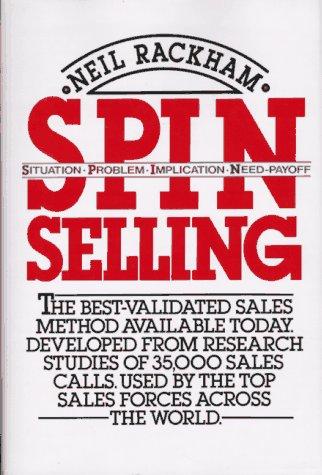
  • Cover: SPIN Selling

    SPIN Selling

    Book

    N. Rackham · 1988

    Grounded in the analysis of thousands of sales calls, the SPIN method structures customer discovery through four types of question (Situation, Problem, Implication, Need-payoff) for complex sales.

  • Cover: The Negotiating Game

    The Negotiating Game

    Book

    C. L. Karrass · 1970

    A pragmatic classic of business negotiation: tactics, power balance and preparation. Karrass sums up his motto, you get what you negotiate, not what you deserve.

  • Cover: Secrets of Power Negotiating

    Secrets of Power Negotiating

    Book

    R. Dawson · 1987

    An arsenal of opening, middle and closing "gambits" to gain the upper hand in commercial negotiation, explained step by step.

C. Karrass, R. Dawson, H. Cohen, N. Rackham (SPIN), T. Gordon (DESC / active listening).

On video

See the technique in action

Videos to picture The Assumptive Close and anchor it through examples.

A verified video selection is being enriched; the search above already surfaces the best videos on the topic.

Technique map

Where this technique sits

Every technique sits within a network: what it draws on, what it combines with, where it applies, and how to defend against it.

Levers engaged

biases & emotions

Countered by

Spot its signals, neutralise it and turn it around with the defensive playbook on this page.

See the counter-techniques

Key takeaways

  • En une phrase

    The assumptive close consists in acting as though the purchasing decision had already been made and steering the discussion towards implementation rather than towards the principle itself. The seller does not ask “do you want to buy?” but “which day shall we deliver?”i. This presumption of agreement, carried with assurance, reduces the buyer’s decision anxiety.

  • The right reflex

    Set your own closing condition: "I'll sign if…"

  • Never do this

    Signing so as not to "miss" the offer.

7.0/10 tactical potential Moderate vigilance School grounded in research and field practice

Master this technique in real situations?

Our programmes turn theory into a concrete advantage.

Explore our programmes
Call Book a call