
NEGOCOACH
216
Origin : Cognitive science

🧠 Cognitive science

Behavioural economics & social psychology

R. Cialdini ("Influence", 1984), D. Kahneman & A. Tversky, R. Thaler, D. Ariely.

Full detail in the “Origin & history” section below.

216

Social Proof

Exploitable cognitive biases Technique 216 / 360
Alexandre Baumberger

Author of the library

Alexandre Baumberger

Negotiation lecturer at KEDGE Business School

A rare threefold background serving negotiation: teaching, commercial justice and audit, backed by experience as a company director in Bordeaux.

  • Teaching, KEDGE Business School Negotiation lecturer since 2014 (12 years).
  • Commercial justice, Commercial Court Judge from 2018 to 2026: litigation, then insolvency proceedings.
  • Audit & advisory, over 20 years Tax, employment and financial audit in major firms, for large groups.
In brief

Social proof is the tendency to work out the right behaviour by observing that of others, especially amid uncertainty or when facing people who resemble us. In negotiation, showing that “others have already chosen” reduces hesitation and legitimises the decision. Theorised by Robert Cialdinii, it is one of the most universal weapons of influence.

Reading level

At a glance

Its family profile at a glance

Effectiveness Psychologicalimpact Discretion Preparation Relationalrisk Ethics
8.0 / 10 Tactical potential

Vigilance: high (6.0/10) · Preparation required: 5/10

Grounding in the source school School grounded in experimental research

Indicative profile: it situates the “Exploitable cognitive biases” family as the Cognitive science school practises it, not this technique taken in isolation. Techniques from the same family and school therefore share the same profile. NEGOCOACH editorial rating out of 10, non-experimental · the higher the “relational risk” value, the more costly the technique is to the relationship.

NEGOCOACH assessment

How to read this rating

Tactical potential 8.0/10 (effectiveness, impact, discretion) and vigilance high (relational and ethical risk): two distinct readings, deliberately never merged into a single score that would reward risk. NEGOCOACH editorial rating calibrated from the “Exploitable cognitive biases” family and the “Cognitive science” school. Each criterion is rated out of 10; click to understand what it measures.

  • Effectiveness 8/10 · Very high

    How far the technique can carry the negotiation in the intended direction when it is well executed.

  • Psychological impact 10/10 · Very high

    Strength of the effect produced on the counterpart's perceptions, emotions and decisions.

  • Discretion 6/10 · High

    How hard it is for the other party to notice the technique is being used. A high value = very discreet.

  • Preparation 5/10 · Moderate

    The information, analysis and rehearsal required upfront to use it effectively.

  • Relational risk 5/10 · Moderate

    Potential cost to the relationship and to trust if the technique is spotted, refused or fails. A high value = riskier.

  • Ethics 4/10 · Moderate

    Moral acceptability: fairness, transparency and respect for the counterpart's autonomy. A high value = more defensible.

Level of evidence

School grounded in experimental research

The school this technique stems from is grounded in replicated, peer-reviewed experimental work. This indicator qualifies the school, not the experimental validation of this technique taken in isolation.

Indicative NEGOCOACH editorial rating, for teaching purposes. For “Relational risk”, a high value signals a cost to the relationship, not a quality.

Social Proof in Brief


Origin & history

The principle was formalised by Robert Cialdini in Influence: The Psychology of Persuasion (1984) as one of the six levers of persuasion. It builds on the foundational work of Solomon Asch on conformityi (1951) and on that of Muzafer Sherif. It answers a deep social need: in case of doubt, imitating the group is a decision shortcut that is generally adaptive.


Definition and principle

Social proof operates above all under two conditions: uncertainty (we do not know what to do, so we look at others) and similarity (we imitate first those who resemble us). Seeing a behaviour adopted by a large number of people, or by relevant peers, makes it appear both right and safe. In negotiation, it is mobilised through testimonials, adoption figures, references and peer examples: “companies like yours have already taken the plunge.” It is not the logical argument that convinces, but the feeling that “everyone is doing it”.


Concrete examples of application

Application by context

The same technique, across every negotiation settings

Context 1 / 8

Sales negotiation

A seller shows the prospect that its direct competitors already use the solution: “Three of the five players in your market adopted it this year.” The fear of falling behind and the endorsement of peers carry the decision where technical arguments were hesitating.

How to apply it

Cite references from relevant peers (same sector, same size) and adoption figures; the testimonial of a similar party weighs more than any sales pitch.

Strengths

Reassures amid uncertainty and creates gentle pressure not to be left behind.

Weaknesses

Irrelevant or unverifiable references undermine credibility and arouse suspicion.
Context 2 / 8

Procurement negotiation

A buyer is wary of “they are all with us” and checks: they ask to speak directly to two clients cited as references. Social proof holds only if it withstands verification; the buyer turns it into a test of the supplier's sincerity.

How to apply it

As a buyer, demand verifiable, contactable references, not anonymous logos; distinguish genuine adoption from mere announcement. Social proof is a criterion only once authenticated.

Strengths

Turns an influence argument into usable factual information.

Weaknesses

Over-weighting what others do can distract from one's own needs analysis.

Context 3 / 8

Labour negotiation

To get an agreement adopted, a negotiator shows that the majority of teams have already approved it: “Seven departments out of eight have signed.” The last, under the effect of conformity, hesitates to remain isolated and falls into line.

How to apply it

Make the majority support already secured visible in order to tip the undecided; social isolation weighs more than conviction on the merits.

Strengths

Speeds up the rallying of the last reluctant parties through the pressure of numbers.

Weaknesses

May be denounced as a manoeuvre and stiffen those who refuse to follow the herd.

Context 4 / 8

Crisis management

A negotiator reminds a party that, in comparable situations, others accepted a negotiated way out without losing face. The existence of precedents makes the option conceivable where it seemed an isolated capitulation.

How to apply it

Provide credible precedents of resolution to normalise the exit solution; “others did it before you” makes it acceptable.

Strengths

Takes the drama out of the agreement by showing it fits within a recognised practice.

Weaknesses

A precedent perceived as not comparable or humiliating is rejected.

Context 5 / 8

Political negotiation

A government justifies a reform by stressing that “most comparable countries have already implemented it”. The international comparison serves as social proof to present the measure as self-evident rather than a contestable choice.

How to apply it

Draw on relevant comparisons (similar countries or regions) to place the decision within a shared norm; alignment with peers confers legitimacy.

Strengths

Neutralises part of the opposition by making the measure appear routine.

Weaknesses

Poorly chosen comparisons backfire (“that country has nothing to do with ours”).

Context 6 / 8

Real-estate negotiation

An agent points out that a property “has already had several viewings and two expressions of interest”. The presumed demand makes the property desirable and pushes the hesitant buyer to move before others.

How to apply it

Make the interest of other buyers visible (viewings, offers in progress), where it is genuine, to activate conformity and scarcity; the appeal to others validates the choice.

Strengths

Speeds up the decision and justifies holding the price.

Weaknesses

Manufactured demand, once uncovered, destroys trust and drives the buyer away.

Context 7 / 8

Cross-cultural negotiation

The strength of social proof varies: in collectivist cultures, conformity to the group is a very powerful driver, whereas in individualist cultures, invoking “what others do” may on the contrary clash with the desire to stand out.

How to apply it

Modulate social proof according to the individualism or collectivism of the culture: lean heavily on group endorsement where the group holds authority, and highlight the singularity of the choice where people want to stand apart.

Strengths

Aligns the lever with the cultural relationship to the group, which varies greatly.

Weaknesses

The “everyone is doing it” argument can be off-putting in a culture that prizes distinction.

Context 8 / 8

Family negotiation

To convince a reluctant parent, a child invokes that “it is now what all families in our situation do” (lasting power of attorney, early gift). The example of other families makes the step less anxiety-inducing and more legitimate.

How to apply it

Cite examples of comparable families who made the same choice; peer normalisation reassures where a direct argument worries.

Strengths

Takes the drama out of a sensitive decision by presenting it as common and tried and tested.

Weaknesses

Comparing to other families can be perceived as misplaced pressure on an intimate decision.


Counter-techniques

Spot and neutralise this technique

Negotiation is also played on defence. Here is how to recognise this technique when it is used against you, and turn it around.

Detect

The signals that give it away

  • An extreme first figure (anchoring)
  • A framing as loss rather than gain
  • The endowment effect ("it's already yours")

Neutralise

The counters that defuse it

  • Reject the anchor and set your own
  • Reframe the decision as a gain
  • Assess out of context, on the facts

Turn around

Turn it into an advantage

Set your own anchor first: it will structure the discussion.

The trap to avoid

Reasoning from the other side's figure.

In brief

  • Difficulty: Beginner
  • Estimated effectiveness: Very high
  • Time to implement: Fast, hinges on the quality of the references
  • Fields of application: Sales, Marketing, Labour negotiation, Politics, Real estate
  • Synonyms: Social proof, Proof by numbers, Social conformity
  • Tags: social proof, Cialdini, Asch, conformity, testimonials

Strengths and Weaknesses

Social proof is one of the most universal and immediate levers of influence: showing that relevant peers have already chosen reassures amid uncertainty and creates gentle pressure not to be left out. It convinces where logic hesitates. Its limit: irrelevant, unverifiable or fabricated references turn into distrust, and the “everyone is doing it” argument can alienate the profiles or cultures that value singularity.


When to use this technique?

To be mobilised as soon as your counterpart is uncertain and sensitive to the opinion of their peers: peer testimonials, adoption figures, precedents, comparisons. Very powerful in decisions with perceived risk. To be avoided with a profile seeking to stand out, in individualist cultures, or when the references cited do not withstand verification.


How to recognise and counter this technique

Recognise: you are repeatedly told that “everyone” or “companies like yours” have already adopted, without verifiable detail. Neutralise: demand contactable references and bring the decision back to your own needs, independently of what others do. Turn it around: cite peers who, for their part, refused or renegotiated, to reverse the social norm invoked.


Limits and ethics

Relying on authentic references is a legitimate and useful form of proof. The ethical drift lies in fabricated social proof: fake testimonials, inflated adoption figures, staged demand, practices that are moreover penalised when they mislead the consumer. The danger, on the receiver's side, is the blind conformity highlighted by Asch: following the group in disregard of one's own judgement. The rule: the norm invoked must be real and relevant.


Variants and related techniques

Part of Cialdini's six principles, it combines with authority, scarcity and loss aversion. Grounded in Asch's conformity and in informational influence. It splits into expert social proof, peer social proof and social proof of the crowd. It stands in contrast to decisions grounded in the autonomous analysis of objective criteria.


To go further

  • Robert Cialdini, Influence: The Psychology of Persuasion, 1984.
  • Solomon Asch, “Opinions and Social Pressure”, Scientific American, 1955.
  • Robert Cialdini, Noah Goldstein & Steve Martin, Yes! 50 Scientifically Proven Ways to Be Persuasive, 2008.

Objectives of the technique

  • Reduce your counterpart's uncertainty by showing them that comparable peers have already made the proposed choice.
  • Speed up the decision by lowering the perceived risk (“if others did it without trouble, I can go ahead”).
  • Legitimise a position or an offer by anchoring it in a collective norm rather than in a mere personal assertion.
  • Reinforce credibility through verifiable references (clients, adoption figures, testimonials) rather than through self-praise.
  • Create a bandwagon effect by making visible the growing support of a group relevant to the target.

Famous cases

Sales · The sector peer's testimonial: A software vendor negotiates with a hesitant hospital director. Rather than pressing its arguments, the salesperson shows that three establishments of comparable size and constraints deployed the solution last year and cites their results. Seeing that directly similar peers took the plunge without incident, the decision-maker turns a risk perceived as individual into a choice already validated by their profession, which unblocks the signature. This scenario illustrates the mechanism without attributing real names.

Everyday life · The queue as a quality signal: Faced with two neighbouring, unknown restaurants, a passer-by almost always chooses the one where a few customers are already seated. The crowd serves as a cue: in the absence of reliable information on quality, the behaviour of others becomes the decision criterion. This is social proof in its purest form, deliberately exploited by restaurateurs who seat their first customers near the windows.


Common mistakes

  • Using references irrelevant to the target: citing clients from an unrelated sector or size destroys the effect, because social proof acts strongly only between similar peers.
  • Inflating or inventing adoption figures or testimonials: the bluff, once uncovered, wipes out credibility and turns into lasting distrust.
  • Believing that social proof suffices on its own: on a matter where the counterpart feels expert or strongly involved, the crowd argument may be perceived as manipulation.
  • Overloading with testimonials to the point of appearing insistent, which signals a need to convince and arouses suspicion rather than trust.
  • Ignoring negative social proof: mentioning that “many give up” or “few have taken the plunge” unintentionally installs the norm opposite to the one sought.

Scientific foundations

  • Robert B. Cialdini (2021) Influence: The Psychology of Persuasion (New and Expanded) Harper Business
  • Robert B. Cialdini (2016) Pre-Suasion: A Revolutionary Way to Influence and Persuade Simon & Schuster

Quick exercise

Test yourself before answering

Answer in your head, then reveal the solution. Memory is built through active recall.

1 Quels signaux doivent vous alerter ?
  • An extreme first figure (anchoring)
  • A framing as loss rather than gain
  • The endowment effect ("it's already yours")
2 Quelles parades appliquer ?
  • Reject the anchor and set your own
  • Reframe the decision as a gain
  • Assess out of context, on the facts

Frequently asked questions

The questions we get most

What is the "Social Proof" technique?

Social proof is the tendency to work out the right behaviour by observing that of others, especially amid uncertainty or when facing people who resemble us. In negotiation, showing that “others have already chosen” reduces hesitation and legitimises the decision. Theorised by Robert Cialdinii, it is one of the most universal weapons of influence.

Is the "Social Proof" technique ethical?

It sits on the line: effective, but it can tip into manipulation if it exploits an information asymmetry. Use it with measure and without deliberate deceit.

How do you defend against "Social Proof"?

Reasoning from the other side's figure. The right reflex: reject the anchor and set your own.

What is the "Social Proof" technique based on?

NEGOCOACH does not assess the experimental validation of this technique in isolation. What we document is the grounding of its source school (Cognitive science): school grounded in experimental research. Full detail is in the "At a glance" section of this page.

Practise with AI

Three ready-to-use prompts

Copy, paste into your assistant, replace the [brackets]. Works with ChatGPT, Claude, Gemini, Mistral, Perplexity.

Prepare

Build your plan before the meeting

You are an expert negotiation coach. Help me prepare to use the "Social Proof" technique in the following situation: [describe your situation]. Give me: the conditions for success, a 3-step script, my counterpart's likely objections and how to answer them.

Simulate

Rehearse against an AI counterpart

Play the role of my counterpart in a negotiation. I am going to test the "Social Proof" technique. React realistically and with resistance, do not give in too quickly, then at the end analyse my performance and suggest 3 concrete improvements.

Debrief

Analyse a past negotiation

Here is how my negotiation went: [paste the exchanges]. Analyse whether the "Social Proof" technique was used well, what worked, the mistakes made, and spell out precisely what I could have done better.

References

Bibliography & credible sources

Founding works of the 🧠 Cognitive science school this technique belongs to.

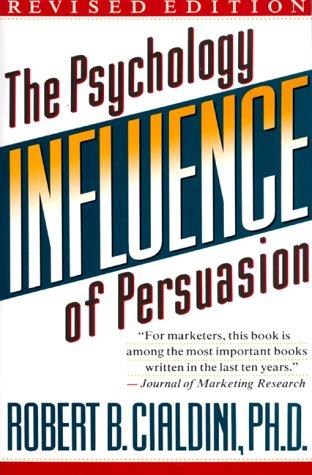
  • Cover: Influence, The Psychology of Persuasion

    Influence, The Psychology of Persuasion

    Book

    R. Cialdini · 1984

    The founding work on the mechanisms of persuasion: six universal principles (reciprocity, consistency, social proof, authority, liking, scarcity) illustrated with striking experiments. A landmark in social psychology.

  • Cover: Thinking, Fast and Slow

    Thinking, Fast and Slow

    Book

    D. Kahneman · 2011

    The sum of Kahneman's work on decision-making: two systems of thought, one fast and intuitive, the other slow and analytical, and the long list of biases that distort our judgements. Essential to understanding others... and yourself.

  • Cover: Nudge

    Nudge

    Book

    R. Thaler & C. Sunstein · 2008

    How to steer choices without constraint, by acting on the "choice architecture". The book popularised the nudge and behavioural economics applied to public policy as much as to management.

  • Judgment under Uncertainty: Heuristics and Biases (Science)

    Article

    A. Tversky & D. Kahneman · 1974

    The founding paper (Science, 1974) that uncovered the heuristics and biases of judgement, including anchoring. The starting point of the behavioural-economics revolution.

R. Cialdini ("Influence", 1984), D. Kahneman & A. Tversky, R. Thaler, D. Ariely.

On video

See the technique in action

Videos to picture Social Proof and anchor it through examples.

Technique map

Where this technique sits

Every technique sits within a network: what it draws on, what it combines with, where it applies, and how to defend against it.

Levers engaged

biases & emotions

Countered by

Spot its signals, neutralise it and turn it around with the defensive playbook on this page.

See the counter-techniques

Key takeaways

  • En une phrase

    Social proof is the tendency to work out the right behaviour by observing that of others, especially amid uncertainty or when facing people who resemble us. In negotiation, showing that “others have already chosen” reduces hesitation and legitimises the decision. Theorised by Robert Cialdinii, it is one of the most universal weapons of influence.

  • The right reflex

    Set your own anchor first: it will structure the discussion.

  • Never do this

    Reasoning from the other side's figure.

8.0/10 tactical potential High vigilance School grounded in experimental research

Master this technique in real situations?

Our programmes turn theory into a concrete advantage.

Explore our programmes
Call Book a call