Context 1 / 6
Sales negotiation
A salesperson reduces an added cost to « less than a coffee a day », or charges it to the « investment budget » rather than the « spending budget », making it psychologically acceptable.

🧠 Cognitive science
Behavioural economics & social psychology
R. Cialdini ("Influence", 1984), D. Kahneman & A. Tversky, R. Thaler, D. Ariely.
Full detail in the “Origin & history” section below.

Author of the library
Negotiation lecturer at KEDGE Business School
A rare threefold background serving negotiation: teaching, commercial justice and audit, backed by experience as a company director in Bordeaux.
Mental accounting describes our tendency to file money into separate « boxes » (leisure budget, home-improvement budget, one-off bonus…) and to treat it differently depending on the box. In negotiation, you attach an expense to the « right » mental box to make it painless.
At a glance
Vigilance: high (6.0/10) · Preparation required: 6/10
Indicative profile: it situates the “Psychological influence” family as the Cognitive science school practises it, not this technique taken in isolation. Techniques from the same family and school therefore share the same profile. NEGOCOACH editorial rating out of 10, non-experimental · the higher the “relational risk” value, the more costly the technique is to the relationship.
NEGOCOACH assessment
Tactical potential 8.3/10 (effectiveness, impact, discretion) and vigilance high (relational and ethical risk): two distinct readings, deliberately never merged into a single score that would reward risk. NEGOCOACH editorial rating calibrated from the “Psychological influence” family and the “Cognitive science” school. Each criterion is rated out of 10; click to understand what it measures.
How far the technique can carry the negotiation in the intended direction when it is well executed.
Strength of the effect produced on the counterpart's perceptions, emotions and decisions.
How hard it is for the other party to notice the technique is being used. A high value = very discreet.
The information, analysis and rehearsal required upfront to use it effectively.
Potential cost to the relationship and to trust if the technique is spotted, refused or fails. A high value = riskier.
Moral acceptability: fairness, transparency and respect for the counterpart's autonomy. A high value = more defensible.
School grounded in experimental research
The school this technique stems from is grounded in replicated, peer-reviewed experimental work. This indicator qualifies the school, not the experimental validation of this technique taken in isolation.
Indicative NEGOCOACH editorial rating, for teaching purposes. For “Relational risk”, a high value signals a cost to the relationship, not a quality.
The concept was developed by the economist Richard Thaler, 2017 Nobel laureate, in his 1980s work on « mental accounting ». Thaler shows that, contrary to the economic principle whereby money is fungible (a pound is a pound), people compartmentalise their finances and take inconsistent decisions from one box to another: we hesitate over an extra £20 on an everyday item, but not over £20 in the « holidays » budget. This finding sheds light on a great many purchasing and negotiating behaviours.
The technique consists in presenting an expense or a concession by attaching it to a mental category where it appears legitimate, small or already provisioned for, rather than to a box where it would be experienced as a sacrifice.
Application by context
A salesperson reduces an added cost to « less than a coffee a day », or charges it to the « investment budget » rather than the « spending budget », making it psychologically acceptable.
A bonus is presented as coming from an exceptional envelope distinct from the wage bill, which makes it easier for management to accept.
A negotiator attaches a costly gesture to a separate « crisis-resolution budget », removing it from any comparison with day-to-day spending.
An expense is earmarked for a dedicated fund rather than the general budget, which changes how it is perceived in the debate.
Renovation costs are presented as belonging to the overall « renovation project » rather than as an added cost on the purchase price.
In a division of assets, a balancing payment is set against an « inheritance » perceived as a windfall, not against personal savings, which makes it less painful.
Counter-techniques
Negotiation is also played on defence. Here is how to recognise this technique when it is used against you, and turn it around.
The signals that give it away
The counters that defuse it
Turn it into an advantage
Verbalise the lever: "I feel you're playing on guilt", and naming it defuses it.
Mistaking an emotional bond for an objective argument.
Mental accounting makes acceptable what would seem costly from another angle, without changing the actual amount. Its limit: the reframing must remain credible; a counterpart who « undoes » the boxes (« all told, it still comes to X pounds ») neutralises the effect.
Valuable for getting an expense or a concession through by attaching it to the right mental envelope. Less effective against a decision-maker who reasons in consolidated total cost.
Sales · The « coffee-a-day » price: A SaaS software salesperson runs up against an annual subscription of £3,600 that the buyer deems « enormous ». Rather than cut the price, he reframes: « That works out at less than £10 a day for your whole team, the price of a coffee. » The amount has not changed, but it leaves the « large investment to be signed off by committee » mental account and joins that of « small everyday expenses ». The buyer, who refused the overall sum, accepts the daily outlay perceived as trivial.
Everyday life · The bundled option in a car purchase: At the dealership, a buyer haggles hard over every thousand pounds on the price of the vehicle. The salesperson then offers the options (paintwork, seats, extended warranty) once the main price is settled. Set against the already-open mental account of « buying a £30,000 car », £1,200 of options seems negligible, whereas the same sum spent on its own would be judged excessive. Mental accounting explains why the extras sell more easily once the large amount has been anchored.
The technique does not change the amount by a single penny: it changes the box the other party files it in, drawing on the mental accounting described by Richard Thaler. Its honest use is real and useful: bringing an expense down to a meaningful scale helps people decide, comparing an investment with what it replaces is illuminating, and attaching a cost to a budget where it genuinely belongs is accurate information. The tipping point rests on a single, verifiable criterion: does the operation remain arithmetically true once recomposed? Reducing an added cost to « less than a coffee a day » is accurate on the scale of a day and becomes deceptive on the scale of the contract, where the coffee amounts to several thousand pounds that the counterpart will never see unless they redo the sum. The technique is then the exact opposite of a fair breakdown: it does not serve to make visible, it serves to make the total disappear. The practical rule follows: fractioning is acceptable as long as the overall amount is stated alongside it. Bringing an expense down to a meaningful scale is teaching; fractioning it to erase the total is sleight of hand.
Quick exercise
Answer in your head, then reveal the solution. Memory is built through active recall.
Frequently asked questions
Mental accounting describes our tendency to file money into separate « boxes » (leisure budget, home-improvement budget, one-off bonus…) and to treat it differently depending on the box. In negotiation, you attach an expense to the « right » mental box to make it painless.
It sits on the line: effective, but it can tip into manipulation if it exploits an information asymmetry. Use it with measure and without deliberate deceit.
Mistaking an emotional bond for an objective argument. The right reflex: separate the emotion from the substance.
NEGOCOACH does not assess the experimental validation of this technique in isolation. What we document is the grounding of its source school (Cognitive science): school grounded in experimental research. Full detail is in the "At a glance" section of this page.
Practise with AI
Copy, paste into your assistant, replace the [brackets]. Works with ChatGPT, Claude, Gemini, Mistral, Perplexity.
Build your plan before the meeting
You are an expert negotiation coach. Help me prepare to use the "The Mental Accounting Technique" technique in the following situation: [describe your situation]. Give me: the conditions for success, a 3-step script, my counterpart's likely objections and how to answer them.
Rehearse against an AI counterpart
Play the role of my counterpart in a negotiation. I am going to test the "The Mental Accounting Technique" technique. React realistically and with resistance, do not give in too quickly, then at the end analyse my performance and suggest 3 concrete improvements.
Analyse a past negotiation
Here is how my negotiation went: [paste the exchanges]. Analyse whether the "The Mental Accounting Technique" technique was used well, what worked, the mistakes made, and spell out precisely what I could have done better.
References
Founding works of the 🧠 Cognitive science school this technique belongs to.
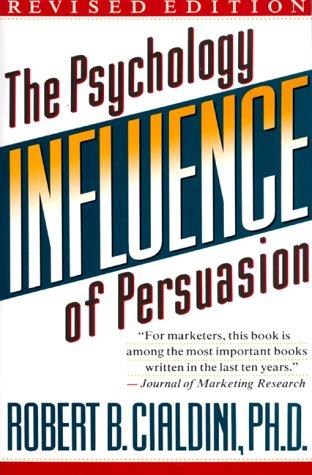
Influence, The Psychology of Persuasion
BookR. Cialdini · 1984
The founding work on the mechanisms of persuasion: six universal principles (reciprocity, consistency, social proof, authority, liking, scarcity) illustrated with striking experiments. A landmark in social psychology.

Thinking, Fast and Slow
BookD. Kahneman · 2011
The sum of Kahneman's work on decision-making: two systems of thought, one fast and intuitive, the other slow and analytical, and the long list of biases that distort our judgements. Essential to understanding others... and yourself.

Nudge
BookR. Thaler & C. Sunstein · 2008
How to steer choices without constraint, by acting on the "choice architecture". The book popularised the nudge and behavioural economics applied to public policy as much as to management.
Judgment under Uncertainty: Heuristics and Biases (Science)
ArticleA. Tversky & D. Kahneman · 1974
The founding paper (Science, 1974) that uncovered the heuristics and biases of judgement, including anchoring. The starting point of the behavioural-economics revolution.
R. Cialdini ("Influence", 1984), D. Kahneman & A. Tversky, R. Thaler, D. Ariely.
On video
Videos to picture The Mental Accounting Technique and anchor it through examples.
A verified video selection is being enriched; the search above already surfaces the best videos on the topic.
Technique map
Every technique sits within a network: what it draws on, what it combines with, where it applies, and how to defend against it.
Spot its signals, neutralise it and turn it around with the defensive playbook on this page.
See the counter-techniquesMental accounting describes our tendency to file money into separate « boxes » (leisure budget, home-improvement budget, one-off bonus…) and to treat it differently depending on the box. In negotiation, you attach an expense to the « right » mental box to make it painless.
Verbalise the lever: "I feel you're playing on guilt", and naming it defuses it.
Mistaking an emotional bond for an objective argument.
Our programmes turn theory into a concrete advantage.