Context 1 / 6
Sales negotiation
A negotiator in a fragile position displays such serenity and such indifference to closing that the other party, thrown off balance, does not dare press their advantage.

🀄 Asia
East Asian traditions
Traditions of China, Japan and Korea (guanxi, mianzi, nemawashi, ringi, nunchi, kibun…).
Full detail in the “Origin & history” section below.

Author of the library
Negotiation lecturer at KEDGE Business School
A rare threefold background serving negotiation: teaching, commercial justice and audit, backed by experience as a company director in Bordeaux.
The empty-city stratagem consists in displaying total assurance and an apparent absence of defence to make your opponent believe that a trap awaits them. Paradoxically, by showing your vulnerability with perfect calm, you deter the attack.
At a glance
Vigilance: very high (8.0/10) · Preparation required: 7/10
Indicative profile: it situates the “Perception management” family as the Asia school practises it, not this technique taken in isolation. Techniques from the same family and school therefore share the same profile. NEGOCOACH editorial rating out of 10, non-experimental · the higher the “relational risk” value, the more costly the technique is to the relationship.
NEGOCOACH assessment
Tactical potential 8.7/10 (effectiveness, impact, discretion) and vigilance very high (relational and ethical risk): two distinct readings, deliberately never merged into a single score that would reward risk. NEGOCOACH editorial rating calibrated from the “Perception management” family and the “Asia” school. Each criterion is rated out of 10; click to understand what it measures.
How far the technique can carry the negotiation in the intended direction when it is well executed.
Strength of the effect produced on the counterpart's perceptions, emotions and decisions.
How hard it is for the other party to notice the technique is being used. A high value = very discreet.
The information, analysis and rehearsal required upfront to use it effectively.
Potential cost to the relationship and to trust if the technique is spotted, refused or fails. A high value = riskier.
Moral acceptability: fairness, transparency and respect for the counterpart's autonomy. A high value = more defensible.
Practitioner-tradition school
The school this technique stems from belongs to a tradition of practitioners, passed on through experience, with little or no dedicated study. This indicator qualifies the school, not this technique taken in isolation.
Indicative NEGOCOACH editorial rating, for teaching purposes. For “Relational risk”, a high value signals a cost to the relationship, not a quality.
This is the 32nd of the Thirty-Six Stratagems, illustrated by a legendary episode attributed to the strategist Zhuge Liang (3rd century): besieged in a city with almost no troops, he had the gates thrown wide open and settled calmly on the ramparts playing music. The enemy army, convinced that such serenity concealed an ambush, chose to withdraw. The lesson: confidence displayed in the face of danger can turn fear back against the opponent, who over-interprets the calm as the sign of a hidden strength.
The technique consists in countering a position of weakness with disconcerting calm and assurance, so that the other party, unable to believe in such serenity without a hidden card, hesitates, doubts and gives up pressing their advantage.
Application by context
A negotiator in a fragile position displays such serenity and such indifference to closing that the other party, thrown off balance, does not dare press their advantage.
A party in difficulty counters with imperturbable calm that makes the opponent doubt the reality of their weakness.
The negotiator, even in a poor position, keeps total composure that deters the other party from forcing matters, for fear of a trap.
A weakened player displays a confidence that suggests hidden backers or assets, cooling the opponent's ardour.
A seller who is pressed but impassive gives the impression of being in no hurry, which holds the buyer back from negotiating too hard.
In an unfavourable dispute, assured calm can make the other party hesitate to press their advantage.
Counter-techniques
Negotiation is also played on defence. Here is how to recognise this technique when it is used against you, and turn it around.
The signals that give it away
The counters that defuse it
Turn it into an advantage
Calmly show that you have seen the staging: it loses all effect.
Taking appearance for reality.
The empty city can turn a desperate situation around through the sheer play of perception and the doubt sown in the opponent. But it is the riskiest of bluffs: if the other party tests you and discovers the real weakness, the position collapses; it works only against a cautious opponent inclined to over-interpret.
A last resort in a position of weakness, faced with a wary counterpart who fears traps. To be avoided against someone direct who will check your actual means.
Diplomatic · Zhuge Liang and the city with open gates (classic account): The most famous episode of the stratagem, popularised by the Romance of the Three Kingdoms (historians regard it as largely legendary): the strategist Zhuge Liang, almost without troops against Sima Yi's far superior army, has the city gates thrown wide open, posts townspeople to sweep the streets calmly, and settles himself on the rampart to play the zither. Knowing Zhuge Liang's reputation for prudence, Sima Yi concludes there is an ambush and orders a retreat. The principle: expose your vulnerability with such poise that it is read as a trap.
Commercial · The supplier who opens the books (representative scenario): A representative scenario, not attributed to a real company. A supplier in a fragile position (an empty order book, tight cash flow) receives a buyer who senses their weakness. Rather than conceal the situation, the supplier welcomes it with disarming transparency: a full tour of the workshop, the schedule on display, a serene refusal to lower the price “because other deals are progressing”. This unexpected poise sows doubt in the buyer, who assumes there are hidden alternatives and gives up pressing their advantage. To be handled with care: if the buyer does not take the bluff, the weakness now lies exposed.
The empty city is a bluff, and it must be qualified precisely, for not all bluffs are equal. This one bears on no fact: Zhuge Liang asserts nothing, he sits down and plays the zither. It bears on your resolve and your strength, that is, on what the negotiation entitles you not to reveal. Displaying a calm you do not feel, letting it be believed that you can do without the deal, belongs to the register that both law and custom tolerate: no one is obliged to parade their weakness. The line is crossed the moment the bluff begins to bear on the facts of the case, on your actual capabilities, your references or your solvency, for you then leave posture behind for deception on elements that determine consent. One practical limit must be weighed before resorting to it, and it is brutal: the stratagem works only against an opponent who thinks too much. Faced with someone who simply advances, the empty city is taken, and nothing remains. Displaying an assurance you do not have is a bluff that negotiation tolerates so long as it bears only on your resolve; making it bear on the facts is fraudulent misrepresentation.
Quick exercise
Answer in your head, then reveal the solution. Memory is built through active recall.
Frequently asked questions
The empty-city stratagem consists in displaying total assurance and an apparent absence of defence to make your opponent believe that a trap awaits them. Paradoxically, by showing your vulnerability with perfect calm, you deter the attack.
It is mainly manipulation and can lastingly damage the relationship. Its main value is learning to recognise it so you do not fall victim to it.
Taking appearance for reality. The right reflex: verify the information independently.
NEGOCOACH does not assess the experimental validation of this technique in isolation. What we document is the grounding of its source school (Asia): practitioner-tradition school. Full detail is in the "At a glance" section of this page.
Practise with AI
Copy, paste into your assistant, replace the [brackets]. Works with ChatGPT, Claude, Gemini, Mistral, Perplexity.
Build your plan before the meeting
You are an expert negotiation coach. Help me prepare to use the "The Empty City Technique" technique in the following situation: [describe your situation]. Give me: the conditions for success, a 3-step script, my counterpart's likely objections and how to answer them.
Rehearse against an AI counterpart
Play the role of my counterpart in a negotiation. I am going to test the "The Empty City Technique" technique. React realistically and with resistance, do not give in too quickly, then at the end analyse my performance and suggest 3 concrete improvements.
Analyse a past negotiation
Here is how my negotiation went: [paste the exchanges]. Analyse whether the "The Empty City Technique" technique was used well, what worked, the mistakes made, and spell out precisely what I could have done better.
References
Founding works of the 🀄 Asia school this technique belongs to.
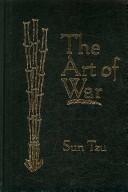
L'Art de la guerre
Ouvrage classiqueSun Tzu · -Ve s.
The oldest treatise on strategy, 2,500 years old. Sun Tzu teaches how to win without fighting: know yourself and know your adversary, cunning, terrain and timing, principles transposed to negotiation.

Beyond Culture (haut/bas contexte)
BookE. T. Hall · 1976
Hall distinguishes "high-context" cultures (implicit, relational) from "low-context" ones (explicit, factual): an essential key to understanding intercultural misunderstandings in negotiation.
Traditions of China, Japan and Korea (guanxi, mianzi, nemawashi, ringi, nunchi, kibun…).
On video
Videos to picture The Empty City Technique and anchor it through examples.
A verified video selection is being enriched; the search above already surfaces the best videos on the topic.
Technique map
Every technique sits within a network: what it draws on, what it combines with, where it applies, and how to defend against it.
Spot its signals, neutralise it and turn it around with the defensive playbook on this page.
See the counter-techniquesThe empty-city stratagem consists in displaying total assurance and an apparent absence of defence to make your opponent believe that a trap awaits them. Paradoxically, by showing your vulnerability with perfect calm, you deter the attack.
Calmly show that you have seen the staging: it loses all effect.
Taking appearance for reality.
Our programmes turn theory into a concrete advantage.