Context 1 / 6
Sales negotiation
A salesperson opens with “would you be against the idea of taking a look, even if you say no afterwards?”: the prospect, reassured that they retain control, commits more readily.

🛠️ Methods & tactics
Anglo-Saxon schools of negotiation
C. Karrass, R. Dawson, H. Cohen, N. Rackham (SPIN), T. Gordon (DESC / active listening).
Full detail in the “Origin & history” section below.

Author of the library
Negotiation lecturer at KEDGE Business School
A rare threefold background serving negotiation: teaching, commercial justice and audit, backed by experience as a company director in Bordeaux.
Running counter to the obsession with “yes”, this approach invites you to let, and even encourage, the other party to say “no”. “No” reassures, restores a sense of control and safety, and paradoxically opens up a genuine dialogue, where the race for “yes” applies pressure and makes people dig in.
At a glance
Vigilance: high (6.0/10) · Preparation required: 6/10
Indicative profile: it situates the “Psychological influence” family as the Methods & tactics school practises it, not this technique taken in isolation. Techniques from the same family and school therefore share the same profile. NEGOCOACH editorial rating out of 10, non-experimental · the higher the “relational risk” value, the more costly the technique is to the relationship.
NEGOCOACH assessment
Tactical potential 8.0/10 (effectiveness, impact, discretion) and vigilance high (relational and ethical risk): two distinct readings, deliberately never merged into a single score that would reward risk. NEGOCOACH editorial rating calibrated from the “Psychological influence” family and the “Methods & tactics” school. Each criterion is rated out of 10; click to understand what it measures.
How far the technique can carry the negotiation in the intended direction when it is well executed.
Strength of the effect produced on the counterpart's perceptions, emotions and decisions.
How hard it is for the other party to notice the technique is being used. A high value = very discreet.
The information, analysis and rehearsal required upfront to use it effectively.
Potential cost to the relationship and to trust if the technique is spotted, refused or fails. A high value = riskier.
Moral acceptability: fairness, transparency and respect for the counterpart's autonomy. A high value = more defensible.
School grounded in research and field practice
The school this technique stems from combines academic work with long field practice. This indicator qualifies the school, not this technique taken in isolation.
Indicative NEGOCOACH editorial rating, for teaching purposes. For “Relational risk”, a high value signals a cost to the relationship, not a quality.
This approach was formalised by Jim Camp, an American negotiation coach, in Start with No (2002). Camp squarely opposes the “win-win” school, which he considers naive and open to exploitation: in his view, seeking to extract a series of “yeses” places the negotiator in a position of need and weakness. Allowing the other party to say “no” restores their sense of safety and control, the very condition for a considered decision. Chris Voss would later take up this insight, showing that a “no” is often the true beginning of the negotiation.
The technique consists in not forcing agreement, but in reassuring the other party by leaving them the right to refuse (“would it be a problem for you if…?”). “No” lowers their defences and makes it possible to explore the real obstacles calmly.
Application by context
A salesperson opens with “would you be against the idea of taking a look, even if you say no afterwards?”: the prospect, reassured that they retain control, commits more readily.
Management invites the representatives to say no to whatever does not suit them, which creates a climate of discussion rather than a trial of strength.
The negotiator asks questions to which a “no” is easy and reassuring, restoring to the person a sense of control that calms them.
A negotiator openly leaves the other camp the option of refusing, which defuses mistrust and revives the dialogue.
The agent tells the seller “you have every right to turn down this offer”: freed from the pressure, the seller examines it more calmly.
In a conflict, letting each person voice their “nos” without drama makes it possible to pinpoint the real sticking points.
Counter-techniques
Negotiation is also played on defence. Here is how to recognise this technique when it is used against you, and turn it around.
The signals that give it away
The counters that defuse it
Turn it into an advantage
Verbalise the lever: "I feel you're playing on guilt", and naming it defuses it.
Mistaking an emotional bond for an objective argument.
Starting with no defuses pressure, restores control to the other party and brings out the real objections instead of burying them. Its limitation: the approach is counter-intuitive and demands mastery; poorly understood, it can look like a lack of interest or scupper a simple sale that only needed a “yes”.
Powerful in complex, high-stakes negotiations or with a wary counterpart. Less relevant in a simple, quick transaction where directly seeking agreement is enough.
Sales · The call that begins with “it might be a no”: A representative scenario. A B2B salesperson opens the meeting by saying: “It is entirely possible that by the end of this conversation you will decide our solution is not for you, and that will be a perfectly acceptable answer.” By defusing the customer’s fear of being “forced” to buy, the salesperson lowers the pressure, elicits franker questions and surfaces the real objection (a previous supplier who let them down). The deal closes later, on a healthier footing, with no price concession wrung out under time pressure.
Everyday life · Allowing the child to say no: A representative scenario. A parent who wants a teenager to tidy their room does not demand an immediate “yes” but puts it as: “You’re allowed to refuse to do it now, tell me what’s getting in the way.” The right to say no dissolves the defensive stance and reveals the real obstacle (homework due that same evening), making it possible to negotiate a time rather than impose an order that would have triggered a deadlock.
Jim Camp’s approach is one of the most protective in the repertoire: inviting the other party to say no means handing them back control, defusing the pressure and enabling a dialogue that the race for yes forbids. It takes the exact opposite stance to commitment-based techniques, and it is no accident that it was born in reaction to them. Its limitation lies in the fact that the no itself can be stage-managed. Offering a refusal where it costs nothing, granting the counterpart the satisfaction of having said no on a minor point in order to establish the trust that will carry the yes on the essentials, is to manufacture a façade of freedom, all the more effective for presenting itself as a safeguard against manipulation. An honest practical limitation must be added: no reassures but does not commit, and a negotiation that multiplies comfortable refusals can turn into endless exploration, everyone feeling perfectly at ease while nothing moves forward. Inviting the no to make the choice real is a mark of respect; inviting it where it costs nothing in order to carry the yes elsewhere is a façade of freedom.
Quick exercise
Answer in your head, then reveal the solution. Memory is built through active recall.
Frequently asked questions
Running counter to the obsession with “yes”, this approach invites you to let, and even encourage, the other party to say “no”. “No” reassures, restores a sense of control and safety, and paradoxically opens up a genuine dialogue, where the race for “yes” applies pressure and makes people dig in.
It sits on the line: effective, but it can tip into manipulation if it exploits an information asymmetry. Use it with measure and without deliberate deceit.
Mistaking an emotional bond for an objective argument. The right reflex: separate the emotion from the substance.
NEGOCOACH does not assess the experimental validation of this technique in isolation. What we document is the grounding of its source school (Methods & tactics): school grounded in research and field practice. Full detail is in the "At a glance" section of this page.
Practise with AI
Copy, paste into your assistant, replace the [brackets]. Works with ChatGPT, Claude, Gemini, Mistral, Perplexity.
Build your plan before the meeting
You are an expert negotiation coach. Help me prepare to use the "The Start-with-No Technique" technique in the following situation: [describe your situation]. Give me: the conditions for success, a 3-step script, my counterpart's likely objections and how to answer them.
Rehearse against an AI counterpart
Play the role of my counterpart in a negotiation. I am going to test the "The Start-with-No Technique" technique. React realistically and with resistance, do not give in too quickly, then at the end analyse my performance and suggest 3 concrete improvements.
Analyse a past negotiation
Here is how my negotiation went: [paste the exchanges]. Analyse whether the "The Start-with-No Technique" technique was used well, what worked, the mistakes made, and spell out precisely what I could have done better.
References
Founding works of the 🛠️ Methods & tactics school this technique belongs to.
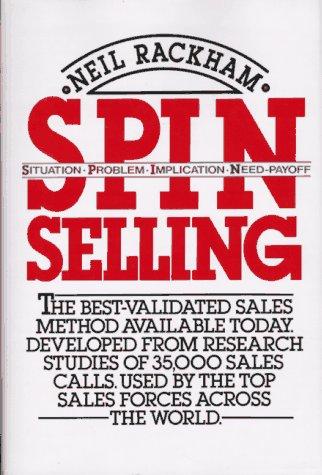
SPIN Selling
BookN. Rackham · 1988
Grounded in the analysis of thousands of sales calls, the SPIN method structures customer discovery through four types of question (Situation, Problem, Implication, Need-payoff) for complex sales.

The Negotiating Game
BookC. L. Karrass · 1970
A pragmatic classic of business negotiation: tactics, power balance and preparation. Karrass sums up his motto, you get what you negotiate, not what you deserve.

Secrets of Power Negotiating
BookR. Dawson · 1987
An arsenal of opening, middle and closing "gambits" to gain the upper hand in commercial negotiation, explained step by step.
C. Karrass, R. Dawson, H. Cohen, N. Rackham (SPIN), T. Gordon (DESC / active listening).
On video
Videos to picture The Start-with-No Technique and anchor it through examples.
A verified video selection is being enriched; the search above already surfaces the best videos on the topic.
Technique map
Every technique sits within a network: what it draws on, what it combines with, where it applies, and how to defend against it.
Spot its signals, neutralise it and turn it around with the defensive playbook on this page.
See the counter-techniquesRunning counter to the obsession with “yes”, this approach invites you to let, and even encourage, the other party to say “no”. “No” reassures, restores a sense of control and safety, and paradoxically opens up a genuine dialogue, where the race for “yes” applies pressure and makes people dig in.
Verbalise the lever: "I feel you're playing on guilt", and naming it defuses it.
Mistaking an emotional bond for an objective argument.
Our programmes turn theory into a concrete advantage.