Context 1 / 6
Sales negotiation
A salesperson identifies a shared interest with the client and sincerely compliments them on a choice: the warmer relationship makes agreement easier.

🧠 Cognitive science
Behavioural economics & social psychology
R. Cialdini ("Influence", 1984), D. Kahneman & A. Tversky, R. Thaler, D. Ariely.
Full detail in the “Origin & history” section below.

Author of the library
Negotiation lecturer at KEDGE Business School
A rare threefold background serving negotiation: teaching, commercial justice and audit, backed by experience as a company director in Bordeaux.
We say yes more readily to those we like. The liking principle consists in activating the levers of appreciation, similarity, sincere compliments, cooperation towards a common goal and familiarity, in order to make the other party more inclined to agree.
At a glance
Vigilance: high (6.0/10) · Preparation required: 6/10
Indicative profile: it situates the “Psychological influence” family as the Cognitive science school practises it, not this technique taken in isolation. Techniques from the same family and school therefore share the same profile. NEGOCOACH editorial rating out of 10, non-experimental · the higher the “relational risk” value, the more costly the technique is to the relationship.
NEGOCOACH assessment
Tactical potential 8.3/10 (effectiveness, impact, discretion) and vigilance high (relational and ethical risk): two distinct readings, deliberately never merged into a single score that would reward risk. NEGOCOACH editorial rating calibrated from the “Psychological influence” family and the “Cognitive science” school. Each criterion is rated out of 10; click to understand what it measures.
How far the technique can carry the negotiation in the intended direction when it is well executed.
Strength of the effect produced on the counterpart's perceptions, emotions and decisions.
How hard it is for the other party to notice the technique is being used. A high value = very discreet.
The information, analysis and rehearsal required upfront to use it effectively.
Potential cost to the relationship and to trust if the technique is spotted, refused or fails. A high value = riskier.
Moral acceptability: fairness, transparency and respect for the counterpart's autonomy. A high value = more defensible.
School grounded in experimental research
The school this technique stems from is grounded in replicated, peer-reviewed experimental work. This indicator qualifies the school, not the experimental validation of this technique taken in isolation.
Indicative NEGOCOACH editorial rating, for teaching purposes. For “Relational risk”, a high value signals a cost to the relationship, not a quality.
The principle of “liking” is one of the six levers of influence identified by Robert Cialdini in Influence (1984), drawing on decades of research in social psychology and the study of persuasion professionals. Cialdini shows that several factors trigger appreciation almost automatically: similarity (we like those who resemble us), compliments, repeated contact, association with positive things, and cooperation. These levers, which salespeople exploit intuitively, have a massive and often unconscious effect on the decision.
The technique consists in building a genuine store of goodwill before negotiating: finding real common ground, sincerely acknowledging the other party's qualities, and cooperating towards a shared objective. Appreciation lowers defences and makes yes easier.
Application by context
A salesperson identifies a shared interest with the client and sincerely compliments them on a choice: the warmer relationship makes agreement easier.
A negotiator highlights shared values and the common objective with the representatives, creating a climate conducive to compromise.
The mediator seeks points of human connection with the person, the liking thus created opening the way to dialogue.
Two delegations foreground a shared history or common interests to warm up strained relations.
An agent builds a genuine connection with the seller (background, attachment to the neighbourhood), which smooths the whole negotiation.
In a dispute, recalling emotional bonds and shared happy memories predisposes everyone towards conciliation.
Counter-techniques
Negotiation is also played on defence. Here is how to recognise this technique when it is used against you, and turn it around.
The signals that give it away
The counters that defuse it
Turn it into an advantage
Verbalise the lever: "I feel you're playing on guilt", and naming it defuses it.
Mistaking an emotional bond for an objective argument.
Liking is a powerful, universal and pleasant lever that eases everything else in the negotiation. Its limits: forced or self-serving (false familiarity, flattery), it turns into distrust; it does not replace substance and can be exploited by a manipulator.
Useful at the outset and throughout a relationship-based negotiation. To be built on sincerity; to be watched on the defensive side, as a sudden excess of liking from the other party may conceal an attempt at influence.
Sales · The sale through perceived similarity: In the preamble, a salesperson discovers that they share with their prospect the same region of origin and a passion for sailing. He invents nothing: he sincerely underlines this real common ground before turning to the offer. The climate becomes markedly more cooperative, the prospect lowers their guard and listens to the arguments with goodwill rather than suspicion. This scenario illustrates the mechanism of similarity described in research on liking: we more readily extend our trust to those who resemble us.
Diplomatic · The personal bond between negotiators: In many international negotiations, diplomats deliberately invest time in informal meals and personal exchanges before the formal sessions. The representative aim: to build genuine liking that makes later concessions psychologically easier and reduces the risk of escalation. The human relationship becomes an asset that cushions tensions over substance.
The lever identified by Cialdini is not in itself deceptive: we do indeed say yes more readily to those we like, and there is nothing reprehensible about making oneself likeable. Seeking what genuinely brings you closer to a counterpart, cooperating towards a common goal, sincerely acknowledging what they do well, all of this improves the negotiation and life. The definition of the technique moreover contains the word that draws the line: “sincere compliments”. Everything else tips over. Manufacturing a resemblance one does not have, conveniently discovering a shared passion, calibrating flattery to what the other needs to hear, that is simulating affinity to reap what it yields. The device has a practical limit worth knowing: manufactured liking is fragile and testable, a single detail that does not fit is enough to make it collapse, and the counterpart then rereads the whole relationship as a calculation. One must add a limit that applies to you: the liking others feel for you is also a hold on you, and the most dangerous negotiator is often the most charming. Seeking what truly brings people closer is a courtesy; manufacturing a resemblance in order to be liked is an imposture.
Quick exercise
Answer in your head, then reveal the solution. Memory is built through active recall.
Frequently asked questions
We say yes more readily to those we like. The liking principle consists in activating the levers of appreciation, similarity, sincere compliments, cooperation towards a common goal and familiarity, in order to make the other party more inclined to agree.
It sits on the line: effective, but it can tip into manipulation if it exploits an information asymmetry. Use it with measure and without deliberate deceit.
Mistaking an emotional bond for an objective argument. The right reflex: separate the emotion from the substance.
NEGOCOACH does not assess the experimental validation of this technique in isolation. What we document is the grounding of its source school (Cognitive science): school grounded in experimental research. Full detail is in the "At a glance" section of this page.
Practise with AI
Copy, paste into your assistant, replace the [brackets]. Works with ChatGPT, Claude, Gemini, Mistral, Perplexity.
Build your plan before the meeting
You are an expert negotiation coach. Help me prepare to use the "The Liking Principle Technique" technique in the following situation: [describe your situation]. Give me: the conditions for success, a 3-step script, my counterpart's likely objections and how to answer them.
Rehearse against an AI counterpart
Play the role of my counterpart in a negotiation. I am going to test the "The Liking Principle Technique" technique. React realistically and with resistance, do not give in too quickly, then at the end analyse my performance and suggest 3 concrete improvements.
Analyse a past negotiation
Here is how my negotiation went: [paste the exchanges]. Analyse whether the "The Liking Principle Technique" technique was used well, what worked, the mistakes made, and spell out precisely what I could have done better.
References
Founding works of the 🧠 Cognitive science school this technique belongs to.
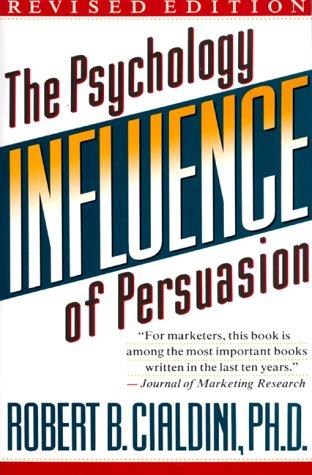
Influence, The Psychology of Persuasion
BookR. Cialdini · 1984
The founding work on the mechanisms of persuasion: six universal principles (reciprocity, consistency, social proof, authority, liking, scarcity) illustrated with striking experiments. A landmark in social psychology.

Thinking, Fast and Slow
BookD. Kahneman · 2011
The sum of Kahneman's work on decision-making: two systems of thought, one fast and intuitive, the other slow and analytical, and the long list of biases that distort our judgements. Essential to understanding others... and yourself.

Nudge
BookR. Thaler & C. Sunstein · 2008
How to steer choices without constraint, by acting on the "choice architecture". The book popularised the nudge and behavioural economics applied to public policy as much as to management.
Judgment under Uncertainty: Heuristics and Biases (Science)
ArticleA. Tversky & D. Kahneman · 1974
The founding paper (Science, 1974) that uncovered the heuristics and biases of judgement, including anchoring. The starting point of the behavioural-economics revolution.
R. Cialdini ("Influence", 1984), D. Kahneman & A. Tversky, R. Thaler, D. Ariely.
On video
Videos to picture The Liking Principle Technique and anchor it through examples.
A verified video selection is being enriched; the search above already surfaces the best videos on the topic.
Technique map
Every technique sits within a network: what it draws on, what it combines with, where it applies, and how to defend against it.
Spot its signals, neutralise it and turn it around with the defensive playbook on this page.
See the counter-techniquesWe say yes more readily to those we like. The liking principle consists in activating the levers of appreciation, similarity, sincere compliments, cooperation towards a common goal and familiarity, in order to make the other party more inclined to agree.
Verbalise the lever: "I feel you're playing on guilt", and naming it defuses it.
Mistaking an emotional bond for an objective argument.
Our programmes turn theory into a concrete advantage.