
NEGOCOACH
262
Origin : FBI · Chris Voss

🕵️ FBI · Chris Voss

Tactical empathy

Chris Voss, "Never Split the Difference", 2016, FBI crisis negotiation.

Full detail in the “Origin & history” section below.

262

Strategic Validation

Emotional intelligence Technique 262 / 360
Alexandre Baumberger

Author of the library

Alexandre Baumberger

Negotiation lecturer at KEDGE Business School

A rare threefold background serving negotiation: teaching, commercial justice and audit, backed by experience as a company director in Bordeaux.

  • Teaching, KEDGE Business School Negotiation lecturer since 2014 (12 years).
  • Commercial justice, Commercial Court Judge from 2018 to 2026: litigation, then insolvency proceedings.
  • Audit & advisory, over 20 years Tax, employment and financial audit in major firms, for large groups.
In brief

Strategic validation consists in explicitly acknowledging the legitimacy of the other party's viewpoint or feelings, without agreeing on the substance, in order to disarm their defences and prompt them towards reciprocity. It turns an entrenched adversary into an interlocutor willing to listen, because feeling validated lowers vigilance and opens the door to influence.

Reading level

At a glance

Its family profile at a glance

Effectiveness Psychologicalimpact Discretion Preparation Relationalrisk Ethics
8.0 / 10 Tactical potential

Vigilance: moderate (4.0/10) · Preparation required: 6/10

Grounding in the source school School grounded in research and field practice

Indicative profile: it situates the “Emotional intelligence” family as the FBI · Chris Voss school practises it, not this technique taken in isolation. Techniques from the same family and school therefore share the same profile. NEGOCOACH editorial rating out of 10, non-experimental · the higher the “relational risk” value, the more costly the technique is to the relationship.

NEGOCOACH assessment

How to read this rating

Tactical potential 8.0/10 (effectiveness, impact, discretion) and vigilance moderate (relational and ethical risk): two distinct readings, deliberately never merged into a single score that would reward risk. NEGOCOACH editorial rating calibrated from the “Emotional intelligence” family and the “FBI · Chris Voss” school. Each criterion is rated out of 10; click to understand what it measures.

  • Effectiveness 8/10 · Very high

    How far the technique can carry the negotiation in the intended direction when it is well executed.

  • Psychological impact 10/10 · Very high

    Strength of the effect produced on the counterpart's perceptions, emotions and decisions.

  • Discretion 6/10 · High

    How hard it is for the other party to notice the technique is being used. A high value = very discreet.

  • Preparation 6/10 · High

    The information, analysis and rehearsal required upfront to use it effectively.

  • Relational risk 3/10 · Low

    Potential cost to the relationship and to trust if the technique is spotted, refused or fails. A high value = riskier.

  • Ethics 6/10 · High

    Moral acceptability: fairness, transparency and respect for the counterpart's autonomy. A high value = more defensible.

Level of evidence

School grounded in research and field practice

The school this technique stems from combines academic work with long field practice. This indicator qualifies the school, not this technique taken in isolation.

Indicative NEGOCOACH editorial rating, for teaching purposes. For “Relational risk”, a high value signals a cost to the relationship, not a quality.

Strategic Validation in Brief


Origin & History

The technique extends the work of Carl Rogers on “unconditional positive regard” (1957) and the dialectical behaviour therapy of Marsha Linehani, who formalised validation into six levels. In negotiation, Chris Voss incorporates it as the bedrock of tactical empathy in Never Split the Difference (2016).


Definition and Principle

Validating is not approving: it is signalling to the other party that their reaction is understandable given their situation, which commits you to nothing on the substance of the request. The mechanism is one of eased dissonance: freed from the obligation to defend its legitimacy, the interlocutor releases mental energy to consider other options.i


Concrete Examples of Application

Application by context

The same technique, across every negotiation settings

Context 1 / 8

Sales negotiation

A prospect thinks the quote is too expensive. The salesperson validates: “Your reaction is perfectly legitimate; at this budget level one expects a clear return on investment.” The client, feeling understood rather than countered, drops their guard and sets out their real decision criteria.

How to apply it

Validate the logic of the objection before answering it (“It is only natural that you should ask the question”), then move on to value, never to defence.

Strengths

Avoids the justification reflex that stiffens the buyer; brings out the real criterion behind the price.

Weaknesses

Systematic or recited validation rings hollow and signals a learned technique rather than genuine listening.
Context 2 / 8

Procurement negotiation

On the buying side, facing a supplier fixated on their margins, the buyer validates: “I understand that your raw-material costs have soared; your position is coherent.” The seller, feeling heard, becomes more inclined to seek non-price trade-offs (lead times, volumes).

How to apply it

Acknowledge the seller's economic constraint before pushing on price; this shifts the discussion towards the variables of exchange.

Strengths

Defuses the supplier's defensive stance and opens up the field of cross-concessions.

Weaknesses

Too much validation can be read as an admission of weakness and harden the other side's position.

Context 3 / 8

Labour negotiation

In a union meeting, management validates: “The feeling that your warnings went unheard is legitimate given the timeline so far.” Acknowledging the legitimacy of the grievance, without conceding on the demands, causes the hostility to subside and reopens the negotiation.

How to apply it

Validate the collective grievance before the figures; this lances the emotional abscess that was paralysing the table.

Strengths

Restores a climate conducive to dialogue and subsequently lends legitimacy to management's arguments.

Weaknesses

Perceived as a manoeuvre if no concrete action follows the verbal acknowledgement.

Context 4 / 8

Crisis management

Faced with a furious client threatening to sever everything, the mediator validates: “After what you have been through, your anger is entirely understandable.” The intensity subsides because the person no longer has to prove they have the right to be angry.

How to apply it

Validate the emotion first, never the fact; propose no solution while the tension has not yet come down.

Strengths

The only effective route when the other party is overwhelmed and deaf to any rational argument.

Weaknesses

Badly calibrated, validation can give the impression that you are yielding on the substance and revive the demand.

Context 5 / 8

Political negotiation

In mediation between parties, the facilitator validates one camp's fear: “Your concern that a compromise might be read as a climbdown by your base is legitimate.” Acknowledging the internal political constraint unlocks concessions that were previously impossible.

How to apply it

Validate the constraint of representation (electoral base, public opinion) rather than the stated position; that is the real lock.

Strengths

Unblocks stalled negotiations by addressing the rarely voiced issue of image.

Weaknesses

Any public validation can be captured and turned against you in the media by the other party.

Context 6 / 8

Real-estate negotiation

A seller refuses any reduction. The agent validates: “Your attachment to this price is understandable; this house is twenty years of your life.” The seller, acknowledged, then agrees to discuss the terms rather than the figure alone.

How to apply it

Validate the sentimental value before broaching the market, then switch to the negotiable conditions (timing, furnishings).

Strengths

Detaches the negotiation from pure price by reintroducing variables of exchange.

Weaknesses

No effect on a purely rational or hurried seller, who expects market comparables.

Context 7 / 8

Cross-cultural negotiation

Between a direct French team and a Japanese partner keen to preserve harmony, the negotiator validates: “Your need to preserve the relationship before deciding is perfectly legitimate for us too.” Acknowledging the other party's cultural framework avoids any impression of disrespect.

How to apply it

Validate the other culture's relational code (pace, indirectness, face) before imposing your own negotiating style.

Strengths

Prevents breakdowns caused by cultural misunderstanding and builds cross-cultural trust.

Weaknesses

Requires genuine knowledge of the target culture; an approximate validation can tip into condescending cliché.

Context 8 / 8

Family negotiation

During an inheritance dispute, a sister validates: “That you feel bitterness is legitimate; you cared for our parents for years.” Acknowledging the legitimacy of the feeling soothes, where contesting the facts would only have made things worse.

How to apply it

Validate the underlying feeling (recognition, emotional fairness) before the material division; that is what blocks the agreement.

Strengths

Preserves the long-term relationship, a central concern in a family context.

Weaknesses

Hard to sustain with neutrality when you are yourself an emotionally involved party.


Counter-techniques

Spot and neutralise this technique

Negotiation is also played on defence. Here is how to recognise this technique when it is used against you, and turn it around.

Detect

The signals that give it away

  • Displayed empathy that lowers your guard
  • Mirroring of your gestures and words
  • A systematic "I understand you"

Neutralise

The counters that defuse it

  • Appreciate the warmth without relaxing
  • Keep your objectives in mind
  • Distinguish being heard from being satisfied

Turn around

Turn it into an advantage

Use active listening in turn to gather information.

The trap to avoid

Mistaking being understood for having won your case.

In Short

  • Difficulty: Intermediate
  • Estimated effectiveness: High
  • Implementation time: Quick to phrase, but demands sincerity
  • Fields of application: Sales, Mediation, Management, Labour negotiation, Client relations
  • Synonyms: Emotional validation, Acknowledgement of legitimacy, Strategic acknowledgement
  • Tags: validation, empathy, Rogers, Linehan, reciprocity

Strengths and Weaknesses

Strategic validation disarms defences without conceding anything on the substance: it frees the other party from the obligation to prove their legitimacy and triggers reciprocity. Inexpensive, it prepares the ground for influence. Its limit: mechanical or insincere, it sounds like a sales technique and destroys the very trust it claims to build.


When to Use This Technique?

Use it as soon as an interlocutor feels challenged or unheard, or at the outset to establish rapport. Avoid it as mere dressing without genuine listening. Of little use, indeed suspect, in a purely technical transaction where no feelings are at stake.


How to Recognise and Counter This Technique

Recognise it: the other party keeps validating your legitimacy (“it is quite natural that…”, “your reaction is understandable”) to soften you up. Neutralise it: acknowledge receipt without opening up further (“Thank you; let us return to the objective criteria”). Turn it around: validate their constraint in turn to regain the relational initiative.


Limits and Ethics

The boundary with manipulative flattery hinges on sincerity: validating a feeling you despise in order to extract a concession is ethically reprehensible, especially in a situation of vulnerability. Validation must be authentic and consistent with the actions that follow, on pain of backlash.


Variants and Related Techniques

Combines closely with Labelling (naming the emotion) and Tactical Empathy. Close to Relational Calibration. Opposed to head-on contradiction and to the distributive power struggle.


Going Further

  • Marsha Linehan, Cognitive-Behavioral Treatment of Borderline Personality Disorder, 1993.
  • Carl Rogers, “The Necessary and Sufficient Conditions of Therapeutic Personality Change”, Journal of Consulting Psychology, 1957.
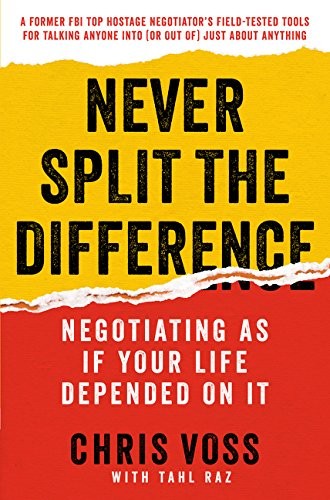
  • Chris Voss & Tahl Raz, Never Split the Difference, 2016.

Objectives of the Technique

  • Disarm the interlocutor's defences by explicitly acknowledging the legitimacy of their feelings or position, without conceding anything on the substance
  • Trigger reciprocity: an interlocutor who feels acknowledged becomes more willing to listen to the other side's arguments and to take a step
  • Bring out the real interests hidden behind a rigid position or a surface objection
  • Defuse emotional escalation and preserve the relationship in tense or conflictual negotiations
  • Obtain the “that's right” that marks the shift from confrontation to cooperation

Famous Cases

Diplomatic · Hostage Jeffrey Schilling (Philippines, 2000): the “that's right” that wiped out 10 million dollars: In August 2000, the Abu Sayyaf group captured the American Jeffrey Schilling on the island of Jolo. Its leader, Abu Sabaya, demanded 10 million dollars, not as a ransom but as “war damages” for five centuries of oppression of Filipino Muslims. Chris Voss, the FBI's lead negotiator on the case, coached the negotiator Benjie: instead of contesting this narrative, he summarised it and validated its internal logic (pauses, minimal encouragers, paraphrase, synthesis), without ever approving the hostage-taking. When Sabaya let slip “that's right”, the shift occurred: he never mentioned the money again, gradually lowered his guard, and Schilling eventually escaped before being recovered by Filipino commandos. Case recounted by Voss himself in Never Split the Difference (chap. 5).

Commercial · Representative scenario: validating the budget objection before answering it: Representative scenario. A prospect judges a software-overhaul quote too expensive and threatens to turn to a low-cost competitor. Instead of defending her price, the saleswoman validates: “Your reaction is perfectly understandable: at this level of investment, you have to justify every euro to your management.” Freed from the obligation to defend the legitimacy of his objection, the client reveals the real sticking point: it is not the amount, it is the absence of a payment milestone aligned with his internal sign-offs. The negotiation shifts from price to the payment schedule, and the deal closes without a discount.

Corporate · Representative scenario: a pay-rise request declined without a breakdown: Representative scenario. A high-performing employee requests a pay rise that the year's frozen budget does not allow. The manager first validates: “Your request is entirely legitimate: you carried two major projects this year and you are comparing your salary to the market, which is rational.” Only after this explicit acknowledgement does he set out the budget constraint and offer trade-offs (certified training, remote working, a dated review). The employee, whose legitimacy has not been denied, accepts the compromise; the same refusal delivered without validation would have been experienced as contempt and would have triggered a departure.


Common Mistakes

  • Confusing validating with approving: yielding on the substance while believing you are merely acknowledging the feeling; validation bears on the legitimacy of the reaction, never on the content of the request
  • Reciting a mechanical formula (“I understand”, “I hear you”) without a precise restatement of the other party's situation: the validation rings hollow and arouses distrust
  • Following immediately with “but…”, which retroactively cancels the validation; prefer a pause, a question, or an “and” that preserves the acknowledgement
  • Validating inaccurately: an approximate summary of the other side's viewpoint provokes a “that's not it at all” and entrenches the interlocutor further
  • Settling for a polite “you're right”, a signal of dismissal, instead of aiming for the “that's right” that attests to genuinely felt acknowledgement

Scientific Foundations

  • Chris Voss & Tahl Raz (2016) Never Split the Difference: Negotiating As If Your Life Depended On It HarperBusiness (chap. 5, “Trigger the two words that immediately transform any negotiation”)
  • Carl R. Rogers (1957) The necessary and sufficient conditions of therapeutic personality change Journal of Consulting Psychology, 21(2), 95-103, DOI: 10.1037/h0045357
  • Marsha M. Linehan (1997) Validation and psychotherapy in A. Bohart & L. Greenberg (eds.), Empathy Reconsidered: New Directions in Psychotherapy, American Psychological Association

Quick exercise

Test yourself before answering

Answer in your head, then reveal the solution. Memory is built through active recall.

1 Quels signaux doivent vous alerter ?
  • Displayed empathy that lowers your guard
  • Mirroring of your gestures and words
  • A systematic "I understand you"
2 Quelles parades appliquer ?
  • Appreciate the warmth without relaxing
  • Keep your objectives in mind
  • Distinguish being heard from being satisfied

Frequently asked questions

The questions we get most

What is the "Strategic Validation" technique?

Strategic validation consists in explicitly acknowledging the legitimacy of the other party's viewpoint or feelings, without agreeing on the substance, in order to disarm their defences and prompt them towards reciprocity. It turns an entrenched adversary into an interlocutor willing to listen, because feeling validated lowers vigilance and opens the door to influence.

Is the "Strategic Validation" technique ethical?

It sits on the line: effective, but it can tip into manipulation if it exploits an information asymmetry. Use it with measure and without deliberate deceit.

How do you defend against "Strategic Validation"?

Mistaking being understood for having won your case. The right reflex: appreciate the warmth without relaxing.

What is the "Strategic Validation" technique based on?

NEGOCOACH does not assess the experimental validation of this technique in isolation. What we document is the grounding of its source school (FBI · Chris Voss): school grounded in research and field practice. Full detail is in the "At a glance" section of this page.

Practise with AI

Three ready-to-use prompts

Copy, paste into your assistant, replace the [brackets]. Works with ChatGPT, Claude, Gemini, Mistral, Perplexity.

Prepare

Build your plan before the meeting

You are an expert negotiation coach. Help me prepare to use the "Strategic Validation" technique in the following situation: [describe your situation]. Give me: the conditions for success, a 3-step script, my counterpart's likely objections and how to answer them.

Simulate

Rehearse against an AI counterpart

Play the role of my counterpart in a negotiation. I am going to test the "Strategic Validation" technique. React realistically and with resistance, do not give in too quickly, then at the end analyse my performance and suggest 3 concrete improvements.

Debrief

Analyse a past negotiation

Here is how my negotiation went: [paste the exchanges]. Analyse whether the "Strategic Validation" technique was used well, what worked, the mistakes made, and spell out precisely what I could have done better.

References

Bibliography & credible sources

Founding works of the 🕵️ FBI · Chris Voss school this technique belongs to.

  • Cover: Never Split the Difference

    Never Split the Difference

    Book

    C. Voss & T. Raz · 2016

    The FBI's hostage-negotiation methods transposed to business and everyday life: tactical empathy, mirroring, labeling, calibrated questions. An emotional, counter-intuitive approach to persuasion.

  • Cover: Stalling for Time, My Life as an FBI Hostage Negotiator

    Stalling for Time, My Life as an FBI Hostage Negotiator

    Book

    G. Noesner · 2010

    The account of twenty-three years of crisis negotiation at the FBI by the head of its unit. A demonstration of the power of listening, patience and de-escalation in the most tense situations.

Chris Voss, "Never Split the Difference", 2016, FBI crisis negotiation.

On video

See the technique in action

Videos to picture Strategic Validation and anchor it through examples.

A verified video selection is being enriched; the search above already surfaces the best videos on the topic.

Technique map

Where this technique sits

Every technique sits within a network: what it draws on, what it combines with, where it applies, and how to defend against it.

Levers engaged

biases & emotions

Countered by

Spot its signals, neutralise it and turn it around with the defensive playbook on this page.

See the counter-techniques

Key takeaways

  • En une phrase

    Strategic validation consists in explicitly acknowledging the legitimacy of the other party's viewpoint or feelings, without agreeing on the substance, in order to disarm their defences and prompt them towards reciprocity. It turns an entrenched adversary into an interlocutor willing to listen, because feeling validated lowers vigilance and opens the door to influence.

  • The right reflex

    Use active listening in turn to gather information.

  • Never do this

    Mistaking being understood for having won your case.

8.0/10 tactical potential Moderate vigilance School grounded in research and field practice

Master this technique in real situations?

Our programmes turn theory into a concrete advantage.

Explore our programmes
Call Book a call