
NEGOCOACH
276
Origin : Methods & tactics

🛠️ Methods & tactics

Anglo-Saxon schools of negotiation

C. Karrass, R. Dawson, H. Cohen, N. Rackham (SPIN), T. Gordon (DESC / active listening).

Full detail in the “Origin & history” section below.

276

The Alternative Close (variant)

Sales closing Technique 276 / 360
Alexandre Baumberger

Author of the library

Alexandre Baumberger

Negotiation lecturer at KEDGE Business School

A rare threefold background serving negotiation: teaching, commercial justice and audit, backed by experience as a company director in Bordeaux.

  • Teaching, KEDGE Business School Negotiation lecturer since 2014 (12 years).
  • Commercial justice, Commercial Court Judge from 2018 to 2026: litigation, then insolvency proceedings.
  • Audit & advisory, over 20 years Tax, employment and financial audit in major firms, for large groups.
In brief

The alternative close, in its broadest sense, denotes the family of closings that confine the decision to a pre-steered choice: two options, two dates, two formulas, never the "yes/no". Where the alternative closing question limits itself to the choice of modality, the alternative close elevates this framing into a closing principlei and combines it with the other levers.

Reading level

At a glance

Its family profile at a glance

Effectiveness Psychologicalimpact Discretion Preparation Relationalrisk Ethics
7.0 / 10 Tactical potential

Vigilance: moderate (5.0/10) · Preparation required: 4/10

Grounding in the source school School grounded in research and field practice

Indicative profile: it situates the “Sales closing” family as the Methods & tactics school practises it, not this technique taken in isolation. Techniques from the same family and school therefore share the same profile. NEGOCOACH editorial rating out of 10, non-experimental · the higher the “relational risk” value, the more costly the technique is to the relationship.

NEGOCOACH assessment

How to read this rating

Tactical potential 7.0/10 (effectiveness, impact, discretion) and vigilance moderate (relational and ethical risk): two distinct readings, deliberately never merged into a single score that would reward risk. NEGOCOACH editorial rating calibrated from the “Sales closing” family and the “Methods & tactics” school. Each criterion is rated out of 10; click to understand what it measures.

  • Effectiveness 8/10 · Very high

    How far the technique can carry the negotiation in the intended direction when it is well executed.

  • Psychological impact 7/10 · High

    Strength of the effect produced on the counterpart's perceptions, emotions and decisions.

  • Discretion 6/10 · High

    How hard it is for the other party to notice the technique is being used. A high value = very discreet.

  • Preparation 4/10 · Moderate

    The information, analysis and rehearsal required upfront to use it effectively.

  • Relational risk 4/10 · Moderate

    Potential cost to the relationship and to trust if the technique is spotted, refused or fails. A high value = riskier.

  • Ethics 5/10 · Moderate

    Moral acceptability: fairness, transparency and respect for the counterpart's autonomy. A high value = more defensible.

Level of evidence

School grounded in research and field practice

The school this technique stems from combines academic work with long field practice. This indicator qualifies the school, not this technique taken in isolation.

Indicative NEGOCOACH editorial rating, for teaching purposes. For “Relational risk”, a high value signals a cost to the relationship, not a quality.

Summary of the Alternative Close


Origin & history

The alternative close is the backbone of Tom Hopkins' method and a constant in Brian Tracy and Zig Ziglar. It systematises the intuition that a mind presented with a binary choice processes the option, not the principlei. It also capitalises on the comfort of a narrow choice as against the paralysis of overload.


Definition and principle

Where the alternative closing question (sheet 273) is a one-off tactic at the end of an interview, the alternative close is a closing posture: structuring each decision step as a choice between two validating paths. The mechanism is that of reducing the decision space: by never offering anything but agreement alternatives, refusal is progressively pushed out of the picture. It combines with the presumptive close (the purchase is presumed, only the choice remains), the trial close (each alternative tests commitment) and the recapitulation. Its effectiveness rests on the fact that it breaks a large decision down into small, comfortable choices.


Concrete examples of application

Application by context

The same technique, across every negotiation settings

Context 1 / 8

Sales negotiation

The salesperson steers the entire interview through alternatives: "Do you see this rather for team A or B?", then "progressive or global rollout?", then "monthly or annual billing?". Each answer is a step of commitment; at no point has the customer been invited to say no. The overall decision has been built through a series of small choices.

How to apply it

Chain alternatives on genuinely open points, from the lightest to the most committing, to build the decision in stages. Ensure that each pair of options is acceptable (never a decoy). Nonetheless leave breathing spaces where "no" remains sayable, on pain of being perceived as manipulative.

Strengths

Builds the decision through small, comfortable steps; pushes refusal out of the picture; combines several closing levers into one unified posture.

Weaknesses

An overly mechanical chain of alternatives becomes stifling and transparent; a buyer who perceives the choice tunnel digs in and brings back the "neither of the two".
Context 2 / 8

Procurement negotiation

A seasoned buyer identifies the steering through successive alternatives: with each pair, the decision of principle is stolen from him. He takes back control: "You're confining me to choices, but I haven't yet decided on the substance. Let's stop the options and talk about the opportunity itself."

How to apply it

To foil the alternative close, the buyer refuses the tunnel of micro-choices, systematically reintroduces the zero option and insists on dealing with the principle before any modality.

Strengths

By stepping out of the binary frame, the buyer recovers the substantive decision that the posture sought to dissolve.

Weaknesses

Contesting every alternative can sharply slow down and sour an exchange that was progressing on genuinely minor points.

Context 3 / 8

Labour negotiation

A leader drives a transformation through successive alternatives: "Do we start with department A or B?", "in-person or hybrid training?", "rollout in Q1 or Q2?". The very principle of the transformation, never put to a vote, ends up ratified through the succession of execution choices.

How to apply it

Drive change management through successive execution choices to have the principle adopted without submitting it to a head-on debate, reserved for directions already legitimised.

Strengths

Moves a transformation forward while avoiding getting bogged down in a repeated debate of principle.

Weaknesses

If the principle is not legitimised, sidestepping it through the modalities is perceived as a denial of deliberation and fuels resistance.

Context 4 / 8

Crisis management

A negotiator structures the de-escalation through reassuring alternatives: "Do you prefer we talk by phone or face to face?", "do we take a break now or in ten minutes?". Each choice, bearing on the form, presupposes and reinforces the continuation of the dialogue.

How to apply it

Chain alternatives on the form of the dialogue, all presupposing its continuity, to anchor cooperation without ever reopening the question of a walk-away.

Strengths

Maintains and solidifies the channel of dialogue by giving the other party control over secondary points.

Weaknesses

Overly tight steering can be felt as manipulation by someone who is keen to reassert their freedom to stop everything.

Context 5 / 8

Political negotiation

A negotiator frames an entire agreement through alternatives: "Quarterly or half-yearly commission?", "review clause at one or two years?". By discussing only the modalities, he gets the very architecture of the agreement accepted, its principle never being reopened.

How to apply it

Structure the negotiation of an arrangement through successive modality choices to lock in the principle of the agreement and focus the debate on adjustments.

Strengths

Consolidates a substantive agreement by making it implicit behind a series of technical decisions.

Weaknesses

A shrewd negotiator refuses the overall framing and insists on reopening the architectural principle itself.

Context 6 / 8

Real-estate negotiation

The agent conducts the entire end of the transaction through alternatives: "Do you want the preliminary contract at this notary or your own?", "financing over twenty or twenty-five years to present to the bank?", "moving in before or after the summer?". Each choice moves things towards the purchase without ever raising the question of the purchase itself.

How to apply it

Drive the finalisation steps through concrete alternatives (notary, financing, timetable) when the decision to buy is ripe, to turn intention into committed action.

Strengths

Smooths the whole finalisation journey into a series of small, easy decisions.

Weaknesses

Triggered before the buying decision is ripe, this steering is felt as coercion and scares the buyer off.

Context 7 / 8

Cross-cultural negotiation

A seller steers a partner from a collective-decision culture with a barrage of alternatives demanding immediate answers. The counterpart, who must consult his group on every point, feels cornered and loses confidence in a process that ignores his mode of decision-making.

How to apply it

Adapt the pace of alternatives to the cultural relationship with time and collegiality: in cultures of slow, collective decision-making, space out the choices and accept the deferral of each one.

Strengths

Effective in cultures of individual, fast decision-making, where breaking things into simple choices is reassuring.

Weaknesses

A rapid chain of alternatives rushes collective or hierarchical cultures and destroys the relationship.

Context 8 / 8

Family negotiation

A parent structures an entire difficult evening through alternatives: "Homework before or after the snack?", "shower now or after the drawing?", "do we read one story or two short ones?". The general framework (the organisation of the evening) is never negotiable, only its details are.

How to apply it

Frame a routine through a series of micro-choices within a non-negotiable framework, to obtain cooperation without repeated confrontations.

Strengths

Drastically reduces conflict by giving control over the form while holding the framework.

Weaknesses

A child or relative who perceives the process rejects it outright, and the entire framing loses its effectiveness.


Counter-techniques

Spot and neutralise this technique

Negotiation is also played on defence. Here is how to recognise this technique when it is used against you, and turn it around.

Detect

The signals that give it away

  • A false "final offer"
  • A "only now" bonus
  • An assumed agreement ("shall we go with that?")

Neutralise

The counters that defuse it

  • Test the "final" offer by pretending to leave
  • Ignore the artificial bonus
  • Validate nothing by default

Turn around

Turn it into an advantage

Set your own closing condition: "I'll sign if…"

The trap to avoid

Signing so as not to "miss" the offer.

In brief

  • Difficulty: Intermediate
  • Estimated effectiveness: Very high in steering an interview
  • Implementation time: Diffuse: structures the whole interview
  • Fields of application: Sales, Change management, Real estate, Diplomacy
  • Synonyms: Systematic steered choice, Steering through alternatives, Double-bind close
  • Tags: closing, alternative close, framing, Tom Hopkins, choice reduction

Strengths and weaknesses

The alternative close elevates the steered binary choice into a closing posture: it breaks a large decision into a series of small, comfortable choices, progressively pushes refusal out of the picture and unifies several levers (presumptive close, trial close, recapitulation). Well conducted, it makes the decision fluid and almost painless. Its power is also its danger: overly tight steering becomes a stifling tunnel which, once perceived, turns into a signal of manipulation.


When to use this technique?

To be deployed when the direction is already secured and it is a matter of steering execution in stages. To be avoided as a choice tunnel imposed before any decision of principle: chaining alternatives on an unconvinced counterpart is a transparent and pressing form of coercion that alerts and antagonises. Prohibited if it removes any breathing space where "no" remains sayable, or in collective-decision cultures which it rushes.


How to recognise and counter this technique

Recognise: you are being steered through a succession of alternatives ("A or B?" then "X or Y?") without ever being asked whether you agree on the substance. Neutralise: step out of the tunnel by reintroducing the zero option ("neither of the two, I haven't decided") and insist on dealing with the principle. Turn it around: take back control of the exchange by setting the agenda yourself, substance first, modalities afterwards.


Limits and ethics

The alternative close tips into manipulation when the series of micro-choices serves to dissolve the decision of principle and to deprive the counterpart of any moment to say "no". The pressure exerted by reducing the decision space is all the more insidious for being barely visible, and weighs heavily on less assertive audiences. Ethics require preserving the option of refusal at every stage, basing choices on genuinely open points and respecting the right of withdrawal.


Variants and related techniques

Generalises the alternative closing question (sheet 273) into an overall posture, and incorporates the double bind of the Palo Alto school. It combines with the presumptive close, the trial close and the recapitulation. A cousin of framing and choice architecture (nudge). It stands opposed to the open-question close, which restores the buyer's full freedom to refuse.


Going further

  • Tom Hopkins, How to Master the Art of Selling, 1982.
  • Brian Tracy, The Psychology of Selling, 1988.
  • Barry Schwartz, The Paradox of Choice: Why More Is Less, 2004.

Objectives of the technique

  • Shift the customer's decision from "buy or not buy" to "which option to choose", by presupposing agreement in principle.
  • Avoid the closed yes/no question, which offers an easy way out and increases the rate of flat refusal.
  • Reduce the cognitive load of the decision by limiting the choice to two concrete options, both acceptable to the seller.
  • Obtain a tangible micro-commitment (appointment date, quantity, delivery arrangement) that materialises and locks in the agreement.
  • Speed up the closing phase by turning a diffuse hesitation into a simple trade-off between two parameters.

Famous cases

Sales · The "Wheeler Which": one egg or two?: In the 1930s, the American consultant Elmer Wheeler, author of Tested Sentences That Sell (1937), tested sales formulas at American drugstore counters. To increase sales of eggs added to malted milkshakes, he had the closed question "Would you like an egg in your malted?" replaced by the alternative question "One egg or two?". Instead of deciding whether he wants an egg, the customer chooses how many he wants: most take at least one, many take two. Egg sales soared within a few days. Wheeler drew from this a principle that became a classic: "Give the customer a choice between something and something, never between something and nothing." This founding case gave the technique its English nickname: the "Wheeler Which".

Sales · The alternative appointment booking in B2B prospecting (representative scenario): A representative scenario of everyday use in telephone prospecting. A saleswoman selling software solutions ends her qualification call with an administrative director who is interested but pressed for time. Instead of asking "Would you agree to a meeting?", a question that invites a polite "I'll call you back", she proposes: "I can show you the demonstration on Tuesday at 10 or Thursday at 2: which suits you best?". The prospect checks his diary and chooses Thursday. The question bore not on the principle of the meeting, taken for granted, but on its date. Used after genuinely established interest, the formula converts a vague intention into a dated commitment; used too early, it would be perceived as pushing.


Common mistakes

  • Pulling out the alternative too early, before interest and value are established: the technique closes a ripe agreement, it does not create one, and used prematurely it is perceived as pushing.
  • Offering a false alternative one of whose branches is not genuinely available or acceptable: if the customer chooses it and then discovers the deception, trust is destroyed.
  • Multiplying the options (three, four, five...): you fall back into choice paralysis and lose the simplifying effect that is the technique's strength.
  • Ignoring a "neither one nor the other" and mechanically repeating the formula: faced with a refusal of both branches, you must return to handling objections, not press the choice.
  • Using it repeatedly or too visibly with seasoned professional buyers: the trick is well known and triggers reactance ("I didn't say I was buying"), which can harden the negotiation.

Scientific foundations

  • Elmer Wheeler (1937) Tested Sentences That Sell Prentice Hall, Englewood Cliffs (NJ)
  • Sheena S. Iyengar and Mark R. Lepper (2000) When Choice is Demotivating: Can One Desire Too Much of a Good Thing? Journal of Personality and Social Psychology, vol. 79, no. 6, pp. 995-1006
  • Richard H. Thaler and Cass R. Sunstein (2008) Nudge: Improving Decisions About Health, Wealth, and Happiness Yale University Press

Quick exercise

Test yourself before answering

Answer in your head, then reveal the solution. Memory is built through active recall.

1 Quels signaux doivent vous alerter ?
  • A false "final offer"
  • A "only now" bonus
  • An assumed agreement ("shall we go with that?")
2 Quelles parades appliquer ?
  • Test the "final" offer by pretending to leave
  • Ignore the artificial bonus
  • Validate nothing by default

Frequently asked questions

The questions we get most

What is the "The Alternative Close (variant)" technique?

The alternative close, in its broadest sense, denotes the family of closings that confine the decision to a pre-steered choice: two options, two dates, two formulas, never the "yes/no". Where the alternative closing question limits itself to the choice of modality, the alternative close elevates this framing into a closing principlei and combines it with the other levers.

Is the "The Alternative Close (variant)" technique ethical?

It sits on the line: effective, but it can tip into manipulation if it exploits an information asymmetry. Use it with measure and without deliberate deceit.

How do you defend against "The Alternative Close (variant)"?

Signing so as not to "miss" the offer. The right reflex: test the "final" offer by pretending to leave.

What is the "The Alternative Close (variant)" technique based on?

NEGOCOACH does not assess the experimental validation of this technique in isolation. What we document is the grounding of its source school (Methods & tactics): school grounded in research and field practice. Full detail is in the "At a glance" section of this page.

Practise with AI

Three ready-to-use prompts

Copy, paste into your assistant, replace the [brackets]. Works with ChatGPT, Claude, Gemini, Mistral, Perplexity.

Prepare

Build your plan before the meeting

You are an expert negotiation coach. Help me prepare to use the "The Alternative Close (variant)" technique in the following situation: [describe your situation]. Give me: the conditions for success, a 3-step script, my counterpart's likely objections and how to answer them.

Simulate

Rehearse against an AI counterpart

Play the role of my counterpart in a negotiation. I am going to test the "The Alternative Close (variant)" technique. React realistically and with resistance, do not give in too quickly, then at the end analyse my performance and suggest 3 concrete improvements.

Debrief

Analyse a past negotiation

Here is how my negotiation went: [paste the exchanges]. Analyse whether the "The Alternative Close (variant)" technique was used well, what worked, the mistakes made, and spell out precisely what I could have done better.

References

Bibliography & credible sources

Founding works of the 🛠️ Methods & tactics school this technique belongs to.

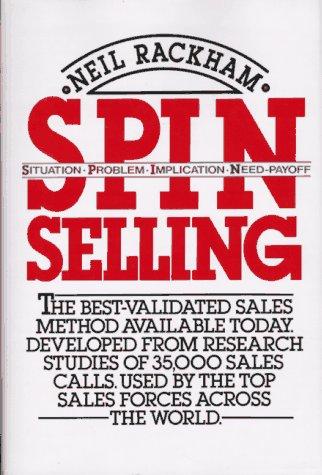
  • Cover: SPIN Selling

    SPIN Selling

    Book

    N. Rackham · 1988

    Grounded in the analysis of thousands of sales calls, the SPIN method structures customer discovery through four types of question (Situation, Problem, Implication, Need-payoff) for complex sales.

  • Cover: The Negotiating Game

    The Negotiating Game

    Book

    C. L. Karrass · 1970

    A pragmatic classic of business negotiation: tactics, power balance and preparation. Karrass sums up his motto, you get what you negotiate, not what you deserve.

  • Cover: Secrets of Power Negotiating

    Secrets of Power Negotiating

    Book

    R. Dawson · 1987

    An arsenal of opening, middle and closing "gambits" to gain the upper hand in commercial negotiation, explained step by step.

C. Karrass, R. Dawson, H. Cohen, N. Rackham (SPIN), T. Gordon (DESC / active listening).

On video

See the technique in action

Videos to picture The Alternative Close (variant) and anchor it through examples.

A verified video selection is being enriched; the search above already surfaces the best videos on the topic.

Technique map

Where this technique sits

Every technique sits within a network: what it draws on, what it combines with, where it applies, and how to defend against it.

Levers engaged

biases & emotions

Countered by

Spot its signals, neutralise it and turn it around with the defensive playbook on this page.

See the counter-techniques

Key takeaways

  • En une phrase

    The alternative close, in its broadest sense, denotes the family of closings that confine the decision to a pre-steered choice: two options, two dates, two formulas, never the "yes/no". Where the alternative closing question limits itself to the choice of modality, the alternative close elevates this framing into a closing principlei and combines it with the other levers.

  • The right reflex

    Set your own closing condition: "I'll sign if…"

  • Never do this

    Signing so as not to "miss" the offer.

7.0/10 tactical potential Moderate vigilance School grounded in research and field practice

Master this technique in real situations?

Our programmes turn theory into a concrete advantage.

Explore our programmes
Call Book a call