
NEGOCOACH
208
Origin : Cognitive science

🧠 Cognitive science

Behavioural economics & social psychology

R. Cialdini ("Influence", 1984), D. Kahneman & A. Tversky, R. Thaler, D. Ariely.

Full detail in the “Origin & history” section below.

208

Loss Aversion

Exploitable cognitive biases Technique 208 / 360
Alexandre Baumberger

Author of the library

Alexandre Baumberger

Negotiation lecturer at KEDGE Business School

A rare threefold background serving negotiation: teaching, commercial justice and audit, backed by experience as a company director in Bordeaux.

  • Teaching, KEDGE Business School Negotiation lecturer since 2014 (12 years).
  • Commercial justice, Commercial Court Judge from 2018 to 2026: litigation, then insolvency proceedings.
  • Audit & advisory, over 20 years Tax, employment and financial audit in major firms, for large groups.
In brief

Loss aversion reflects a major psychological fact: losing hurts roughly twice as much as gaining feels good. The same sum weighs more heavily when it is presented as a shortfall than as a gain. Formalised by Kahneman and Tverskyi, it makes the threat of a loss a more powerful driver of decision than the promise of a gain.

Reading level

At a glance

Its family profile at a glance

Effectiveness Psychologicalimpact Discretion Preparation Relationalrisk Ethics
8.0 / 10 Tactical potential

Vigilance: high (6.0/10) · Preparation required: 5/10

Grounding in the source school School grounded in experimental research

Indicative profile: it situates the “Exploitable cognitive biases” family as the Cognitive science school practises it, not this technique taken in isolation. Techniques from the same family and school therefore share the same profile. NEGOCOACH editorial rating out of 10, non-experimental · the higher the “relational risk” value, the more costly the technique is to the relationship.

NEGOCOACH assessment

How to read this rating

Tactical potential 8.0/10 (effectiveness, impact, discretion) and vigilance high (relational and ethical risk): two distinct readings, deliberately never merged into a single score that would reward risk. NEGOCOACH editorial rating calibrated from the “Exploitable cognitive biases” family and the “Cognitive science” school. Each criterion is rated out of 10; click to understand what it measures.

  • Effectiveness 8/10 · Very high

    How far the technique can carry the negotiation in the intended direction when it is well executed.

  • Psychological impact 10/10 · Very high

    Strength of the effect produced on the counterpart's perceptions, emotions and decisions.

  • Discretion 6/10 · High

    How hard it is for the other party to notice the technique is being used. A high value = very discreet.

  • Preparation 5/10 · Moderate

    The information, analysis and rehearsal required upfront to use it effectively.

  • Relational risk 5/10 · Moderate

    Potential cost to the relationship and to trust if the technique is spotted, refused or fails. A high value = riskier.

  • Ethics 4/10 · Moderate

    Moral acceptability: fairness, transparency and respect for the counterpart's autonomy. A high value = more defensible.

Level of evidence

School grounded in experimental research

The school this technique stems from is grounded in replicated, peer-reviewed experimental work. This indicator qualifies the school, not the experimental validation of this technique taken in isolation.

Indicative NEGOCOACH editorial rating, for teaching purposes. For “Relational risk”, a high value signals a cost to the relationship, not a quality.

Summary of Loss Aversion


Origin & history

The concept lies at the heart of prospect theory, published in 1979 in Econometrica by Daniel Kahneman and Amos Tversky. Their experiments reveal an asymmetric value function: the loss curve is steeper than the gain curve, with an aversion coefficient estimated at around 2 to 2.5i. This work founded modern behavioural economics.


Definition and principle

Loss aversion is not mere caution: it describes an affective asymmetry between winning and losing relative to a reference point. The same agreement may therefore be accepted or rejected depending on whether it is framed as a loss avoided or a gain obtained. In negotiation, it explains why the fear of "letting slip" an opportunity, or of incurring a penalty, often unlocks what no promise of advantage could achieve. The reference point becomes the central issue: shifting it turns a gain into a loss.


Concrete examples of application

Application by context

The same technique, across every negotiation settings

Context 1 / 8

Sales negotiation

A salesperson no longer says "you will gain 15% in productivity" but "every month without this tool, you lose the equivalent of two man-days". The prospect, until then lukewarm about the gain, suddenly springs into action to stop a haemorrhage that has just been made visible.

How to apply it

Reframe the benefit as a cost of inaction; quantify the monthly loss of the status quo. Add a deadline (limited offer) that turns waiting into a concrete loss.

Strengths

Rouses a passive prospect; creates urgency without cutting the price.

Weaknesses

Overplayed, fear becomes pressure and triggers reactance or suspicion about the honesty of the figure.
Context 2 / 8

Procurement negotiation

A buyer signals to the incumbent supplier: "We have three competing offers on the table; if we do not reach an agreement this week, you lose a contract you have held for six years." The seller, focused on losing the long-standing account, grants a discount that no promise of volume would have secured.

How to apply it

Make the loss of the account or the renewal tangible for the seller (turnover, commercial reference) rather than the gain of new volume. Give substance to the credible alternative that makes the loss real.

Strengths

The incumbent supplier has much to lose and little to gain: a very powerful lever at renewal.

Weaknesses

Threatening a long-standing partner can damage the relationship and push them to disengage pre-emptively.

Context 3 / 8

Labour negotiation

In a company negotiation, management frames a plan: "Without this flexibility agreement, 40 posts will have to be cut." The workforce representatives, mobilised by the job losses to be avoided, accept concessions they would have refused had the agreement been presented as a mere "gain in competitiveness".

How to apply it

Anchor the reference point on the worst scenario avoided; present the agreement as a bulwark against a loss, not as an improvement.

Strengths

Unites people around a common interest in averting the worst; makes shared efforts acceptable.

Weaknesses

Repeated doom-laden framing wears thin and may be seen as blackmail, undermining trust.

Context 4 / 8

Crisis management

A negotiator points out to a party entrenched in a hardline stance everything it has already obtained and risks losing by persisting: "You have opened a dialogue, bought time; all of that vanishes if you close the door now."

How to apply it

Take stock of the gains threatened by escalation rather than extolling uncertain future gains; the fear of losing what has already been secured encourages preserving the agreement.

Strengths

Powerful when the other side is rigid: protecting one's gains outweighs conquering new ground.

Weaknesses

Highlighting an imminent loss may, in a desperate counterpart, trigger a headlong rush.

Context 5 / 8

Political negotiation

A government defends a reform by insisting not on future benefits but on the vested rights that will be lost without it ("without reform, the pension system will no longer be able to pay pensions"). The voter, sensitive to loss, backs an effort they would have rejected had it been presented as a hypothetical gain.

How to apply it

Frame the measure as the protection of a threatened entitlement; preservation mobilises more than the promise of progress.

Strengths

Mobilises opinion around defending the existing order, an emotionally powerful argument.

Weaknesses

The electorate detects instrumental scaremongering if the announced loss never materialises.

Context 6 / 8

Real-estate negotiation

An agent lets slip to a hesitant buyer: "Another couple is viewing tomorrow morning and said they were very interested." The buyer, seized by the prospect of losing the property, submits that very evening an offer they had been putting off for two weeks.

How to apply it

Signal a credible scarcity (another viewing, imminent offer) to convert hesitation into fear of loss; announce only what is true, on pain of a backlash.

Strengths

Triggers the purchase decision more effectively than any argument about the property's merits.

Weaknesses

False scarcity, once uncovered, destroys trust and may cause the offer to be withdrawn, a legally risky practice.

Context 7 / 8

Cross-cultural negotiation

In a negotiation with partners from a culture of strong uncertainty avoidance (Japan, Germany), stressing the risks and losses averted by the contract is reassuring; the same arguments, served to counterparts from a more risk-tolerant culture, may on the contrary seem pessimistic and unambitious.

How to apply it

Calibrate the weight of loss framing to the culture's relationship with uncertainty: emphasise security and continuity where risk aversion is strong, opportunity where it is weak.

Strengths

Aligns the argument with the dominant values of the other culture; increases the message's resonance.

Weaknesses

Anxiety-inducing framing in an optimistic culture may signal a lack of confidence and cool the relationship.

Context 8 / 8

Family negotiation

During a discussion about selling the family home, a parent points out: "If we do not decide now, inheritance costs will eat away at what your grandparents spent a lifetime building." The fear of losing the inherited estate wins agreement where the financial argument left everyone indifferent.

How to apply it

Link the decision to the preservation of a threatened legacy rather than to a financial advantage; attachment to what has been handed down mobilises strongly.

Strengths

Strikes the chord of patrimonial loyalty, decisive in a family context.

Weaknesses

Exploiting the memory of elders to force a decision may be experienced as emotional manipulation.


Counter-techniques

Spot and neutralise this technique

Negotiation is also played on defence. Here is how to recognise this technique when it is used against you, and turn it around.

Detect

The signals that give it away

  • An extreme first figure (anchoring)
  • A framing as loss rather than gain
  • The endowment effect ("it's already yours")

Neutralise

The counters that defuse it

  • Reject the anchor and set your own
  • Reframe the decision as a gain
  • Assess out of context, on the facts

Turn around

Turn it into an advantage

Set your own anchor first: it will structure the discussion.

The trap to avoid

Reasoning from the other side's figure.

In brief

  • Difficulty: Intermediate
  • Estimated effectiveness: Very high
  • Implementation time: Short, hinges on how the message is framed
  • Fields of application: Sales, Labour negotiation, Public policy, Real estate, Insurance
  • Synonyms: Loss aversion, Aversion to losses, Gain-loss asymmetry
  • Tags: loss aversion, prospect theory, framing, Kahneman, urgency

Strengths and Weaknesses

Loss aversion gives the negotiator an emotional lever of rare intensity: the fear of losing drives action where the promise of winning leaves people lukewarm. It costs nothing, is activated by the framing of the message alone and works on almost every profile. Its limitation: overused, it turns into anxiety-inducing blackmail, triggers reactance and rebounds the moment the announced loss proves to be a bluff.


When to use this technique?

Deploy it to unlock a decision that is dragging on, to create legitimate urgency or to highlight the cost of inaction. Very effective with a passive or hesitant counterpart. Avoid it when the threat is not credible, when the long-term relationship comes first, or with someone already overwhelmed by fear, where loss framing would only drive them away.


How to recognise and counter this technique

Recognise it: the other side leans heavily on what you are about to lose, stirring up scarcity and urgency. Neutralise it: bring the decision back to its objective facts and to your own timetable; test the reality of the threat ("show me this other offer"). Turn it around: remind them what they stand to lose by not closing with you, reversing the reference point.


Limitations and ethics

Exploiting loss aversion becomes ethically problematic when it rests on a fabricated threat (false scarcity, invented deadline) or targets a vulnerable person unable to assess the risk. The law, moreover, penalises certain commercial pressures. The rule: the loss invoked must be real and verifiable, not a device designed to short-circuit deliberation.


Variants and related techniques

It combines with the scarcity effect and urgency (deadline). It derives directly from prospect theory and feeds the endowment effect and the status quo bias. It connects to Tversky's framing, of which it is the most operational application in negotiation.


Going further

  • Daniel Kahneman & Amos Tversky, "Prospect Theory: An Analysis of Decision under Risk", Econometrica, 1979.
  • Daniel Kahneman, Thinking, Fast and Slow, 2011.
  • Richard Thaler, Misbehaving: The Making of Behavioral Economics, 2015.

Objectives of the technique

  • Make the other party feel what they stand to LOSE (status quo, opportunity, acquired advantage) rather than what they might gain, in order to heighten their motivation to close.
  • Create a sense of legitimate urgency by making the cost of inaction or refusal tangible.
  • Reframe an offer in terms of loss avoided to make it psychologically more attractive at equal objective value.
  • Protect your own decisions from the bias by assessing each option on its real value rather than on the pain of giving up something already held.
  • Anchor the discussion on what the other party already owns (endowment effect) to give value to a concession or to holding a position.

Famous cases

Sales · The free trial that becomes hard to give back: A software vendor offers a 30-day free trial with all premium features enabled. At the end of the period, the user no longer reasons in terms of "am I going to gain these features?" but "am I going to lose the workspace, the integrations and the automations I have already set up?". The switch to a paid subscription rests less on a gain to obtain than on a loss to avoid. This mechanism, typical of "freemium" and "free trial" strategies, illustrates the direct exploitation of loss aversion coupled with the endowment effect.

Everyday life · Reframing a salary negotiation through loss: A representative scenario: a high-performing employee receives a competing offer. Rather than telling their employer "give me 8% more", they make visible what the company would lose: the ongoing projects they alone hold, the cost and lead time of recruiting and training a replacement, the client relationship built up. The employer then assesses the counter-offer against a concrete loss to avoid, generally weighed more heavily than a hypothetical gain in productivity.


Common mistakes

  • Confusing loss aversion with a simple threat: brandishing an artificial or exaggerated loss destroys credibility and triggers defensive reactance.
  • Framing the offer in terms of gain ("you will gain X") where a loss-avoided framing ("you will avoid losing X") would be far more persuasive.
  • Creating repeated false urgency ("offer valid today only") which, once seen through, ruins trust for all future negotiations.
  • Underestimating your OWN loss aversion: refusing a good agreement solely so as not to "let go" of a position or of something already valued (sunk costs, endowment effect).
  • Stacking loss levers to the point of generating anxiety or a sense of manipulation, pushing the other side to walk away rather than close.

Scientific foundations

  • Daniel Kahneman & Amos Tversky (1979) Prospect Theory: An Analysis of Decision under Risk Econometrica, 47(2), 263-291, DOI: 10.2307/1914185
  • Daniel Kahneman (2011) Thinking, Fast and Slow Farrar, Straus and Giroux
  • Amos Tversky & Daniel Kahneman (1991) Loss Aversion in Riskless Choice: A Reference-Dependent Model The Quarterly Journal of Economics, 106(4), 1039-1061, DOI: 10.2307/2937956

Quick exercise

Test yourself before answering

Answer in your head, then reveal the solution. Memory is built through active recall.

1 Quels signaux doivent vous alerter ?
  • An extreme first figure (anchoring)
  • A framing as loss rather than gain
  • The endowment effect ("it's already yours")
2 Quelles parades appliquer ?
  • Reject the anchor and set your own
  • Reframe the decision as a gain
  • Assess out of context, on the facts

Frequently asked questions

The questions we get most

What is the "Loss Aversion" technique?

Loss aversion reflects a major psychological fact: losing hurts roughly twice as much as gaining feels good. The same sum weighs more heavily when it is presented as a shortfall than as a gain. Formalised by Kahneman and Tverskyi, it makes the threat of a loss a more powerful driver of decision than the promise of a gain.

Is the "Loss Aversion" technique ethical?

It sits on the line: effective, but it can tip into manipulation if it exploits an information asymmetry. Use it with measure and without deliberate deceit.

How do you defend against "Loss Aversion"?

Reasoning from the other side's figure. The right reflex: reject the anchor and set your own.

What is the "Loss Aversion" technique based on?

NEGOCOACH does not assess the experimental validation of this technique in isolation. What we document is the grounding of its source school (Cognitive science): school grounded in experimental research. Full detail is in the "At a glance" section of this page.

Practise with AI

Three ready-to-use prompts

Copy, paste into your assistant, replace the [brackets]. Works with ChatGPT, Claude, Gemini, Mistral, Perplexity.

Prepare

Build your plan before the meeting

You are an expert negotiation coach. Help me prepare to use the "Loss Aversion" technique in the following situation: [describe your situation]. Give me: the conditions for success, a 3-step script, my counterpart's likely objections and how to answer them.

Simulate

Rehearse against an AI counterpart

Play the role of my counterpart in a negotiation. I am going to test the "Loss Aversion" technique. React realistically and with resistance, do not give in too quickly, then at the end analyse my performance and suggest 3 concrete improvements.

Debrief

Analyse a past negotiation

Here is how my negotiation went: [paste the exchanges]. Analyse whether the "Loss Aversion" technique was used well, what worked, the mistakes made, and spell out precisely what I could have done better.

References

Bibliography & credible sources

Founding works of the 🧠 Cognitive science school this technique belongs to.

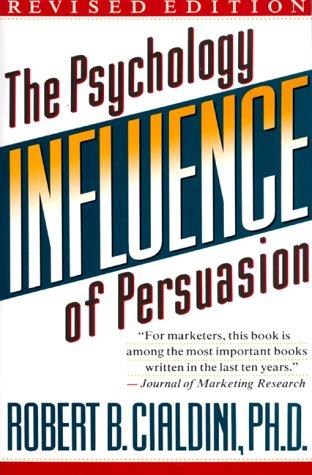
  • Cover: Influence, The Psychology of Persuasion

    Influence, The Psychology of Persuasion

    Book

    R. Cialdini · 1984

    The founding work on the mechanisms of persuasion: six universal principles (reciprocity, consistency, social proof, authority, liking, scarcity) illustrated with striking experiments. A landmark in social psychology.

  • Cover: Thinking, Fast and Slow

    Thinking, Fast and Slow

    Book

    D. Kahneman · 2011

    The sum of Kahneman's work on decision-making: two systems of thought, one fast and intuitive, the other slow and analytical, and the long list of biases that distort our judgements. Essential to understanding others... and yourself.

  • Cover: Nudge

    Nudge

    Book

    R. Thaler & C. Sunstein · 2008

    How to steer choices without constraint, by acting on the "choice architecture". The book popularised the nudge and behavioural economics applied to public policy as much as to management.

  • Judgment under Uncertainty: Heuristics and Biases (Science)

    Article

    A. Tversky & D. Kahneman · 1974

    The founding paper (Science, 1974) that uncovered the heuristics and biases of judgement, including anchoring. The starting point of the behavioural-economics revolution.

R. Cialdini ("Influence", 1984), D. Kahneman & A. Tversky, R. Thaler, D. Ariely.

On video

See the technique in action

Videos to picture Loss Aversion and anchor it through examples.

A verified video selection is being enriched; the search above already surfaces the best videos on the topic.

Technique map

Where this technique sits

Every technique sits within a network: what it draws on, what it combines with, where it applies, and how to defend against it.

Levers engaged

biases & emotions

Countered by

Spot its signals, neutralise it and turn it around with the defensive playbook on this page.

See the counter-techniques

Key takeaways

  • En une phrase

    Loss aversion reflects a major psychological fact: losing hurts roughly twice as much as gaining feels good. The same sum weighs more heavily when it is presented as a shortfall than as a gain. Formalised by Kahneman and Tverskyi, it makes the threat of a loss a more powerful driver of decision than the promise of a gain.

  • The right reflex

    Set your own anchor first: it will structure the discussion.

  • Never do this

    Reasoning from the other side's figure.

8.0/10 tactical potential High vigilance School grounded in experimental research

Master this technique in real situations?

Our programmes turn theory into a concrete advantage.

Explore our programmes
Call Book a call