
NEGOCOACH
272
Origin : Methods & tactics

🛠️ Methods & tactics

Anglo-Saxon schools of negotiation

C. Karrass, R. Dawson, H. Cohen, N. Rackham (SPIN), T. Gordon (DESC / active listening).

Full detail in the “Origin & history” section below.

272

The Benjamin Franklin Close

Sales closing Technique 272 / 360
Alexandre Baumberger

Author of the library

Alexandre Baumberger

Negotiation lecturer at KEDGE Business School

A rare threefold background serving negotiation: teaching, commercial justice and audit, backed by experience as a company director in Bordeaux.

  • Teaching, KEDGE Business School Negotiation lecturer since 2014 (12 years).
  • Commercial justice, Commercial Court Judge from 2018 to 2026: litigation, then insolvency proceedings.
  • Audit & advisory, over 20 years Tax, employment and financial audit in major firms, for large groups.
In brief

The Benjamin Franklin close borrows Franklin's decision-making methodi: setting the arguments for and against the purchase side by side. The seller helps the buyer fill in the "for" column, leaves them alone with the "against" column, and the visual weight tips naturally towards the decision.

Reading level

At a glance

Its family profile at a glance

Effectiveness Psychologicalimpact Discretion Preparation Relationalrisk Ethics
7.0 / 10 Tactical potential

Vigilance: moderate (5.0/10) · Preparation required: 4/10

Grounding in the source school School grounded in research and field practice

Indicative profile: it situates the “Sales closing” family as the Methods & tactics school practises it, not this technique taken in isolation. Techniques from the same family and school therefore share the same profile. NEGOCOACH editorial rating out of 10, non-experimental · the higher the “relational risk” value, the more costly the technique is to the relationship.

NEGOCOACH assessment

How to read this rating

Tactical potential 7.0/10 (effectiveness, impact, discretion) and vigilance moderate (relational and ethical risk): two distinct readings, deliberately never merged into a single score that would reward risk. NEGOCOACH editorial rating calibrated from the “Sales closing” family and the “Methods & tactics” school. Each criterion is rated out of 10; click to understand what it measures.

  • Effectiveness 8/10 · Very high

    How far the technique can carry the negotiation in the intended direction when it is well executed.

  • Psychological impact 7/10 · High

    Strength of the effect produced on the counterpart's perceptions, emotions and decisions.

  • Discretion 6/10 · High

    How hard it is for the other party to notice the technique is being used. A high value = very discreet.

  • Preparation 4/10 · Moderate

    The information, analysis and rehearsal required upfront to use it effectively.

  • Relational risk 4/10 · Moderate

    Potential cost to the relationship and to trust if the technique is spotted, refused or fails. A high value = riskier.

  • Ethics 5/10 · Moderate

    Moral acceptability: fairness, transparency and respect for the counterpart's autonomy. A high value = more defensible.

Level of evidence

School grounded in research and field practice

The school this technique stems from combines academic work with long field practice. This indicator qualifies the school, not this technique taken in isolation.

Indicative NEGOCOACH editorial rating, for teaching purposes. For “Relational risk”, a high value signals a cost to the relationship, not a quality.

Overview of the Benjamin Franklin Close


Origin & history

The technique takes its name from Benjamin Franklin, who as early as 1772 described his decision-support method using pro/con columns. Taken up and renamed by the American sales schools (notably Frank Bettger and Tom Hopkins), it exploits a well-known biasi: the asymmetry of assistance between the two columns.


Definition and principle

Where other closes press for the decision, the Franklin apparently rationalises it: it gives the buyer the feeling of deciding for themselves, methodically. The real mechanism lies in the asymmetry of assistance: the seller enriches the advantages column with their entire pitch, while the buyer, left to their own devices, struggles to articulate their reservations. The visual imbalance, a long "for" column and a short "against" column, makes the decision look obvious and reasoned, when in fact it has been steered.


Concrete examples of application

Application by context

The same technique, across every negotiation settings

Context 1 / 8

Sales negotiation

Facing an undecided customer, the seller suggests: "Let's do as Benjamin Franklin did, the advantages on one side, the reservations on the other." They help list eight precise, concrete benefits, then fall silent while the customer, on their own, painfully musters only two drawbacks. The sheet speaks for itself: the visual imbalance carries the decision.

How to apply it

Reserve the Franklin for rational undecideds who want to "weigh things up" before deciding. Feed the "for" column with concrete, personalised benefits, then leave a silence over the "against" column. Do not use the device if your advantages are weak: the column would stay short and turn against you.

Strengths

Structures the undecided person's choice; gives the feeling of an autonomous, reasoned decision; visualises a favourable imbalance.

Weaknesses

A clear-sighted buyer sees the asymmetry of assistance and fills in a long "against" column themselves; the device, being well known, can seem dated or schoolroom-ish.
Context 2 / 8

Procurement negotiation

A buyer recognises the "pro/con" manoeuvre and restores the balance: they insist the seller also help fill in the drawbacks column, hidden costs, dependency, alternatives, and weight each line by its real importance, refusing to let eight small "pros" outweigh two major "cons".

How to apply it

To defeat the Franklin, the buyer weights the criteria (one decisive "con" is worth ten minor "pros") and demands symmetrical assistance on the risks column.

Strengths

By weighting, the buyer neutralises the bias of line count and restores a genuinely rational decision.

Weaknesses

The weighting exercise is time-consuming and may cause an otherwise good decision to be abandoned through over-analysis.

Context 3 / 8

Labour negotiation

An HR director helps a team decide on a new tool: "Let's list the gains together, then your concerns." By animating the column of collective benefits and letting the reservations be voiced without feeding them, they steer the deliberation towards adoption.

How to apply it

In collective decisions, structure the debate around benefits/risks while controlling the facilitation: whoever holds the board tips the balance.

Strengths

Gives a rational, participatory framework that legitimises the decision in the group's eyes.

Weaknesses

If the asymmetry of facilitation is perceived, the group feels manipulated and the decision loses its legitimacy.

Context 4 / 8

Crisis management

A mediator helps a party hesitating to accept an agreement: "Let's look at what you gain by signing, and what you risk by continuing the conflict." Coolly setting out the cost/benefit balance of continuing hostilities clarifies a decision clouded by emotion.

How to apply it

Replace emotion with a rational cost/benefit assessment of the agreement versus continuing the conflict; the table soothes and clarifies.

Strengths

Reintroduces reason into a decision saturated with affect; makes tangible the interest in leaving the conflict.

Weaknesses

A party still gripped by emotion may reject the exercise as misplaced coldness.

Context 5 / 8

Political negotiation

To rally undecideds to a text, a rapporteur presents an "advantages/drawbacks" table in which the benefits are detailed and quantified, the risks minimised and vague. The decision-support document becomes a tool for steering the vote.

How to apply it

The pro/con summary document is a lever: its construction, precise gains, vague risks, steers without ever imposing.

Strengths

Dresses a recommendation up as neutral decision support, which makes it more acceptable.

Weaknesses

An opponent who reconstructs the risks column turns the tool around and discredits its author for bias.

Context 6 / 8

Real-estate negotiation

Facing a buyer torn between two properties, the agent suggests listing the pros and cons for each. They enrich the "for" column of the property they want to sell (light, neighbourhood, potential) and leave the buyer alone with the reservations: the balance tips.

How to apply it

Structure the comparison of properties into pro/con columns, taking care over the concrete advantages of the target property; the visual imbalance settles the undecided buyer's choice.

Strengths

Helps a buyer paralysed by choice to decide, while apparently objectifying their preference.

Weaknesses

A methodical buyer weights and compares the columns of both properties, neutralising the steer.

Context 7 / 8

Cross-cultural negotiation

A negotiator offers a very analytical pro/con table to a partner from a culture where decisions are made in a holistic and relational way, not by Cartesian slicing. The exercise, judged reductive, is felt as a failure to grasp complexity and relationship.

How to apply it

Check the cultural relationship to analytical rationality: where decisions are global, intuitive or collective, the Cartesian table can seem simplistic or out of place.

Strengths

Effective in analytical, individualistic cultures that value explicit argumentation.

Weaknesses

Ineffective or counterproductive in holistic cultures or those with deferred collective decision-making.

Context 8 / 8

Family negotiation

To help a loved one choose a direction, a parent suggests: "Let's write out the pros and cons together." Well-intentioned, they inadvertently enrich the column matching their own wish, discreetly steering a decision presented as free.

How to apply it

Used in good faith, the table clarifies a difficult family decision; take care not to steer one of the columns without the other realising.

Strengths

Helps a loved one who is paralysed to structure their thinking and decide for themselves.

Weaknesses

Inadvertently steering one column can lead the other person to make a decision that is not really their own.


Counter-techniques

Spot and neutralise this technique

Negotiation is also played on defence. Here is how to recognise this technique when it is used against you, and turn it around.

Detect

The signals that give it away

  • A false "final offer"
  • A "only now" bonus
  • An assumed agreement ("shall we go with that?")

Neutralise

The counters that defuse it

  • Test the "final" offer by pretending to leave
  • Ignore the artificial bonus
  • Validate nothing by default

Turn around

Turn it into an advantage

Set your own closing condition: "I'll sign if…"

The trap to avoid

Signing so as not to "miss" the offer.

In brief

  • Difficulty: Accessible
  • Estimated effectiveness: Moderate to high on undecided parties
  • Time to implement: Medium: the time to draw up the columns
  • Fields of application: Sales, Decision support, Management, Mediation
  • Synonyms: Pro/con assessment, Balance sheet close, Moral algebra
  • Tags: closing, Benjamin Franklin, pros and cons, decision support, asymmetry

Strengths and Weaknesses

The Franklin close gives the undecided person a rational framework and the feeling of deciding for themselves, which lifts the paralysis of choice. Its real power comes from the asymmetry of assistance: the seller carries the advantages column while the buyer faces the reservations alone. The visual imbalance makes the conclusion appear obvious. Its weakness is symmetrical: it requires genuine advantages, failing which the "for" column stays short and works against the seller.


When to use this technique?

Reserve it for rational undecideds who want to weigh things up before deciding, and when the real advantages are numerous. Avoid it if the offer has few concrete benefits (the column would stay short), when facing an analytical buyer who will restore the balance, or as an over-insistent device: forcing the table on someone who does not want it comes across as a schoolroom, pressuring manoeuvre that harms the sale.


How to recognise and counter this technique

Recognise it: you are invited to list pros/cons, with abundant help on the "pros" and left alone on the "cons". Neutralise it: weight each line (a deal-breaking drawback counts more than ten minor advantages) and demand symmetrical assistance on the risks. Turn it around: build a substantial "against" column yourself (hidden costs, alternatives, dependency) to rebalance the scales.


Limits and ethics

The Franklin close tips into manipulation when the asymmetry of assistance becomes a falsification: artificially inflating the advantages, minimising or concealing the real risks, or presenting a biased table as neutral support. Ethics require fair information on both columns and respect for the right of withdrawal. The risk of pressure through false objectivity is real when dealing with people who grant "paper" an unearned authority.


Variants and related techniques

It is a form of the decisional balance pro/con. It combines with the Summary close (the "for" column recaps the agreed benefits) and with the Trial close. A cousin of the weighted decision matrix, its rigorous version. It stands opposed to emotional closes and to closing under pressure, betting instead on the appearance of rationality.


Going further

  • Benjamin Franklin, "Letter to Joseph Priestley" (the "moral algebra" method), 1772.
  • Frank Bettger, How I Raised Myself from Failure to Success in Selling, 1947.
  • Tom Hopkins, How to Master the Art of Selling, 1982.

Aims of the technique

  • Help an undecided counterpart out of decisional paralysis by making the whole set of arguments for and against visible and comparable, on a single medium.
  • Steer the decision towards "yes" by having a more amply co-built "advantages" column than the "drawbacks" column, the visual imbalance serving as apparent proof.
  • Surface hidden objections: the "cons" the customer writes themselves reveal the real barriers to address before closing.
  • Engage the counterpart through writing and active participation (commitment effect): what they have listed themselves is harder to disown afterwards.
  • Give the decision an appearance of rationality and method, which reduces post-purchase remorse and secures the agreement over time.

Famous cases

Everyday life · Franklin's letter to Joseph Priestley (1772): The origin of the technique is authentically documented: on 19 September 1772, Benjamin Franklin replies to the chemist Joseph Priestley, who is hesitating over whether to accept a post with Lord Shelburne. Franklin describes to him his method of "moral or prudential algebra": divide a sheet into two columns (For / Against), record the arguments over several days, then cross out arguments of equivalent weight on each side until it becomes clear which way the balance tips. Franklin notes that the point is not mathematical precision, but having the whole set of considerations before one's eyes at the same time, which prevents changes of mind due to selective memory. It is this letter, real and preserved, that twentieth-century American sales schools turned into a closing technique.

Commercial · Representative scenario: the car salesman and the two-column sheet: Typical scenario (representative, unattributed): at the end of a meeting, a customer is hesitating over a vehicle. The salesman takes out a sheet, draws two columns and suggests: "Let's do as Benjamin Franklin did: let's list together the reasons for and the reasons against." He actively helps the customer fill in the "For" column (fuel consumption, warranty, resale value, a convincing test drive, and so on), which quickly reaches eight or ten lines, then falls silent while the customer looks for the "Against" reasons alone, finding only two or three. The salesman concludes: "The answer seems to speak for itself, doesn't it?" The strength of the device lies in the asymmetric visual; its weakness is that the customer may perceive the manipulation if the salesman feeds one column and not the other too visibly.


Common mistakes

  • Ostentatiously feeding the "For" column while staying silent on the "Against": as soon as the asymmetry is perceived, the technique looks like a sleight of hand and destroys trust.
  • Brushing aside or minimising the objections the customer enters in the "Against" column instead of treating them seriously: an unaddressed objection resurfaces after signing (buyer's remorse, withdrawal).
  • Producing the sheet too early, before completing a full needs discovery: the list of "Pros" then rings hollow because it does not reflect the customer's real criteria.
  • Confusing the number and the weight of arguments: ten anecdotal "Pros" do not outweigh a single major "Con" (budget exceeded, spouse's veto); Franklin himself crossed out arguments by equivalence of weight, not by counting them.
  • Using the device mechanically and datedly ("the old car-salesman trick") with a savvy buyer or in sophisticated B2B, where it is better reframed as a cost/benefit analysis or a shared decision matrix.

Scientific foundations

  • Benjamin Franklin (1772) Letter to Joseph Priestley of 19 September 1772 ("moral or prudential algebra") The Papers of Benjamin Franklin, vol. 19, Yale University Press (1975 ed.); available on franklinpapers.org
  • Zig Ziglar (1984) Secrets of Closing the Sale Revell / Berkley Books, chapter devoted to the "Ben Franklin close" (balance sheet close), a classic reference of American selling
  • Robert B. Cialdini (1984) Influence: The Psychology of Persuasion William Morrow, the commitment and consistency principle, the psychological mechanism underlying the list co-written by the customer

Quick exercise

Test yourself before answering

Answer in your head, then reveal the solution. Memory is built through active recall.

1 Quels signaux doivent vous alerter ?
  • A false "final offer"
  • A "only now" bonus
  • An assumed agreement ("shall we go with that?")
2 Quelles parades appliquer ?
  • Test the "final" offer by pretending to leave
  • Ignore the artificial bonus
  • Validate nothing by default

Frequently asked questions

The questions we get most

What is the "The Benjamin Franklin Close" technique?

The Benjamin Franklin close borrows Franklin's decision-making methodi: setting the arguments for and against the purchase side by side. The seller helps the buyer fill in the "for" column, leaves them alone with the "against" column, and the visual weight tips naturally towards the decision.

Is the "The Benjamin Franklin Close" technique ethical?

It sits on the line: effective, but it can tip into manipulation if it exploits an information asymmetry. Use it with measure and without deliberate deceit.

How do you defend against "The Benjamin Franklin Close"?

Signing so as not to "miss" the offer. The right reflex: test the "final" offer by pretending to leave.

What is the "The Benjamin Franklin Close" technique based on?

NEGOCOACH does not assess the experimental validation of this technique in isolation. What we document is the grounding of its source school (Methods & tactics): school grounded in research and field practice. Full detail is in the "At a glance" section of this page.

Practise with AI

Three ready-to-use prompts

Copy, paste into your assistant, replace the [brackets]. Works with ChatGPT, Claude, Gemini, Mistral, Perplexity.

Prepare

Build your plan before the meeting

You are an expert negotiation coach. Help me prepare to use the "The Benjamin Franklin Close" technique in the following situation: [describe your situation]. Give me: the conditions for success, a 3-step script, my counterpart's likely objections and how to answer them.

Simulate

Rehearse against an AI counterpart

Play the role of my counterpart in a negotiation. I am going to test the "The Benjamin Franklin Close" technique. React realistically and with resistance, do not give in too quickly, then at the end analyse my performance and suggest 3 concrete improvements.

Debrief

Analyse a past negotiation

Here is how my negotiation went: [paste the exchanges]. Analyse whether the "The Benjamin Franklin Close" technique was used well, what worked, the mistakes made, and spell out precisely what I could have done better.

References

Bibliography & credible sources

Founding works of the 🛠️ Methods & tactics school this technique belongs to.

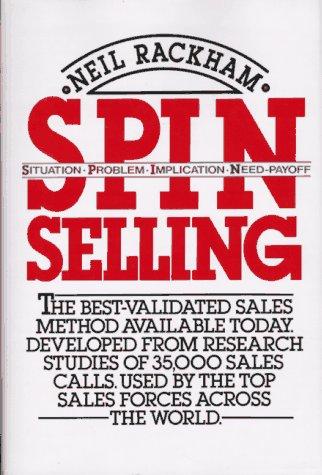
  • Cover: SPIN Selling

    SPIN Selling

    Book

    N. Rackham · 1988

    Grounded in the analysis of thousands of sales calls, the SPIN method structures customer discovery through four types of question (Situation, Problem, Implication, Need-payoff) for complex sales.

  • Cover: The Negotiating Game

    The Negotiating Game

    Book

    C. L. Karrass · 1970

    A pragmatic classic of business negotiation: tactics, power balance and preparation. Karrass sums up his motto, you get what you negotiate, not what you deserve.

  • Cover: Secrets of Power Negotiating

    Secrets of Power Negotiating

    Book

    R. Dawson · 1987

    An arsenal of opening, middle and closing "gambits" to gain the upper hand in commercial negotiation, explained step by step.

C. Karrass, R. Dawson, H. Cohen, N. Rackham (SPIN), T. Gordon (DESC / active listening).

On video

See the technique in action

Videos to picture The Benjamin Franklin Close and anchor it through examples.

A verified video selection is being enriched; the search above already surfaces the best videos on the topic.

Technique map

Where this technique sits

Every technique sits within a network: what it draws on, what it combines with, where it applies, and how to defend against it.

Levers engaged

biases & emotions

Countered by

Spot its signals, neutralise it and turn it around with the defensive playbook on this page.

See the counter-techniques

Key takeaways

  • En une phrase

    The Benjamin Franklin close borrows Franklin's decision-making methodi: setting the arguments for and against the purchase side by side. The seller helps the buyer fill in the "for" column, leaves them alone with the "against" column, and the visual weight tips naturally towards the decision.

  • The right reflex

    Set your own closing condition: "I'll sign if…"

  • Never do this

    Signing so as not to "miss" the offer.

7.0/10 tactical potential Moderate vigilance School grounded in research and field practice

Master this technique in real situations?

Our programmes turn theory into a concrete advantage.

Explore our programmes
Call Book a call