
NEGOCOACH
212
Origin : Cognitive science

🧠 Cognitive science

Behavioural economics & social psychology

R. Cialdini ("Influence", 1984), D. Kahneman & A. Tversky, R. Thaler, D. Ariely.

Full detail in the “Origin & history” section below.

212

The Authority Bias

Exploitable cognitive biases Technique 212 / 360
Alexandre Baumberger

Author of the library

Alexandre Baumberger

Negotiation lecturer at KEDGE Business School

A rare threefold background serving negotiation: teaching, commercial justice and audit, backed by experience as a company director in Bordeaux.

  • Teaching, KEDGE Business School Negotiation lecturer since 2014 (12 years).
  • Commercial justice, Commercial Court Judge from 2018 to 2026: litigation, then insolvency proceedings.
  • Audit & advisory, over 20 years Tax, employment and financial audit in major firms, for large groups.
In brief

The authority bias is the tendency to grant greater credence and obedience to a source perceived as expert or legitimate, sometimes at the expense of one's own judgement. In negotiation, signals of authority (title, expertise, track record) reinforce the weight of an argument independently of its content. The experiments of Stanley Milgrami revealed the unsettling power of this lever.

Reading level

At a glance

Its family profile at a glance

Effectiveness Psychologicalimpact Discretion Preparation Relationalrisk Ethics
8.0 / 10 Tactical potential

Vigilance: high (6.0/10) · Preparation required: 5/10

Grounding in the source school School grounded in experimental research

Indicative profile: it situates the “Exploitable cognitive biases” family as the Cognitive science school practises it, not this technique taken in isolation. Techniques from the same family and school therefore share the same profile. NEGOCOACH editorial rating out of 10, non-experimental · the higher the “relational risk” value, the more costly the technique is to the relationship.

NEGOCOACH assessment

How to read this rating

Tactical potential 8.0/10 (effectiveness, impact, discretion) and vigilance high (relational and ethical risk): two distinct readings, deliberately never merged into a single score that would reward risk. NEGOCOACH editorial rating calibrated from the “Exploitable cognitive biases” family and the “Cognitive science” school. Each criterion is rated out of 10; click to understand what it measures.

  • Effectiveness 8/10 · Very high

    How far the technique can carry the negotiation in the intended direction when it is well executed.

  • Psychological impact 10/10 · Very high

    Strength of the effect produced on the counterpart's perceptions, emotions and decisions.

  • Discretion 6/10 · High

    How hard it is for the other party to notice the technique is being used. A high value = very discreet.

  • Preparation 5/10 · Moderate

    The information, analysis and rehearsal required upfront to use it effectively.

  • Relational risk 5/10 · Moderate

    Potential cost to the relationship and to trust if the technique is spotted, refused or fails. A high value = riskier.

  • Ethics 4/10 · Moderate

    Moral acceptability: fairness, transparency and respect for the counterpart's autonomy. A high value = more defensible.

Level of evidence

School grounded in experimental research

The school this technique stems from is grounded in replicated, peer-reviewed experimental work. This indicator qualifies the school, not the experimental validation of this technique taken in isolation.

Indicative NEGOCOACH editorial rating, for teaching purposes. For “Relational risk”, a high value signals a cost to the relationship, not a quality.

Authority in Brief


Origin & history

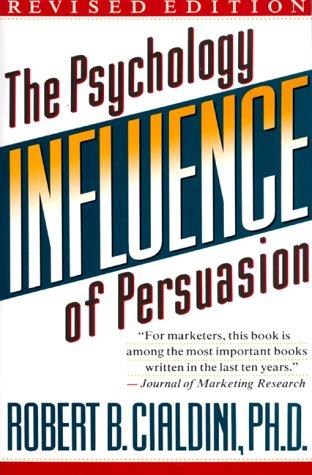
The lever was illustrated as early as 1963 by Stanley Milgram's obedience experiments, in which subjects administered supposedly dangerous shocks on the sole instruction of an expert in a lab coat. Robert Cialdini made it one of the six principles of influence in his book Influence: The Psychology of Persuasioni (1984). It draws on deep-rooted social learning: from childhood, obeying authority is valued and rewarded.


Definition and principle

The authority bias rests on a cognitive-economy heuristic: rather than assess each argument, we rely on the status of whoever puts it forward. It is triggered by symbols (titles, qualifications, uniform, prestigious setting) as much as by genuine expertise. Its strength is that it often operates outside awareness: we believe we are judging the argument when we are in fact judging the source. In negotiation, invoking a third-party authority (expert, standard, precedent) or embodying competence oneself shifts the balance of power without resorting to coercion.


Concrete examples of application

Application by context

The same technique, across every negotiation settings

Context 1 / 8

Sales negotiation

A consultant opens by recalling their credentials ("we have advised three leaders in your sector") and cites a study by a well-regarded firm. The client, impressed by these markers of expertise, challenges the substance of the recommendations less and accepts a premium fee.

How to apply it

Establish your legitimacy at the outset (results, certifications, client cases) and anchor your arguments in recognised sources of authority. Let the expert speak rather than the salesperson.

Strengths

Reduces resistance to price and to the pitch; justifies a top-tier positioning.

Weaknesses

Authority that is overplayed or unsupported tips into arrogance and triggers distrust.
Context 2 / 8

Procurement negotiation

A buyer meets a seller who piles on titles and prestigious references. Rather than being impressed, the buyer brings each expert claim back to a factual question: "For my specific case, what figures can you guarantee?" Authority deflates the moment it is confronted with the concrete.

How to apply it

Distinguish genuine expertise from mere symbols of authority; demand evidence that applies to your situation, not impressive general references.

Strengths

Neutralises the prestige effect and refocuses the decision on the facts.

Weaknesses

Challenging genuine authority through excessive suspicion can deprive you of useful expertise.

Context 3 / 8

Labour negotiation

In a collective negotiation, management brings in an independent expert to present the company's accounts. The third party, perceived as neutral and competent, persuades the employee representatives to accept an assessment they would have contested had it come directly from the employer.

How to apply it

Outsource sensitive findings to a credible third-party authority (chartered accountant, consultancy, mediator); the argument gains legitimacy by changing mouths.

Strengths

Depersonalises the conflict and lends the assessment a neutrality that eases agreement.

Weaknesses

Expertise perceived as bought by one party loses all its force and stokes suspicion.

Context 4 / 8

Crisis management

In a crisis situation, a word from a figure of authority respected by the entrenched party (a doctor, a religious figure, an influential relative) achieves a de-escalation that the official negotiator was unable to bring about.

How to apply it

Identify the figure of authority that is legitimate in the eyes of the other party, not yours, and bring them in; it is their legitimacy, not yours, that unlocks the situation.

Strengths

Opens a path when every direct instruction fails against a closed-off counterpart.

Weaknesses

A poorly chosen authority, or one perceived as manipulated, can deepen the rejection.

Context 5 / 8

Political negotiation

To push through a contested measure, a government relies on the opinion of an independent scientific authority or a respected institution. The expertise argument moves the debate from political ground to the ground of competence, which is harder to challenge head-on.

How to apply it

Anchor the decision in recognised institutional expertise to remove it from partisan controversy; let the authority carry the technical message.

Strengths

Confers a rational legitimacy that defuses part of the opposition.

Weaknesses

The repeated instrumentalisation of expertise eventually weakens it and feeds distrust of institutions.

Context 6 / 8

Real-estate negotiation

An agent grounds their valuation in a notary's appraisal report and official data on recent transactions. The seller, who was contesting the price when it came from the agent, accepts the figure when it is carried by a source they perceive as neutral and authoritative.

How to apply it

Have sensitive figures carried by official references (notary databases, appraisals) rather than by your word alone as an agent, an interested party.

Strengths

Makes credible a valuation the client would have disputed had it come from you alone.

Weaknesses

A savvy client knows the agent selects the references that suit them.

Context 7 / 8

Cross-cultural negotiation

In cultures with high power distance (many countries in Asia and the Gulf), the authority of status and age carries great weight: sending a junior negotiator to face a senior executive is a misstep, as the counterpart expects an equal in rank before taking the discussion seriously.

How to apply it

Align the rank and status of your representatives with the hierarchical expectations of the culture in question; deploy markers of authority (title, seniority) where they are decisive.

Strengths

Respects hierarchical codes and confers the necessary credibility from the outset.

Weaknesses

The same markers of authority may seem pompous in an egalitarian culture (Scandinavia, the Netherlands).

Context 8 / 8

Family negotiation

In an inheritance dispute, the opinion of a notary or a respected elder secures acceptance of a division the heirs had refused to discuss among themselves. The outside authority lifts the debate out of sibling rivalry and lends it a neutral endorsement.

How to apply it

Turn to a legitimate trusted third party (notary, family mediator) to carry sensitive rulings; their perceived neutrality soothes rivalries.

Strengths

Unlocks situations where no member would accept another's authority.

Weaknesses

An authority perceived as allied with one side of the family instantly loses its calming function.


Counter-techniques

Spot and neutralise this technique

Negotiation is also played on defence. Here is how to recognise this technique when it is used against you, and turn it around.

Detect

The signals that give it away

  • An extreme first figure (anchoring)
  • A framing as loss rather than gain
  • The endowment effect ("it's already yours")

Neutralise

The counters that defuse it

  • Reject the anchor and set your own
  • Reframe the decision as a gain
  • Assess out of context, on the facts

Turn around

Turn it into an advantage

Set your own anchor first: it will structure the discussion.

The trap to avoid

Reasoning from the other side's figure.

In brief

  • Difficulty: Intermediate
  • Estimated effectiveness: High
  • Implementation time: Fast, as soon as legitimacy is established
  • Fields of application: Consulting, Labour negotiation, Politics, Real estate, Mediation
  • Synonyms: Authority bias, Appeal to authority, Expertise effect
  • Tags: authority, Milgram, Cialdini, expertise, legitimacy

Strengths and Weaknesses

The authority bias lets you secure acceptance of an argument through the credibility of its source rather than through adversarial debate: invoking an expert, a standard or a neutral third party shifts the balance of power without coercion. It depersonalises sensitive findings and eases agreement. Its limit: authority that is overplayed, bought or poorly chosen turns into distrust, and the bias exposes you to blindly following status at the expense of the facts.


When to use this technique?

Use it to lend credibility to a sensitive assessment, justify a premium positioning or unlock a closed-off party through a figure they respect. Decisive in high-hierarchy cultures. Handle with restraint before a savvy or egalitarian counterpart, and keep watch on yourself: the best appeal to authority never replaces verifying the facts.


How to recognise and counter this technique

Recognise it: the other party piles on titles, references and prestigious sources more than they argue on the substance. Neutralise it: distinguish genuine expertise from decorum and bring each claim back to evidence applicable to your case. Turn it around: counter with your own third-party authority (counter-appraisal, standard) to rebalance the legitimacy.


Limits and ethics

Relying on genuine expertise is legitimate and useful. The drift begins with simulated authority (false titles, borrowed prestige) or instrumentalised authority (an expert presented as neutral when they are in fact a party), exploiting deference to short-circuit judgement. The blind obedience laid bare by Milgram is a reminder of the danger: authority never dispenses anyone from verifying the facts, neither the one who invokes it nor the one who is subjected to it.


Variants and related techniques

It is one of Cialdini's six principles of influence and combines with social proof and the halo effect. Close to the appeal to authority (ad verecundiam) in rhetoric and to the white-coat effect. It runs counter to principled negotiation on objective criteria, which demands justification rather than imposition through status.


Going further

  • Stanley Milgram, "Behavioral Study of Obedience", Journal of Abnormal and Social Psychology, 1963.
  • Robert Cialdini, Influence: The Psychology of Persuasion, 1984.
  • Stanley Milgram, Obedience to Authority, 1974.

Objectives of the technique

  • Understand how a counterpart's title, expertise or status symbols bear on the decision, so as not to confuse authority with the relevance of the argument
  • Strengthen your own credibility in a legitimate way (demonstrated competence, evidence, verifiable references) in order to be heard without manipulating
  • Guard against the abusive exploitation of authority by the opposing party (false experts, appeals to authority, impressive titles)
  • Distinguish real and relevant authority (competence on the precise subject) from façade authority (status, uniform, off-topic renown)
  • Reintroduce rationality into the discussion by bringing the debate back to facts and interests rather than to people's status

Famous cases

Sales · The expert brought forward to lock in the sale: In a software purchase negotiation, the supplier brings in their "scientific director" over video and cites a study "validated by an independent firm". The buyer, impressed by the titles, is about to accept the price without demur. A member of their team brings the discussion back to the concrete: "For our specific volumes, what performance figures can you guarantee contractually?" Lacking expertise genuinely applicable to their case, the appeal to authority collapses and the negotiation resumes on factual ground. A representative case, not attributed to a real company.

Everyday life · The white coat that secures acceptance without question: A patient immediately accepts a costly treatment quote because the person wears a coat and displays a title, without seeking a second opinion. The authority bias, whereby a mere status symbol is enough to switch off critical thinking, is illustrated here. The countermeasure is to separate the respect due to the role from the assessment of the argument: ask for the evidence, the alternatives and, if the stakes are high, a second opinion. A representative scenario.


Common mistakes

  • Confusing a person's prestige or title with the validity of their argument on the precise subject under discussion
  • Accepting an "appeal to authority" ("an expert said so") without ever asking for the evidence, the data or the conditions of validity
  • Being impressed by off-topic status symbols (renown, uniform, prestigious address) that bear no relation to the relevant competence
  • Refraining from asking questions or from contradicting for fear of appearing incompetent before authority
  • Using authority manipulatively oneself (false experts, inflated titles), which destroys trust the moment the deception is uncovered

Scientific foundations

  • Robert B. Cialdini (2021) Influence: The Psychology of Persuasion (New and Expanded) Harper Business
  • Stanley Milgram (1974) Obedience to Authority: An Experimental View Harper & Row

Quick exercise

Test yourself before answering

Answer in your head, then reveal the solution. Memory is built through active recall.

1 Quels signaux doivent vous alerter ?
  • An extreme first figure (anchoring)
  • A framing as loss rather than gain
  • The endowment effect ("it's already yours")
2 Quelles parades appliquer ?
  • Reject the anchor and set your own
  • Reframe the decision as a gain
  • Assess out of context, on the facts

Frequently asked questions

The questions we get most

What is the "The Authority Bias" technique?

The authority bias is the tendency to grant greater credence and obedience to a source perceived as expert or legitimate, sometimes at the expense of one's own judgement. In negotiation, signals of authority (title, expertise, track record) reinforce the weight of an argument independently of its content. The experiments of Stanley Milgrami revealed the unsettling power of this lever.

Is the "The Authority Bias" technique ethical?

It sits on the line: effective, but it can tip into manipulation if it exploits an information asymmetry. Use it with measure and without deliberate deceit.

How do you defend against "The Authority Bias"?

Reasoning from the other side's figure. The right reflex: reject the anchor and set your own.

What is the "The Authority Bias" technique based on?

NEGOCOACH does not assess the experimental validation of this technique in isolation. What we document is the grounding of its source school (Cognitive science): school grounded in experimental research. Full detail is in the "At a glance" section of this page.

Practise with AI

Three ready-to-use prompts

Copy, paste into your assistant, replace the [brackets]. Works with ChatGPT, Claude, Gemini, Mistral, Perplexity.

Prepare

Build your plan before the meeting

You are an expert negotiation coach. Help me prepare to use the "The Authority Bias" technique in the following situation: [describe your situation]. Give me: the conditions for success, a 3-step script, my counterpart's likely objections and how to answer them.

Simulate

Rehearse against an AI counterpart

Play the role of my counterpart in a negotiation. I am going to test the "The Authority Bias" technique. React realistically and with resistance, do not give in too quickly, then at the end analyse my performance and suggest 3 concrete improvements.

Debrief

Analyse a past negotiation

Here is how my negotiation went: [paste the exchanges]. Analyse whether the "The Authority Bias" technique was used well, what worked, the mistakes made, and spell out precisely what I could have done better.

References

Bibliography & credible sources

Founding works of the 🧠 Cognitive science school this technique belongs to.

  • Cover: Influence, The Psychology of Persuasion

    Influence, The Psychology of Persuasion

    Book

    R. Cialdini · 1984

    The founding work on the mechanisms of persuasion: six universal principles (reciprocity, consistency, social proof, authority, liking, scarcity) illustrated with striking experiments. A landmark in social psychology.

  • Cover: Thinking, Fast and Slow

    Thinking, Fast and Slow

    Book

    D. Kahneman · 2011

    The sum of Kahneman's work on decision-making: two systems of thought, one fast and intuitive, the other slow and analytical, and the long list of biases that distort our judgements. Essential to understanding others... and yourself.

  • Cover: Nudge

    Nudge

    Book

    R. Thaler & C. Sunstein · 2008

    How to steer choices without constraint, by acting on the "choice architecture". The book popularised the nudge and behavioural economics applied to public policy as much as to management.

  • Judgment under Uncertainty: Heuristics and Biases (Science)

    Article

    A. Tversky & D. Kahneman · 1974

    The founding paper (Science, 1974) that uncovered the heuristics and biases of judgement, including anchoring. The starting point of the behavioural-economics revolution.

R. Cialdini ("Influence", 1984), D. Kahneman & A. Tversky, R. Thaler, D. Ariely.

On video

See the technique in action

Videos to picture The Authority Bias and anchor it through examples.

Technique map

Where this technique sits

Every technique sits within a network: what it draws on, what it combines with, where it applies, and how to defend against it.

Levers engaged

biases & emotions

Countered by

Spot its signals, neutralise it and turn it around with the defensive playbook on this page.

See the counter-techniques

Key takeaways

  • En une phrase

    The authority bias is the tendency to grant greater credence and obedience to a source perceived as expert or legitimate, sometimes at the expense of one's own judgement. In negotiation, signals of authority (title, expertise, track record) reinforce the weight of an argument independently of its content. The experiments of Stanley Milgrami revealed the unsettling power of this lever.

  • The right reflex

    Set your own anchor first: it will structure the discussion.

  • Never do this

    Reasoning from the other side's figure.

8.0/10 tactical potential High vigilance School grounded in experimental research

Master this technique in real situations?

Our programmes turn theory into a concrete advantage.

Explore our programmes
Call Book a call