
NEGOCOACH
269
Origin : Methods & tactics

🛠️ Methods & tactics

Anglo-Saxon schools of negotiation

C. Karrass, R. Dawson, H. Cohen, N. Rackham (SPIN), T. Gordon (DESC / active listening).

Full detail in the “Origin & history” section below.

269

The Puppy Dog Close

Sales closing Technique 269 / 360
Alexandre Baumberger

Author of the library

Alexandre Baumberger

Negotiation lecturer at KEDGE Business School

A rare threefold background serving negotiation: teaching, commercial justice and audit, backed by experience as a company director in Bordeaux.

  • Teaching, KEDGE Business School Negotiation lecturer since 2014 (12 years).
  • Commercial justice, Commercial Court Judge from 2018 to 2026: litigation, then insolvency proceedings.
  • Audit & advisory, over 20 years Tax, employment and financial audit in major firms, for large groups.
In brief

The puppy dog close takes its name from pet shopsi: letting the customer try out and take home the product, betting that, once attached, they will no longer want to give it back. It rests on the endowment effect, whereby we value more highly what we already own, and on loss aversion.

Reading level

At a glance

Its family profile at a glance

Effectiveness Psychologicalimpact Discretion Preparation Relationalrisk Ethics
7.0 / 10 Tactical potential

Vigilance: moderate (5.0/10) · Preparation required: 4/10

Grounding in the source school School grounded in research and field practice

Indicative profile: it situates the “Sales closing” family as the Methods & tactics school practises it, not this technique taken in isolation. Techniques from the same family and school therefore share the same profile. NEGOCOACH editorial rating out of 10, non-experimental · the higher the “relational risk” value, the more costly the technique is to the relationship.

NEGOCOACH assessment

How to read this rating

Tactical potential 7.0/10 (effectiveness, impact, discretion) and vigilance moderate (relational and ethical risk): two distinct readings, deliberately never merged into a single score that would reward risk. NEGOCOACH editorial rating calibrated from the “Sales closing” family and the “Methods & tactics” school. Each criterion is rated out of 10; click to understand what it measures.

  • Effectiveness 8/10 · Very high

    How far the technique can carry the negotiation in the intended direction when it is well executed.

  • Psychological impact 7/10 · High

    Strength of the effect produced on the counterpart's perceptions, emotions and decisions.

  • Discretion 6/10 · High

    How hard it is for the other party to notice the technique is being used. A high value = very discreet.

  • Preparation 4/10 · Moderate

    The information, analysis and rehearsal required upfront to use it effectively.

  • Relational risk 4/10 · Moderate

    Potential cost to the relationship and to trust if the technique is spotted, refused or fails. A high value = riskier.

  • Ethics 5/10 · Moderate

    Moral acceptability: fairness, transparency and respect for the counterpart's autonomy. A high value = more defensible.

Level of evidence

School grounded in research and field practice

The school this technique stems from combines academic work with long field practice. This indicator qualifies the school, not this technique taken in isolation.

Indicative NEGOCOACH editorial rating, for teaching purposes. For “Relational risk”, a high value signals a cost to the relationship, not a quality.

The Puppy Dog Close in a nutshell


Origin & history

The expression comes from the sale of pets and was popularised in the sales literature by Tom Hopkins and Zig Ziglar. It is today the template of the “free trial” modeli, ubiquitous in the subscription and software economy.


Definition and principle

Where the classic close demands a commitment before use, the puppy dog reverses the order: it makes possession precede the decision. The psychological mechanism is the endowment effect coupled with loss aversion: giving up a good already woven into one’s daily life is experienced as a loss, more painful than an equivalent gain. The customer no longer asks “do I want to buy it?” but “am I ready to part with it?”, a question they far more often answer by keeping it.


Concrete examples of application

Application by context

The same technique, across every negotiation settings

Context 1 / 8

Sales negotiation

A seller of professional equipment offers: “Keep the machine in your workshop for two weeks, no commitment. We’ll review it afterwards.” By the end of the trial, the team has reorganised its workflow around the device; returning it would mean disrupting production. The customer buys, not out of initial conviction, but out of acquired attachment.

How to apply it

Reserve the puppy dog for products whose value is revealed through use and which become part of daily life. Make the onboarding during the trial as easy as possible (installation, training) to maximise attachment. Set a clear deadline to create the moment of decision, without ever rushing.

Strengths

Removes the objection of doubt through proof of use; turns perceived risk into attachment; excellent for a genuinely good product.

Weaknesses

Logistically costly; backfires on the seller if the product disappoints in use; unsuited to impulse purchases or to goods that cannot be woven into daily life.
Context 2 / 8

Procurement negotiation

A shrewd buyer accepts the free trial but imposes a rule on themselves: “I assess against a set of criteria defined in advance, and I decide coolly on the appointed date.” They refuse to let habit decide in their place and even plan to return the product to test their own dependence.

How to apply it

To foil the puppy dog, the buyer sets before the trial their evaluation criteria and a dated decision, and is wary of emotional attachment as a substitute for analysis.

Strengths

By deciding on predefined criteria, the buyer neutralises the endowment effect and keeps the decision rational.

Weaknesses

Excessive rigidity may lead to rejecting a genuinely suitable product whose value only emerged through prolonged use.

Context 3 / 8

Labour negotiation

A management team offers employees the chance to trial remote working “on a trial basis, three months, reversible”. Once habits have formed and personal routines have readjusted, going back becomes socially and psychologically costly: the trial settles in as the norm.

How to apply it

Introduce a new arrangement as reversible and temporary: appropriation through use lifts resistance on principle better than a theoretical debate.

Strengths

Sidesteps ideological opposition by letting concrete experience do the convincing.

Weaknesses

The advertised “reversibility” becomes fictitious; if the experience disappoints, going back generates frustration and mistrust.

Context 4 / 8

Crisis management

A mediator proposes a truce “on trial, forty-eight hours” between parties in conflict. The respite once lived, sleep, de-escalation, a return to calm, makes resuming hostilities less desirable than it seemed. The trial makes its own case.

How to apply it

Propose a temporary de-escalation measure rather than a definitive agreement: the experience of calm works in your favour.

Strengths

Makes it possible to secure a first step when a firm commitment would be refused; the lull becomes an achievement worth preserving.

Weaknesses

One party may exploit the truce to regroup and then resume the offensive, the trial committing them to nothing.

Context 5 / 8

Political negotiation

A government launches a reform “on an experimental basis” across a few territories. Once the arrangements are in place and beneficiaries have grown attached, abandoning them becomes politically costly: the pilot manufactures its own permanence.

How to apply it

Territorial piloting is an institutional puppy dog: it creates attached stakeholders who will make going back unpopular.

Strengths

Defuses opposition on principle and builds a base of support through use before the national debate.

Weaknesses

Perceived as a Trojan horse, it fuels mistrust; a failed pilot becomes an argument against the reform.

Context 6 / 8

Real-estate negotiation

An owner offers a rent-to-buy arrangement: the tenant lives in the property, furnishes it, grows attached to it. At the end of the term, buying is no longer an abstract projection but the confirmation of a home already lived in.

How to apply it

The lease with a purchase option is a real-estate puppy dog: taking ownership of the place turns the doubt of buying into the obviousness of keeping.

Strengths

Removes the fear of committing to a heavy purchase by breaking it up and preceding it with use.

Weaknesses

Legally complex to structure; the attached tenant can also use that attachment to renegotiate the price downwards.

Context 7 / 8

Cross-cultural negotiation

A foreign company offers a free pilot to a partner in a culture where one does not readily accept a “gift” without feeling indebted. Far from winning them over, the trial creates unease: the partner fears being trapped by the obligation of reciprocity.

How to apply it

Check the cultural relationship to gift and debt: where a free trial is read as an obligation, present it as a neutral standard, not as a favour.

Strengths

Powerful in cultures that value trial and concrete proof before commitment.

Weaknesses

In cultures where a gift creates obligation, a free trial creates awkwardness or a suspicion of manipulation.

Context 8 / 8

Family negotiation

To convince a reluctant elderly parent, the family suggests bringing in home help “just to try for a month, no obligation”. The comfort and the bond created make the prospect of giving it up, when the time comes, more painful than that of carrying on.

How to apply it

Introduce a sensitive life change as a reversible trial: the experience eases the fear of surrendering one’s independence better than any argument.

Strengths

Dissolves resistance on principle through lived experience; respects the person’s own pace.

Weaknesses

If the “no obligation” is felt to be a family stratagem, it can feed a sense of emotional manipulation.


Counter-techniques

Spot and neutralise this technique

Negotiation is also played on defence. Here is how to recognise this technique when it is used against you, and turn it around.

Detect

The signals that give it away

  • A false "final offer"
  • A "only now" bonus
  • An assumed agreement ("shall we go with that?")

Neutralise

The counters that defuse it

  • Test the "final" offer by pretending to leave
  • Ignore the artificial bonus
  • Validate nothing by default

Turn around

Turn it into an advantage

Set your own closing condition: "I'll sign if…"

The trap to avoid

Signing so as not to "miss" the offer.

In brief

  • Difficulty: Accessible
  • Estimated effectiveness: Very high on an integrable product
  • Time to implement: Long: the duration of the trial before the decision
  • Fields of application: Sales, SaaS / subscription, Real estate, Change management
  • Synonyms: Trial-based selling, Free trial, Puppy dog close
  • Tags: closing, puppy dog, endowment effect, free trial, loss aversion

Strengths and weaknesses

The puppy dog close replaces argument with proof of use and turns loss aversion to the seller’s advantage: returning a good woven into daily life costs more psychologically than keeping it. It removes doubt better than any pitch and marries perfectly with the free-trial economy. Its strength is also its dependence: it only works if the product delivers on its promises in use.


When to use this technique?

Use it when the product benefits from being tried and becomes part of daily life, and when doubt (not price) is the main obstacle. Avoid it if the trial is too short to create attachment, if the product is disappointing, or as a way of establishing a dependence falsely presented as reversible: a token “no commitment”, followed by friction on return, destroys trust.


How to recognise and counter this technique

Recognise it: you are offered use before the decision, with emphasis on the absence of commitment. Neutralise it: set your evaluation criteria and a cool decision date in advance; be wary of habit deciding in your place. Turn it around: use the trial period to assess without indulgence, or even to renegotiate the price from the position of someone genuinely able to return the good.


Limits and ethics

The ethics of the puppy dog turn on the sincerity of the “no commitment”: presenting as reversible a trial actually designed to lock the customer in (hidden exit fees, engineered dependence, tacit renewal) amounts to unfair practice. The risk of pressure through loss is real for vulnerable audiences. Respect for consent and the right of withdrawal requires genuine reversibility, with no deterrent obstacle to returning.


Variants and related techniques

It comes in the forms of the free trial (SaaS, subscriptions), the home demonstration, rent-to-buy and the temporary pilot (social, political). A cousin of freemium and the sample. It extends the logic of the foot-in-the-door. It stands opposed to the head-on close that demands commitment before any use.


Going further

  • Tom Hopkins, How to Master the Art of Selling, 1982.
  • Richard Thaler, “Toward a Positive Theory of Consumer Choice”, Journal of Economic Behavior & Organization, 1980.
  • Daniel Kahneman, Jack Knetsch & Richard Thaler, “Experimental Tests of the Endowment Effect and the Coase Theorem”, Journal of Political Economy, 1990.

Aims of the technique

  • Trigger the endowment effect: create a sense of ownership even before the transaction, making returning the product psychologically costly
  • Short-circuit rational objections (price, hesitation) by shifting the decision from the terrain of argument to that of emotion and experience
  • Reduce the buyer’s perceived risk by letting them test the product with no apparent commitment (free trial, possible return)
  • Make the product itself the seller: let the experience of use demonstrate value better than any pitch
  • Transform the status quo: after the trial, giving up the product becomes a loss, and loss aversion works in the seller’s favour

Famous cases

Sales · The 100-night trial of online mattresses: Online mattress brands such as Casper built their model on an industrialised version of the Puppy Dog Close: the customer receives the mattress at home with 100 nights of trial and free returns. Once the mattress is set up in the bedroom and woven into daily life, sending it back represents a logistical effort and, above all, a psychological loss: the return rate remains very low. The product lives in the customer’s home before the sale is emotionally concluded.

Sales · The Apple Store and freely handled devices: In Apple Stores, the display devices are unlocked, tilted to hand height and freely handled: the customer is explicitly encouraged to touch, try and personalise. This staging exploits the mechanism demonstrated by Peck and Shu (2009): mere touch increases the sense of ownership and the value attributed to the object. The store is not selling a phone, it lets the visitor begin to own it.

Everyday life · The puppy taken home for the weekend (representative scenario, the origin of the name): The archetypal scenario that gave the technique its name: a family hesitates over a puppy in a pet shop, the parents dreading the burden. The assistant offers: “Take him for the weekend; if he doesn’t suit, bring him back on Monday, free of charge.” After two days of playing with the children, bringing the puppy back has become unthinkable: it would be an abandonment, not the return of an item. The sale closes itself, without a further word of pitch.


Common mistakes

  • Offering the trial too early, before the prospect’s genuine interest is established: you then multiply trials with no intent to buy and the associated return costs
  • Attaching deterrent conditions to the trial (a high deposit, a cumbersome return procedure): the customer senses the trap, trust collapses and the effect reverses
  • Following up aggressively during the trial period: the pressure breaks the spell of quiet ownership and reminds the customer they are in a sales process
  • Using the technique on a mediocre product: the trial reveals the flaws better than any competitor could; the Puppy Dog Close is only viable with a product that delivers on its promises
  • Crossing the ethical line by exploiting the emotional attachment of vulnerable people (children, isolated individuals) or by deliberately making the return humiliating: a short-term gain, a destroyed reputation

Scientific foundations

  • Joann Peck, Suzanne B. Shu (2009) The Effect of Mere Touch on Perceived Ownership Journal of Consumer Research, vol. 36, no. 3, pp. 434-447, DOI: 10.1086/598614
  • Daniel Kahneman, Jack L. Knetsch, Richard H. Thaler (1990) Experimental Tests of the Endowment Effect and the Coase Theorem Journal of Political Economy, vol. 98, no. 6, pp. 1325-1348
  • Zig Ziglar (1984) Secrets of Closing the Sale Fleming H. Revell (Baker Publishing Group)

Quick exercise

Test yourself before answering

Answer in your head, then reveal the solution. Memory is built through active recall.

1 Quels signaux doivent vous alerter ?
  • A false "final offer"
  • A "only now" bonus
  • An assumed agreement ("shall we go with that?")
2 Quelles parades appliquer ?
  • Test the "final" offer by pretending to leave
  • Ignore the artificial bonus
  • Validate nothing by default

Frequently asked questions

The questions we get most

What is the "The Puppy Dog Close" technique?

The puppy dog close takes its name from pet shopsi: letting the customer try out and take home the product, betting that, once attached, they will no longer want to give it back. It rests on the endowment effect, whereby we value more highly what we already own, and on loss aversion.

Is the "The Puppy Dog Close" technique ethical?

It sits on the line: effective, but it can tip into manipulation if it exploits an information asymmetry. Use it with measure and without deliberate deceit.

How do you defend against "The Puppy Dog Close"?

Signing so as not to "miss" the offer. The right reflex: test the "final" offer by pretending to leave.

What is the "The Puppy Dog Close" technique based on?

NEGOCOACH does not assess the experimental validation of this technique in isolation. What we document is the grounding of its source school (Methods & tactics): school grounded in research and field practice. Full detail is in the "At a glance" section of this page.

Practise with AI

Three ready-to-use prompts

Copy, paste into your assistant, replace the [brackets]. Works with ChatGPT, Claude, Gemini, Mistral, Perplexity.

Prepare

Build your plan before the meeting

You are an expert negotiation coach. Help me prepare to use the "The Puppy Dog Close" technique in the following situation: [describe your situation]. Give me: the conditions for success, a 3-step script, my counterpart's likely objections and how to answer them.

Simulate

Rehearse against an AI counterpart

Play the role of my counterpart in a negotiation. I am going to test the "The Puppy Dog Close" technique. React realistically and with resistance, do not give in too quickly, then at the end analyse my performance and suggest 3 concrete improvements.

Debrief

Analyse a past negotiation

Here is how my negotiation went: [paste the exchanges]. Analyse whether the "The Puppy Dog Close" technique was used well, what worked, the mistakes made, and spell out precisely what I could have done better.

References

Bibliography & credible sources

Founding works of the 🛠️ Methods & tactics school this technique belongs to.

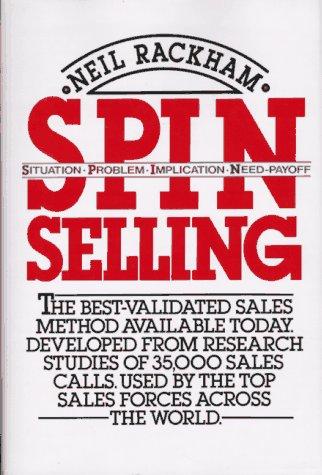
  • Cover: SPIN Selling

    SPIN Selling

    Book

    N. Rackham · 1988

    Grounded in the analysis of thousands of sales calls, the SPIN method structures customer discovery through four types of question (Situation, Problem, Implication, Need-payoff) for complex sales.

  • Cover: The Negotiating Game

    The Negotiating Game

    Book

    C. L. Karrass · 1970

    A pragmatic classic of business negotiation: tactics, power balance and preparation. Karrass sums up his motto, you get what you negotiate, not what you deserve.

  • Cover: Secrets of Power Negotiating

    Secrets of Power Negotiating

    Book

    R. Dawson · 1987

    An arsenal of opening, middle and closing "gambits" to gain the upper hand in commercial negotiation, explained step by step.

C. Karrass, R. Dawson, H. Cohen, N. Rackham (SPIN), T. Gordon (DESC / active listening).

On video

See the technique in action

Videos to picture The Puppy Dog Close and anchor it through examples.

A verified video selection is being enriched; the search above already surfaces the best videos on the topic.

Technique map

Where this technique sits

Every technique sits within a network: what it draws on, what it combines with, where it applies, and how to defend against it.

Levers engaged

biases & emotions

Countered by

Spot its signals, neutralise it and turn it around with the defensive playbook on this page.

See the counter-techniques

Key takeaways

  • En une phrase

    The puppy dog close takes its name from pet shopsi: letting the customer try out and take home the product, betting that, once attached, they will no longer want to give it back. It rests on the endowment effect, whereby we value more highly what we already own, and on loss aversion.

  • The right reflex

    Set your own closing condition: "I'll sign if…"

  • Never do this

    Signing so as not to "miss" the offer.

7.0/10 tactical potential Moderate vigilance School grounded in research and field practice

Master this technique in real situations?

Our programmes turn theory into a concrete advantage.

Explore our programmes
Call Book a call