
NEGOCOACH
265
Origin : FBI · Chris Voss

🕵️ FBI · Chris Voss

Tactical empathy

Chris Voss, "Never Split the Difference", 2016, FBI crisis negotiation.

Full detail in the “Origin & history” section below.

265

Emotional Recentering

Emotional intelligence Technique 265 / 360
Alexandre Baumberger

Author of the library

Alexandre Baumberger

Negotiation lecturer at KEDGE Business School

A rare threefold background serving negotiation: teaching, commercial justice and audit, backed by experience as a company director in Bordeaux.

  • Teaching, KEDGE Business School Negotiation lecturer since 2014 (12 years).
  • Commercial justice, Commercial Court Judge from 2018 to 2026: litigation, then insolvency proceedings.
  • Audit & advisory, over 20 years Tax, employment and financial audit in major firms, for large groups.
In brief

Emotional recentring is the manoeuvre by which you reconnect with your objective and your stable state after being knocked off balance, redirecting attention from the reactive back towards the intentional. Where emotional management prevents overflow, recentring repairs: it restores clarity once the jolt has been absorbed.

Reading level

At a glance

Its family profile at a glance

Effectiveness Psychologicalimpact Discretion Preparation Relationalrisk Ethics
8.0 / 10 Tactical potential

Vigilance: moderate (4.0/10) · Preparation required: 6/10

Grounding in the source school School grounded in research and field practice

Indicative profile: it situates the “Emotional intelligence” family as the FBI · Chris Voss school practises it, not this technique taken in isolation. Techniques from the same family and school therefore share the same profile. NEGOCOACH editorial rating out of 10, non-experimental · the higher the “relational risk” value, the more costly the technique is to the relationship.

NEGOCOACH assessment

How to read this rating

Tactical potential 8.0/10 (effectiveness, impact, discretion) and vigilance moderate (relational and ethical risk): two distinct readings, deliberately never merged into a single score that would reward risk. NEGOCOACH editorial rating calibrated from the “Emotional intelligence” family and the “FBI · Chris Voss” school. Each criterion is rated out of 10; click to understand what it measures.

  • Effectiveness 8/10 · Very high

    How far the technique can carry the negotiation in the intended direction when it is well executed.

  • Psychological impact 10/10 · Very high

    Strength of the effect produced on the counterpart's perceptions, emotions and decisions.

  • Discretion 6/10 · High

    How hard it is for the other party to notice the technique is being used. A high value = very discreet.

  • Preparation 6/10 · High

    The information, analysis and rehearsal required upfront to use it effectively.

  • Relational risk 3/10 · Low

    Potential cost to the relationship and to trust if the technique is spotted, refused or fails. A high value = riskier.

  • Ethics 6/10 · High

    Moral acceptability: fairness, transparency and respect for the counterpart's autonomy. A high value = more defensible.

Level of evidence

School grounded in research and field practice

The school this technique stems from combines academic work with long field practice. This indicator qualifies the school, not this technique taken in isolation.

Indicative NEGOCOACH editorial rating, for teaching purposes. For “Relational risk”, a high value signals a cost to the relationship, not a quality.

Summary of Emotional Recentring


Origin & history

The notion draws on techniques of mindfulness and attentional regulation (Jon Kabat-Zinn, 1990) and on cardiac coherencei studied by the HeartMath Institute. In negotiation, it extends the work of Fisher and Shapiro on regaining emotional control at the table.


Definition and principle

To recentre is to run a brief routine (breathing, bodily anchoring, recalling the objective) that interrupts the reactive spiral and reorients you towards the original intention. The mechanism is a return of the parasympathetic system and of focused attention, which makes working memory and judgement accessible once again.i


Concrete examples of application

Application by context

The same technique, across every negotiation settings

Context 1 / 8

Sales negotiation

A salesperson has just met with a stinging rejection and feels the thread of their pitch slipping away. They pause, recall their objective (to understand the real obstacle) and resume calmly. Recentring avoids panicked improvisation.

How to apply it

After a hard blow, run a micro-routine (breath, recalling the aim) before speaking again; do not respond from a place of distress.

Strengths

Restores tactical clarity after a setback and avoids clumsy recovery reactions.

Weaknesses

A recentring pause that is too long or too visible can be read as wavering and make the client doubt.
Context 2 / 8

Procurement negotiation

On the buyer's side, thrown by an aggressive counter-offer that catches them off guard, they take a moment, return to their target and their limits, then respond from their strategy rather than from surprise. They regain the upper hand.

How to apply it

Faced with a destabilising manoeuvre, first return to your written objectives and limits before formulating any response.

Strengths

Prevents the surprise counter-offer from dictating an impulsive and costly reaction.

Weaknesses

The time taken to recentre gives the other side the chance to see that they have scored a point.

Context 3 / 8

Labour negotiation

A union negotiator, shaken by a blunt announcement from management, calls for an adjournment of the session. They refocus the team on the priorities of the mandate before returning. The group reconnects with its strategy.

How to apply it

Use the adjournment of the session as a tool for collective recentring: it restores direction where emotion had blurred it.

Strengths

Restores strategic coherence to the group after a shared emotional shock.

Weaknesses

Too many adjournments can be perceived as a lack of composure or as a delaying tactic.

Context 4 / 8

Crisis management

A crisis negotiator, momentarily overwhelmed by the life-or-death stakes, recentres through their breathing and the recall of their protocol. Within a few seconds they recover the stability needed to resume dialogue with the barricaded individual.

How to apply it

Anchor yourself with slow breathing and a simple reference point (the protocol, the objective of preserving life) the moment the stakes overwhelm you.

Strengths

Allows you to keep functioning lucidly where the emotional load is extreme.

Weaknesses

In a real crisis, a badly managed second of wavering can cost dearly; the routine must be automatic.

Context 5 / 8

Political negotiation

Caught off guard by a hostile statement in the middle of a televised negotiation, a leader allows themselves a controlled silence, recentres on their line, and responds with recovered composure. Recentring avoids a damaging off-the-cuff retort.

How to apply it

Turn the recentring silence into an assumed posture; it is worth more than a hasty and regrettable retort.

Strengths

Prevents irreversible slip-ups under the eye of the cameras.

Weaknesses

A pause for recovery that is too pronounced can be interpreted as hesitation or weakness.

Context 6 / 8

Real-estate negotiation

A seller, unsettled by a very low offer that offends them, recentres on their market value and their real objective rather than on the perceived affront. They respond with a measured counter-proposal, not an offended refusal.

How to apply it

Redirect attention from the perceived affront towards objective data (market price, life plan) before responding to an aggressive offer.

Strengths

Avoids the emotional refusal that slams the door on a negotiation that is still possible.

Weaknesses

No effect if the offer is genuinely off-market: recentring is no substitute for judgement.

Context 7 / 8

Cross-cultural negotiation

A negotiator, disconcerted by behaviour that clashes with their own codes (prolonged silence, refusal of eye contact), recentres: they remind themselves that this gap is cultural, not hostile, and resume the exchange without bristling.

How to apply it

Recentre on the hypothesis of a cultural misunderstanding rather than hostility as soon as a behaviour throws you.

Strengths

Prevents breakdowns caused by an ethnocentric reading of a neutral behaviour.

Weaknesses

By attributing too much to culture, you can miss genuine hostility or disagreement.

Context 8 / 8

Family negotiation

In the middle of an inheritance discussion, a hurtful remark reawakens an old wound. The person allows themselves a moment, recentres on what really matters (preserving the bond), and returns without having retaliated in the heat of the moment.

How to apply it

Faced with an old family trigger, recentre on the long-term relational stake before responding to the wound of the moment.

Strengths

Prevents an old wound from derailing a present decision and the future bond.

Weaknesses

Recentring alone does not address the substance of the old grievance, which may resurface.


Counter-techniques

Spot and neutralise this technique

Negotiation is also played on defence. Here is how to recognise this technique when it is used against you, and turn it around.

Detect

The signals that give it away

  • Displayed empathy that lowers your guard
  • Mirroring of your gestures and words
  • A systematic "I understand you"

Neutralise

The counters that defuse it

  • Appreciate the warmth without relaxing
  • Keep your objectives in mind
  • Distinguish being heard from being satisfied

Turn around

Turn it into an advantage

Use active listening in turn to gather information.

The trap to avoid

Mistaking being understood for having won your case.

In brief

  • Difficulty: Intermediate
  • Estimated effectiveness: High
  • Implementation time: A few seconds to minutes, can be trained
  • Fields of application: Crisis negotiation, Sales, Public speaking, Management, Diplomacy
  • Synonyms: Regaining emotional control, Anchoring, Return to calm
  • Tags: mindfulness, cardiac coherence, anchoring, self-reset, Fisher Shapiro

Strengths and Weaknesses

Emotional recentring restores clarity after being knocked off balance and prevents a one-off jolt from throwing the whole negotiation out of kilter. Quick and discreet once trained, it restores access to judgement. Its limitation: it requires an automatic routine to work under heavy pressure, and a recentring that is too visible can betray the very disturbance it repairs.


When to use this technique?

To be triggered just after a destabilising shock (attack, surprise, wound) and before any significant response. Not to be confused with flight: to recentre is to return to intention, not to avoid the subject. Of little use if no loss of balance has occurred.


How to recognise and counter this technique

Recognise: after one of your manoeuvres, the other party pauses, breathes, and seems to collect themselves before responding differently. Neutralise: maintain the pressure of the tempo without giving them time to rest, or press on again before they have recentred. Turn it around: grant yourself that same recentring time rather than being subjected to theirs.


Limits and ethics

Recentring becomes questionable when it serves to display a façade of composure masking a manoeuvre, or to deprive the other party of their legitimate emotion by treating it as a mere obstacle to be circumvented. Used on oneself, it remains healthy; used to manipulate another person's emotional rhythm, it slides towards control. The aim must remain clarity, not domination.


Variants and related techniques

A direct complement to Emotional management (prevent vs repair) and to the Pattern interrupt applied to oneself. Close to Relational calibration in its dimension of adjustment. Stands in opposition to the impulsive reaction and to escalation.


Going further

  • Jon Kabat-Zinn, Full Catastrophe Living, 1990.
  • Roger Fisher & Daniel Shapiro, Beyond Reason: Using Emotions as You Negotiate, 2005.
  • David Rock, Your Brain at Work, 2009.

Objectives of the technique

  • Defuse an emotional escalation before it blocks the substantive discussion
  • Explicitly acknowledge the other party's emotion without being drawn onto affective ground
  • Bring the conversation back from reproaches and positions towards facts, criteria and interests
  • Preserve the relationship and the other party's face while protecting the objective of the negotiation
  • Regain control of the framing of the exchange without authoritarianism or a frontal power struggle

Famous cases

Sales · The furious buyer brought back to the figures (representative scenario): During an annual renegotiation, a large-retail buyer explodes: "Your price increases are outright theft, you're taking us for fools!" Rather than justifying himself inch by inch or replying in the same tone, the sales director pauses and responds: "I can see this increase is putting you in a difficult position with your own management, and I understand that it is exasperating." The buyer, acknowledged in his feelings, lowers his tone. The salesperson immediately follows up: "Let's look together at the breakdown of our material costs and see across which volumes we can absorb the impact." In two sentences, acknowledgement of the emotion and then a pivot to objective criteria, the discussion leaves the register of accusation and returns to a negotiation over data.

Company · The tense labour meeting (representative scenario): During the negotiation of a restructuring plan, a staff representative violently challenges the HR director: "You're destroying lives while management pays itself bonuses!" The HR director resists the temptation to counter-attack or to invoke the legal framework. She responds: "What I hear is genuine anger and concern for the colleagues affected. It is legitimate and I am not going to brush it aside." She then recentres: "It is precisely to limit these impacts that we are around this table: let's go back over the three support measures and see which of them strike you as insufficient." The session, on the brink of breakdown, continues with a point-by-point examination of the measures; the emotion has been acknowledged, but it is the substance that takes over again.

Everyday life · The neighbour dispute that gets out of hand (representative scenario): Two neighbours are at odds over a shared boundary fence. One piles up grievances: the noise, the trees, "your total lack of respect for years". The other senses that responding to each reproach would feed the spiral. He chooses to recentre: "I can see it's not just the fence, and that you feel you haven't been respected; I take note of that and I'm willing to talk about it. For today, can we first settle the question of the fence, since the builder is waiting for our answer on Friday?" By validating the feeling without opening every front at once, he obtains an agreement on the urgent matter and a meeting for the rest.


Common mistakes

  • Denying or minimising the emotion ("calm down", "it's not that serious"): this is the surest way to provoke an escalation rather than a calming
  • Recentring too quickly, before the other party truly feels heard: the pivot is then perceived as an evasion or as contempt, and the emotion returns amplified
  • Confusing recentring with diversion: changing the subject to dodge a painful question destroys trust, whereas recentring acknowledges the sensitive point before returning to it at the right moment
  • Letting yourself be emotionally contaminated and answering anger with anger, turning a negotiation into a clash of personalities
  • Using mechanical, repeated empathy formulas ("I understand, I understand") without sincerity: façade empathy is quickly detected and discredits the whole approach

Scientific foundations

  • Roger Fisher, William Ury (1981) Getting to Yes: Negotiating Agreement Without Giving In Houghton Mifflin
  • Roger Fisher, Daniel Shapiro (2005) Beyond Reason: Using Emotions as You Negotiate Viking Press
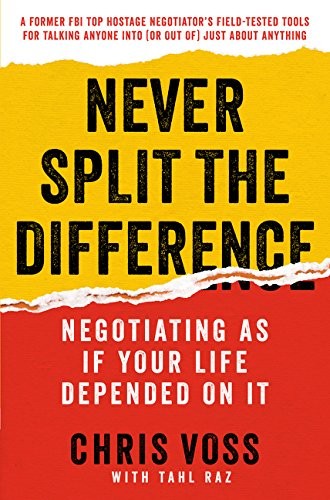
  • Chris Voss, Tahl Raz (2016) Never Split the Difference: Negotiating As If Your Life Depended On It HarperBusiness

Quick exercise

Test yourself before answering

Answer in your head, then reveal the solution. Memory is built through active recall.

1 Quels signaux doivent vous alerter ?
  • Displayed empathy that lowers your guard
  • Mirroring of your gestures and words
  • A systematic "I understand you"
2 Quelles parades appliquer ?
  • Appreciate the warmth without relaxing
  • Keep your objectives in mind
  • Distinguish being heard from being satisfied

Frequently asked questions

The questions we get most

What is the "Emotional Recentering" technique?

Emotional recentring is the manoeuvre by which you reconnect with your objective and your stable state after being knocked off balance, redirecting attention from the reactive back towards the intentional. Where emotional management prevents overflow, recentring repairs: it restores clarity once the jolt has been absorbed.

Is the "Emotional Recentering" technique ethical?

It sits on the line: effective, but it can tip into manipulation if it exploits an information asymmetry. Use it with measure and without deliberate deceit.

How do you defend against "Emotional Recentering"?

Mistaking being understood for having won your case. The right reflex: appreciate the warmth without relaxing.

What is the "Emotional Recentering" technique based on?

NEGOCOACH does not assess the experimental validation of this technique in isolation. What we document is the grounding of its source school (FBI · Chris Voss): school grounded in research and field practice. Full detail is in the "At a glance" section of this page.

Practise with AI

Three ready-to-use prompts

Copy, paste into your assistant, replace the [brackets]. Works with ChatGPT, Claude, Gemini, Mistral, Perplexity.

Prepare

Build your plan before the meeting

You are an expert negotiation coach. Help me prepare to use the "Emotional Recentering" technique in the following situation: [describe your situation]. Give me: the conditions for success, a 3-step script, my counterpart's likely objections and how to answer them.

Simulate

Rehearse against an AI counterpart

Play the role of my counterpart in a negotiation. I am going to test the "Emotional Recentering" technique. React realistically and with resistance, do not give in too quickly, then at the end analyse my performance and suggest 3 concrete improvements.

Debrief

Analyse a past negotiation

Here is how my negotiation went: [paste the exchanges]. Analyse whether the "Emotional Recentering" technique was used well, what worked, the mistakes made, and spell out precisely what I could have done better.

References

Bibliography & credible sources

Founding works of the 🕵️ FBI · Chris Voss school this technique belongs to.

  • Cover: Never Split the Difference

    Never Split the Difference

    Book

    C. Voss & T. Raz · 2016

    The FBI's hostage-negotiation methods transposed to business and everyday life: tactical empathy, mirroring, labeling, calibrated questions. An emotional, counter-intuitive approach to persuasion.

  • Cover: Stalling for Time, My Life as an FBI Hostage Negotiator

    Stalling for Time, My Life as an FBI Hostage Negotiator

    Book

    G. Noesner · 2010

    The account of twenty-three years of crisis negotiation at the FBI by the head of its unit. A demonstration of the power of listening, patience and de-escalation in the most tense situations.

Chris Voss, "Never Split the Difference", 2016, FBI crisis negotiation.

On video

See the technique in action

Videos to picture Emotional Recentering and anchor it through examples.

A verified video selection is being enriched; the search above already surfaces the best videos on the topic.

Technique map

Where this technique sits

Every technique sits within a network: what it draws on, what it combines with, where it applies, and how to defend against it.

Levers engaged

biases & emotions

Countered by

Spot its signals, neutralise it and turn it around with the defensive playbook on this page.

See the counter-techniques

Key takeaways

  • En une phrase

    Emotional recentring is the manoeuvre by which you reconnect with your objective and your stable state after being knocked off balance, redirecting attention from the reactive back towards the intentional. Where emotional management prevents overflow, recentring repairs: it restores clarity once the jolt has been absorbed.

  • The right reflex

    Use active listening in turn to gather information.

  • Never do this

    Mistaking being understood for having won your case.

8.0/10 tactical potential Moderate vigilance School grounded in research and field practice

Master this technique in real situations?

Our programmes turn theory into a concrete advantage.

Explore our programmes
Call Book a call