
NEGOCOACH
222
Origin : Cognitive science

🧠 Cognitive science

Behavioural economics & social psychology

R. Cialdini ("Influence", 1984), D. Kahneman & A. Tversky, R. Thaler, D. Ariely.

Full detail in the “Origin & history” section below.

222

The Contrast Effect

Social influence Technique 222 / 360
Alexandre Baumberger

Author of the library

Alexandre Baumberger

Negotiation lecturer at KEDGE Business School

A rare threefold background serving negotiation: teaching, commercial justice and audit, backed by experience as a company director in Bordeaux.

  • Teaching, KEDGE Business School Negotiation lecturer since 2014 (12 years).
  • Commercial justice, Commercial Court Judge from 2018 to 2026: litigation, then insolvency proceedings.
  • Audit & advisory, over 20 years Tax, employment and financial audit in major firms, for large groups.
In brief

The contrast effect is the bias by which our perception of something depends on what we compare it to just beforehand. A price seems reasonable after a higher one, a mediocre offer shines beside a worse one. Judgement is not absolute but relative to the immediate reference pointi, which can be manipulated by choosing what is presented first.

Reading level

At a glance

Its family profile at a glance

Effectiveness Psychologicalimpact Discretion Preparation Relationalrisk Ethics
8.0 / 10 Tactical potential

Vigilance: high (6.0/10) · Preparation required: 4/10

Grounding in the source school School grounded in experimental research

Indicative profile: it situates the “Social influence” family as the Cognitive science school practises it, not this technique taken in isolation. Techniques from the same family and school therefore share the same profile. NEGOCOACH editorial rating out of 10, non-experimental · the higher the “relational risk” value, the more costly the technique is to the relationship.

NEGOCOACH assessment

How to read this rating

Tactical potential 8.0/10 (effectiveness, impact, discretion) and vigilance high (relational and ethical risk): two distinct readings, deliberately never merged into a single score that would reward risk. NEGOCOACH editorial rating calibrated from the “Social influence” family and the “Cognitive science” school. Each criterion is rated out of 10; click to understand what it measures.

  • Effectiveness 8/10 · Very high

    How far the technique can carry the negotiation in the intended direction when it is well executed.

  • Psychological impact 9/10 · Very high

    Strength of the effect produced on the counterpart's perceptions, emotions and decisions.

  • Discretion 7/10 · High

    How hard it is for the other party to notice the technique is being used. A high value = very discreet.

  • Preparation 4/10 · Moderate

    The information, analysis and rehearsal required upfront to use it effectively.

  • Relational risk 5/10 · Moderate

    Potential cost to the relationship and to trust if the technique is spotted, refused or fails. A high value = riskier.

  • Ethics 4/10 · Moderate

    Moral acceptability: fairness, transparency and respect for the counterpart's autonomy. A high value = more defensible.

Level of evidence

School grounded in experimental research

The school this technique stems from is grounded in replicated, peer-reviewed experimental work. This indicator qualifies the school, not the experimental validation of this technique taken in isolation.

Indicative NEGOCOACH editorial rating, for teaching purposes. For “Relational risk”, a high value signals a cost to the relationship, not a quality.

Contrast in Brief


Origin & history

The principle is old in psychophysics (the Weber-Fechner law on the relative perception of stimuli), but its persuasive reach was popularised by Robert Cialdini in Influence (1984), who illustrates it with the experiment of the three buckets of water: a hand taken out of cold water finds lukewarm what a hand taken out of hot water finds cold. In selling, the decoy-property technique, first showing an expensive and unattractive property to flatter the next one, is its classic application.


Definition and principle

The brain judges by comparison, not in the absolute: it evaluates each new piece of information against the previous one. By controlling the order of presentation and the reference point (the anchor), one alters perception without changing the object itself. Presenting an extreme first makes the next item more acceptable: it is a cousin of anchoring, but one that plays on the perceived gap between two successive propositions rather than on an isolated numerical value.


Concrete examples of application

Application by context

The same technique, across every negotiation settings

Context 1 / 8

Sales negotiation

A car salesperson first presents the top-of-the-range model at €60,000, then the options (upholstery, wheels) at €1,500 each. Set against the price of the car, these sums seem negligible, and the customer piles on the extras.

How to apply it

Present the large amount first so that later add-ons seem minimal by contrast; the order shapes how the price is perceived.

Strengths

Secures acceptance of extras that, presented alone, would seem expensive.

Weaknesses

Exposed if the customer adds the total back up and becomes aware of the accumulation.
Context 2 / 8

Procurement negotiation

A buyer receives from a supplier a deliberately high first offer, followed by a second, 'discounted' one that seems generous by contrast, even though it remains above the fair market price.

How to apply it

Never judge an offer against the previous one proposed by the seller, but against an external market reference that you set yourself.

Strengths

Guarding against contrast prevents mistaking a false discount for a good deal.

Weaknesses

The high anchor keeps influencing you even when you know it is artificial.

Context 3 / 8

Labour negotiation

A manager first announces a very heavy reorganisation (relocation, extended hours), then 'gives up' part of it. Relieved by comparison, employees welcome changes they would have refused outright.

How to apply it

Precede the real request with a harsher scenario that is then dropped; the relief of contrast eases acceptance.

Strengths

Makes a difficult change acceptable by comparing it to a worse scenario.

Weaknesses

Manipulative if the harsh scenario was a sham; destroys trust if discovered.

Context 4 / 8

Crisis management

An executive first raises the worst-case scenario (bankruptcy, mass redundancies), then presents their cost-cutting plan. By contrast with the worst, measures that are nonetheless severe appear a lesser evil, accepted without revolt.

How to apply it

Frame the difficult measures against the gravest scenario avoided; contrast turns a sacrifice into relative relief.

Strengths

Gets painful decisions through by positioning them as the best of the bad options.

Weaknesses

Perceived as opportunistic scaremongering if the worst-case scenario seems exaggerated.

Context 5 / 8

Political negotiation

A government announces a maximalist reform, provokes an outcry, then retreats to a 'watered-down' version that was the initial objective. Compared to the first, it seems moderate and is accepted almost with gratitude.

How to apply it

The calculated-retreat manoeuvre (high anchor then concession) secures by contrast what, presented alone, would have been rejected.

Strengths

Defuses opposition by turning an apparent concession into a perceived victory.

Weaknesses

A transparent strategy to informed observers, who denounce the staging.

Context 6 / 8

Real-estate negotiation

An agent first shows an overpriced, run-down property, then the property they actually want to sell. The latter, by contrast, seems bright, well-kept and reasonably priced, and wins the buyer over.

How to apply it

Arrange the order of viewings so that the target property follows an unfavourable point of comparison; contrast magnifies it.

Strengths

Enhances a property with no works or price cut, through sequence alone.

Weaknesses

Waste of time and credibility if the buyer perceives the manipulation of the sequence.

Context 7 / 8

Cross-cultural negotiation

In an international negotiation, one party opens with an extreme demand according to its own codes; the other, used to more moderate starting points, judges as exorbitant what is merely a cultural bargaining anchor.

How to apply it

Recalibrate the reference point according to the culture: where bargaining is the norm, the extreme opening anchor should not be judged by your own standards.

Strengths

Understanding cultural anchors prevents breaking off over an opening that is merely a ritual.

Weaknesses

Misunderstanding if one party takes the other's anchor at face value.

Context 8 / 8

Family negotiation

A teenager first asks permission for an expensive far-flung trip, meets a refusal, then requests a far more modest outing. By contrast, the relieved parents readily accept this second request, their real target.

How to apply it

Recognise the extreme-then-reasonable sequence; judge each request on its own merits, not against the previous one.

Strengths

Spotting the manoeuvre helps keep an independent judgement within the family.

Weaknesses

The effect works even when you know the method, so automatic is the comparison.


Counter-techniques

Spot and neutralise this technique

Negotiation is also played on defence. Here is how to recognise this technique when it is used against you, and turn it around.

Detect

The signals that give it away

  • "Everyone does it"
  • An authority invoked to close the debate
  • A gift followed by a request (forced reciprocity)

Neutralise

The counters that defuse it

  • Check the real norm
  • Question the authority's legitimacy
  • Refuse the debt created by the gift

Turn around

Turn it into an advantage

Turn social proof around: "Actually, the best do the opposite."

The trap to avoid

Conforming for fear of being the only dissenter.

In short

  • Difficulty: Easy
  • Estimated effectiveness: Very high
  • Implementation time: Instant
  • Fields of application: Sales, Negotiation, Marketing, Politics, Real estate
  • Synonyms: Comparison effect, Perceptual contrast, Relative framing
  • Tags: contrast, anchoring, Cialdini, order of presentation, reference point

Strengths and Weaknesses

The contrast effect is a simple and formidably effective lever of persuasion: it alters perception without changing the object, through the sole mastery of order and point of comparison. It shapes pricing, negotiation and merchandising. Its strength: acting below the threshold of awareness. Its limit: once the sequence is perceived as a staging, it rebounds into distrust, for no one likes to be steered by a stage set.


When to use this technique?

To be exploited whenever one can control the order of presentation: offers, prices, options, scenarios. Ideal for making a proposition acceptable by preceding it with an extreme. To be neutralised whenever you must judge objectively: bring each option back to an independent external reference. Pointless where the counterpart already has a reliable and stable point of comparison.


How to recognise and counter this technique

Recognise: you are systematically shown an extreme option before the one they want you to choose. Neutralise: evaluate each proposition against an external market reference that you set, ignoring the anchor offered. Turn it around: set the first anchor of the sequence yourself to regain control of the reference point.


Limits and ethics

The contrast effect becomes manipulation when the reference option is purely fake (an unsellable property, an unreal threat) intended to distort judgement. The ethical boundary is the sincerity of the alternatives presented. The rule: offer real and relevant points of comparison, not decoys set up to bias another's decision.


Variants and related techniques

Closely linked to anchoring (Tversky & Kahneman) and to framing. It combines with Cialdini's door-in-the-face (extreme then reasonable request) and the decoy effect. The basis of many pricing and merchandising tactics.


Going further

  • Robert B. Cialdini, Influence: The Psychology of Persuasion, 1984.
  • Amos Tversky & Daniel Kahneman, 'Judgment under Uncertainty: Heuristics and Biases', Science, 1974.
  • Joel Huber, John Payne & Christopher Puto, 'Adding Asymmetrically Dominated Alternatives', Journal of Consumer Research, 1982.

Objectives of the technique

  • Make an offer seem reasonable or advantageous by presenting it just after a deliberately more extreme reference (high price, strong demand).
  • Steer the other party's point of comparison to shift their perception of what is 'normal' or 'acceptable'.
  • Make a concession more valuable by exposing it after an ambitious initial position.
  • Reduce resistance on price or terms by sequencing the options from the most expensive/demanding to the least.
  • Highlight the quality or benefit of a proposition by juxtaposing it with a markedly less attractive alternative.

Famous cases

Sales · Order of presentation in a car dealership: A salesperson first offers the top-of-the-range model at €45,000, which the customer finds too expensive. They then present the mid-range model at €32,000: by contrast with the first, this price suddenly seems reasonable, whereas presented alone it would have seemed high. The same logic applies to options: offered after the price of the vehicle (several tens of thousands of euros), €900 of metallic paint seems negligible. A scenario representative of a common sales practice.

Everyday life · The estate agent and the 'decoy' viewing: An agent first shows an overpriced, run-down property, then presents the property they actually want to sell. By contrast, the latter appears markedly more attractive and better valued than if it had been shown first. A scenario representative of the contrast principle applied to the sequencing of viewings.


Common mistakes

  • Choosing a first reference so extreme that it seems absurd or insulting: instead of anchoring, it discredits and breaks the relationship.
  • Confusing the contrast effect with pure anchoring: contrast rests on the immediate juxtaposition of two elements, not merely on a figure thrown out in isolation.
  • Overlooking that the other party may have external reference points (market prices, competing quotes) that neutralise the contrast.
  • Over-using the technique until it becomes visible: once the method is perceived as manipulative, it rebounds into distrust.
  • Forgetting to follow the decoy offer promptly with the target offer: too long a delay dissolves the comparison effect.

Scientific foundations

  • Robert B. Cialdini (2021) Influence: The Psychology of Persuasion (New and Expanded) Harper Business
  • Robert B. Cialdini, Joyce E. Vincent, Stephen K. Lewis, José Catalan, Diane Wheeler, Betty Lee Darby (1975) Reciprocal concessions procedure for inducing compliance: The door-in-the-face technique Journal of Personality and Social Psychology, 31(2), 206-215, DOI: 10.1037/h0076284
  • Amos Tversky, Daniel Kahneman (1974) Judgment under Uncertainty: Heuristics and Biases Science, 185(4157), 1124-1131, DOI: 10.1126/science.185.4157.1124

Quick exercise

Test yourself before answering

Answer in your head, then reveal the solution. Memory is built through active recall.

1 Quels signaux doivent vous alerter ?
  • "Everyone does it"
  • An authority invoked to close the debate
  • A gift followed by a request (forced reciprocity)
2 Quelles parades appliquer ?
  • Check the real norm
  • Question the authority's legitimacy
  • Refuse the debt created by the gift

Frequently asked questions

The questions we get most

What is the "The Contrast Effect" technique?

The contrast effect is the bias by which our perception of something depends on what we compare it to just beforehand. A price seems reasonable after a higher one, a mediocre offer shines beside a worse one. Judgement is not absolute but relative to the immediate reference pointi, which can be manipulated by choosing what is presented first.

Is the "The Contrast Effect" technique ethical?

It sits on the line: effective, but it can tip into manipulation if it exploits an information asymmetry. Use it with measure and without deliberate deceit.

How do you defend against "The Contrast Effect"?

Conforming for fear of being the only dissenter. The right reflex: check the real norm.

What is the "The Contrast Effect" technique based on?

NEGOCOACH does not assess the experimental validation of this technique in isolation. What we document is the grounding of its source school (Cognitive science): school grounded in experimental research. Full detail is in the "At a glance" section of this page.

Practise with AI

Three ready-to-use prompts

Copy, paste into your assistant, replace the [brackets]. Works with ChatGPT, Claude, Gemini, Mistral, Perplexity.

Prepare

Build your plan before the meeting

You are an expert negotiation coach. Help me prepare to use the "The Contrast Effect" technique in the following situation: [describe your situation]. Give me: the conditions for success, a 3-step script, my counterpart's likely objections and how to answer them.

Simulate

Rehearse against an AI counterpart

Play the role of my counterpart in a negotiation. I am going to test the "The Contrast Effect" technique. React realistically and with resistance, do not give in too quickly, then at the end analyse my performance and suggest 3 concrete improvements.

Debrief

Analyse a past negotiation

Here is how my negotiation went: [paste the exchanges]. Analyse whether the "The Contrast Effect" technique was used well, what worked, the mistakes made, and spell out precisely what I could have done better.

References

Bibliography & credible sources

Founding works of the 🧠 Cognitive science school this technique belongs to.

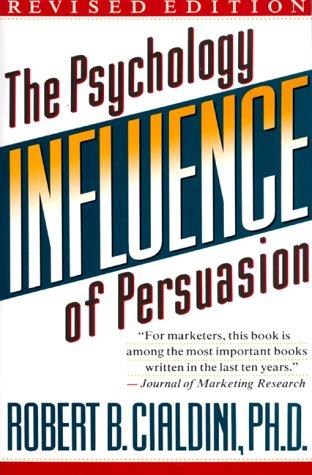
  • Cover: Influence, The Psychology of Persuasion

    Influence, The Psychology of Persuasion

    Book

    R. Cialdini · 1984

    The founding work on the mechanisms of persuasion: six universal principles (reciprocity, consistency, social proof, authority, liking, scarcity) illustrated with striking experiments. A landmark in social psychology.

  • Cover: Thinking, Fast and Slow

    Thinking, Fast and Slow

    Book

    D. Kahneman · 2011

    The sum of Kahneman's work on decision-making: two systems of thought, one fast and intuitive, the other slow and analytical, and the long list of biases that distort our judgements. Essential to understanding others... and yourself.

  • Cover: Nudge

    Nudge

    Book

    R. Thaler & C. Sunstein · 2008

    How to steer choices without constraint, by acting on the "choice architecture". The book popularised the nudge and behavioural economics applied to public policy as much as to management.

  • Judgment under Uncertainty: Heuristics and Biases (Science)

    Article

    A. Tversky & D. Kahneman · 1974

    The founding paper (Science, 1974) that uncovered the heuristics and biases of judgement, including anchoring. The starting point of the behavioural-economics revolution.

R. Cialdini ("Influence", 1984), D. Kahneman & A. Tversky, R. Thaler, D. Ariely.

On video

See the technique in action

Videos to picture The Contrast Effect and anchor it through examples.

Technique map

Where this technique sits

Every technique sits within a network: what it draws on, what it combines with, where it applies, and how to defend against it.

Levers engaged

biases & emotions

Countered by

Spot its signals, neutralise it and turn it around with the defensive playbook on this page.

See the counter-techniques

Key takeaways

  • En une phrase

    The contrast effect is the bias by which our perception of something depends on what we compare it to just beforehand. A price seems reasonable after a higher one, a mediocre offer shines beside a worse one. Judgement is not absolute but relative to the immediate reference pointi, which can be manipulated by choosing what is presented first.

  • The right reflex

    Turn social proof around: "Actually, the best do the opposite."

  • Never do this

    Conforming for fear of being the only dissenter.

8.0/10 tactical potential High vigilance School grounded in experimental research

Master this technique in real situations?

Our programmes turn theory into a concrete advantage.

Explore our programmes
Call Book a call