
NEGOCOACH
209
Origin : Cognitive science

🧠 Cognitive science

Behavioural economics & social psychology

R. Cialdini ("Influence", 1984), D. Kahneman & A. Tversky, R. Thaler, D. Ariely.

Full detail in the “Origin & history” section below.

209

The Endowment Effect

Exploitable cognitive biases Technique 209 / 360
Alexandre Baumberger

Author of the library

Alexandre Baumberger

Negotiation lecturer at KEDGE Business School

A rare threefold background serving negotiation: teaching, commercial justice and audit, backed by experience as a company director in Bordeaux.

  • Teaching, KEDGE Business School Negotiation lecturer since 2014 (12 years).
  • Commercial justice, Commercial Court Judge from 2018 to 2026: litigation, then insolvency proceedings.
  • Audit & advisory, over 20 years Tax, employment and financial audit in major firms, for large groups.
In brief

The endowment effect refers to the tendency to overvalue what we already own simply by the fact of owning it. People demand more to sell a good than they would be willing to pay to acquire it. Demonstrated by Richard Thaleri, it turns ownership, even symbolic or temporary, into a powerful lever of perceived value.

Reading level

At a glance

Its family profile at a glance

Effectiveness Psychologicalimpact Discretion Preparation Relationalrisk Ethics
8.0 / 10 Tactical potential

Vigilance: high (6.0/10) · Preparation required: 5/10

Grounding in the source school School grounded in experimental research

Indicative profile: it situates the “Exploitable cognitive biases” family as the Cognitive science school practises it, not this technique taken in isolation. Techniques from the same family and school therefore share the same profile. NEGOCOACH editorial rating out of 10, non-experimental · the higher the “relational risk” value, the more costly the technique is to the relationship.

NEGOCOACH assessment

How to read this rating

Tactical potential 8.0/10 (effectiveness, impact, discretion) and vigilance high (relational and ethical risk): two distinct readings, deliberately never merged into a single score that would reward risk. NEGOCOACH editorial rating calibrated from the “Exploitable cognitive biases” family and the “Cognitive science” school. Each criterion is rated out of 10; click to understand what it measures.

  • Effectiveness 8/10 · Very high

    How far the technique can carry the negotiation in the intended direction when it is well executed.

  • Psychological impact 10/10 · Very high

    Strength of the effect produced on the counterpart's perceptions, emotions and decisions.

  • Discretion 6/10 · High

    How hard it is for the other party to notice the technique is being used. A high value = very discreet.

  • Preparation 5/10 · Moderate

    The information, analysis and rehearsal required upfront to use it effectively.

  • Relational risk 5/10 · Moderate

    Potential cost to the relationship and to trust if the technique is spotted, refused or fails. A high value = riskier.

  • Ethics 4/10 · Moderate

    Moral acceptability: fairness, transparency and respect for the counterpart's autonomy. A high value = more defensible.

Level of evidence

School grounded in experimental research

The school this technique stems from is grounded in replicated, peer-reviewed experimental work. This indicator qualifies the school, not the experimental validation of this technique taken in isolation.

Indicative NEGOCOACH editorial rating, for teaching purposes. For “Relational risk”, a high value signals a cost to the relationship, not a quality.

Endowment in Brief


Origin & history

The term endowment effect was coined by Richard Thaler in 1980. Its most famous demonstration is the mugs experiment by Kahneman, Knetsch and Thaleri: those given a mug demanded roughly double the price that others were willing to pay for it. The effect is a direct consequence of loss aversion applied to ownership.


Definition and principle

The endowment effect creates a systematic gap between the desired selling price and the acceptable buying price for one and the same object. Owning shifts the reference point: parting with the good is then felt as a loss, more painful than an equivalent gain. This attachment is triggered quickly, sometimes simply by handling or trialling the item, and grows with the length of possession and personal investment. In negotiation, to have someone touch, try, or personalise something is already to transfer a share of psychological ownership.


Concrete examples of application

Application by context

The same technique, across every negotiation settings

Context 1 / 8

Sales negotiation

A dealership offers a 48-hour trial: "Take the car this weekend, no commitment." On Monday, the customer, who parked "his" car outside his home and showed it to his neighbours, struggles to hand back the keys: the good became his even before purchase.

How to apply it

Multiply the experiences of ownership: extended trial, personalised demo in his name, bespoke configuration. Every act of appropriation heightens the pain of giving up.

Strengths

Turns a prospect into a psychological owner; reduces price sensitivity.

Weaknesses

Costly to set up (lending equipment, time) and ineffective on a strictly rational or time-pressed buyer.
Context 2 / 8

Procurement negotiation

A professional buyer is wary of precisely this mechanism: he refuses any extended trial or pilot deployment until the price is locked in, knowing that established usage would then make switching supplier costly, both psychologically and materially.

How to apply it

Postpone appropriation until after the commercial agreement; negotiate the terms before any deployment. Soberly cost the exit costs so as not to remain captive to a supplier.

Strengths

Preserves your freedom to negotiate by avoiding becoming an "owner" prematurely.

Weaknesses

Forgoing trials deprives you of useful information about the product's real value.

Context 3 / 8

Labour negotiation

During a reorganisation, employees fiercely defend an acquired benefit (a room, a bonus, a working schedule) whose objective value is low, but which, because it is "theirs", is worth in their eyes far more than what is offered in exchange.

How to apply it

Do not ask them to give up an acquired benefit: offer to exchange it for an equivalent or greater gain, framed as an addition, to circumvent the pain of losing possession.

Strengths

Explains disproportionate resistance to change and guides how to defuse it.

Weaknesses

Compensating every acquired benefit can make the agreement more expensive; some attachments are irreducible to compensation.

Context 4 / 8

Crisis management

In a mediation, a party clings to a clause it "obtained" in an earlier round and refuses to touch it, even in exchange for an objectively superior consideration: that clause is now part of its negotiating estate.

How to apply it

Avoid taking back what has already been conceded; instead, build through successive additions. Reframe any trade-off as a net-gain swap, never as a clawback.

Strengths

Avoids the emotional deadlock tied to the sense of dispossession.

Weaknesses

The accumulation of untouchable gains can freeze the negotiation into a sub-optimal architecture.

Context 5 / 8

Political negotiation

A local authority refuses to hand back a power that was transferred to it temporarily, now experienced as its own, even though pooling it would be more efficient. Institutional ownership prevails over the calculation of effectiveness.

How to apply it

Present any reclaiming of a power as a newly negotiated benefit (funding, status) rather than a dispossession; leave the actor a share of symbolic ownership.

Strengths

Anticipates resistance to transfer and allows it to be addressed upstream.

Weaknesses

Multiplying symbolic compensations can strip the reform of its substance.

Context 6 / 8

Real-estate negotiation

A private seller overestimates his property by 15%: memories, the work done with his own hands, the years spent there inflate its value in his eyes. He turns down offers that are nonetheless in line with the market, convinced that his house "is worth more".

How to apply it

When facing a seller, defuse the endowment with factual comparables and a third-party valuer. As a buyer, never reinforce his attachment by praising the property's sentimental value.

Strengths

Explains the recurring gap between asking price and market price; shapes the argument.

Weaknesses

Sentimental attachment is barely permeable to figures; some sellers would rather not sell.

Context 7 / 8

Cross-cultural negotiation

In cultures where ownership is strongly tied to family honour or lineage (many Asian or Mediterranean cultures), the endowment effect on inherited land or a family business is massive: to sell is to betray. A foreign buyer who ignores this offends and fails.

How to apply it

Acknowledge the symbolic weight of the good in the culture concerned; propose continuity (name retained, role maintained) rather than a mere financial transaction.

Strengths

Respects local codes of ownership and unlocks sales that would otherwise be impossible.

Weaknesses

If misjudged, the symbolic weight can make the good simply off-market.

Context 8 / 8

Family negotiation

At the time of an estate division, each child overvalues the object they hold or have coveted since childhood, the grandfather's watch, a piece of furniture, far beyond its market value, making any equitable exchange on figures alone all but impossible.

How to apply it

Step outside the monetary logic: organise the division through rounds of choice or bundles of attachment, acknowledging sentimental value rather than denying it.

Strengths

Explains why estate divisions stumble over low-value objects; opens up non-monetary solutions.

Weaknesses

Rival attachment to the same object can remain irreconcilable and reignite old rivalries.


Counter-techniques

Spot and neutralise this technique

Negotiation is also played on defence. Here is how to recognise this technique when it is used against you, and turn it around.

Detect

The signals that give it away

  • An extreme first figure (anchoring)
  • A framing as loss rather than gain
  • The endowment effect ("it's already yours")

Neutralise

The counters that defuse it

  • Reject the anchor and set your own
  • Reframe the decision as a gain
  • Assess out of context, on the facts

Turn around

Turn it into an advantage

Set your own anchor first: it will structure the discussion.

The trap to avoid

Reasoning from the other side's figure.

In brief

  • Difficulty: Intermediate
  • Estimated effectiveness: High
  • Time to implement: Builds up with ownership, sometimes immediate
  • Fields of application: Sales, Real estate, Labour negotiation, Inheritance, Mediation
  • Synonyms: Endowment effect, Possession effect, Ownership bias
  • Tags: endowment effect, ownership, Thaler, loss aversion, trial

Strengths and Weaknesses

The endowment effect offers a discreet and lasting lever: having someone touch, try, personalise transfers a psychological ownership that reduces price sensitivity and builds loyalty. It also sheds light on resistance to change in labour and estate negotiations. Its limitation: it is costly to activate (loans, trials), ineffective on the purely rational, and backfires when it inflates a seller's expectations away from the market.


When to use this technique?

To be exploited on the selling side to anchor appropriation before the decision (trial, bespoke demo), and to be aware of on the buying side so as to avoid being captured. Invaluable for understanding a disproportionate resistance to giving up an acquired benefit. To be avoided with a time-pressed, purely financial counterpart, or when it irremediably inflates expectations.


How to recognise and counter this technique

Recognise: you are pushed to try, hold, or personalise before any price agreement. Neutralise: defer appropriation until after the negotiation and assess the good on objective comparables, not on your budding attachment. Turn it around: facing a seller in the grip of endowment, counter with third-party market data that reframes his overvaluation.


Limits and ethics

Fostering attachment in order to sell remains legitimate as long as the product lives up to its promises; the drift begins when appropriation serves to mask a defect or to trap a captive buyer (hidden exit costs). On an ethical level, exploiting the sentimental attachment of a vulnerable person (bereavement, isolation) to extract an agreement is reprehensible.


Variants and related techniques

Stems from loss aversion and combines with the status quo bias and the sunk cost. Close to the mere-exposure effect (Zajonc). Exploited commercially through the free trial, the return period and personalisation, all operational variations on psychological ownership.


Going further

  • Richard Thaler, « Toward a Positive Theory of Consumer Choice », Journal of Economic Behavior and Organization, 1980.
  • Daniel Kahneman, Jack Knetsch & Richard Thaler, « Experimental Tests of the Endowment Effect and the Coase Theorem », Journal of Political Economy, 1990.
  • Richard Thaler & Cass Sunstein, Nudge: Improving Decisions About Health, Wealth, and Happiness, 2008.

Objectives of the technique

  • Understand and anticipate the other party's irrational attachment to what it already owns (status, benefit, acquired clause) in order to frame one's demands better
  • Reduce the valuation gap between the seller's selling price (WTA, willingness to accept) and the buyer's buying price (WTP, willingness to pay)
  • Strengthen one's own position by creating in the other a sense of anticipated ownership (trial, usage period, projection) that raises its perceived value
  • Neutralise the counterpart's endowment effect by reframing gains and losses to defuse a blocking attachment
  • Assess an asset's value objectively by detaching from one's own owner position to avoid over-demanding

Famous cases

Sales · The free trial that closes the deal: A dealership systematically offers to let the customer drive off with the vehicle for a weekend trial. Once the customer has grown used to his new car, parked outside his home, shown to the neighbours, he has psychologically absorbed it into his estate. Returning the vehicle is experienced as a loss, not as a mere decision not to buy. The salesperson exploits the endowment effect here: anticipated ownership turns a hesitant prospect into a buyer who now negotiates to keep what he already considers his own.

Business · The acquired-benefit clause in pay renegotiation: During the renegotiation of a company agreement, management proposes to remove a long-standing day of leave in exchange for a bonus. Although the bonus is financially superior, the employees firmly oppose it: this day, acquired long ago, is perceived as their property. Its removal is felt as a net loss (loss aversion), far greater than the equivalent gain of the bonus. The astute negotiator then reframes the proposal, presenting it as an addition to what exists rather than an exchange, defusing the endowment reflex.


Common mistakes

  • Confusing the endowment effect with a mere whim: it is a systematic and predictable bias, not an isolated irrational reaction, and it must be treated as a given of the problem
  • Underestimating one's own exposure to the bias: the negotiator too overvalues what he owns (his position, his offer) and then demands a price detached from the market
  • Asking the other to give up an acquired benefit without psychological compensation for the loss: an "equivalent" gain is not enough because the loss weighs roughly twice as much (loss aversion)
  • Presenting the transaction as an exchange ("I take this, you give that") rather than as an addition, which needlessly triggers the sense of dispossession
  • Creating an endowment effect in the other (trial, anticipated ownership) without having secured the terms, letting the other party become attached and then withdraw

Scientific foundations

  • Kahneman, D., Knetsch, J. L., & Thaler, R. H. (1990) Experimental Tests of the Endowment Effect and the Coase Theorem Journal of Political Economy, 98(6), 1325-1348, DOI: 10.1086/261737
  • Kahneman, D., Knetsch, J. L., & Thaler, R. H. (1991) Anomalies: The Endowment Effect, Loss Aversion, and Status Quo Bias Journal of Economic Perspectives, 5(1), 193-206, DOI: 10.1257/jep.5.1.193
  • Thaler, R. H. (1980) Toward a Positive Theory of Consumer Choice Journal of Economic Behavior & Organization, 1(1), 39-60, DOI: 10.1016/0167-2681(80)90051-7

Quick exercise

Test yourself before answering

Answer in your head, then reveal the solution. Memory is built through active recall.

1 Quels signaux doivent vous alerter ?
  • An extreme first figure (anchoring)
  • A framing as loss rather than gain
  • The endowment effect ("it's already yours")
2 Quelles parades appliquer ?
  • Reject the anchor and set your own
  • Reframe the decision as a gain
  • Assess out of context, on the facts

Frequently asked questions

The questions we get most

What is the "The Endowment Effect" technique?

The endowment effect refers to the tendency to overvalue what we already own simply by the fact of owning it. People demand more to sell a good than they would be willing to pay to acquire it. Demonstrated by Richard Thaleri, it turns ownership, even symbolic or temporary, into a powerful lever of perceived value.

Is the "The Endowment Effect" technique ethical?

It sits on the line: effective, but it can tip into manipulation if it exploits an information asymmetry. Use it with measure and without deliberate deceit.

How do you defend against "The Endowment Effect"?

Reasoning from the other side's figure. The right reflex: reject the anchor and set your own.

What is the "The Endowment Effect" technique based on?

NEGOCOACH does not assess the experimental validation of this technique in isolation. What we document is the grounding of its source school (Cognitive science): school grounded in experimental research. Full detail is in the "At a glance" section of this page.

Practise with AI

Three ready-to-use prompts

Copy, paste into your assistant, replace the [brackets]. Works with ChatGPT, Claude, Gemini, Mistral, Perplexity.

Prepare

Build your plan before the meeting

You are an expert negotiation coach. Help me prepare to use the "The Endowment Effect" technique in the following situation: [describe your situation]. Give me: the conditions for success, a 3-step script, my counterpart's likely objections and how to answer them.

Simulate

Rehearse against an AI counterpart

Play the role of my counterpart in a negotiation. I am going to test the "The Endowment Effect" technique. React realistically and with resistance, do not give in too quickly, then at the end analyse my performance and suggest 3 concrete improvements.

Debrief

Analyse a past negotiation

Here is how my negotiation went: [paste the exchanges]. Analyse whether the "The Endowment Effect" technique was used well, what worked, the mistakes made, and spell out precisely what I could have done better.

References

Bibliography & credible sources

Founding works of the 🧠 Cognitive science school this technique belongs to.

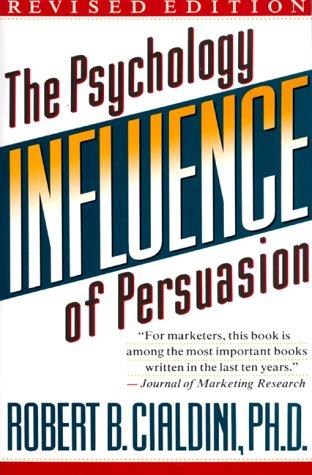
  • Cover: Influence, The Psychology of Persuasion

    Influence, The Psychology of Persuasion

    Book

    R. Cialdini · 1984

    The founding work on the mechanisms of persuasion: six universal principles (reciprocity, consistency, social proof, authority, liking, scarcity) illustrated with striking experiments. A landmark in social psychology.

  • Cover: Thinking, Fast and Slow

    Thinking, Fast and Slow

    Book

    D. Kahneman · 2011

    The sum of Kahneman's work on decision-making: two systems of thought, one fast and intuitive, the other slow and analytical, and the long list of biases that distort our judgements. Essential to understanding others... and yourself.

  • Cover: Nudge

    Nudge

    Book

    R. Thaler & C. Sunstein · 2008

    How to steer choices without constraint, by acting on the "choice architecture". The book popularised the nudge and behavioural economics applied to public policy as much as to management.

  • Judgment under Uncertainty: Heuristics and Biases (Science)

    Article

    A. Tversky & D. Kahneman · 1974

    The founding paper (Science, 1974) that uncovered the heuristics and biases of judgement, including anchoring. The starting point of the behavioural-economics revolution.

R. Cialdini ("Influence", 1984), D. Kahneman & A. Tversky, R. Thaler, D. Ariely.

On video

See the technique in action

Videos to picture The Endowment Effect and anchor it through examples.

Technique map

Where this technique sits

Every technique sits within a network: what it draws on, what it combines with, where it applies, and how to defend against it.

Levers engaged

biases & emotions

Countered by

Spot its signals, neutralise it and turn it around with the defensive playbook on this page.

See the counter-techniques

Key takeaways

  • En une phrase

    The endowment effect refers to the tendency to overvalue what we already own simply by the fact of owning it. People demand more to sell a good than they would be willing to pay to acquire it. Demonstrated by Richard Thaleri, it turns ownership, even symbolic or temporary, into a powerful lever of perceived value.

  • The right reflex

    Set your own anchor first: it will structure the discussion.

  • Never do this

    Reasoning from the other side's figure.

8.0/10 tactical potential High vigilance School grounded in experimental research

Master this technique in real situations?

Our programmes turn theory into a concrete advantage.

Explore our programmes
Call Book a call