
NEGOCOACH
217
Origin : Cognitive science

🧠 Cognitive science

Behavioural economics & social psychology

R. Cialdini ("Influence", 1984), D. Kahneman & A. Tversky, R. Thaler, D. Ariely.

Full detail in the “Origin & history” section below.

217

The Pygmalion Effect

Social influence Technique 217 / 360
Alexandre Baumberger

Author of the library

Alexandre Baumberger

Negotiation lecturer at KEDGE Business School

A rare threefold background serving negotiation: teaching, commercial justice and audit, backed by experience as a company director in Bordeaux.

  • Teaching, KEDGE Business School Negotiation lecturer since 2014 (12 years).
  • Commercial justice, Commercial Court Judge from 2018 to 2026: litigation, then insolvency proceedings.
  • Audit & advisory, over 20 years Tax, employment and financial audit in major firms, for large groups.
In brief

The Pygmalion effect denotes the mechanism whereby the expectations we project onto someone end up improving their performance. Expecting the best from a counterpart subtly alters our behaviour towards them, more attention, more benevolent demandingness, and prompts them to rise to the anticipated level. It is a positive self-fulfilling prophecyi, in which belief creates the outcome it foretells.

Reading level

At a glance

Its family profile at a glance

Effectiveness Psychologicalimpact Discretion Preparation Relationalrisk Ethics
8.0 / 10 Tactical potential

Vigilance: high (6.0/10) · Preparation required: 4/10

Grounding in the source school School grounded in experimental research

Indicative profile: it situates the “Social influence” family as the Cognitive science school practises it, not this technique taken in isolation. Techniques from the same family and school therefore share the same profile. NEGOCOACH editorial rating out of 10, non-experimental · the higher the “relational risk” value, the more costly the technique is to the relationship.

NEGOCOACH assessment

How to read this rating

Tactical potential 8.0/10 (effectiveness, impact, discretion) and vigilance high (relational and ethical risk): two distinct readings, deliberately never merged into a single score that would reward risk. NEGOCOACH editorial rating calibrated from the “Social influence” family and the “Cognitive science” school. Each criterion is rated out of 10; click to understand what it measures.

  • Effectiveness 8/10 · Very high

    How far the technique can carry the negotiation in the intended direction when it is well executed.

  • Psychological impact 9/10 · Very high

    Strength of the effect produced on the counterpart's perceptions, emotions and decisions.

  • Discretion 7/10 · High

    How hard it is for the other party to notice the technique is being used. A high value = very discreet.

  • Preparation 4/10 · Moderate

    The information, analysis and rehearsal required upfront to use it effectively.

  • Relational risk 5/10 · Moderate

    Potential cost to the relationship and to trust if the technique is spotted, refused or fails. A high value = riskier.

  • Ethics 4/10 · Moderate

    Moral acceptability: fairness, transparency and respect for the counterpart's autonomy. A high value = more defensible.

Level of evidence

School grounded in experimental research

The school this technique stems from is grounded in replicated, peer-reviewed experimental work. This indicator qualifies the school, not the experimental validation of this technique taken in isolation.

Indicative NEGOCOACH editorial rating, for teaching purposes. For “Relational risk”, a high value signals a cost to the relationship, not a quality.

Pygmalion in brief


Origin & history

The name harks back to the myth of Pygmalion, the sculptor who, through the sheer force of his love for his statue, sees it come to life. The effect was demonstrated experimentally by Robert Rosenthal and Lenore Jacobson in 1968 in a San Francisco school: having falsely presented certain pupils as having high potential, they found that these pupils genuinely progressed more, not through their gifts, but through the altered attitude of their teachers. The phenomenon extends the notion of the self-fulfilling prophecy coined by the sociologist Robert Merton in 1948.


Definition and principle

The driver is not magical but behavioural: believing in the other person's potential leads us to grant them more time, to offer richer feedback, to entrust them with ambitious tasks and to show them warmth. The counterpart perceives these signals, gains in confidence and commitment, and their performance rises to meet the initial expectation. Unlike mere flattery, the Pygmalion effect operates over time and through micro-signals that are often unconscious.


Concrete examples of application

Application by context

The same technique, across every negotiation settings

Context 1 / 8

Sales negotiation

A salesperson treats a modest prospect as a future major client: availability, in-depth advice, consideration. Flattered to be taken seriously, the prospect invests in the relationship, increases their basket and effectively becomes a key account.

How to apply it

Treat each counterpart according to the potential you wish to awaken, not according to their current status; the level of regard you offer shapes the level of commitment you obtain.

Strengths

Builds loyalty and grows accounts that competitors neglect; creates a lasting relationship of trust.

Weaknesses

Costly in time if one over-invests in prospects with no real potential; risk of commercial dispersion.
Context 2 / 8

Procurement negotiation

A buyer signals to a new supplier their confidence in its capacity to become a partner of excellence. Valued, the supplier mobilises its best teams, proposes innovations and outdoes itself on lead times to live up to this image.

How to apply it

State explicitly the high standard you place in the supplier ('I see you as capable of...'); the expressed expectation pulls the performance upwards without frontal negotiation.

Strengths

Secures additional effort and quality through motivation rather than through pressure or price.

Weaknesses

Ineffective against a cynical or overstretched supplier, who will see the flattery without responding to it.

Context 3 / 8

Labour negotiation

A manager entrusts a strategic project to a reserved team member, telling them that he judges them cut out for it. Carried by this confidence, the person develops unsuspected skills and succeeds beyond the team's expectations.

How to apply it

Distribute signs of trust (responsibilities, demanding feedback) deliberately; what you visibly expect of a team shapes what it produces.

Strengths

A powerful lever for developing talent, at no financial cost; strengthens commitment.

Weaknesses

A poorly calibrated expectation can set up an unprepared person to fail and damage trust.

Context 4 / 8

Crisis management

During a restructuring, a leader repeatedly tells the teams that he believes them capable of weathering the storm and bouncing back. This openly displayed conviction sustains morale, reduces departures and channels energy towards the way out of the crisis.

How to apply it

In times of doubt, voice your confidence in the collective capacity to overcome the ordeal; the leader's positive expectation shapes the group's behaviour.

Strengths

Maintains morale and mobilisation when everything is pushing towards discouragement.

Weaknesses

Turns into denial if the displayed optimism ignores real difficulties and loses all credibility.

Context 5 / 8

Political negotiation

A head of state entrusts a delicate mission to a minister, publicly underlining his high esteem for their talents. Invested with this trust and exposed to public scrutiny, the minister deploys exceptional energy to prove worthy of it.

How to apply it

Anchor the delegation in a public mark of trust: it commits the person as much as it honours them, for it creates an expectation that failure would belie.

Strengths

Motivates and confers responsibility without direct constraint; cements loyalty.

Weaknesses

Publicly exposing the expectation raises the cost of failure and may paralyse a fragile profile.

Context 6 / 8

Real-estate negotiation

An agent treats young first-time buyers on a tight budget as clients with a future, with the same seriousness as a wealthy investor. Moved to be taken into account, they remain loyal, recommend the agent and return for their subsequent purchases.

How to apply it

Extend to every buyer regard independent of their immediate budget; the consideration you project builds a relationship that will bear fruit later.

Strengths

Generates referrals and loyalty in a market where reputation is everything.

Weaknesses

A time-consuming model, hard to sustain across a very large volume of prospects.

Context 7 / 8

Cross-cultural negotiation

In a Franco-Japanese joint venture, the French party approaches its counterparts by underlining its high esteem for their rigour and reliability. Honoured in a culture where face matters, the Japanese partners commit to not disappointing this expectation.

How to apply it

Frame a flattering expectation anchored in a local value (rigour, sense of honour); respect for face amplifies the Pygmalion effect in collectivist cultures.

Strengths

Creates a powerful moral commitment in cultures sensitive to honour and reputation.

Weaknesses

Praise that is culturally miscalibrated may seem exaggerated or self-serving and produce the opposite effect.

Context 8 / 8

Family negotiation

Parents regularly tell their hesitant child that they know they are capable of passing their exam. This internalised confidence nourishes their self-esteem and perseverance, and they achieve better results than their level suggested.

How to apply it

Express sincere, situated confidence ('I know you are capable of...') rather than pressure on the outcome; the loving expectation supports the child's effort.

Strengths

Builds self-esteem and autonomy over the long term.

Weaknesses

Tips over into toxic pressure if the expectation becomes a demand on which love is conditioned.


Counter-techniques

Spot and neutralise this technique

Negotiation is also played on defence. Here is how to recognise this technique when it is used against you, and turn it around.

Detect

The signals that give it away

  • "Everyone does it"
  • An authority invoked to close the debate
  • A gift followed by a request (forced reciprocity)

Neutralise

The counters that defuse it

  • Check the real norm
  • Question the authority's legitimacy
  • Refuse the debt created by the gift

Turn around

Turn it into an advantage

Turn social proof around: "Actually, the best do the opposite."

The trap to avoid

Conforming for fear of being the only dissenter.

In short

  • Difficulty: Intermediate
  • Estimated effectiveness: High
  • Time to implement: Gradual effect, over time
  • Fields of application: Management, Education, Sales, Leadership, Coaching
  • Synonyms: Self-fulfilling prophecy, Rosenthal effect, Expectancy effect
  • Tags: expectations, self-fulfilling prophecy, Rosenthal, motivation, trust

Strengths and Weaknesses

The Pygmalion effect transforms a simple belief into a concrete result, at no financial cost, through the mere adjustment of attitude. It is one of the most powerful motivational levers in management and education: it grows people by reflecting back a high image of themselves. Its limit: it requires genuine sincerity, for the signals of expectation, largely unconscious, cannot be faked over time.


When to use this technique?

To be deployed to develop a talent, motivate a team or build a lasting relationship of trust. Particularly effective in management, in teaching and in long-term commercial relationships. To be avoided as a cynical technique of one-off flattery: without authentic conviction behind it, the effect does not take hold.


How to recognise and counter this technique

Recognise: you are showered with flattering expectations and gratifying responsibilities that subtly commit you. Neutralise: distinguish sincere confidence from motivational manipulation, and accept only the assignments whose burden you genuinely wish to bear. Turn it around: use positive expectation yourself to pull your own counterparts upwards.


Limits and ethics

The effect has a flip side, the Golem effect: low expectations degrade performance. Ethically, projecting expectations in order to instrumentalise others verges on manipulation, especially if the expectation creates unbearable pressure. The rule: the expectation must remain benevolent, realistic and sincere, in the service of the person and not of their mere exploitation.


Variants and related techniques

Stands in direct opposition to the Golem effect (low expectations, degraded performance). Close to the Galatea effect (the expectations one holds of oneself) and to Merton's self-fulfilling prophecy. Combines with affirming feedback and empowering delegation.


To go further

  • Robert Rosenthal & Lenore Jacobson, Pygmalion in the Classroom: Teacher Expectation and Pupils' Intellectual Development, 1968.
  • Robert K. Merton, 'The Self-Fulfilling Prophecy', The Antioch Review, 1948.
  • Dov Eden, Pygmalion in Management: Productivity as a Self-Fulfilling Prophecy, 1990.

Objectives of the technique

  • Lead the other party to adopt the cooperative or high-performing behaviour expected of them, through the mere projection of positive expectations.
  • Establish a climate of trust and respect that reduces the defensive posture and facilitates mutual concession.
  • Strengthen the motivation and commitment of a counterpart (colleague, partner, supplier) by signalling that one believes them capable.
  • Steer the relationship towards a virtuous dynamic in which the affirming image becomes a norm to which the other seeks to conform.
  • Transform a transactional relationship into a lasting partnership by betting on potential rather than on distrust.

Famous cases

Business · The supplier raised to the rank of strategic partner: A procurement director receives an average supplier, regularly behind schedule. Rather than penalising it, he announces in a meeting that he regards it as 'the most reliable partner in his panel, the one he wants to rely on for critical projects'. He brings it into his upstream planning and entrusts it with increased responsibility. Under the pressure of this flattering expectation, the supplier reorganises its production, prioritises this client and effectively becomes one of the most punctual. The expressed expectation shaped the actual behaviour, the mechanism at the heart of Rosenthal's self-fulfilling prophecy. A representative scenario, not attributed to a real company.

Everyday life · The 'reasonable' neighbour in a boundary dispute: Faced with a dispute over a shared hedge, a person approaches their neighbour by describing them from the outset as 'someone reasonable with whom one can always reach an amicable arrangement'. This expectation framing makes it socially costly for the neighbour to adopt an obstructive stance: to be intransigent would contradict the image laid down. The negotiation moves towards the compromise that the phrasing presupposed. A representative scenario.


Common mistakes

  • Confusing the Pygmalion effect with hollow flattery: compliments that are not credible or not backed by consistent behaviour are perceived as manipulative and destroy trust.
  • Projecting an expectation so unrealistic that the other experiences it as crushing pressure or a trap, which triggers withdrawal rather than buy-in.
  • Forgetting the behavioural counterpart: the effect only works if one genuinely treats the other in line with the expressed expectation (access, responsibilities, marks of trust), not through words alone.
  • Ignoring the Golem effect, its flip side: displaying distrust or low expectations locks the other into a negative self-fulfilling spiral that sabotages the negotiation.
  • Expecting an immediate effect: conforming to expectations is a gradual process that presupposes consistency in the relationship.

Scientific foundations

  • Robert Rosenthal & Lenore Jacobson (1968) Pygmalion in the Classroom: Teacher Expectation and Pupils' Intellectual Development Holt, Rinehart and Winston
  • Dov Eden (1990) Pygmalion in Management: Productivity as a Self-Fulfilling Prophecy Lexington Books

Quick exercise

Test yourself before answering

Answer in your head, then reveal the solution. Memory is built through active recall.

1 Quels signaux doivent vous alerter ?
  • "Everyone does it"
  • An authority invoked to close the debate
  • A gift followed by a request (forced reciprocity)
2 Quelles parades appliquer ?
  • Check the real norm
  • Question the authority's legitimacy
  • Refuse the debt created by the gift

Frequently asked questions

The questions we get most

What is the "The Pygmalion Effect" technique?

The Pygmalion effect denotes the mechanism whereby the expectations we project onto someone end up improving their performance. Expecting the best from a counterpart subtly alters our behaviour towards them, more attention, more benevolent demandingness, and prompts them to rise to the anticipated level. It is a positive self-fulfilling prophecyi, in which belief creates the outcome it foretells.

Is the "The Pygmalion Effect" technique ethical?

It sits on the line: effective, but it can tip into manipulation if it exploits an information asymmetry. Use it with measure and without deliberate deceit.

How do you defend against "The Pygmalion Effect"?

Conforming for fear of being the only dissenter. The right reflex: check the real norm.

What is the "The Pygmalion Effect" technique based on?

NEGOCOACH does not assess the experimental validation of this technique in isolation. What we document is the grounding of its source school (Cognitive science): school grounded in experimental research. Full detail is in the "At a glance" section of this page.

Practise with AI

Three ready-to-use prompts

Copy, paste into your assistant, replace the [brackets]. Works with ChatGPT, Claude, Gemini, Mistral, Perplexity.

Prepare

Build your plan before the meeting

You are an expert negotiation coach. Help me prepare to use the "The Pygmalion Effect" technique in the following situation: [describe your situation]. Give me: the conditions for success, a 3-step script, my counterpart's likely objections and how to answer them.

Simulate

Rehearse against an AI counterpart

Play the role of my counterpart in a negotiation. I am going to test the "The Pygmalion Effect" technique. React realistically and with resistance, do not give in too quickly, then at the end analyse my performance and suggest 3 concrete improvements.

Debrief

Analyse a past negotiation

Here is how my negotiation went: [paste the exchanges]. Analyse whether the "The Pygmalion Effect" technique was used well, what worked, the mistakes made, and spell out precisely what I could have done better.

References

Bibliography & credible sources

Founding works of the 🧠 Cognitive science school this technique belongs to.

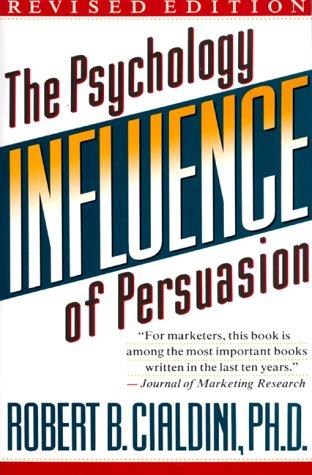
  • Cover: Influence, The Psychology of Persuasion

    Influence, The Psychology of Persuasion

    Book

    R. Cialdini · 1984

    The founding work on the mechanisms of persuasion: six universal principles (reciprocity, consistency, social proof, authority, liking, scarcity) illustrated with striking experiments. A landmark in social psychology.

  • Cover: Thinking, Fast and Slow

    Thinking, Fast and Slow

    Book

    D. Kahneman · 2011

    The sum of Kahneman's work on decision-making: two systems of thought, one fast and intuitive, the other slow and analytical, and the long list of biases that distort our judgements. Essential to understanding others... and yourself.

  • Cover: Nudge

    Nudge

    Book

    R. Thaler & C. Sunstein · 2008

    How to steer choices without constraint, by acting on the "choice architecture". The book popularised the nudge and behavioural economics applied to public policy as much as to management.

  • Judgment under Uncertainty: Heuristics and Biases (Science)

    Article

    A. Tversky & D. Kahneman · 1974

    The founding paper (Science, 1974) that uncovered the heuristics and biases of judgement, including anchoring. The starting point of the behavioural-economics revolution.

R. Cialdini ("Influence", 1984), D. Kahneman & A. Tversky, R. Thaler, D. Ariely.

On video

See the technique in action

Videos to picture The Pygmalion Effect and anchor it through examples.

Technique map

Where this technique sits

Every technique sits within a network: what it draws on, what it combines with, where it applies, and how to defend against it.

Levers engaged

biases & emotions

Countered by

Spot its signals, neutralise it and turn it around with the defensive playbook on this page.

See the counter-techniques

Key takeaways

  • En une phrase

    The Pygmalion effect denotes the mechanism whereby the expectations we project onto someone end up improving their performance. Expecting the best from a counterpart subtly alters our behaviour towards them, more attention, more benevolent demandingness, and prompts them to rise to the anticipated level. It is a positive self-fulfilling prophecyi, in which belief creates the outcome it foretells.

  • The right reflex

    Turn social proof around: "Actually, the best do the opposite."

  • Never do this

    Conforming for fear of being the only dissenter.

8.0/10 tactical potential High vigilance School grounded in experimental research

Master this technique in real situations?

Our programmes turn theory into a concrete advantage.

Explore our programmes
Call Book a call