NEGOCOACH
225
Origin : Cognitive science

🧠 Cognitive science

Behavioural economics & social psychology

R. Cialdini ("Influence", 1984), D. Kahneman & A. Tversky, R. Thaler, D. Ariely.

Full detail in the “Origin & history” section below.

225

The Zeigarnik Effect

Social influence Technique 225 / 360
Alexandre Baumberger

Author of the library

Alexandre Baumberger

Negotiation lecturer at KEDGE Business School

A rare threefold background serving negotiation: teaching, commercial justice and audit, backed by experience as a company director in Bordeaux.

  • Teaching, KEDGE Business School Negotiation lecturer since 2014 (12 years).
  • Commercial justice, Commercial Court Judge from 2018 to 2026: litigation, then insolvency proceedings.
  • Audit & advisory, over 20 years Tax, employment and financial audit in major firms, for large groups.
In brief

The Zeigarnik effect is the mind's tendency to retain and dwell on unfinished tasks better than completed ones. An interrupted action creates a cognitive tension that keeps the information active until it is resolved. Incompleteness occupies memoryi and attention, which explains the pull of “to be continued” stories, open files and outstanding promises.

Reading level

At a glance

Its family profile at a glance

Effectiveness Psychologicalimpact Discretion Preparation Relationalrisk Ethics
8.0 / 10 Tactical potential

Vigilance: high (6.0/10) · Preparation required: 4/10

Grounding in the source school School grounded in experimental research

Indicative profile: it situates the “Social influence” family as the Cognitive science school practises it, not this technique taken in isolation. Techniques from the same family and school therefore share the same profile. NEGOCOACH editorial rating out of 10, non-experimental · the higher the “relational risk” value, the more costly the technique is to the relationship.

NEGOCOACH assessment

How to read this rating

Tactical potential 8.0/10 (effectiveness, impact, discretion) and vigilance high (relational and ethical risk): two distinct readings, deliberately never merged into a single score that would reward risk. NEGOCOACH editorial rating calibrated from the “Social influence” family and the “Cognitive science” school. Each criterion is rated out of 10; click to understand what it measures.

  • Effectiveness 8/10 · Very high

    How far the technique can carry the negotiation in the intended direction when it is well executed.

  • Psychological impact 9/10 · Very high

    Strength of the effect produced on the counterpart's perceptions, emotions and decisions.

  • Discretion 7/10 · High

    How hard it is for the other party to notice the technique is being used. A high value = very discreet.

  • Preparation 4/10 · Moderate

    The information, analysis and rehearsal required upfront to use it effectively.

  • Relational risk 5/10 · Moderate

    Potential cost to the relationship and to trust if the technique is spotted, refused or fails. A high value = riskier.

  • Ethics 4/10 · Moderate

    Moral acceptability: fairness, transparency and respect for the counterpart's autonomy. A high value = more defensible.

Level of evidence

School grounded in experimental research

The school this technique stems from is grounded in replicated, peer-reviewed experimental work. This indicator qualifies the school, not the experimental validation of this technique taken in isolation.

Indicative NEGOCOACH editorial rating, for teaching purposes. For “Relational risk”, a high value signals a cost to the relationship, not a quality.

Zeigarnik in brief


Origin & history

The Lithuanian psychologist Bluma Zeigarnik formalised the effect in 1927, following an observation by her mentor Kurt Lewin: in a Viennese café, the waiters recalled unpaid orders perfectly but forgot them the moment the bill was settled. Her experiments confirmed that interrupted tasks are recalled roughly twice as well as completed ones. The effect sits within Lewin's field theory of goal-directed psychic tensions.


Definition and principle

Beginning an action creates a psychic tension directed towards its completion; as long as the goal is not reached, that tension keeps the task active in memory, forcing itself on the conscious mind as intrusive thoughts. Completion releases the tension and forgetting follows. In influence, opening a loop (a question, a narrative, a partial commitment) without closing it holds attention captive and creates a motivation towards resolution that can be steered.


Concrete examples of application

Application by context

The same technique, across every negotiation settings

Context 1 / 8

Sales negotiation

A salesperson ends a meeting on an open question left hanging: “There's one point that could change everything for you… shall we pick it up on Thursday?” The client, gnawed at by the open loop, waits impatiently for the appointment.

How to apply it

Close each exchange on an open loop (a question, a teased benefit) rather than on a conclusion; the tension of incompleteness sustains attention between two contacts.

Strengths

Keeps the prospect engaged and mobilised in the interval between meetings.

Weaknesses

Perceived as a cheap device if the teasing is contrived or disappoints when picked up again.
Context 2 / 8

Procurement negotiation

A buyer is kept on tenterhooks by a supplier who doles out information in fragments (“the real innovation, I'll show you at the next meeting”). The sustained curiosity keeps them in the relationship beyond their initial interest.

How to apply it

Spot the tactical open loops that drag out the process; insist on the complete information so you decide on the merits, not under the pull of curiosity.

Strengths

Exposing the device restores control over the timetable and the decision.

Weaknesses

The tension of curiosity works despite clear-sightedness and nudges you to stay in the loop.

Context 3 / 8

Labour negotiation

A manager assigns a task by presenting it as “a first step” in a wider project whose sequel remains to be written. The employee, inhabited by the open loop, stays mentally mobilised well beyond the day's task.

How to apply it

Frame assignments as steps within an unfinished whole; the open loop sustains commitment and projection into what comes next.

Strengths

Supports motivation and continuity of commitment over time.

Weaknesses

Frustration if loops pile up without ever closing (a sense of permanent incompleteness).

Context 4 / 8

Crisis management

A team stays stuck on an unresolved problem that obsesses it, to the point of harming everyone's sleep and concentration. The tension of the open, unfinished crisis weighs heavily as long as no way out is agreed.

How to apply it

In a crisis, close the loops wherever possible: naming a next action, even a partial one, releases the mental tension that is draining the team.

Strengths

Understanding the effect helps protect mental energy by sealing off stages.

Weaknesses

Some major loops cannot be closed quickly, and their cognitive weight lingers.

Context 5 / 8

Political negotiation

A leader announces “a major reform to come” without revealing its content, sustaining suspense over several weeks. The open loop captures media attention and keeps the topic at the centre of debate.

How to apply it

Open the suspense of an announcement to come to capture attention lastingly; incompleteness sustains coverage and interest.

Strengths

Keeps the media initiative and attention on your own agenda.

Weaknesses

Disappointment and disengagement if the reveal fails to match the suspense created.

Context 6 / 8

Real-estate negotiation

An agent shows an almost perfect property “but there's one detail left to reveal at the next viewing”. The open loop pricks the buyer's curiosity and brings them back, more invested than after a viewing that had told them everything.

How to apply it

Leave a curiosity hanging to prompt the return and the involvement; incompleteness sustains interest between two viewings.

Strengths

Prompts the follow-up and a more committed second contact.

Weaknesses

A sense of manipulation if the teased “detail” turns out to be trivial or invented.

Context 7 / 8

Cross-cultural negotiation

In an international negotiation, one party deliberately leaves a point open to be dealt with “at a future meeting”, maintaining the connection and the need to continue - a practice well received in cultures that value the long-term relationship.

How to apply it

Leave open points to prolong the relationship in cultures where the bond outweighs a quick conclusion; incompleteness there sustains mutual commitment.

Strengths

Nurtures the lasting relationship prized in long-term cultures (Asia, the Middle East).

Weaknesses

Poorly received in cultures eager to conclude, which read it as stalling.

Context 8 / 8

Family negotiation

A parent reads a story to their child and stops at the crucial moment (“the rest tomorrow night”). The child, captivated by the open loop, waits impatiently for the next day and remembers the ongoing plot perfectly.

How to apply it

Use the device of the interrupted suspenseful tale to sustain desire and attention; incompleteness etches the story into memory.

Strengths

Reinforces shared pleasure, attention and the ritual over time.

Weaknesses

Real frustration in a young child if the wait is too long or too often repeated.


Counter-techniques

Spot and neutralise this technique

Negotiation is also played on defence. Here is how to recognise this technique when it is used against you, and turn it around.

Detect

The signals that give it away

  • "Everyone does it"
  • An authority invoked to close the debate
  • A gift followed by a request (forced reciprocity)

Neutralise

The counters that defuse it

  • Check the real norm
  • Question the authority's legitimacy
  • Refuse the debt created by the gift

Turn around

Turn it into an advantage

Turn social proof around: "Actually, the best do the opposite."

The trap to avoid

Conforming for fear of being the only dissenter.

In short

  • Difficulty: Easy
  • Estimated effectiveness: High
  • Time to implement: Lasting effect as long as the loop stays open
  • Fields of application: Sales, Content marketing, Storytelling, Management, Productivity
  • Synonyms: Unfinished-task effect, Tension of incompleteness, Open loop
  • Tags: Zeigarnik, memory, open loop, suspense, cognitive tension

Strengths and weaknesses

The Zeigarnik effect is a lasting attention-catcher: an open loop forces itself on the mind and sustains engagement until it is resolved. It lies at the heart of storytelling, content marketing (cliffhangers, series, teasers) and motivation. Its strength: keeping present what, once closed, would be forgotten. Its limit: too many open loops generate an exhausting mental load, and disappointing suspense turns into irritation.


When to use this technique?

Use it to sustain attention and engagement over time: tease a sequel, open a question, sequence a narrative. Invaluable in storytelling, in teaching and in an ongoing commercial relationship. Conversely, to relieve the mental load (productivity, stress management), you must close the loops. Avoid it as hollow suspense that disappoints at resolution.


How to recognise and counter this technique

Recognise it: a question left hanging or a “to be continued” obsesses you and draws you back to its author. Neutralise it: consciously close the loop (ask the question directly, demand the missing information) to free your captive attention. Turn it around: open a relevant loop yourself to retake the initiative in the relationship.


Limits and ethics

Misused, the Zeigarnik effect feeds addictive mechanisms (never-ending serials, notifications, commercial cliffhangers) that exploit the tension of incompleteness at the expense of well-being. The ethical limit is the sustaining of hollow suspense or of deliberate frustration with no value for the other person. The rule: the open loop must close on genuine satisfaction, not on disappointment.


Variants and related techniques

The foundation of the cliffhanger and the narrative loop (open loop). Close to the need for closure (Kruglanski) and to curiosity from an information gap (the curiosity gap, Loewenstein). Useful in task management (closing loops lightens the mental load).


Going further

  • Bluma Zeigarnik, “Über das Behalten von erledigten und unerledigten Handlungen”, Psychologische Forschung, 1927.
  • Kurt Lewin, A Dynamic Theory of Personality, 1935.
  • George Loewenstein, “The Psychology of Curiosity: A Review and Reinterpretation”, Psychological Bulletin, 1994.

Aims of the technique

  • Keep the other party mentally engaged between two sessions by deliberately leaving a point unresolved.
  • Create a psychological tension that drives the counterpart to want to return to the table to 'close' the matter.
  • Increase the memorability and the perceived importance of points left hanging.
  • Keep control of the timetable by governing which file stays open and when it is closed.
  • Avoid the premature closing of a negotiation by signalling that an element remains to be finalised.

Famous cases

Sales · The quote deliberately left open: A B2B salesperson ends a meeting without settling the final discount: “We're almost there, there's just one point to fix on volumes, I'll call you Thursday.” The prospect leaves the meeting with an unfinished file in mind. Between the two meetings, the cognitive tension tied to the unresolved point keeps the deal active in their mind, reduces the risk of a competitor capturing their attention, and it is often the prospect who follows up to finalise. A representative scenario illustrating the use of the Zeigarnik effect within a sales cycle.

Diplomatic · The point of agreement suspended between two rounds: In a multi-session negotiation, a delegation closes the day by recording the progress made but explicitly leaving a key article open: “We agree on the spirit, the precise wording waits until tomorrow morning.” The incompleteness keeps the teams mobilised overnight and creates a momentum of return to the table the next day, the closing of that point becoming a shared objective. A representative scenario, not attributed to any specific real negotiation.


Common mistakes

  • Leaving too many points open at once: the tension dilutes and the other party disengages instead of refocusing.
  • Confusing 'unfinished' with 'botched': a point left open must be clearly identified and framed, not the product of visible lack of preparation.
  • Overusing the device repeatedly with the same counterpart, who ends up sensing manipulation and digs in.
  • Leaving open a point that the other party actually has every interest in NOT returning to: the tension then works against you.
  • Forgetting to retake the initiative yourself: if no one reopens the file, the effect fades and the deal bogs down.

Scientific foundations

  • Bluma Zeigarnik (1927) Über das Behalten von erledigten und unerledigten Handlungen (On Finished and Unfinished Tasks) Psychologische Forschung, 9, 1-85
  • Colin M. MacLeod (2020) Zeigarnik and von Restorff: The memory effects and the stories behind them Memory & Cognition, 48, DOI : 10.3758/s13421-020-01033-5
  • Robert B. Cialdini (2001) Influence: Science and Practice Allyn & Bacon

Quick exercise

Test yourself before answering

Answer in your head, then reveal the solution. Memory is built through active recall.

1 Quels signaux doivent vous alerter ?
  • "Everyone does it"
  • An authority invoked to close the debate
  • A gift followed by a request (forced reciprocity)
2 Quelles parades appliquer ?
  • Check the real norm
  • Question the authority's legitimacy
  • Refuse the debt created by the gift

Frequently asked questions

The questions we get most

What is the "The Zeigarnik Effect" technique?

The Zeigarnik effect is the mind's tendency to retain and dwell on unfinished tasks better than completed ones. An interrupted action creates a cognitive tension that keeps the information active until it is resolved. Incompleteness occupies memoryi and attention, which explains the pull of “to be continued” stories, open files and outstanding promises.

Is the "The Zeigarnik Effect" technique ethical?

It sits on the line: effective, but it can tip into manipulation if it exploits an information asymmetry. Use it with measure and without deliberate deceit.

How do you defend against "The Zeigarnik Effect"?

Conforming for fear of being the only dissenter. The right reflex: check the real norm.

What is the "The Zeigarnik Effect" technique based on?

NEGOCOACH does not assess the experimental validation of this technique in isolation. What we document is the grounding of its source school (Cognitive science): school grounded in experimental research. Full detail is in the "At a glance" section of this page.

Practise with AI

Three ready-to-use prompts

Copy, paste into your assistant, replace the [brackets]. Works with ChatGPT, Claude, Gemini, Mistral, Perplexity.

Prepare

Build your plan before the meeting

You are an expert negotiation coach. Help me prepare to use the "The Zeigarnik Effect" technique in the following situation: [describe your situation]. Give me: the conditions for success, a 3-step script, my counterpart's likely objections and how to answer them.

Simulate

Rehearse against an AI counterpart

Play the role of my counterpart in a negotiation. I am going to test the "The Zeigarnik Effect" technique. React realistically and with resistance, do not give in too quickly, then at the end analyse my performance and suggest 3 concrete improvements.

Debrief

Analyse a past negotiation

Here is how my negotiation went: [paste the exchanges]. Analyse whether the "The Zeigarnik Effect" technique was used well, what worked, the mistakes made, and spell out precisely what I could have done better.

References

Bibliography & credible sources

Founding works of the 🧠 Cognitive science school this technique belongs to.

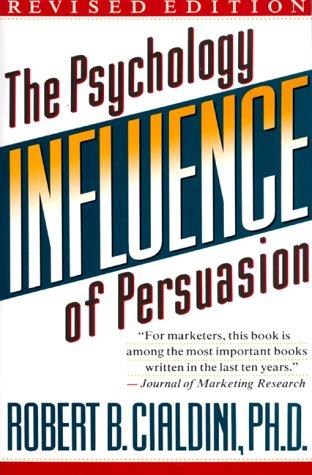
  • Cover: Influence, The Psychology of Persuasion

    Influence, The Psychology of Persuasion

    Book

    R. Cialdini · 1984

    The founding work on the mechanisms of persuasion: six universal principles (reciprocity, consistency, social proof, authority, liking, scarcity) illustrated with striking experiments. A landmark in social psychology.

  • Cover: Thinking, Fast and Slow

    Thinking, Fast and Slow

    Book

    D. Kahneman · 2011

    The sum of Kahneman's work on decision-making: two systems of thought, one fast and intuitive, the other slow and analytical, and the long list of biases that distort our judgements. Essential to understanding others... and yourself.

  • Cover: Nudge

    Nudge

    Book

    R. Thaler & C. Sunstein · 2008

    How to steer choices without constraint, by acting on the "choice architecture". The book popularised the nudge and behavioural economics applied to public policy as much as to management.

  • Judgment under Uncertainty: Heuristics and Biases (Science)

    Article

    A. Tversky & D. Kahneman · 1974

    The founding paper (Science, 1974) that uncovered the heuristics and biases of judgement, including anchoring. The starting point of the behavioural-economics revolution.

R. Cialdini ("Influence", 1984), D. Kahneman & A. Tversky, R. Thaler, D. Ariely.

On video

See the technique in action

Videos to picture The Zeigarnik Effect and anchor it through examples.

Technique map

Where this technique sits

Every technique sits within a network: what it draws on, what it combines with, where it applies, and how to defend against it.

Levers engaged

biases & emotions

Countered by

Spot its signals, neutralise it and turn it around with the defensive playbook on this page.

See the counter-techniques

Key takeaways

  • En une phrase

    The Zeigarnik effect is the mind's tendency to retain and dwell on unfinished tasks better than completed ones. An interrupted action creates a cognitive tension that keeps the information active until it is resolved. Incompleteness occupies memoryi and attention, which explains the pull of “to be continued” stories, open files and outstanding promises.

  • The right reflex

    Turn social proof around: "Actually, the best do the opposite."

  • Never do this

    Conforming for fear of being the only dissenter.

8.0/10 tactical potential High vigilance School grounded in experimental research

Master this technique in real situations?

Our programmes turn theory into a concrete advantage.

Explore our programmes
Call Book a call