
NEGOCOACH
215
Origin : Cognitive science

🧠 Cognitive science

Behavioural economics & social psychology

R. Cialdini ("Influence", 1984), D. Kahneman & A. Tversky, R. Thaler, D. Ariely.

Full detail in the “Origin & history” section below.

215

The Illusion of Control

Exploitable cognitive biases Technique 215 / 360
Alexandre Baumberger

Author of the library

Alexandre Baumberger

Negotiation lecturer at KEDGE Business School

A rare threefold background serving negotiation: teaching, commercial justice and audit, backed by experience as a company director in Bordeaux.

  • Teaching, KEDGE Business School Negotiation lecturer since 2014 (12 years).
  • Commercial justice, Commercial Court Judge from 2018 to 2026: litigation, then insolvency proceedings.
  • Audit & advisory, over 20 years Tax, employment and financial audit in major firms, for large groups.
In brief

The illusion of control is the tendency to overestimate one's ability to influence events that in reality depend largely on chance or external factors. In negotiation, giving the other party a sense of mastery, choice, personalisation, participation, increases their buy-in and satisfaction. The concept was established by Ellen Langeri.

Reading level

At a glance

Its family profile at a glance

Effectiveness Psychologicalimpact Discretion Preparation Relationalrisk Ethics
8.0 / 10 Tactical potential

Vigilance: high (6.0/10) · Preparation required: 5/10

Grounding in the source school School grounded in experimental research

Indicative profile: it situates the “Exploitable cognitive biases” family as the Cognitive science school practises it, not this technique taken in isolation. Techniques from the same family and school therefore share the same profile. NEGOCOACH editorial rating out of 10, non-experimental · the higher the “relational risk” value, the more costly the technique is to the relationship.

NEGOCOACH assessment

How to read this rating

Tactical potential 8.0/10 (effectiveness, impact, discretion) and vigilance high (relational and ethical risk): two distinct readings, deliberately never merged into a single score that would reward risk. NEGOCOACH editorial rating calibrated from the “Exploitable cognitive biases” family and the “Cognitive science” school. Each criterion is rated out of 10; click to understand what it measures.

  • Effectiveness 8/10 · Very high

    How far the technique can carry the negotiation in the intended direction when it is well executed.

  • Psychological impact 10/10 · Very high

    Strength of the effect produced on the counterpart's perceptions, emotions and decisions.

  • Discretion 6/10 · High

    How hard it is for the other party to notice the technique is being used. A high value = very discreet.

  • Preparation 5/10 · Moderate

    The information, analysis and rehearsal required upfront to use it effectively.

  • Relational risk 5/10 · Moderate

    Potential cost to the relationship and to trust if the technique is spotted, refused or fails. A high value = riskier.

  • Ethics 4/10 · Moderate

    Moral acceptability: fairness, transparency and respect for the counterpart's autonomy. A high value = more defensible.

Level of evidence

School grounded in experimental research

The school this technique stems from is grounded in replicated, peer-reviewed experimental work. This indicator qualifies the school, not the experimental validation of this technique taken in isolation.

Indicative NEGOCOACH editorial rating, for teaching purposes. For “Relational risk”, a high value signals a cost to the relationship, not a quality.

Control Overview


Origin & history

The bias was described in 1975 by the psychologist Ellen Langer in the Journal of Personality and Social Psychology. Her experiments on lotteries show that participants who choose their own ticket ascribe more value to it, as though that choice increased their oddsi. The effect is reinforced by familiarity, involvement and the presence of choice, even illusory choice.


Definition and principle

The illusion of control arises from introducing, into a situation that is largely imposed, markers of mastery: the ability to choose, to act, to participate. These markers alter the objective outcome little but profoundly change the experience and the engagement. In negotiation, offering framed choices, even between options that all suit you, gives the other party the feeling of steering, which reduces their resistance and reinforces their buy-in to the decision they believe they made on their own. What matters is not real control, but the sense of it.


Concrete examples of application

Application by context

The same technique, across every negotiation settings

Context 1 / 8

Sales negotiation

Rather than imposing an offer, the seller proposes: 'Would you prefer to start with module A or module B?' Both lead to the sale, but the client, by choosing their path, feels in charge of the decision and commits to it far more strongly.

How to apply it

Offer framed choices ('one package or the other') rather than a yes/no; let the client configure and set the pace. The sense of control amounts to buy-in.

Strengths

Turns an imposed decision into an owned one; reduces resistance and buyer's remorse.

Weaknesses

Obviously spurious choices (false options) are perceived as manipulation.
Context 2 / 8

Procurement negotiation

A buyer insists on controlling the process: specifications drafted by them, criteria they set, a timetable they impose. This control is real, not illusory, and protects them from sales journeys designed to give them the impression of steering while actually guiding them.

How to apply it

Distinguish real control (your criteria, your timetable) from the sense of control that others try to offer you; take back command of the framework rather than merely choosing among the options put in front of you.

Strengths

Prevents you from being led down a sales journey dressed up as free choice.

Weaknesses

Wanting to control everything weighs down the process and can deter good suppliers.

Context 3 / 8

Labour negotiation

In a reorganisation, involving employees in the design of the new rules, workshops, working groups, even within a framework that is already largely defined, sharply increases their acceptance: they experience the change as co-built, not imposed.

How to apply it

Open up spaces for real but bounded participation; let the other party decide on the modalities once the direction is set. Perceived co-building defuses resistance.

Strengths

Converts a top-down decision into shared buy-in; reduces the feeling of being subjected to it.

Weaknesses

Token participation, once discovered (the decision already made), provokes a more violent backlash than open imposition.

Context 4 / 8

Crisis management

Faced with a person who feels cornered and powerless, the negotiator restores small levers of control to them: 'You are the one who decides when we talk.' Regaining a space of choice, however minimal, causes the panic to subside and reopens dialogue.

How to apply it

Restore concrete micro-choices (the pace, the order of topics) to whoever feels dispossessed; the sense of regaining a little control soothes and de-escalates.

Strengths

Reduces the distress tied to the total loss of mastery, often at the heart of the crisis.

Weaknesses

Overly symbolic choices in the face of a vital stake can be felt as an insult.

Context 5 / 8

Political negotiation

A contested reform lands better if citizens or intermediary bodies are involved through consultations: even when their real impact is limited, the feeling of having been heard and of having weighed on the modalities reduces head-on opposition.

How to apply it

Organise consultations and dialogue that offer a sense of grip on the process; perceived involvement legitimises the final decision.

Strengths

Defuses the sense of imposition that fuels protest.

Weaknesses

Consultation judged to be fictitious becomes a powerful driver of distrust and anger.

Context 6 / 8

Real-estate negotiation

An agent lets the buyer lead the viewing, ask their questions and picture themselves at their own pace, rather than reeling off a pitch. The buyer, feeling like an actor in their decision, takes ownership of the property and commits more readily.

How to apply it

Let the client lead (free viewing, open questions, choosing the order of properties); the sense of driving their own search reinforces ownership and the decision.

Strengths

Fosters commitment by turning a passive buyer into an active decision-maker.

Weaknesses

A client who senses a staged version of their freedom grows wary of the agent.

Context 7 / 8

Cross-cultural negotiation

In collectivist cultures, the sense of control sought is collective (the group decides, saves face together) rather than individual: offering a personal choice to a counterpart who expects their group's endorsement puts them in difficulty instead of reassuring them.

How to apply it

Calibrate the lever to the individual or collective nature of the control that is valued; in collectivist cultures, give the group, not the individual, the sense of controlling the process.

Strengths

Aligns the sense of control offered with the real cultural expectations.

Weaknesses

An individual choice imposed in a collectivist culture may embarrass rather than empower.

Context 8 / 8

Family negotiation

During an inheritance division, letting each heir propose their own solution for the split, then arbitrating between them, is far more soothing than an imposed plan: everyone feels like an actor in the outcome, even if the final framework stays close to what was planned.

How to apply it

Give each person an active role in the process (propose, choose a share, set a criterion); the sense of having taken part defuses the feeling of injustice.

Strengths

Reduces resentment by turning an imposed decision into a shared choice.

Weaknesses

Illusory participation, perceived by a clear-sighted member, reignites the very conflict it was meant to extinguish.


Counter-techniques

Spot and neutralise this technique

Negotiation is also played on defence. Here is how to recognise this technique when it is used against you, and turn it around.

Detect

The signals that give it away

  • An extreme first figure (anchoring)
  • A framing as loss rather than gain
  • The endowment effect ("it's already yours")

Neutralise

The counters that defuse it

  • Reject the anchor and set your own
  • Reframe the decision as a gain
  • Assess out of context, on the facts

Turn around

Turn it into an advantage

Set your own anchor first: it will structure the discussion.

The trap to avoid

Reasoning from the other side's figure.

In brief

  • Difficulty: Intermediate
  • Estimated effectiveness: High
  • Implementation time: Quick, hinges on offering choice
  • Fields of application: Sales, Management, Labour negotiation, Politics, Mediation
  • Synonyms: Illusion of control, Sense of mastery, Illusion of mastery
  • Tags: illusion of control, Langer, choice, participation, engagement

Strengths and Weaknesses

The illusion of control offers a powerful and low-cost lever of buy-in: giving the other party the feeling of steering, through choices, participation or configuration, transforms an imposed decision into an owned one, and reduces resistance and remorse. Perceived co-building defuses opposition. Its limit: obviously spurious choices or participation rebound as an accusation of manipulation, more violent than open imposition.


When to use this technique?

To be deployed whenever you need to gain acceptance of a decision or ease a feeling of dispossession: offer framed choices, involve people in the design, let them set the pace. Invaluable in change management and de-escalation. To be avoided when the real margin of choice is nil and the other party will perceive it, in which case false participation is counterproductive.


How to recognise and counter this technique

Recognise it: you are allowed to 'choose' between options that all lead to the same outcome the other party wants. Neutralise it: take back command of the framework itself (your criteria, your timetable) rather than choosing among the options offered. Turn it around: redefine the alternatives genuinely on the table, including that of not concluding, in order to restore effective control.


Limits and ethics

Offering a sense of mastery through real choices is legitimate and improves satisfaction. The ethical drift lies in the illusory choice and token participation: simulating a decision-making process that is already locked manipulates consent. When facing a vulnerable person, maintaining the illusion that they control a process you entirely direct is especially reprehensible. The rule: the control offered must contain a share of reality.


Variants and related techniques

Combines with the endowment effect (choosing increases perceived value, as shown by Langer) and with Cialdini's commitment. Close to the optimism bias and the IKEA effect (valuing what one has helped build). Exploited by framed-choice and co-building techniques. Stands in opposition to the head-on imposition of a decision.


Further reading

  • Ellen Langer, 'The Illusion of Control', Journal of Personality and Social Psychology, 1975.
  • Daniel Kahneman, Thinking, Fast and Slow, 2011.
  • Michael Norton, Daniel Mochon & Dan Ariely, 'The IKEA Effect: When Labor Leads to Love', Journal of Consumer Psychology, 2012.

Objectives of the technique

  • Spot in yourself the overestimation of your mastery over variables that are in reality imposed (timetable, hidden decision-maker, market, contingencies) in order to avoid tactical overconfidence.
  • Give the other party a sense of control (choice, options, sequence) in order to reduce their resistance and ease their commitment to the agreement.
  • Distinguish the levers genuinely under your control (preparation, BATNA, questions asked) from those that are not, in order to focus effort in the right place.
  • Structure concessions as framed choices ('this option or that one') that preserve perceived autonomy without widening the real scope.
  • Detect and neutralise an illusion of control used against you (a false impression of steering the process when it is in fact framed by your opponent).

Famous cases

Sales · The choice that seals the deal: A B2B salesperson stops pushing a single offer and presents two bounded packages (monthly vs annual, two service tiers). The buyer, who felt cornered, regains the sense of steering the decision by 'choosing' between the options. The scope stays controlled by the seller, but perceived autonomy lifts the resistance and speeds up the signing. A representative scenario illustrating the constructive use of the lever.

Everyday life · The overplayed property negotiation: A buyer convinced they have the seller 'on the ropes' piles on demands, persuaded that the pace and terms depend on them. They are unaware that a second buyer is in the running and that the timetable is set by the notary. Their illusory reading of their own control pushes them to harden their stance at the wrong moment, and they lose the property. A representative scenario of the trap of the illusion of control over oneself.


Common mistakes

  • Confusing agitation with mastery: piling on follow-ups and demands while believing you are steering a process that is in reality framed by the other party or by third parties.
  • Overestimating your influence over random or external variables (market, budget voted elsewhere, decision-maker not present) and building your tactics on it.
  • Offering the other party a false choice that is too transparent (near-identical or obviously biased options), which destroys trust instead of creating autonomy.
  • Genuinely widening the scope while believing you are only giving 'a sense' of control: the options proposed become real, costly concessions.
  • Mistaking the other party's confidence for real control and yielding to pressure that has no objective basis.

Scientific foundations

  • Ellen J. Langer (1975) The Illusion of Control Journal of Personality and Social Psychology, 32(2), 311-328, DOI: 10.1037/0022-3514.32.2.311
  • Daniel Kahneman (2011) Thinking, Fast and Slow Farrar, Straus and Giroux

Quick exercise

Test yourself before answering

Answer in your head, then reveal the solution. Memory is built through active recall.

1 Quels signaux doivent vous alerter ?
  • An extreme first figure (anchoring)
  • A framing as loss rather than gain
  • The endowment effect ("it's already yours")
2 Quelles parades appliquer ?
  • Reject the anchor and set your own
  • Reframe the decision as a gain
  • Assess out of context, on the facts

Frequently asked questions

The questions we get most

What is the "The Illusion of Control" technique?

The illusion of control is the tendency to overestimate one's ability to influence events that in reality depend largely on chance or external factors. In negotiation, giving the other party a sense of mastery, choice, personalisation, participation, increases their buy-in and satisfaction. The concept was established by Ellen Langeri.

Is the "The Illusion of Control" technique ethical?

It sits on the line: effective, but it can tip into manipulation if it exploits an information asymmetry. Use it with measure and without deliberate deceit.

How do you defend against "The Illusion of Control"?

Reasoning from the other side's figure. The right reflex: reject the anchor and set your own.

What is the "The Illusion of Control" technique based on?

NEGOCOACH does not assess the experimental validation of this technique in isolation. What we document is the grounding of its source school (Cognitive science): school grounded in experimental research. Full detail is in the "At a glance" section of this page.

Practise with AI

Three ready-to-use prompts

Copy, paste into your assistant, replace the [brackets]. Works with ChatGPT, Claude, Gemini, Mistral, Perplexity.

Prepare

Build your plan before the meeting

You are an expert negotiation coach. Help me prepare to use the "The Illusion of Control" technique in the following situation: [describe your situation]. Give me: the conditions for success, a 3-step script, my counterpart's likely objections and how to answer them.

Simulate

Rehearse against an AI counterpart

Play the role of my counterpart in a negotiation. I am going to test the "The Illusion of Control" technique. React realistically and with resistance, do not give in too quickly, then at the end analyse my performance and suggest 3 concrete improvements.

Debrief

Analyse a past negotiation

Here is how my negotiation went: [paste the exchanges]. Analyse whether the "The Illusion of Control" technique was used well, what worked, the mistakes made, and spell out precisely what I could have done better.

References

Bibliography & credible sources

Founding works of the 🧠 Cognitive science school this technique belongs to.

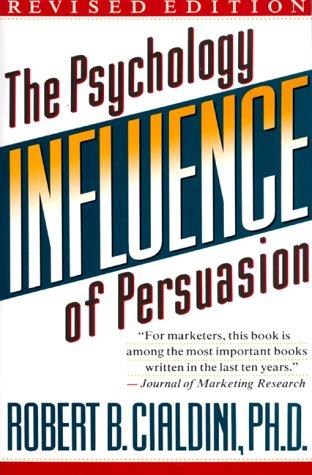
  • Cover: Influence, The Psychology of Persuasion

    Influence, The Psychology of Persuasion

    Book

    R. Cialdini · 1984

    The founding work on the mechanisms of persuasion: six universal principles (reciprocity, consistency, social proof, authority, liking, scarcity) illustrated with striking experiments. A landmark in social psychology.

  • Cover: Thinking, Fast and Slow

    Thinking, Fast and Slow

    Book

    D. Kahneman · 2011

    The sum of Kahneman's work on decision-making: two systems of thought, one fast and intuitive, the other slow and analytical, and the long list of biases that distort our judgements. Essential to understanding others... and yourself.

  • Cover: Nudge

    Nudge

    Book

    R. Thaler & C. Sunstein · 2008

    How to steer choices without constraint, by acting on the "choice architecture". The book popularised the nudge and behavioural economics applied to public policy as much as to management.

  • Judgment under Uncertainty: Heuristics and Biases (Science)

    Article

    A. Tversky & D. Kahneman · 1974

    The founding paper (Science, 1974) that uncovered the heuristics and biases of judgement, including anchoring. The starting point of the behavioural-economics revolution.

R. Cialdini ("Influence", 1984), D. Kahneman & A. Tversky, R. Thaler, D. Ariely.

On video

See the technique in action

Videos to picture The Illusion of Control and anchor it through examples.

A verified video selection is being enriched; the search above already surfaces the best videos on the topic.

Technique map

Where this technique sits

Every technique sits within a network: what it draws on, what it combines with, where it applies, and how to defend against it.

Levers engaged

biases & emotions

Countered by

Spot its signals, neutralise it and turn it around with the defensive playbook on this page.

See the counter-techniques

Key takeaways

  • En une phrase

    The illusion of control is the tendency to overestimate one's ability to influence events that in reality depend largely on chance or external factors. In negotiation, giving the other party a sense of mastery, choice, personalisation, participation, increases their buy-in and satisfaction. The concept was established by Ellen Langeri.

  • The right reflex

    Set your own anchor first: it will structure the discussion.

  • Never do this

    Reasoning from the other side's figure.

8.0/10 tactical potential High vigilance School grounded in experimental research

Master this technique in real situations?

Our programmes turn theory into a concrete advantage.

Explore our programmes
Call Book a call