
NEGOCOACH
119
Origin : Methods & tactics

🛠️ Methods & tactics

Anglo-Saxon schools of negotiation

C. Karrass, R. Dawson, H. Cohen, N. Rackham (SPIN), T. Gordon (DESC / active listening).

Full detail in the “Origin & history” section below.

119

The Flinch Technique

Perception management Technique 119 / 360
Alexandre Baumberger

Author of the library

Alexandre Baumberger

Negotiation lecturer at KEDGE Business School

A rare threefold background serving negotiation: teaching, commercial justice and audit, backed by experience as a company director in Bordeaux.

  • Teaching, KEDGE Business School Negotiation lecturer since 2014 (12 years).
  • Commercial justice, Commercial Court Judge from 2018 to 2026: litigation, then insolvency proceedings.
  • Audit & advisory, over 20 years Tax, employment and financial audit in major firms, for large groups.
In brief

The flinch (or wince) consists of reacting visibly, a start, a shocked look, an "ouch", the moment the other side announces its first offer, whatever it may be. This non-verbal reaction suggests that the proposal is unreasonable and pushes the other party to correct itself before any counter-offer has even been made.

Reading level

At a glance

Its family profile at a glance

Effectiveness Psychologicalimpact Discretion Preparation Relationalrisk Ethics
8.3 / 10 Tactical potential

Vigilance: very high (8.0/10) · Preparation required: 7/10

Grounding in the source school School grounded in research and field practice

Indicative profile: it situates the “Perception management” family as the Methods & tactics school practises it, not this technique taken in isolation. Techniques from the same family and school therefore share the same profile. NEGOCOACH editorial rating out of 10, non-experimental · the higher the “relational risk” value, the more costly the technique is to the relationship.

NEGOCOACH assessment

How to read this rating

Tactical potential 8.3/10 (effectiveness, impact, discretion) and vigilance very high (relational and ethical risk): two distinct readings, deliberately never merged into a single score that would reward risk. NEGOCOACH editorial rating calibrated from the “Perception management” family and the “Methods & tactics” school. Each criterion is rated out of 10; click to understand what it measures.

  • Effectiveness 8/10 · Very high

    How far the technique can carry the negotiation in the intended direction when it is well executed.

  • Psychological impact 8/10 · Very high

    Strength of the effect produced on the counterpart's perceptions, emotions and decisions.

  • Discretion 9/10 · Very high

    How hard it is for the other party to notice the technique is being used. A high value = very discreet.

  • Preparation 7/10 · High

    The information, analysis and rehearsal required upfront to use it effectively.

  • Relational risk 7/10 · High

    Potential cost to the relationship and to trust if the technique is spotted, refused or fails. A high value = riskier.

  • Ethics 2/10 · Low

    Moral acceptability: fairness, transparency and respect for the counterpart's autonomy. A high value = more defensible.

Level of evidence

School grounded in research and field practice

The school this technique stems from combines academic work with long field practice. This indicator qualifies the school, not this technique taken in isolation.

Indicative NEGOCOACH editorial rating, for teaching purposes. For “Relational risk”, a high value signals a cost to the relationship, not a quality.

THE FLINCH in a nutshell


Origin & history

The flinch is as old as haggling itself: in markets and bazaars the world over, the gesture of horrified recoil at the first price quoted is an age-old ritual. It was theorised and named ("the flinch") by the great American negotiation trainers of the 1980s and 1990s, notably Roger Dawson (Secrets of Power Negotiating) and Herb Cohen (You Can Negotiate Anything). Their contribution: to show that this physical reaction exploits the universal insecurity of whoever has just named a figure, and that a negotiator who does not react to an offer encourages the other side to hold it firm.


Definition and principle

A classic haggling tactic, the flinch exploits the insecurity of whoever has just named a figure. Most offers carry a margin and are voiced with a measure of doubt; a physical reaction of disbelief activates that doubt and often triggers a spontaneous concession.


Practical examples of application

Application by context

The same technique, across several negotiation settings

Context 1 / 6

Sales negotiation

A supplier announces "that'll be €15,000". The buyer leans back in their chair, breathes out and repeats "fifteen thousand?!" with a dismayed look. Without another word, the supplier presses on: "well, we could look at 13,500".
Context 2 / 6

Labour negotiation

Faced with a pay-rise demand, management holds a silence and an expression of stunned disbelief, prompting the representatives to present their claim as a "debatable starting point".

Context 3 / 6

Crisis management

A negotiator reacts with pronounced surprise to an excessive demand, signalling that it is out of reach, which leads the other side to revise its claims spontaneously.

Context 4 / 6

Political negotiation

Faced with a demand from the opposition, a minister puts on a dismayed expression in front of the cameras, delegitimising the proposal in public opinion before any substantive discussion.

Context 5 / 6

Real-estate negotiation

A buyer, while viewing, lets slip a wince at the asking price and an "ah, that much…", setting the stage for a markedly lower offer that the seller will perceive as less aggressive.

Context 6 / 6

Family negotiation

During a division of assets, one party reacts with marked astonishment to the other's demand, leading them to present it as negotiable rather than firm.


Counter-techniques

Spot and neutralise this technique

Negotiation is also played on defence. Here is how to recognise this technique when it is used against you, and turn it around.

Detect

The signals that give it away

  • Partial or biased information
  • False scarcity ("only one left")
  • Staging: files, "other buyers"

Neutralise

The counters that defuse it

  • Verify the information independently
  • Demand proof
  • Ignore the set dressing

Turn around

Turn it into an advantage

Calmly show that you have seen the staging: it loses all effect.

The trap to avoid

Taking appearance for reality.

Strengths and weaknesses

Simple, non-verbal and immediate, the flinch secures concessions without arguing and without revealing one's hand. Its weaknesses: it is quickly seen through by an experienced negotiator, can appear theatrical or disingenuous, and damages the relationship if repeated.


When should this technique be used?

Effective in a one-off, transactional haggle, faced with a first offer voiced with hesitation. To be avoided in a long-term relationship or a climate of trust that one wishes to preserve.


Objectives of the technique

  • Signal visibly, without an aggressive word, that an offer or price is deemed unacceptable or surprising.
  • Provoke in the other party a doubt about their anchoring and trigger a first spontaneous concession.
  • Avoid accepting too quickly a proposal, even a fair one, that would leave unexploited margin on the table.
  • Take control of the emotional tempo of the exchange by imposing a strong non-verbal reaction.
  • Lower the opponent's expectations from the outset, before even counter-arguing.

Famous cases

Sales · The buyer who recoils at the quote: A procurement manager receives a service quote. Although the amount stays within budget, they pause, lean back in their chair and let out an "ooh…" with a frown, adding nothing more. Thrown by this physical reaction and the silence that follows, the salesperson, believing they aimed too high, spontaneously offers a discount before any counter-proposal is even made. The flinch alone was enough to trigger the concession.

Everyday life · The trader and the customer at a market: At a market, a seller quotes a price for an item. The buyer puts on a pained look, shakes their head and begins to step back as if to leave. The seller, reading this body language as a rejection, immediately adjusts the price downwards. No figure was uttered by the buyer: the visible reaction alone reopened the negotiation.


Common mistakes

  • Overdoing it: a theatrical or repeated flinch becomes transparent play-acting that undermines credibility and irritates.
  • Using it on every proposal, which makes it commonplace and ineffective.
  • Flinching then speaking at once: the power comes from the silence that follows; launching straight into an argument cancels the effect.
  • Reacting in a way inconsistent with the context (flinching at an offer that is actually advantageous), at the risk of losing a good deal.
  • Ignoring that the other party knows the technique: faced with a seasoned negotiator, a calculated flinch can rebound as a signal of weakness or manipulation.

Limits and ethics

The flinch raises a problem that most techniques do not: it deceives not through words but through the body. A start, a shocked look, an "ouch" are read by the other party as an involuntary reaction, therefore sincere, and it is precisely this presumption of sincerity that produces the concession. Simulating the involuntary is of a different nature from holding a firm position. Yet the line is simple to draw. Reacting sharply because the offer is genuinely unreasonable is not a technique, it is a reaction, and holding it back would even be a form of indulgence: the other side has the right to know that its figure is off the mark. Flinching on principle, at every offer whatever it may be, including at a fair proposal, is lying with one's face to make the other side pay for its doubt, and it is worth noting that the ploy works all the better the more honest or inexperienced the other party is. Its practical limit is scathing: faced with a seasoned negotiator, the flinch is spotted at once, and it marks you out. Starting because the offer is unreasonable is a reaction; starting on principle is a lie of the body.


Scientific foundations

  • Roger Dawson (2010) Secrets of Power Negotiating Career Press
  • Chris Voss (2016) Never Split the Difference: Negotiating As If Your Life Depended On It HarperBusiness
  • Chester L. Karrass (1992) The Negotiating Game (Revised Edition) HarperBusiness

Quick exercise

Test yourself before answering

Answer in your head, then reveal the solution. Memory is built through active recall.

1 Quels signaux doivent vous alerter ?
  • Partial or biased information
  • False scarcity ("only one left")
  • Staging: files, "other buyers"
2 Quelles parades appliquer ?
  • Verify the information independently
  • Demand proof
  • Ignore the set dressing

Frequently asked questions

The questions we get most

What is the "The Flinch Technique" technique?

The flinch (or wince) consists of reacting visibly, a start, a shocked look, an "ouch", the moment the other side announces its first offer, whatever it may be. This non-verbal reaction suggests that the proposal is unreasonable and pushes the other party to correct itself before any counter-offer has even been made.

Is the "The Flinch Technique" technique ethical?

It is mainly manipulation and can lastingly damage the relationship. Its main value is learning to recognise it so you do not fall victim to it.

How do you defend against "The Flinch Technique"?

Taking appearance for reality. The right reflex: verify the information independently.

What is the "The Flinch Technique" technique based on?

NEGOCOACH does not assess the experimental validation of this technique in isolation. What we document is the grounding of its source school (Methods & tactics): school grounded in research and field practice. Full detail is in the "At a glance" section of this page.

Practise with AI

Three ready-to-use prompts

Copy, paste into your assistant, replace the [brackets]. Works with ChatGPT, Claude, Gemini, Mistral, Perplexity.

Prepare

Build your plan before the meeting

You are an expert negotiation coach. Help me prepare to use the "The Flinch Technique" technique in the following situation: [describe your situation]. Give me: the conditions for success, a 3-step script, my counterpart's likely objections and how to answer them.

Simulate

Rehearse against an AI counterpart

Play the role of my counterpart in a negotiation. I am going to test the "The Flinch Technique" technique. React realistically and with resistance, do not give in too quickly, then at the end analyse my performance and suggest 3 concrete improvements.

Debrief

Analyse a past negotiation

Here is how my negotiation went: [paste the exchanges]. Analyse whether the "The Flinch Technique" technique was used well, what worked, the mistakes made, and spell out precisely what I could have done better.

References

Bibliography & credible sources

Founding works of the 🛠️ Methods & tactics school this technique belongs to.

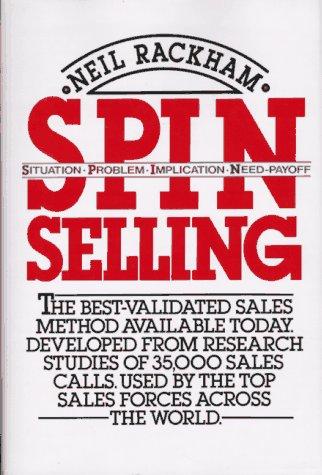
  • Cover: SPIN Selling

    SPIN Selling

    Book

    N. Rackham · 1988

    Grounded in the analysis of thousands of sales calls, the SPIN method structures customer discovery through four types of question (Situation, Problem, Implication, Need-payoff) for complex sales.

  • Cover: The Negotiating Game

    The Negotiating Game

    Book

    C. L. Karrass · 1970

    A pragmatic classic of business negotiation: tactics, power balance and preparation. Karrass sums up his motto, you get what you negotiate, not what you deserve.

  • Cover: Secrets of Power Negotiating

    Secrets of Power Negotiating

    Book

    R. Dawson · 1987

    An arsenal of opening, middle and closing "gambits" to gain the upper hand in commercial negotiation, explained step by step.

C. Karrass, R. Dawson, H. Cohen, N. Rackham (SPIN), T. Gordon (DESC / active listening).

On video

See the technique in action

Videos to picture The Flinch Technique and anchor it through examples.

A verified video selection is being enriched; the search above already surfaces the best videos on the topic.

Technique map

Where this technique sits

Every technique sits within a network: what it draws on, what it combines with, where it applies, and how to defend against it.

Levers engaged

biases & emotions

Countered by

Spot its signals, neutralise it and turn it around with the defensive playbook on this page.

See the counter-techniques

Key takeaways

  • En une phrase

    The flinch (or wince) consists of reacting visibly, a start, a shocked look, an "ouch", the moment the other side announces its first offer, whatever it may be. This non-verbal reaction suggests that the proposal is unreasonable and pushes the other party to correct itself before any counter-offer has even been made.

  • The right reflex

    Calmly show that you have seen the staging: it loses all effect.

  • Never do this

    Taking appearance for reality.

8.3/10 tactical potential Very high vigilance School grounded in research and field practice

Master this technique in real situations?

Our programmes turn theory into a concrete advantage.

Explore our programmes
Call Book a call