Context 1 / 6
Sales negotiation
A salesperson offers a free trial period: once the product is woven into the customer’s habits, they find it hard to give up what they already “own”.
🧠 Cognitive science
Behavioural economics & social psychology
R. Cialdini ("Influence", 1984), D. Kahneman & A. Tversky, R. Thaler, D. Ariely.
Full detail in the “Origin & history” section below.

Author of the library
Negotiation lecturer at KEDGE Business School
A rare threefold background serving negotiation: teaching, commercial justice and audit, backed by experience as a company director in Bordeaux.
The endowment effect refers to our tendency to overvalue what we already own: an item becomes more precious the moment it is “ours”. In negotiation, making the other party mentally “possess” an offer, through a trial, projection or personalisation, increases its perceived value and their reluctance to give it up.
At a glance
Vigilance: high (6.0/10) · Preparation required: 6/10
Indicative profile: it situates the “Psychological influence” family as the Cognitive science school practises it, not this technique taken in isolation. Techniques from the same family and school therefore share the same profile. NEGOCOACH editorial rating out of 10, non-experimental · the higher the “relational risk” value, the more costly the technique is to the relationship.
NEGOCOACH assessment
Tactical potential 8.3/10 (effectiveness, impact, discretion) and vigilance high (relational and ethical risk): two distinct readings, deliberately never merged into a single score that would reward risk. NEGOCOACH editorial rating calibrated from the “Psychological influence” family and the “Cognitive science” school. Each criterion is rated out of 10; click to understand what it measures.
How far the technique can carry the negotiation in the intended direction when it is well executed.
Strength of the effect produced on the counterpart's perceptions, emotions and decisions.
How hard it is for the other party to notice the technique is being used. A high value = very discreet.
The information, analysis and rehearsal required upfront to use it effectively.
Potential cost to the relationship and to trust if the technique is spotted, refused or fails. A high value = riskier.
Moral acceptability: fairness, transparency and respect for the counterpart's autonomy. A high value = more defensible.
School grounded in experimental research
The school this technique stems from is grounded in replicated, peer-reviewed experimental work. This indicator qualifies the school, not the experimental validation of this technique taken in isolation.
Indicative NEGOCOACH editorial rating, for teaching purposes. For “Relational risk”, a high value signals a cost to the relationship, not a quality.
The endowment effect was demonstrated by the economist Richard Thaler, a future Nobel laureate, building on the work of Daniel Kahneman and Amos Tversky on loss aversion. The emblematic experiment (1990s): people who are given a mug demand roughly twice the price to sell it that others would agree to pay to acquire it. Mere ownership distorts value. This finding from behavioural economics explains a host of negotiation behaviours previously dismissed as “irrational”.
The technique consists in creating a sense of anticipated ownership (free trial, personalisation, projection into use), because we are loath to lose what we already regard as ours. A loss weighs psychologically about twice as much as an equivalent gain.
Application by context
A salesperson offers a free trial period: once the product is woven into the customer’s habits, they find it hard to give up what they already “own”.
Presenting a benefit as already acquired and then “threatened” mobilises far more than presenting it as a mere potential gain.
Getting a party to visualise what it has already secured and risks losing encourages it to preserve the agreement rather than break everything off.
A right or entitlement presented as threatened with withdrawal triggers far stronger mobilisation than the promise of a future gain.
An agent gets the buyer to project themselves into the property (“picture your living room here”): once the property has been mentally appropriated, giving it up becomes a loss.
In a division of assets, whoever already occupies an item grants it a higher value and negotiates more fiercely to keep it.
Counter-techniques
Negotiation is also played on defence. Here is how to recognise this technique when it is used against you, and turn it around.
The signals that give it away
The counters that defuse it
Turn it into an advantage
Verbalise the lever: "I feel you're playing on guilt", and naming it defuses it.
Mistaking an emotional bond for an objective argument.
The endowment effect is a powerful and universal psychological lever, useful for locking in commitment. Its limits: it rests on a distortion of judgement that a clear-sighted counterpart can correct; on the defensive side, being aware of it prevents overpaying out of sheer attachment.
Effective for getting an offer adopted through trial and projection, or for enhancing an existing entitlement. Worth knowing too in order to protect yourself against your own tendency to overvalue what you hold.
Sales · The free trial that becomes irreversible: A software vendor offers 30 days of full access rather than a simple demo. During this trial, the client’s team configures its dashboards, imports its data and settles into new habits. When the purchase decision comes, giving up is no longer perceived as “not buying” but as “losing a tool that is already ours”. The reference value has shifted: price becomes secondary against the felt cost of abandonment. A scenario representative of the mechanism, not attributed to any specific company.
Everyday life · The laboratory mug experiment: In the studies by Kahneman, Knetsch and Thaler (1990), a mug is handed to half of a group. When invited to sell it, the owners demand roughly twice the price that non-owners are willing to pay, even though the allocation was random. The mere fact of owning an object for a few minutes is enough to double its perceived value: a direct experimental illustration of the endowment effect.
The technique does not improve the offer: it exploits a bias documented by Richard Thaler, our tendency to overvalue what we believe we already hold. It has a perfectly honest side, one even superior to mere talk: letting someone try, project and handle what they are buying gives them the best possible information to judge, far better than a brochure. A genuine trial is proof, and if the product convinces in use, the sale is sound. The tipping point lies in the objective pursued. Engineering anticipated ownership so that giving up becomes painful, rather than so that judgement is clarified, turns the other party’s attachment against their own discernment: they keep it not because it is good, but because letting go hurts. The warning sign is clear and you can apply it to your own practice: if your trial arrangement is designed to make return complicated, costly or awkward, it is no longer proof, it is a hook. Letting someone try so that they can judge is proof; making them possess so that they can no longer give up is a trap.
Quick exercise
Answer in your head, then reveal the solution. Memory is built through active recall.
Frequently asked questions
The endowment effect refers to our tendency to overvalue what we already own: an item becomes more precious the moment it is “ours”. In negotiation, making the other party mentally “possess” an offer, through a trial, projection or personalisation, increases its perceived value and their reluctance to give it up.
It sits on the line: effective, but it can tip into manipulation if it exploits an information asymmetry. Use it with measure and without deliberate deceit.
Mistaking an emotional bond for an objective argument. The right reflex: separate the emotion from the substance.
NEGOCOACH does not assess the experimental validation of this technique in isolation. What we document is the grounding of its source school (Cognitive science): school grounded in experimental research. Full detail is in the "At a glance" section of this page.
Practise with AI
Copy, paste into your assistant, replace the [brackets]. Works with ChatGPT, Claude, Gemini, Mistral, Perplexity.
Build your plan before the meeting
You are an expert negotiation coach. Help me prepare to use the "The Endowment Effect Technique" technique in the following situation: [describe your situation]. Give me: the conditions for success, a 3-step script, my counterpart's likely objections and how to answer them.
Rehearse against an AI counterpart
Play the role of my counterpart in a negotiation. I am going to test the "The Endowment Effect Technique" technique. React realistically and with resistance, do not give in too quickly, then at the end analyse my performance and suggest 3 concrete improvements.
Analyse a past negotiation
Here is how my negotiation went: [paste the exchanges]. Analyse whether the "The Endowment Effect Technique" technique was used well, what worked, the mistakes made, and spell out precisely what I could have done better.
References
Founding works of the 🧠 Cognitive science school this technique belongs to.
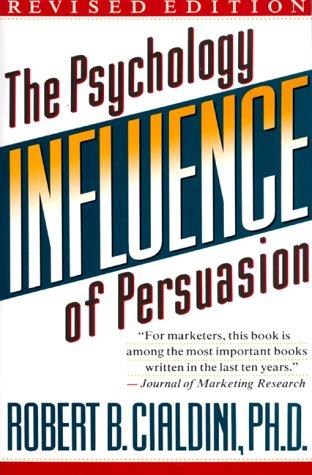
Influence, The Psychology of Persuasion
BookR. Cialdini · 1984
The founding work on the mechanisms of persuasion: six universal principles (reciprocity, consistency, social proof, authority, liking, scarcity) illustrated with striking experiments. A landmark in social psychology.

Thinking, Fast and Slow
BookD. Kahneman · 2011
The sum of Kahneman's work on decision-making: two systems of thought, one fast and intuitive, the other slow and analytical, and the long list of biases that distort our judgements. Essential to understanding others... and yourself.

Nudge
BookR. Thaler & C. Sunstein · 2008
How to steer choices without constraint, by acting on the "choice architecture". The book popularised the nudge and behavioural economics applied to public policy as much as to management.
Judgment under Uncertainty: Heuristics and Biases (Science)
ArticleA. Tversky & D. Kahneman · 1974
The founding paper (Science, 1974) that uncovered the heuristics and biases of judgement, including anchoring. The starting point of the behavioural-economics revolution.
R. Cialdini ("Influence", 1984), D. Kahneman & A. Tversky, R. Thaler, D. Ariely.
On video
Videos to picture The Endowment Effect Technique and anchor it through examples.
Technique map
Every technique sits within a network: what it draws on, what it combines with, where it applies, and how to defend against it.
Spot its signals, neutralise it and turn it around with the defensive playbook on this page.
See the counter-techniquesThe endowment effect refers to our tendency to overvalue what we already own: an item becomes more precious the moment it is “ours”. In negotiation, making the other party mentally “possess” an offer, through a trial, projection or personalisation, increases its perceived value and their reluctance to give it up.
Verbalise the lever: "I feel you're playing on guilt", and naming it defuses it.
Mistaking an emotional bond for an objective argument.
Our programmes turn theory into a concrete advantage.