Context 1 / 6
Sales negotiation
A consultant opens by mentioning a striking success; this signal of competence reflects onto the entire proposal that follows.

🧠 Cognitive science
Behavioural economics & social psychology
R. Cialdini ("Influence", 1984), D. Kahneman & A. Tversky, R. Thaler, D. Ariely.
Full detail in the “Origin & history” section below.

Author of the library
Negotiation lecturer at KEDGE Business School
A rare threefold background serving negotiation: teaching, commercial justice and audit, backed by experience as a company director in Bordeaux.
The halo effect is our tendency to let one salient quality (appearance, reputation, a success) colour the whole judgement: someone who is well-groomed or brilliant on one point is judged competent across the board. In negotiation, cultivating a strong first impression casts a favourable prejudice over everything that follows.
At a glance
Vigilance: very high (8.0/10) · Preparation required: 7/10
Indicative profile: it situates the “Perception management” family as the Cognitive science school practises it, not this technique taken in isolation. Techniques from the same family and school therefore share the same profile. NEGOCOACH editorial rating out of 10, non-experimental · the higher the “relational risk” value, the more costly the technique is to the relationship.
NEGOCOACH assessment
Tactical potential 8.7/10 (effectiveness, impact, discretion) and vigilance very high (relational and ethical risk): two distinct readings, deliberately never merged into a single score that would reward risk. NEGOCOACH editorial rating calibrated from the “Perception management” family and the “Cognitive science” school. Each criterion is rated out of 10; click to understand what it measures.
How far the technique can carry the negotiation in the intended direction when it is well executed.
Strength of the effect produced on the counterpart's perceptions, emotions and decisions.
How hard it is for the other party to notice the technique is being used. A high value = very discreet.
The information, analysis and rehearsal required upfront to use it effectively.
Potential cost to the relationship and to trust if the technique is spotted, refused or fails. A high value = riskier.
Moral acceptability: fairness, transparency and respect for the counterpart's autonomy. A high value = more defensible.
School grounded in experimental research
The school this technique stems from is grounded in replicated, peer-reviewed experimental work. This indicator qualifies the school, not the experimental validation of this technique taken in isolation.
Indicative NEGOCOACH editorial rating, for teaching purposes. For “Relational risk”, a high value signals a cost to the relationship, not a quality.
The effect was demonstrated by the psychologist Edward Thorndike in 1920: asking officers to rate their soldiers, he found that those judged handsome or well-turned-out were also judged more intelligent and more loyal, with no real connection. A single positive characteristic gives the whole perception a "halo". Research has since confirmed the scale of this bias in recruitment, sales and the courts. In negotiation, it explains why credibility is often settled in the first few seconds.
The technique consists in putting forward, from the outset, a strong, positive signal (expertise, references, a polished presentation, proof of success) that will favourably tint the other party's whole judgement of you and of your offer.
Application by context
A consultant opens by mentioning a striking success; this signal of competence reflects onto the entire proposal that follows.
A negotiator known for their integrity enjoys a favourable prejudice across all of their proposals.
A mediator whose calm and assurance are manifest inspires confidence in their whole handling of the situation, well beyond their arguments.
A leader credited with an earlier success sees their new proposals received more favourably by association.
An impeccably presented property (home staging) creates a halo that softens the perception of its flaws.
Whoever appears the most measured and benevolent in a dispute sees their proposals judged more legitimate.
Counter-techniques
Negotiation is also played on defence. Here is how to recognise this technique when it is used against you, and turn it around.
The signals that give it away
The counters that defuse it
Turn it into an advantage
Calmly show that you have seen the staging: it loses all effect.
Taking appearance for reality.
The halo effect is powerful, immediate and lasting: a good first impression eases the whole negotiation. Its limits: it rests on a bias, so a flaw once revealed (the "negative halo") can reverse the judgement abruptly; relying on it without substance eventually backfires.
Decisive in the opening and during first contacts, where the impression sets quickly. It must be backed by substance, because an unfulfilled halo turns into distrust.
Sales · The polished demo that sells the rest: A software vendor prepares for a decisive meeting. Rather than lining up technical arguments point by point, the team invests in an extremely polished demonstration interface, a fluent pitch and reputable client logos up front. Impressed by this visible mastery, the buyer implicitly infers that robustness, support and security are of the same standard, even though these aspects were never actually demonstrated. The halo of the demo reduces their critical questioning of the uncertain areas of the contract. (Representative scenario, not attributed to a real company.)
Everyday life · The suit at the salary interview: A candidate arrives at a salary negotiation particularly well prepared and presented: impeccable dress, punctuality, a confident handshake, a few quantified successes stated up front. This impression of overall seriousness leads the recruiter to assume other unverified qualities (rigour, loyalty, adaptability) and to receive the requested salary range more favourably. The salient trait at the start colours the assessment of the whole. (Representative scenario.)
The effect demonstrated by Thorndike in 1920 is undergone before it is deployed: we all extend one salient quality to a whole judgement, and it is first against ourselves that we must guard. As for its use, taking care over one's presentation, preparation and punctuality is in no way blameworthy: it is a courtesy shown to the other party and the condition for being heard. The tipping point lies in what the halo is supposed to signal. A polished appearance that accompanies genuine competence deceives no one. An appearance built to make one infer a competence one does not have, a qualification flaunted outside its field, a single success exhibited as general proof, is using a bias to usurp credibility. The practical limit is severe: the halo is fragile and it is reversible. The first failure on substance does not return the judgement to neutrality, it swings it to the opposite, the other party feeling deceived. Taking care over one's presentation in order to be heard is a courtesy; using it to feign a competence that is absent is a usurpation.
Quick exercise
Answer in your head, then reveal the solution. Memory is built through active recall.
Frequently asked questions
The halo effect is our tendency to let one salient quality (appearance, reputation, a success) colour the whole judgement: someone who is well-groomed or brilliant on one point is judged competent across the board. In negotiation, cultivating a strong first impression casts a favourable prejudice over everything that follows.
It is mainly manipulation and can lastingly damage the relationship. Its main value is learning to recognise it so you do not fall victim to it.
Taking appearance for reality. The right reflex: verify the information independently.
NEGOCOACH does not assess the experimental validation of this technique in isolation. What we document is the grounding of its source school (Cognitive science): school grounded in experimental research. Full detail is in the "At a glance" section of this page.
Practise with AI
Copy, paste into your assistant, replace the [brackets]. Works with ChatGPT, Claude, Gemini, Mistral, Perplexity.
Build your plan before the meeting
You are an expert negotiation coach. Help me prepare to use the "The Halo Effect Technique" technique in the following situation: [describe your situation]. Give me: the conditions for success, a 3-step script, my counterpart's likely objections and how to answer them.
Rehearse against an AI counterpart
Play the role of my counterpart in a negotiation. I am going to test the "The Halo Effect Technique" technique. React realistically and with resistance, do not give in too quickly, then at the end analyse my performance and suggest 3 concrete improvements.
Analyse a past negotiation
Here is how my negotiation went: [paste the exchanges]. Analyse whether the "The Halo Effect Technique" technique was used well, what worked, the mistakes made, and spell out precisely what I could have done better.
References
Founding works of the 🧠 Cognitive science school this technique belongs to.
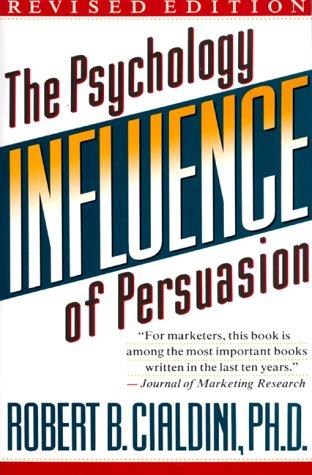
Influence, The Psychology of Persuasion
BookR. Cialdini · 1984
The founding work on the mechanisms of persuasion: six universal principles (reciprocity, consistency, social proof, authority, liking, scarcity) illustrated with striking experiments. A landmark in social psychology.

Thinking, Fast and Slow
BookD. Kahneman · 2011
The sum of Kahneman's work on decision-making: two systems of thought, one fast and intuitive, the other slow and analytical, and the long list of biases that distort our judgements. Essential to understanding others... and yourself.

Nudge
BookR. Thaler & C. Sunstein · 2008
How to steer choices without constraint, by acting on the "choice architecture". The book popularised the nudge and behavioural economics applied to public policy as much as to management.
Judgment under Uncertainty: Heuristics and Biases (Science)
ArticleA. Tversky & D. Kahneman · 1974
The founding paper (Science, 1974) that uncovered the heuristics and biases of judgement, including anchoring. The starting point of the behavioural-economics revolution.
R. Cialdini ("Influence", 1984), D. Kahneman & A. Tversky, R. Thaler, D. Ariely.
On video
Videos to picture The Halo Effect Technique and anchor it through examples.
Technique map
Every technique sits within a network: what it draws on, what it combines with, where it applies, and how to defend against it.
Spot its signals, neutralise it and turn it around with the defensive playbook on this page.
See the counter-techniquesThe halo effect is our tendency to let one salient quality (appearance, reputation, a success) colour the whole judgement: someone who is well-groomed or brilliant on one point is judged competent across the board. In negotiation, cultivating a strong first impression casts a favourable prejudice over everything that follows.
Calmly show that you have seen the staging: it loses all effect.
Taking appearance for reality.
Our programmes turn theory into a concrete advantage.