Context 1 / 6
Sales negotiation
A salesperson co-constructs the offer with the client (choice of modules, personalisation): being involved, the client buys in and defends "their" solution.
🧠 Cognitive science
Behavioural economics & social psychology
R. Cialdini ("Influence", 1984), D. Kahneman & A. Tversky, R. Thaler, D. Ariely.
Full detail in the “Origin & history” section below.

Author of the library
Negotiation lecturer at KEDGE Business School
A rare threefold background serving negotiation: teaching, commercial justice and audit, backed by experience as a company director in Bordeaux.
The IKEA effect refers to the additional value we assign to what we have helped to build. In negotiation, involving the other party in shaping the solution prompts them to adopt and defend it: we do not tear down what we have helped to construct.
At a glance
Vigilance: high (6.0/10) · Preparation required: 6/10
Indicative profile: it situates the “Psychological influence” family as the Cognitive science school practises it, not this technique taken in isolation. Techniques from the same family and school therefore share the same profile. NEGOCOACH editorial rating out of 10, non-experimental · the higher the “relational risk” value, the more costly the technique is to the relationship.
NEGOCOACH assessment
Tactical potential 8.3/10 (effectiveness, impact, discretion) and vigilance high (relational and ethical risk): two distinct readings, deliberately never merged into a single score that would reward risk. NEGOCOACH editorial rating calibrated from the “Psychological influence” family and the “Cognitive science” school. Each criterion is rated out of 10; click to understand what it measures.
How far the technique can carry the negotiation in the intended direction when it is well executed.
Strength of the effect produced on the counterpart's perceptions, emotions and decisions.
How hard it is for the other party to notice the technique is being used. A high value = very discreet.
The information, analysis and rehearsal required upfront to use it effectively.
Potential cost to the relationship and to trust if the technique is spotted, refused or fails. A high value = riskier.
Moral acceptability: fairness, transparency and respect for the counterpart's autonomy. A high value = more defensible.
School grounded in experimental research
The school this technique stems from is grounded in replicated, peer-reviewed experimental work. This indicator qualifies the school, not the experimental validation of this technique taken in isolation.
Indicative NEGOCOACH editorial rating, for teaching purposes. For “Relational risk”, a high value signals a cost to the relationship, not a quality.
The effect was named and demonstrated by the researchers Michael Norton, Daniel Mochon and Dan Ariely in a 2011 study: people who assembled an IKEA piece of furniture themselves assigned it a value markedly higher than that of an identical, already-assembled piece. Effort and participation create attachment. Applied to negotiation, this principle explains why co-constructed agreements, in which everyone has contributed their part, are far more robust and better defended than imposed solutions.
The technique consists in involving the other party in designing the agreement (having them propose options, incorporating their ideas, co-drafting) rather than presenting them with a finished solution. Participation generates ownership and commitment.
Application by context
A salesperson co-constructs the offer with the client (choice of modules, personalisation): being involved, the client buys in and defends "their" solution.
An agreement developed with the representatives, on the basis of their own proposals, is far better accepted by the rank and file than an imposed plan.
The mediator has the parties themselves propose the ways out, which secures their commitment to the solution.
A reform co-constructed with the stakeholders concerned meets less resistance than a top-down text.
An agent involves the buyer in arranging the structure of the deal (terms, timetable), reinforcing their attachment to the agreement.
A division worked out together, in which each person has proposed arrangements, is more durable than a settlement dictated from above.
Counter-techniques
Negotiation is also played on defence. Here is how to recognise this technique when it is used against you, and turn it around.
The signals that give it away
The counters that defuse it
Turn it into an advantage
Verbalise the lever: "I feel you're playing on guilt", and naming it defuses it.
Mistaking an emotional bond for an objective argument.
The IKEA effect produces agreements that are robust, owned and defended by the other party themselves. Its limitations: co-construction takes time and requires letting go of some control over the outcome; it is poorly suited when a swift, unilateral decision is required.
Ideal for durable agreements and for situations where the other party's buy-in is essential to implementation. Less relevant in a one-off, time-pressured transaction.
Sales · The co-drafted specification: An IT provider, rather than sending a finalised proposal, runs a workshop where the client themselves ranks the features and arbitrates the priorities. The final solution is virtually identical to what the provider had planned, but the client, having "built" the scope, defends it internally and haggles far less over the price: they value what they have helped to shape. A scenario representative of a common commercial practice.
Diplomatic · The text shaped by the parties: In a mediation, the mediator does not present a ready-made compromise but has each clause reworded by both camps, incorporating their words and their nuances. The resulting agreement, largely inspired by the mediator's initial proposals, is perceived by each party as "their own", which reinforces its robustness and the way it is respected. A representative illustration of the logic of co-construction in mediation.
This is one of the most virtuous techniques in the repertoire, and it must be said plainly: involving the other party in shaping the outcome produces an objectively better agreement, because they bring in information you did not have, and a durable buy-in, because we do not undo what we have helped to build. The effect demonstrated by Norton, Mochon and Ariely works here in the service of quality. Its limitation is singular but formidable: simulated participation. Gathering teams to co-construct a solution already settled upon, inviting amendments you have no intention of keeping, running a workshop whose minutes are written in advance, is to inflict on the other party the worst of both worlds. Not only is the decision not theirs, but they become publicly co-responsible for it, and they will lose even the right to contest it since they "agreed". That is more serious than deciding alone and owning it. The test is inescapable, and it applies before you open the workshop: which proposal from the participants would you be prepared to keep even if it troubles you? If the answer is none, do not convene them. Genuinely building with the other party improves the agreement; staging the co-construction makes them complicit in a decision they did not take.
Quick exercise
Answer in your head, then reveal the solution. Memory is built through active recall.
Frequently asked questions
The IKEA effect refers to the additional value we assign to what we have helped to build. In negotiation, involving the other party in shaping the solution prompts them to adopt and defend it: we do not tear down what we have helped to construct.
It sits on the line: effective, but it can tip into manipulation if it exploits an information asymmetry. Use it with measure and without deliberate deceit.
Mistaking an emotional bond for an objective argument. The right reflex: separate the emotion from the substance.
NEGOCOACH does not assess the experimental validation of this technique in isolation. What we document is the grounding of its source school (Cognitive science): school grounded in experimental research. Full detail is in the "At a glance" section of this page.
Practise with AI
Copy, paste into your assistant, replace the [brackets]. Works with ChatGPT, Claude, Gemini, Mistral, Perplexity.
Build your plan before the meeting
You are an expert negotiation coach. Help me prepare to use the "The IKEA Effect Technique" technique in the following situation: [describe your situation]. Give me: the conditions for success, a 3-step script, my counterpart's likely objections and how to answer them.
Rehearse against an AI counterpart
Play the role of my counterpart in a negotiation. I am going to test the "The IKEA Effect Technique" technique. React realistically and with resistance, do not give in too quickly, then at the end analyse my performance and suggest 3 concrete improvements.
Analyse a past negotiation
Here is how my negotiation went: [paste the exchanges]. Analyse whether the "The IKEA Effect Technique" technique was used well, what worked, the mistakes made, and spell out precisely what I could have done better.
References
Founding works of the 🧠 Cognitive science school this technique belongs to.
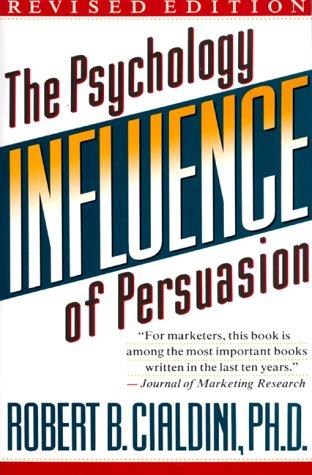
Influence, The Psychology of Persuasion
BookR. Cialdini · 1984
The founding work on the mechanisms of persuasion: six universal principles (reciprocity, consistency, social proof, authority, liking, scarcity) illustrated with striking experiments. A landmark in social psychology.

Thinking, Fast and Slow
BookD. Kahneman · 2011
The sum of Kahneman's work on decision-making: two systems of thought, one fast and intuitive, the other slow and analytical, and the long list of biases that distort our judgements. Essential to understanding others... and yourself.

Nudge
BookR. Thaler & C. Sunstein · 2008
How to steer choices without constraint, by acting on the "choice architecture". The book popularised the nudge and behavioural economics applied to public policy as much as to management.
Judgment under Uncertainty: Heuristics and Biases (Science)
ArticleA. Tversky & D. Kahneman · 1974
The founding paper (Science, 1974) that uncovered the heuristics and biases of judgement, including anchoring. The starting point of the behavioural-economics revolution.
R. Cialdini ("Influence", 1984), D. Kahneman & A. Tversky, R. Thaler, D. Ariely.
On video
Videos to picture The IKEA Effect Technique and anchor it through examples.
Technique map
Every technique sits within a network: what it draws on, what it combines with, where it applies, and how to defend against it.
Spot its signals, neutralise it and turn it around with the defensive playbook on this page.
See the counter-techniquesThe IKEA effect refers to the additional value we assign to what we have helped to build. In negotiation, involving the other party in shaping the solution prompts them to adopt and defend it: we do not tear down what we have helped to construct.
Verbalise the lever: "I feel you're playing on guilt", and naming it defuses it.
Mistaking an emotional bond for an objective argument.
Our programmes turn theory into a concrete advantage.