Context 1 / 6
Sales negotiation
A salesperson treats the client as a trustworthy long-term partner, which prompts them to be genuinely loyal in return.

🧠 Cognitive science
Behavioural economics & social psychology
R. Cialdini ("Influence", 1984), D. Kahneman & A. Tversky, R. Thaler, D. Ariely.
Full detail in the “Origin & history” section below.

Author of the library
Negotiation lecturer at KEDGE Business School
A rare threefold background serving negotiation: teaching, commercial justice and audit, backed by experience as a company director in Bordeaux.
The Pygmalion effect describes how the expectations we project onto someone tend to come true: treating the other party as a loyal, competent partner prompts them to behave that way. In negotiation, attributing positive intentions to the other side from the outset can help bring them about.
At a glance
Vigilance: high (6.0/10) · Preparation required: 6/10
Indicative profile: it situates the “Psychological influence” family as the Cognitive science school practises it, not this technique taken in isolation. Techniques from the same family and school therefore share the same profile. NEGOCOACH editorial rating out of 10, non-experimental · the higher the “relational risk” value, the more costly the technique is to the relationship.
NEGOCOACH assessment
Tactical potential 8.3/10 (effectiveness, impact, discretion) and vigilance high (relational and ethical risk): two distinct readings, deliberately never merged into a single score that would reward risk. NEGOCOACH editorial rating calibrated from the “Psychological influence” family and the “Cognitive science” school. Each criterion is rated out of 10; click to understand what it measures.
How far the technique can carry the negotiation in the intended direction when it is well executed.
Strength of the effect produced on the counterpart's perceptions, emotions and decisions.
How hard it is for the other party to notice the technique is being used. A high value = very discreet.
The information, analysis and rehearsal required upfront to use it effectively.
Potential cost to the relationship and to trust if the technique is spotted, refused or fails. A high value = riskier.
Moral acceptability: fairness, transparency and respect for the counterpart's autonomy. A high value = more defensible.
School grounded in experimental research
The school this technique stems from is grounded in replicated, peer-reviewed experimental work. This indicator qualifies the school, not the experimental validation of this technique taken in isolation.
Indicative NEGOCOACH editorial rating, for teaching purposes. For “Relational risk”, a high value signals a cost to the relationship, not a quality.
The effect was demonstrated by psychologists Robert Rosenthal and Lenore Jacobson in a celebrated 1968 school study (Pygmalion in the Classroom): teachers who had been falsely told that certain pupils were “high-potential” unknowingly encouraged them more, and those pupils genuinely made greater progress. The observer's expectation shapes the behaviour of the observed, through a host of subtle signals. The name refers to the myth of Pygmalion, the sculptor whose statue comes to life through the force of his love. In negotiation, this mechanism illuminates the power of self-fulfilling prophecies.
The technique consists in adopting and expressing, towards the other party, a positive expectation (“I know we will reach a fair agreement”, “I trust you to keep your word”), because that expectation steers their behaviour in the hoped-for direction.
Application by context
A salesperson treats the client as a trustworthy long-term partner, which prompts them to be genuinely loyal in return.
A negotiator affirms their confidence in the parties' ability to reach a responsible agreement, encouraging a constructive attitude.
The mediator voices their conviction that the person will make the right choice, reinforcing their inclination to cooperate.
A leader publicly credits the other camp with a sincere will to succeed, committing them to live up to it.
An agent treats both parties as people acting in good faith, which soothes and smooths the transaction.
In a division of assets, approaching each person as someone fair and well-intentioned encourages them to be exactly that.
Counter-techniques
Negotiation is also played on defence. Here is how to recognise this technique when it is used against you, and turn it around.
The signals that give it away
The counters that defuse it
Turn it into an advantage
Verbalise the lever: "I feel you're playing on guilt", and naming it defuses it.
Mistaking an emotional bond for an objective argument.
The Pygmalion effect creates a virtuous circle of trust and can bring about the very cooperation it presupposes. Its limits: it has little purchase against blatant bad faith, and a naive expectation can be exploited; it therefore goes hand in hand with vigilance and concrete safeguards.
Invaluable for establishing a cooperative climate and in long-term relationships. To be tempered with caution when trust is not yet warranted by actions.
Sales · The supplier treated as a partner of excellence: An industrial buyer opens a contract renegotiation with a supplier whose lead times had been slipping. Rather than threatening penalties, they begin the meeting by recalling: “You have historically been our most reliable supplier, and that is precisely why I want to build the future with you.” By explicitly setting this expectation of excellence, they place the supplier in the position of having to live up to the image reflected back at them. Feeling valued, the supplier proposes a lead-time reliability plan of their own accord rather than digging in. This case illustrates a mechanism representative of the Pygmalion effect in negotiation; it is not attributed to any identified real company.
Corporate · The manager negotiating an ambitious target: During a goal-setting interview, a manager tells a hesitant team member: “I'm entrusting this project to you because I know you can carry it better than anyone else here.” By voicing a high expectation and sincere confidence, they increase the team member's commitment, who accepts a more ambitious target than they would spontaneously have negotiated. A scenario representative of the mechanism, with no attribution to real individuals.
Two reservations must accompany this technique, and the first is scientific: the study by Rosenthal and Jacobson (1968) is famous, but its methodology has been sharply contested and the magnitude of the effect is still debated. Attributing positive intentions to the other party is an excellent disposition; expecting a mechanical result from it would be an illusion. The second is moral, and it is more interesting than it may seem. Treating someone as a loyal partner because you wager on their loyalty is an act of trust, and it is what underpins cooperation. Saying so out loud in order to forbid them from being otherwise is an altogether different manoeuvre: “you who are always so accommodating” is not a compliment, it is an assignment, and flattery becomes a cage from which the other can escape only by publicly disowning themselves. Finally, the flip side must be named, though it is often forgotten: the same mechanism operates in reverse, and the counterpart one treats from the outset as a disloyal adversary becomes one. Crediting the other with the best because one hopes for it is trust; crediting them with it to forbid them from being otherwise is a flattery that imprisons.
Quick exercise
Answer in your head, then reveal the solution. Memory is built through active recall.
Frequently asked questions
The Pygmalion effect describes how the expectations we project onto someone tend to come true: treating the other party as a loyal, competent partner prompts them to behave that way. In negotiation, attributing positive intentions to the other side from the outset can help bring them about.
It sits on the line: effective, but it can tip into manipulation if it exploits an information asymmetry. Use it with measure and without deliberate deceit.
Mistaking an emotional bond for an objective argument. The right reflex: separate the emotion from the substance.
NEGOCOACH does not assess the experimental validation of this technique in isolation. What we document is the grounding of its source school (Cognitive science): school grounded in experimental research. Full detail is in the "At a glance" section of this page.
Practise with AI
Copy, paste into your assistant, replace the [brackets]. Works with ChatGPT, Claude, Gemini, Mistral, Perplexity.
Build your plan before the meeting
You are an expert negotiation coach. Help me prepare to use the "The Pygmalion Effect Technique" technique in the following situation: [describe your situation]. Give me: the conditions for success, a 3-step script, my counterpart's likely objections and how to answer them.
Rehearse against an AI counterpart
Play the role of my counterpart in a negotiation. I am going to test the "The Pygmalion Effect Technique" technique. React realistically and with resistance, do not give in too quickly, then at the end analyse my performance and suggest 3 concrete improvements.
Analyse a past negotiation
Here is how my negotiation went: [paste the exchanges]. Analyse whether the "The Pygmalion Effect Technique" technique was used well, what worked, the mistakes made, and spell out precisely what I could have done better.
References
Founding works of the 🧠 Cognitive science school this technique belongs to.
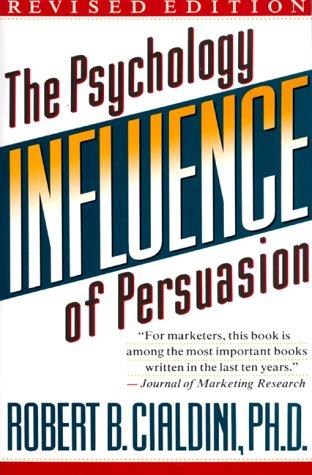
Influence, The Psychology of Persuasion
BookR. Cialdini · 1984
The founding work on the mechanisms of persuasion: six universal principles (reciprocity, consistency, social proof, authority, liking, scarcity) illustrated with striking experiments. A landmark in social psychology.

Thinking, Fast and Slow
BookD. Kahneman · 2011
The sum of Kahneman's work on decision-making: two systems of thought, one fast and intuitive, the other slow and analytical, and the long list of biases that distort our judgements. Essential to understanding others... and yourself.

Nudge
BookR. Thaler & C. Sunstein · 2008
How to steer choices without constraint, by acting on the "choice architecture". The book popularised the nudge and behavioural economics applied to public policy as much as to management.
Judgment under Uncertainty: Heuristics and Biases (Science)
ArticleA. Tversky & D. Kahneman · 1974
The founding paper (Science, 1974) that uncovered the heuristics and biases of judgement, including anchoring. The starting point of the behavioural-economics revolution.
R. Cialdini ("Influence", 1984), D. Kahneman & A. Tversky, R. Thaler, D. Ariely.
On video
Videos to picture The Pygmalion Effect Technique and anchor it through examples.
Technique map
Every technique sits within a network: what it draws on, what it combines with, where it applies, and how to defend against it.
Spot its signals, neutralise it and turn it around with the defensive playbook on this page.
See the counter-techniquesThe Pygmalion effect describes how the expectations we project onto someone tend to come true: treating the other party as a loyal, competent partner prompts them to behave that way. In negotiation, attributing positive intentions to the other side from the outset can help bring them about.
Verbalise the lever: "I feel you're playing on guilt", and naming it defuses it.
Mistaking an emotional bond for an objective argument.
Our programmes turn theory into a concrete advantage.