Context 1 / 6
Sales negotiation
A salesperson stressed by the stakes realises that their nerves are all but invisible to the client, which restores their composure and their room for manoeuvre.

🧠 Cognitive science
Behavioural economics & social psychology
R. Cialdini ("Influence", 1984), D. Kahneman & A. Tversky, R. Thaler, D. Ariely.
Full detail in the “Origin & history” section below.

Author of the library
Negotiation lecturer at KEDGE Business School
A rare threefold background serving negotiation: teaching, commercial justice and audit, backed by experience as a company director in Bordeaux.
The illusion of transparency is our tendency to overestimate how far our internal states, nervousness, bluffing, hesitation, are visible to others. In negotiation, understanding this bias is reassuring (we appear far more composed than we believe) and helps us read the other party without relying on appearances.
At a glance
Vigilance: high (6.0/10) · Preparation required: 6/10
Indicative profile: it situates the “Psychological influence” family as the Cognitive science school practises it, not this technique taken in isolation. Techniques from the same family and school therefore share the same profile. NEGOCOACH editorial rating out of 10, non-experimental · the higher the “relational risk” value, the more costly the technique is to the relationship.
NEGOCOACH assessment
Tactical potential 8.3/10 (effectiveness, impact, discretion) and vigilance high (relational and ethical risk): two distinct readings, deliberately never merged into a single score that would reward risk. NEGOCOACH editorial rating calibrated from the “Psychological influence” family and the “Cognitive science” school. Each criterion is rated out of 10; click to understand what it measures.
How far the technique can carry the negotiation in the intended direction when it is well executed.
Strength of the effect produced on the counterpart's perceptions, emotions and decisions.
How hard it is for the other party to notice the technique is being used. A high value = very discreet.
The information, analysis and rehearsal required upfront to use it effectively.
Potential cost to the relationship and to trust if the technique is spotted, refused or fails. A high value = riskier.
Moral acceptability: fairness, transparency and respect for the counterpart's autonomy. A high value = more defensible.
School grounded in experimental research
The school this technique stems from is grounded in replicated, peer-reviewed experimental work. This indicator qualifies the school, not the experimental validation of this technique taken in isolation.
Indicative NEGOCOACH editorial rating, for teaching purposes. For “Relational risk”, a high value signals a cost to the relationship, not a quality.
The phenomenon was demonstrated by the psychologists Thomas Gilovich, Kenneth Savitsky and Victoria Medvec in the late 1990s. Their experiments show that liars believe they are far more « detectable » than they really are, and that anxious speakers believe their stage fright is much more visible than it actually is. We are prisoners of our own point of view and project our inner life onto others. This bias sheds light on a great many negotiation behaviours, particularly around bluffing and stress.
The technique consists, on the one hand, of reassuring yourself (your nervousness or uncertainty shows far less than you think), and on the other of not over-interpreting the other party's signals, since they too believe they are giving themselves away when in fact they are not.
Application by context
A salesperson stressed by the stakes realises that their nerves are all but invisible to the client, which restores their composure and their room for manoeuvre.
A negotiator bluffing about their limits understands that their uncertainty barely shows, and holds their position calmly.
The negotiator keeps their cool, knowing that their inner tension is not read as clearly as they fear.
A leader under pressure maintains a firm stance, aware that their doubt is not as apparent as they believe.
A keenly interested buyer conceals their eagerness better than they think, and can negotiate without betraying their enthusiasm.
In a tense dispute, each party overestimates how readable their emotions are; being aware of this helps them stay composed.
Counter-techniques
Negotiation is also played on defence. Here is how to recognise this technique when it is used against you, and turn it around.
The signals that give it away
The counters that defuse it
Turn it into an advantage
Verbalise the lever: "I feel you're playing on guilt", and naming it defuses it.
Mistaking an emotional bond for an objective argument.
Being aware of the illusion of transparency bolsters confidence, defuses stage fright and sharpens one's reading of the other party. Its limitation: it is defensive knowledge rather than an offensive tactic; it does not remove the need to genuinely control one's most overt signals.
Invaluable in moments of stress, bluffing or high stakes, to avoid believing you have been found out and to avoid over-interpreting the other party. Useful as mental preparation before an intimidating negotiation.
Sales · The salesperson who thinks they have been unmasked: A salesperson in the closing phase agrees to cut their price by 12% the moment the buyer frowns, convinced that their own relief at the prospect of closing « shows on their face » and betrays their room for manoeuvre. In reality, the buyer had detected nothing and was frowning merely out of the habit of reading a document. The salesperson conceded a discount that nothing required, falling victim to the illusion of transparency: they overestimated the readability of their internal state and over-reacted. A representative scenario, not attributed to real individuals.
Everyday life · Bluffing nerves in a friendly poker game: During a game among friends, a player who is bluffing is convinced that their trembling hand and pounding heart are « shouting » their lie to the whole table. They then start overplaying their composure, which, paradoxically, draws attention. The other players, for their part, had noticed nothing of the initial nerves: the inner agitation was all but invisible from the outside. A textbook illustration of the illusion of transparency, experimentally documented in deception tasks. A representative scenario.
This is not, strictly speaking, a technique applied to the other party; it is a correction to apply to oneself, and that is why it is more or less beyond ethical reproach: knowing that your nervousness, your hesitation or your discomfort is far less visible than you believe harms no one, it merely restores your composure. The work of Gilovich, Savitsky and Medvec has a genuine calming value for anyone who dreads « giving themselves away ». Two limits must nonetheless be set, and they are symmetrical. The first is a tempting slide: concluding that, since the disturbance is invisible, bluffing carries no risk. That is replacing one bias with another, the gambler's, and forgetting that a lie is not detected on the face alone, it is verified against the facts, and often later. The second is a double-edged use of the knowledge: this bias also applies to the other party, which means that their apparent calm proves nothing. Reading a solid position into their assurance is an interpretive error as costly as believing one's own panic to be visible. Knowing that one's disturbance does not show is reassuring; concluding from it that one can bluff without risk is another bias.
Quick exercise
Answer in your head, then reveal the solution. Memory is built through active recall.
Frequently asked questions
The illusion of transparency is our tendency to overestimate how far our internal states, nervousness, bluffing, hesitation, are visible to others. In negotiation, understanding this bias is reassuring (we appear far more composed than we believe) and helps us read the other party without relying on appearances.
It sits on the line: effective, but it can tip into manipulation if it exploits an information asymmetry. Use it with measure and without deliberate deceit.
Mistaking an emotional bond for an objective argument. The right reflex: separate the emotion from the substance.
NEGOCOACH does not assess the experimental validation of this technique in isolation. What we document is the grounding of its source school (Cognitive science): school grounded in experimental research. Full detail is in the "At a glance" section of this page.
Practise with AI
Copy, paste into your assistant, replace the [brackets]. Works with ChatGPT, Claude, Gemini, Mistral, Perplexity.
Build your plan before the meeting
You are an expert negotiation coach. Help me prepare to use the "The Illusion of Transparency Technique" technique in the following situation: [describe your situation]. Give me: the conditions for success, a 3-step script, my counterpart's likely objections and how to answer them.
Rehearse against an AI counterpart
Play the role of my counterpart in a negotiation. I am going to test the "The Illusion of Transparency Technique" technique. React realistically and with resistance, do not give in too quickly, then at the end analyse my performance and suggest 3 concrete improvements.
Analyse a past negotiation
Here is how my negotiation went: [paste the exchanges]. Analyse whether the "The Illusion of Transparency Technique" technique was used well, what worked, the mistakes made, and spell out precisely what I could have done better.
References
Founding works of the 🧠 Cognitive science school this technique belongs to.
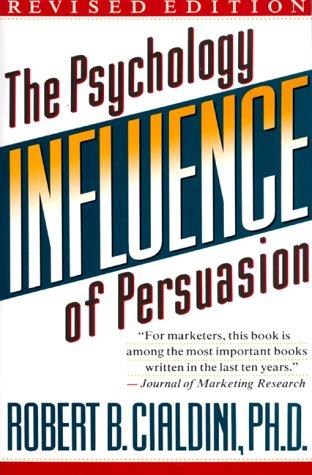
Influence, The Psychology of Persuasion
BookR. Cialdini · 1984
The founding work on the mechanisms of persuasion: six universal principles (reciprocity, consistency, social proof, authority, liking, scarcity) illustrated with striking experiments. A landmark in social psychology.

Thinking, Fast and Slow
BookD. Kahneman · 2011
The sum of Kahneman's work on decision-making: two systems of thought, one fast and intuitive, the other slow and analytical, and the long list of biases that distort our judgements. Essential to understanding others... and yourself.

Nudge
BookR. Thaler & C. Sunstein · 2008
How to steer choices without constraint, by acting on the "choice architecture". The book popularised the nudge and behavioural economics applied to public policy as much as to management.
Judgment under Uncertainty: Heuristics and Biases (Science)
ArticleA. Tversky & D. Kahneman · 1974
The founding paper (Science, 1974) that uncovered the heuristics and biases of judgement, including anchoring. The starting point of the behavioural-economics revolution.
R. Cialdini ("Influence", 1984), D. Kahneman & A. Tversky, R. Thaler, D. Ariely.
On video
Videos to picture The Illusion of Transparency Technique and anchor it through examples.
A verified video selection is being enriched; the search above already surfaces the best videos on the topic.
Technique map
Every technique sits within a network: what it draws on, what it combines with, where it applies, and how to defend against it.
Spot its signals, neutralise it and turn it around with the defensive playbook on this page.
See the counter-techniquesThe illusion of transparency is our tendency to overestimate how far our internal states, nervousness, bluffing, hesitation, are visible to others. In negotiation, understanding this bias is reassuring (we appear far more composed than we believe) and helps us read the other party without relying on appearances.
Verbalise the lever: "I feel you're playing on guilt", and naming it defuses it.
Mistaking an emotional bond for an objective argument.
Our programmes turn theory into a concrete advantage.