Context 1 / 6
Sales negotiation
A salesperson links their offer to convictions the client has already voiced (“you who prize reliability…”), and the client then receives it without suspicion.

🧠 Cognitive science
Behavioural economics & social psychology
R. Cialdini ("Influence", 1984), D. Kahneman & A. Tversky, R. Thaler, D. Ariely.
Full detail in the “Origin & history” section below.

Author of the library
Negotiation lecturer at KEDGE Business School
A rare threefold background serving negotiation: teaching, commercial justice and audit, backed by experience as a company director in Bordeaux.
We seek out and retain above all what confirms our beliefs, and overlook what contradicts them. In negotiation, presenting the other party with points that align with what they already think wins their agreement more readily, and recognising this bias in yourself keeps you from getting locked into your own reading.
At a glance
Vigilance: high (6.0/10) · Preparation required: 6/10
Indicative profile: it situates the “Psychological influence” family as the Cognitive science school practises it, not this technique taken in isolation. Techniques from the same family and school therefore share the same profile. NEGOCOACH editorial rating out of 10, non-experimental · the higher the “relational risk” value, the more costly the technique is to the relationship.
NEGOCOACH assessment
Tactical potential 8.3/10 (effectiveness, impact, discretion) and vigilance high (relational and ethical risk): two distinct readings, deliberately never merged into a single score that would reward risk. NEGOCOACH editorial rating calibrated from the “Psychological influence” family and the “Cognitive science” school. Each criterion is rated out of 10; click to understand what it measures.
How far the technique can carry the negotiation in the intended direction when it is well executed.
Strength of the effect produced on the counterpart's perceptions, emotions and decisions.
How hard it is for the other party to notice the technique is being used. A high value = very discreet.
The information, analysis and rehearsal required upfront to use it effectively.
Potential cost to the relationship and to trust if the technique is spotted, refused or fails. A high value = riskier.
Moral acceptability: fairness, transparency and respect for the counterpart's autonomy. A high value = more defensible.
School grounded in experimental research
The school this technique stems from is grounded in replicated, peer-reviewed experimental work. This indicator qualifies the school, not the experimental validation of this technique taken in isolation.
Indicative NEGOCOACH editorial rating, for teaching purposes. For “Relational risk”, a high value signals a cost to the relationship, not a quality.
Confirmation bias was studied as early as the 1960s by the psychologist Peter Wason, whose celebrated “selection task” shows that people spontaneously seek to confirm a rule rather than to refute it. Decades of research have confirmed the scale of this bias in reasoning, memory and perception. In negotiation it has a twofold reach: it is a lever (moving in the direction of the other party’s convictions) and a trap (persuading yourself that the other party thinks what you believe they think).
The technique consists, offensively, of framing your arguments within the other party’s existing frame of reference and beliefs, so that they are accepted without resistance. Defensively, it requires you to actively seek out what contradicts your own assumptions.
Application by context
A salesperson links their offer to convictions the client has already voiced (“you who prize reliability…”), and the client then receives it without suspicion.
A negotiator presents their arguments within the other party’s value framework, making them easier to accept.
The mediator frames the options in the logic the person has already expressed, so that they recognise themselves in it.
A measure is framed within the opposing camp’s convictions in order to secure a favourable reception.
An agent grounds their arguments in the criteria the buyer has themselves set out, and the buyer validates them all the more willingly.
A solution is presented as an echo of the values the other party already champions, and they receive it as consistent with who they are.
Counter-techniques
Negotiation is also played on defence. Here is how to recognise this technique when it is used against you, and turn it around.
The signals that give it away
The counters that defuse it
Turn it into an advantage
Verbalise the lever: "I feel you're playing on guilt", and naming it defuses it.
Mistaking an emotional bond for an objective argument.
Exploiting confirmation bias makes an argument flow smoothly and become almost irresistible. Its defensive face is just as valuable: being aware of it keeps you from misreading the other party and from getting locked in. Its limits: used offensively, it can tip into intellectual flattery; it does not open the other party up to what genuinely unsettles them.
Useful for getting an idea accepted by anchoring it in the other party’s convictions, and indispensable in preparation for testing your own assumptions. To be set aside when, on the contrary, you need to shift the other party’s point of view.
Business · The recruitment locked in from the first impression: A director interviews three candidates for a key post. Won over from the initial interview by the first, he spends the rest of the process gathering the elements that confirm his choice: he retains the brilliant answers, plays down the warning signs about team management, and reads lukewarm references as modesty. The other two candidates are assessed with far greater severity. Confirmation bias has turned the interview into a search for validation rather than a test. A structured assessment grid, filled in criterion by criterion before any overall impression, would have forced the comparison onto the same basis and neutralised the effect of the first impression.
Sales · The negotiator who hears only what suits them: Convinced his client will accept a price increase because “the product is indispensable”, a salesperson reads every ambiguous signal in his favour: a silence becomes tacit agreement, a question about price becomes a mere formality. He overlooks the repeated signs that the client is actively comparing with a competitor. The result: he has prepared no counter-offer and loses the contract. By listing in advance the evidence that would invalidate his hypothesis (“what would I see if the client were ready to walk away?”), he would have detected the risk in time.
This bias, studied since Peter Wason, turns first against whoever ignores it: the negotiator who seeks only what confirms their reading of the file arrives at the table with a conviction and leaves with a surprise. Knowing it in order to force yourself to seek what contradicts your own thesis is a discipline of thought, and by far its most profitable use. Used on the other party, it raises a problem of a very particular nature that must be named precisely: selecting the elements that align with what they already believe makes it possible to lie without uttering a single false word. Every fact put forward is accurate, every figure is verifiable, and yet the overall picture is false, because what is missing was never said. It is the form of deception hardest to establish and easiest to defend (“I never lied”), which ought to be enough to keep anyone who values their word well clear of it. The defensive test comes down to one question, to be put to the other party as much as to yourself: “what, in this file, proves you wrong?” A counterpart who has nothing to answer does not have a solid file, they have a curated one. Seeking what contradicts you is a discipline; curating for the other party the facts that prove them right is a lie with no false word.
Quick exercise
Answer in your head, then reveal the solution. Memory is built through active recall.
Frequently asked questions
We seek out and retain above all what confirms our beliefs, and overlook what contradicts them. In negotiation, presenting the other party with points that align with what they already think wins their agreement more readily, and recognising this bias in yourself keeps you from getting locked into your own reading.
It sits on the line: effective, but it can tip into manipulation if it exploits an information asymmetry. Use it with measure and without deliberate deceit.
Mistaking an emotional bond for an objective argument. The right reflex: separate the emotion from the substance.
NEGOCOACH does not assess the experimental validation of this technique in isolation. What we document is the grounding of its source school (Cognitive science): school grounded in experimental research. Full detail is in the "At a glance" section of this page.
Practise with AI
Copy, paste into your assistant, replace the [brackets]. Works with ChatGPT, Claude, Gemini, Mistral, Perplexity.
Build your plan before the meeting
You are an expert negotiation coach. Help me prepare to use the "The Confirmation Bias Technique" technique in the following situation: [describe your situation]. Give me: the conditions for success, a 3-step script, my counterpart's likely objections and how to answer them.
Rehearse against an AI counterpart
Play the role of my counterpart in a negotiation. I am going to test the "The Confirmation Bias Technique" technique. React realistically and with resistance, do not give in too quickly, then at the end analyse my performance and suggest 3 concrete improvements.
Analyse a past negotiation
Here is how my negotiation went: [paste the exchanges]. Analyse whether the "The Confirmation Bias Technique" technique was used well, what worked, the mistakes made, and spell out precisely what I could have done better.
References
Founding works of the 🧠 Cognitive science school this technique belongs to.
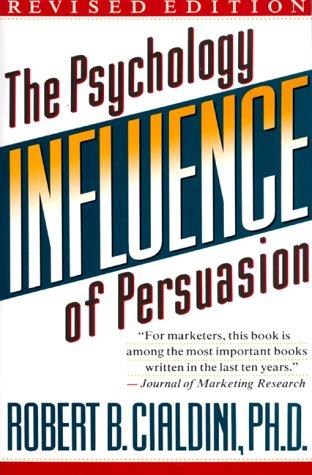
Influence, The Psychology of Persuasion
BookR. Cialdini · 1984
The founding work on the mechanisms of persuasion: six universal principles (reciprocity, consistency, social proof, authority, liking, scarcity) illustrated with striking experiments. A landmark in social psychology.

Thinking, Fast and Slow
BookD. Kahneman · 2011
The sum of Kahneman's work on decision-making: two systems of thought, one fast and intuitive, the other slow and analytical, and the long list of biases that distort our judgements. Essential to understanding others... and yourself.

Nudge
BookR. Thaler & C. Sunstein · 2008
How to steer choices without constraint, by acting on the "choice architecture". The book popularised the nudge and behavioural economics applied to public policy as much as to management.
Judgment under Uncertainty: Heuristics and Biases (Science)
ArticleA. Tversky & D. Kahneman · 1974
The founding paper (Science, 1974) that uncovered the heuristics and biases of judgement, including anchoring. The starting point of the behavioural-economics revolution.
R. Cialdini ("Influence", 1984), D. Kahneman & A. Tversky, R. Thaler, D. Ariely.
On video
Videos to picture The Confirmation Bias Technique and anchor it through examples.
Technique map
Every technique sits within a network: what it draws on, what it combines with, where it applies, and how to defend against it.
Spot its signals, neutralise it and turn it around with the defensive playbook on this page.
See the counter-techniquesWe seek out and retain above all what confirms our beliefs, and overlook what contradicts them. In negotiation, presenting the other party with points that align with what they already think wins their agreement more readily, and recognising this bias in yourself keeps you from getting locked into your own reading.
Verbalise the lever: "I feel you're playing on guilt", and naming it defuses it.
Mistaking an emotional bond for an objective argument.
Our programmes turn theory into a concrete advantage.