
NEGOCOACH
210
Origin : Cognitive science

🧠 Cognitive science

Behavioural economics & social psychology

R. Cialdini ("Influence", 1984), D. Kahneman & A. Tversky, R. Thaler, D. Ariely.

Full detail in the “Origin & history” section below.

210

Confirmation Bias

Exploitable cognitive biases Technique 210 / 360
Alexandre Baumberger

Author of the library

Alexandre Baumberger

Negotiation lecturer at KEDGE Business School

A rare threefold background serving negotiation: teaching, commercial justice and audit, backed by experience as a company director in Bordeaux.

  • Teaching, KEDGE Business School Negotiation lecturer since 2014 (12 years).
  • Commercial justice, Commercial Court Judge from 2018 to 2026: litigation, then insolvency proceedings.
  • Audit & advisory, over 20 years Tax, employment and financial audit in major firms, for large groups.
In brief

Confirmation bias is the tendency to seek out, retain and interpret information in line with one's prior convictions, while overlooking whatever contradicts them. In negotiation, it allows you to persuade not by supplying fresh evidence, but by feeding the other party's existing belief. Studied notably by Peter Wasoni, it makes each of us more receptive to what we already believe.

Reading level

At a glance

Its family profile at a glance

Effectiveness Psychologicalimpact Discretion Preparation Relationalrisk Ethics
8.0 / 10 Tactical potential

Vigilance: high (6.0/10) · Preparation required: 5/10

Grounding in the source school School grounded in experimental research

Indicative profile: it situates the “Exploitable cognitive biases” family as the Cognitive science school practises it, not this technique taken in isolation. Techniques from the same family and school therefore share the same profile. NEGOCOACH editorial rating out of 10, non-experimental · the higher the “relational risk” value, the more costly the technique is to the relationship.

NEGOCOACH assessment

How to read this rating

Tactical potential 8.0/10 (effectiveness, impact, discretion) and vigilance high (relational and ethical risk): two distinct readings, deliberately never merged into a single score that would reward risk. NEGOCOACH editorial rating calibrated from the “Exploitable cognitive biases” family and the “Cognitive science” school. Each criterion is rated out of 10; click to understand what it measures.

  • Effectiveness 8/10 · Very high

    How far the technique can carry the negotiation in the intended direction when it is well executed.

  • Psychological impact 10/10 · Very high

    Strength of the effect produced on the counterpart's perceptions, emotions and decisions.

  • Discretion 6/10 · High

    How hard it is for the other party to notice the technique is being used. A high value = very discreet.

  • Preparation 5/10 · Moderate

    The information, analysis and rehearsal required upfront to use it effectively.

  • Relational risk 5/10 · Moderate

    Potential cost to the relationship and to trust if the technique is spotted, refused or fails. A high value = riskier.

  • Ethics 4/10 · Moderate

    Moral acceptability: fairness, transparency and respect for the counterpart's autonomy. A high value = more defensible.

Level of evidence

School grounded in experimental research

The school this technique stems from is grounded in replicated, peer-reviewed experimental work. This indicator qualifies the school, not the experimental validation of this technique taken in isolation.

Indicative NEGOCOACH editorial rating, for teaching purposes. For “Relational risk”, a high value signals a cost to the relationship, not a quality.

Confirmation Summary


Origin & history

The mechanism was formalised by the psychologist Peter Wason in the 1960s, through his selection task and his "2-4-6" testi, which show that individuals seek to verify their hypotheses rather than to refute them. The phenomenon extends far older intuitions, from Francis Bacon to Festinger's theory of cognitive dissonance (1957), and today underpins the psychology of reasoning.


Definition and principle

Confirmation bias operates at three levels: in the search for information (we ask questions that will prove us right), in interpretation (we read ambiguous facts in our own favour) and in memory (we retain the favourable evidence). It creates highly resilient mental echo chambers. In negotiation, tackling it head-on fails: direct contradiction reinforces the opposing position (the backfire effect). Exploiting it, by contrast, means starting from what the other party believes in order to lead them, step by step, to where you want them.


Concrete examples of application

Application by context

The same technique, across every negotiation settings

Context 1 / 8

Sales negotiation

A salesperson discovers that the client sees themselves as "a rational person who buys smart". They steer their entire pitch towards ROI and hard comparative figures: the client, confirmed in their self-image as a shrewd decision-maker, buys into the solution that "proves" they are choosing well.

How to apply it

First identify the client's core conviction or self-image, then align every argument with it. Frame the solution as proof that they are right to think what they already think.

Strengths

Reduces resistance: the client persuades themselves; buy-in is more solid and lasting.

Weaknesses

Requires an accurate diagnosis of the beliefs: aim wide of the mark and the pitch rings false.
Context 2 / 8

Procurement negotiation

A buyer suspects that the seller is only showing them the studies and references that suit their case. They systematically demand the counter-examples: "Name me a client for whom it did not work, and why." In doing so they force their way out of the sales echo chamber.

How to apply it

Actively ask for the unfavourable evidence and the failure cases; draw up a list of criteria before hearing the arguments, so they do not shift under the influence of the seller's pitch.

Strengths

Neutralises the seller's selective use of information and makes the decision more reliable.

Weaknesses

Time-consuming and may antagonise a supplier unaccustomed to exposing their weaknesses.

Context 3 / 8

Labour negotiation

In collective bargaining, each side arrives convinced of the other's bad faith and reads every gesture in that light. A skilful mediator first gets both parties to acknowledge a minimal point of agreement, a breach in the conviction of incompatibility, before widening it out.

How to apply it

Get each party to state a fact that contradicts its prejudice about the other; start from that point of convergence to crack open the echo chamber.

Strengths

Defuses the self-sustaining spiral of mistrust that blocks dialogue.

Weaknesses

Strong identity-based convictions resist even shared facts.

Context 4 / 8

Crisis management

An entrenched party is convinced that "no one will listen to me anyway". Rather than deny this, the negotiator accumulates small acts consistent with the opposite idea (keeping a minor promise, calling back at the agreed time) until the initial belief can no longer hold up against the facts.

How to apply it

Do not contradict the negative conviction head-on: provide a series of concrete experiences that, taken together, make it untenable.

Strengths

Sidesteps the backfire effect, the only route when logical argument fails.

Weaknesses

Slow and fragile: a single broken promise instantly reconfirms the prejudice.

Context 5 / 8

Political negotiation

A negotiator frames a proposal in their counterpart's ideological terms: the very same measure will be presented as "protecting purchasing power" to the left and "fiscal responsibility" to the right, each side seeing in it confirmation of its own values.

How to apply it

Dress the proposal in the vocabulary and values of the other camp; let them recognise their own convictions in it rather than yours.

Strengths

Allows opposing camps to be won over to the same measure by playing on the framing.

Weaknesses

Double-speak, once exposed, destroys credibility and comes at a heavy price.

Context 6 / 8

Real-estate negotiation

A buyer has already fallen in love with a neighbourhood. Rather than talking up other areas, the agent confirms and documents this attachment (schools, shops, price trends): the buyer, reassured, decides quickly and defends the choice themselves before friends and family.

How to apply it

Spot the emotional favourite or the decisive criterion, then supply the facts that validate it; the buyer turns your confirmation into a personal conviction.

Strengths

Speeds up the decision and makes the buyer an ambassador for their own choice.

Weaknesses

Reinforcing a poor choice exposes the buyer to later regret that reflects back on the agent.

Context 7 / 8

Cross-cultural negotiation

A Western negotiator believes that a prolonged silence on the Japanese side signals disagreement, and reads every signal in that light, which leads them to concede needlessly. The silence was merely a norm of reflection: their confirmation bias made them read a hostility that did not exist.

How to apply it

Suspend your cultural assumptions; actively look for the facts that disprove them before acting on an interpretation. Check the meaning of signals rather than confirming them.

Strengths

Prevents costly errors in reading the codes of the other culture.

Weaknesses

Demands constant vigilance against one's own reflexes, hard to sustain under pressure.

Context 8 / 8

Family negotiation

In a dispute, a member convinced that another "just does as they please" reads every one of their initiatives as a provocation, even the conciliatory gestures. The negotiation stalls as long as this interpretive frame goes unnamed.

How to apply it

Get the belief that filters the facts to be made explicit, then point together to a recent counter-example; that is the only way to open a breach.

Strengths

Makes visible the mechanism that poisons lasting family relationships.

Weaknesses

Long-standing family narratives are extremely resistant to factual contradiction.


Counter-techniques

Spot and neutralise this technique

Negotiation is also played on defence. Here is how to recognise this technique when it is used against you, and turn it around.

Detect

The signals that give it away

  • An extreme first figure (anchoring)
  • A framing as loss rather than gain
  • The endowment effect ("it's already yours")

Neutralise

The counters that defuse it

  • Reject the anchor and set your own
  • Reframe the decision as a gain
  • Assess out of context, on the facts

Turn around

Turn it into an advantage

Set your own anchor first: it will structure the discussion.

The trap to avoid

Reasoning from the other side's figure.

In brief

  • Difficulty: Advanced
  • Estimated effectiveness: High
  • Time to implement: Gradual, requires prior diagnosis
  • Fields of application: Sales, Mediation, Politics, Cross-cultural negotiation, Management
  • Synonyms: Confirmation bias, Verification bias, Cognitive echo chamber
  • Tags: confirmation bias, Wason, dissonance, beliefs, framing

Strengths and Weaknesses

Confirmation bias offers a route of influence of great gentleness: instead of fighting the other party's convictions, which only reinforces them, you embrace them in order to lead them where you want, such that they persuade themselves. The buy-in obtained is then solid and defended by the person concerned. Its limit: it requires an accurate diagnosis of the beliefs, and exploiting it through double-speak comes at a very heavy price once uncovered.


When to use this technique?

To be used whenever you need to persuade a counterpart with strongly held convictions, or to defuse self-sustaining mistrust. Indispensable for avoiding counterproductive head-on confrontation. To be avoided when you do not know the other party's beliefs well enough, and to be watched in yourself: the best negotiator first hunts down their own confirmation bias.


How to recognise and counter this technique

Recognise it: the other party presents you only with evidence pointing one way and carefully avoids the objections. Neutralise it: explicitly demand the counter-examples and set your decision criteria before listening to the pitch. Turn it around: restate their own thesis using the facts they have set aside, to force them out of their echo chamber.


Limits and ethics

Embracing another's beliefs the better to serve them is acceptable. The ethical drift lies in double-speak (saying one thing to one person and the opposite to another) and in exploiting a false prejudice to deceive. The most insidious risk remains falling prey to the bias yourself: overrating your own arguments and ignoring the weak signals of failure. Here intellectual honesty is a condition of performance as much as of ethics.


Variants and related techniques

It combines with framing and the halo effect. Akin to Festinger's cognitive dissonance and the backfire effect. It stands methodologically opposed to Popper's falsifiability, which the astute negotiator applies to themselves so as not to be fooled by their own certainties.


Further reading

  • Peter Wason, "On the Failure to Eliminate Hypotheses in a Conceptual Task", Quarterly Journal of Experimental Psychology, 1960.
  • Leon Festinger, A Theory of Cognitive Dissonance, 1957.
  • Raymond Nickerson, "Confirmation Bias: A Ubiquitous Phenomenon in Many Guises", Review of General Psychology, 1998.

Objectives of the technique

  • Becoming aware of one's own tendency to retain only the information that supports one's initial diagnosis of the other party, their ZOPA or their BATNA.
  • Structuring one's preparation so as to actively test one's hypotheses (seeking disproof) rather than confirm them.
  • Spotting the bias in the other party in order to understand what locks their position and help them revise their reading.
  • Avoiding the deadlocks and escalations that stem from a selective interpretation of the signals at the table.
  • Improving the quality of concessions and agreements by grounding decisions in genuinely examined contradictory data.

Famous cases

Sales · The buyer convinced the supplier is bluffing: A buyer enters a negotiation persuaded that their supplier "cannot afford to lose the contract". Every ambiguous signal (a delay in replying, the conciliatory tone of a sales rep) is read as confirmation of this supposed weakness. They ignore the contrary indications: a full order book, an announced rise in raw-material prices. Anchored in their hypothesis, they harden their price demands. The supplier, whose margin is genuinely under pressure, pulls out of the tender. The buyer is left with no fallback option just weeks before running out of stock. A representative case illustrating how confirmation bias turns an untested hypothesis into a costly certainty.


Common mistakes

  • Seeking only the information that validates one's starting hypothesis, instead of actively looking for what might refute it.
  • Reading every ambiguous signal from the other party as confirmation of one's own view (supposed weakness, bluff or urgency).
  • Mistaking an accumulation of concordant clues for proof, without ever testing the opposite hypothesis.
  • Asking leading questions that invite only an answer confirming what one already believes.
  • Relying on unverified impressions to assess the other party's BATNA rather than on established facts.

Scientific foundations

  • Raymond S. Nickerson (1998) Confirmation Bias: A Ubiquitous Phenomenon in Many Guises Review of General Psychology, 2(2), 175-220, DOI: 10.1037/1089-2680.2.2.175
  • Peter C. Wason (1960) On the failure to eliminate hypotheses in a conceptual task Quarterly Journal of Experimental Psychology, 12(3), 129-140, DOI: 10.1080/17470216008416717
  • Daniel Kahneman (2011) Thinking, Fast and Slow Farrar, Straus and Giroux

Quick exercise

Test yourself before answering

Answer in your head, then reveal the solution. Memory is built through active recall.

1 Quels signaux doivent vous alerter ?
  • An extreme first figure (anchoring)
  • A framing as loss rather than gain
  • The endowment effect ("it's already yours")
2 Quelles parades appliquer ?
  • Reject the anchor and set your own
  • Reframe the decision as a gain
  • Assess out of context, on the facts

Frequently asked questions

The questions we get most

What is the "Confirmation Bias" technique?

Confirmation bias is the tendency to seek out, retain and interpret information in line with one's prior convictions, while overlooking whatever contradicts them. In negotiation, it allows you to persuade not by supplying fresh evidence, but by feeding the other party's existing belief. Studied notably by Peter Wasoni, it makes each of us more receptive to what we already believe.

Is the "Confirmation Bias" technique ethical?

It sits on the line: effective, but it can tip into manipulation if it exploits an information asymmetry. Use it with measure and without deliberate deceit.

How do you defend against "Confirmation Bias"?

Reasoning from the other side's figure. The right reflex: reject the anchor and set your own.

What is the "Confirmation Bias" technique based on?

NEGOCOACH does not assess the experimental validation of this technique in isolation. What we document is the grounding of its source school (Cognitive science): school grounded in experimental research. Full detail is in the "At a glance" section of this page.

Practise with AI

Three ready-to-use prompts

Copy, paste into your assistant, replace the [brackets]. Works with ChatGPT, Claude, Gemini, Mistral, Perplexity.

Prepare

Build your plan before the meeting

You are an expert negotiation coach. Help me prepare to use the "Confirmation Bias" technique in the following situation: [describe your situation]. Give me: the conditions for success, a 3-step script, my counterpart's likely objections and how to answer them.

Simulate

Rehearse against an AI counterpart

Play the role of my counterpart in a negotiation. I am going to test the "Confirmation Bias" technique. React realistically and with resistance, do not give in too quickly, then at the end analyse my performance and suggest 3 concrete improvements.

Debrief

Analyse a past negotiation

Here is how my negotiation went: [paste the exchanges]. Analyse whether the "Confirmation Bias" technique was used well, what worked, the mistakes made, and spell out precisely what I could have done better.

References

Bibliography & credible sources

Founding works of the 🧠 Cognitive science school this technique belongs to.

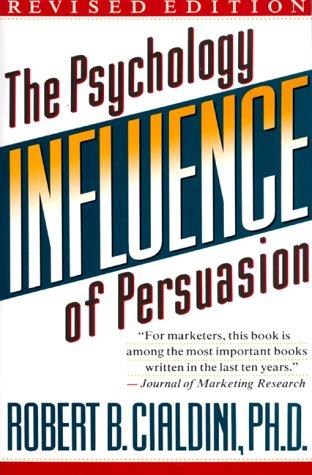
  • Cover: Influence, The Psychology of Persuasion

    Influence, The Psychology of Persuasion

    Book

    R. Cialdini · 1984

    The founding work on the mechanisms of persuasion: six universal principles (reciprocity, consistency, social proof, authority, liking, scarcity) illustrated with striking experiments. A landmark in social psychology.

  • Cover: Thinking, Fast and Slow

    Thinking, Fast and Slow

    Book

    D. Kahneman · 2011

    The sum of Kahneman's work on decision-making: two systems of thought, one fast and intuitive, the other slow and analytical, and the long list of biases that distort our judgements. Essential to understanding others... and yourself.

  • Cover: Nudge

    Nudge

    Book

    R. Thaler & C. Sunstein · 2008

    How to steer choices without constraint, by acting on the "choice architecture". The book popularised the nudge and behavioural economics applied to public policy as much as to management.

  • Judgment under Uncertainty: Heuristics and Biases (Science)

    Article

    A. Tversky & D. Kahneman · 1974

    The founding paper (Science, 1974) that uncovered the heuristics and biases of judgement, including anchoring. The starting point of the behavioural-economics revolution.

R. Cialdini ("Influence", 1984), D. Kahneman & A. Tversky, R. Thaler, D. Ariely.

On video

See the technique in action

Videos to picture Confirmation Bias and anchor it through examples.

Technique map

Where this technique sits

Every technique sits within a network: what it draws on, what it combines with, where it applies, and how to defend against it.

Levers engaged

biases & emotions

Countered by

Spot its signals, neutralise it and turn it around with the defensive playbook on this page.

See the counter-techniques

Key takeaways

  • En une phrase

    Confirmation bias is the tendency to seek out, retain and interpret information in line with one's prior convictions, while overlooking whatever contradicts them. In negotiation, it allows you to persuade not by supplying fresh evidence, but by feeding the other party's existing belief. Studied notably by Peter Wasoni, it makes each of us more receptive to what we already believe.

  • The right reflex

    Set your own anchor first: it will structure the discussion.

  • Never do this

    Reasoning from the other side's figure.

8.0/10 tactical potential High vigilance School grounded in experimental research

Master this technique in real situations?

Our programmes turn theory into a concrete advantage.

Explore our programmes
Call Book a call