
NEGOCOACH
214
Origin : Cognitive science

🧠 Cognitive science

Behavioural economics & social psychology

R. Cialdini ("Influence", 1984), D. Kahneman & A. Tversky, R. Thaler, D. Ariely.

Full detail in the “Origin & history” section below.

214

The Sunk Cost Bias

Exploitable cognitive biases Technique 214 / 360
Alexandre Baumberger

Author of the library

Alexandre Baumberger

Negotiation lecturer at KEDGE Business School

A rare threefold background serving negotiation: teaching, commercial justice and audit, backed by experience as a company director in Bordeaux.

  • Teaching, KEDGE Business School Negotiation lecturer since 2014 (12 years).
  • Commercial justice, Commercial Court Judge from 2018 to 2026: litigation, then insolvency proceedings.
  • Audit & advisory, over 20 years Tax, employment and financial audit in major firms, for large groups.
In brief

The sunk cost bias drives us to persevere with a course of action because of resources already committed, money, time, effort, instead of deciding on future prospects alone. We « do not want to have lost everything ». In negotiation, the investment already made by the other party becomes a lever to push them to see it through. Studied notably by Arkes and Blumeri.

Reading level

At a glance

Its family profile at a glance

Effectiveness Psychologicalimpact Discretion Preparation Relationalrisk Ethics
8.0 / 10 Tactical potential

Vigilance: high (6.0/10) · Preparation required: 5/10

Grounding in the source school School grounded in experimental research

Indicative profile: it situates the “Exploitable cognitive biases” family as the Cognitive science school practises it, not this technique taken in isolation. Techniques from the same family and school therefore share the same profile. NEGOCOACH editorial rating out of 10, non-experimental · the higher the “relational risk” value, the more costly the technique is to the relationship.

NEGOCOACH assessment

How to read this rating

Tactical potential 8.0/10 (effectiveness, impact, discretion) and vigilance high (relational and ethical risk): two distinct readings, deliberately never merged into a single score that would reward risk. NEGOCOACH editorial rating calibrated from the “Exploitable cognitive biases” family and the “Cognitive science” school. Each criterion is rated out of 10; click to understand what it measures.

  • Effectiveness 8/10 · Very high

    How far the technique can carry the negotiation in the intended direction when it is well executed.

  • Psychological impact 10/10 · Very high

    Strength of the effect produced on the counterpart's perceptions, emotions and decisions.

  • Discretion 6/10 · High

    How hard it is for the other party to notice the technique is being used. A high value = very discreet.

  • Preparation 5/10 · Moderate

    The information, analysis and rehearsal required upfront to use it effectively.

  • Relational risk 5/10 · Moderate

    Potential cost to the relationship and to trust if the technique is spotted, refused or fails. A high value = riskier.

  • Ethics 4/10 · Moderate

    Moral acceptability: fairness, transparency and respect for the counterpart's autonomy. A high value = more defensible.

Level of evidence

School grounded in experimental research

The school this technique stems from is grounded in replicated, peer-reviewed experimental work. This indicator qualifies the school, not the experimental validation of this technique taken in isolation.

Indicative NEGOCOACH editorial rating, for teaching purposes. For “Relational risk”, a high value signals a cost to the relationship, not a quality.

Sunk Cost in Brief


Origin & history

The sunk cost fallacy was formalised by Hal Arkes and Catherine Blumer in 1985 in Organizational Behavior and Human Decision Processes. It relates to the notion of escalation of commitment described by Barry Stawi and is rooted in loss aversion: to give up is to formally record the loss of what has already been invested.


Definition and principle

Rationally, a cost already committed and non-recoverable should carry no weight in a decision, which ought to depend only on the costs and benefits still to come. The bias does the opposite: the more we have invested, the more we dig in, even when giving up would be optimal. It feeds on the need for consistency (justifying past choices) and the pain of admitting a mistake. In negotiation, accumulating the other party's small commitments (time spent, stages completed, concessions made) makes giving up ever more costly for them.


Concrete examples of application

Application by context

The same technique, across every negotiation settings

Context 1 / 8

Sales negotiation

A seller walks the prospect through a series of engaging steps, a free audit, a scoping workshop, a bespoke mock-up. By the time it comes to signing, the client has invested so much time that giving up would mean « having done it all for nothing »: they close the deal.

How to apply it

Multiply the micro-commitments before the final decision (diagnosis, personalisation, meetings); each stage completed raises the psychological cost of pulling out.

Strengths

Makes giving up increasingly difficult as the process advances.

Weaknesses

A client who becomes aware of the mechanism feels trapped and may break off on principle.
Context 2 / 8

Procurement negotiation

A buyer realises they are staying with an underperforming supplier « because we have already invested so much in this project ». A clear-headed decision-maker settles it: the sums already spent are lost whatever happens; all that matters is the best option for the future.

How to apply it

Reason every decision to continue on future costs and benefits only; explicitly set aside what has already been spent. Set exit milestones decided in the cold light of day.

Strengths

Guards against costly escalation and obstinacy in a poor choice.

Weaknesses

Admitting the pull-out exposes one to an internal political cost (acknowledging a mistaken commitment).

Context 3 / 8

Labour negotiation

After months of exhausting collective bargaining, no party wants to have « talked for nothing ». This shared investment becomes a lever: the mediator recalls the ground already covered to push towards a final agreement that fatigue alone would not justify.

How to apply it

Capitalise on the time already invested together to motivate the agreement (« we are not going to waste three months of work »); mutual commitment deters everyone from giving it all up.

Strengths

Turns the length of the discussions into an incentive to conclude.

Weaknesses

May lead to a poor agreement signed so as not to « lose » the time spent.

Context 4 / 8

Crisis management

A party locked into an all-or-nothing stance stays trapped in it so as not to admit that its sacrifices have been in vain, this is escalation of commitment. The negotiator offers it an honourable way out that recognises the value of what has been done, without demanding an admission of error.

How to apply it

Never ask anyone to admit that it was all in vain; propose a framing in which stopping honours the past investment rather than disowning it, so as to lift the consistency deadlock.

Strengths

Defuses the obstinacy born of a refusal to admit a loss.

Weaknesses

A counterpart whose identity is fused with the cause will resist any way out.

Context 5 / 8

Political negotiation

A government keeps up a major project whose costs are spiralling, because « billions have already been spent » and abandoning it would be a public admission of failure. The escalation continues well beyond the point of economic rationality.

How to apply it

To justify continuing, foreground the sums already invested and the admission of failure that abandonment would be; to stop instead, offer a narrative that revalues the past and absolves the decision to halt.

Strengths

The cost already committed is a powerful argument for continuity in public debate.

Weaknesses

Visible obstinacy ends up costing more politically than the admission of a courageous halt.

Context 6 / 8

Real-estate negotiation

A buyer has already spent on application fees, surveys and viewings; when a defect comes to light, they hesitate to pull out « after all they have committed » and overpay for a property they would refuse in the cold light of day. The seller, for their part, banks on this growing commitment.

How to apply it

As a buyer, ring-fence the fees already committed (lost whatever happens) from the purchase decision itself. As a seller, let the buyer invest themselves before the price phase.

Strengths

Explains why a buyer well advanced in the process finds it hard to walk away.

Weaknesses

A major defect revealed outweighs the cost already incurred all the same.

Context 7 / 8

Cross-cultural negotiation

In relationship-based cultures, the long time spent building trust (meals, visits, repeated exchanges) constitutes an investment that both parties are reluctant to « waste »: this mutual commitment weighs more heavily than in a transactional culture where decisions are made quickly.

How to apply it

In long-relationship cultures, value the ground covered together as an incentive to conclude; in transactional cultures, do not rely on this effect, which is all but non-existent.

Strengths

Aligns the lever with the cultural weight of the relationship invested.

Weaknesses

Overestimating this effect in a transactional culture leads to a strategic misreading.

Context 8 / 8

Family negotiation

A family carries on with the costly renovation of a house « because we have already put so much into it », when selling at a loss would be wiser. The attachment to what has already been invested, financial and emotional, prevents a clear-headed decision.

How to apply it

Separate the future decision (keep or sell) from the past invested (lost in either case); ask the question « if we were starting from scratch today, what would we do? ».

Strengths

Unblocks a decision paralysed by the refusal to « lose » the past investment.

Weaknesses

The emotional attachment to the property compounds the sunk cost and clouds the calculation.


Counter-techniques

Spot and neutralise this technique

Negotiation is also played on defence. Here is how to recognise this technique when it is used against you, and turn it around.

Detect

The signals that give it away

  • An extreme first figure (anchoring)
  • A framing as loss rather than gain
  • The endowment effect ("it's already yours")

Neutralise

The counters that defuse it

  • Reject the anchor and set your own
  • Reframe the decision as a gain
  • Assess out of context, on the facts

Turn around

Turn it into an advantage

Set your own anchor first: it will structure the discussion.

The trap to avoid

Reasoning from the other side's figure.

In short

  • Difficulty: Intermediate
  • Estimated effectiveness: High
  • Time to implement: Builds up through the accumulation of commitments
  • Fields of application: Sales, Project management, Labour negotiation, Politics, Real estate
  • Synonyms: Sunk cost fallacy, Sunk costs, Escalation of commitment
  • Tags: sunk cost, escalation, Arkes, commitment, loss aversion

Strengths and Weaknesses

The sunk cost bias turns each commitment made by the other party into an incentive to see it through: the more time and effort they have invested, the more it costs them to give up. Accumulating micro-steps makes giving up all but impossible. Its limit: once uncovered, the mechanism produces a sense of entrapment and triggers a break-off; and when suffered, it drives one to dig in on a choice that has turned bad.


When to use this technique?

To be exploited by building a path of progressive commitments (trials, workshops, stages) that make giving up costly. To be aware of so as not to be caught by it: every decision to continue must be judged on the future alone. Decisive in long processes and major projects, where escalation lies in wait.


How to recognise and counter this technique

Recognise it: you are constantly reminded of « all you have already invested » in order to justify going further. Neutralise it: treat the past as lost whatever happens and decide on future costs and benefits alone; ask yourself « what if I were starting from scratch? ». Turn it around: remind the other party of their own investment to prompt them to conclude on your terms.


Limits and ethics

Walking a client through engaging steps is a common and acceptable commercial practice as long as no information is concealed. The ethical drift appears when the path aims to trap a client, sinking them deeper into commitment to hide from them that they ought to give up, especially if they are vulnerable. As for oneself, the real danger is escalation: clear-headedness means knowing how to cut one's losses despite the discomfort of admitting the mistake.


Variants and related techniques

Stems from loss aversion and merges with Staw's escalation of commitment. Combines with Cialdini's consistency and commitment, as well as the foot-in-the-door technique. A relative of the status quo bias. It stands opposed to marginal (forward-looking) reasoning, which considers only future costs.


Further reading

  • Hal Arkes & Catherine Blumer, « The Psychology of Sunk Cost », Organizational Behavior and Human Decision Processes, 1985.
  • Barry Staw, « Knee-Deep in the Big Muddy: A Study of Escalating Commitment to a Chosen Course of Action », Organizational Behavior and Human Performance, 1976.
  • Daniel Kahneman, Thinking, Fast and Slow, 2011.

Objectives of the technique

  • Recognise in oneself the temptation to continue a negotiation or project solely because one has already invested time, money or reputation in it
  • Make decisions on the basis of FUTURE costs and benefits, neutralising the weight of past non-recoverable expenditure
  • Understand and anticipate this bias in the opposing party in order to assess their real room for manoeuvre and their dependence on the agreement
  • Protect one's BATNA by avoiding degrading it mentally as the investment in the negotiation grows
  • Know, ethically, not to exploit this bias in a manipulative way (induced escalation of commitment) at the risk of destroying trust and the relationship

Famous cases

Business · The IT project no one dares stop: A management team has already spent €4M on an in-house piece of software that keeps piling up delays and defects. An audit shows that an off-the-shelf product would do better for €800k. Yet the managers argue for injecting a further €2M « so as not to lose what we have invested ». This is the sunk cost bias: the €4M is spent whatever happens and should no longer weigh in the decision. The right question is not « how much have we already put in? » but « from now on, which option costs the least and returns the most? ». Reframing it this way makes it possible to decide without pride or the fear of « losing » the past investment steering the choice.

Everyday life · Drawn-out property purchase negotiations: A buyer has spent three months of viewings, surveys and notarial appointments on a property. On discovering a serious defect, they are tempted to accept anyway, « after all that time spent ». The months gone by are non-recoverable: they do not make the property any better. A clear-headed negotiator isolates these past costs and decides solely on the future value of the property against their alternatives, even if it means pulling out, however late.


Common mistakes

  • Confusing « not wasting » with « deciding rationally »: the money and time already committed are lost whatever we decide and must no longer enter the calculation
  • Letting ego and the fear of « admitting a mistake » turn mere perseverance into a costly escalation of commitment
  • Justifying a final concession by « we have gone too far to give up now » instead of comparing it to one's updated BATNA
  • Deliberately exploiting the bias in the opponent (making them invest ever more to render them captive): effective in the short term, but destructive of trust and of the lasting relationship
  • Forgetting that the time invested in the negotiation often degrades our own perceived BATNA, making us more vulnerable to the bias than the other party

Scientific foundations

  • Hal R. Arkes & Catherine Blumer (1985) The Psychology of Sunk Cost Organizational Behavior and Human Decision Processes, 35(1), 124-140
  • Daniel Kahneman & Amos Tversky (1979) Prospect Theory: An Analysis of Decision under Risk Econometrica, 47(2), 263-291, DOI: 10.2307/1914185
  • Richard H. Thaler (1980) Toward a Positive Theory of Consumer Choice Journal of Economic Behavior & Organization, 1(1), 39-60, DOI: 10.1016/0167-2681(80)90051-7

Quick exercise

Test yourself before answering

Answer in your head, then reveal the solution. Memory is built through active recall.

1 Quels signaux doivent vous alerter ?
  • An extreme first figure (anchoring)
  • A framing as loss rather than gain
  • The endowment effect ("it's already yours")
2 Quelles parades appliquer ?
  • Reject the anchor and set your own
  • Reframe the decision as a gain
  • Assess out of context, on the facts

Frequently asked questions

The questions we get most

What is the "The Sunk Cost Bias" technique?

The sunk cost bias drives us to persevere with a course of action because of resources already committed, money, time, effort, instead of deciding on future prospects alone. We « do not want to have lost everything ». In negotiation, the investment already made by the other party becomes a lever to push them to see it through. Studied notably by Arkes and Blumeri.

Is the "The Sunk Cost Bias" technique ethical?

It sits on the line: effective, but it can tip into manipulation if it exploits an information asymmetry. Use it with measure and without deliberate deceit.

How do you defend against "The Sunk Cost Bias"?

Reasoning from the other side's figure. The right reflex: reject the anchor and set your own.

What is the "The Sunk Cost Bias" technique based on?

NEGOCOACH does not assess the experimental validation of this technique in isolation. What we document is the grounding of its source school (Cognitive science): school grounded in experimental research. Full detail is in the "At a glance" section of this page.

Practise with AI

Three ready-to-use prompts

Copy, paste into your assistant, replace the [brackets]. Works with ChatGPT, Claude, Gemini, Mistral, Perplexity.

Prepare

Build your plan before the meeting

You are an expert negotiation coach. Help me prepare to use the "The Sunk Cost Bias" technique in the following situation: [describe your situation]. Give me: the conditions for success, a 3-step script, my counterpart's likely objections and how to answer them.

Simulate

Rehearse against an AI counterpart

Play the role of my counterpart in a negotiation. I am going to test the "The Sunk Cost Bias" technique. React realistically and with resistance, do not give in too quickly, then at the end analyse my performance and suggest 3 concrete improvements.

Debrief

Analyse a past negotiation

Here is how my negotiation went: [paste the exchanges]. Analyse whether the "The Sunk Cost Bias" technique was used well, what worked, the mistakes made, and spell out precisely what I could have done better.

References

Bibliography & credible sources

Founding works of the 🧠 Cognitive science school this technique belongs to.

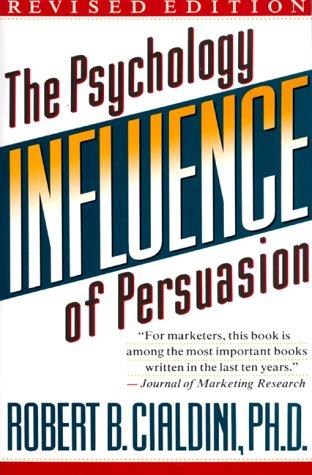
  • Cover: Influence, The Psychology of Persuasion

    Influence, The Psychology of Persuasion

    Book

    R. Cialdini · 1984

    The founding work on the mechanisms of persuasion: six universal principles (reciprocity, consistency, social proof, authority, liking, scarcity) illustrated with striking experiments. A landmark in social psychology.

  • Cover: Thinking, Fast and Slow

    Thinking, Fast and Slow

    Book

    D. Kahneman · 2011

    The sum of Kahneman's work on decision-making: two systems of thought, one fast and intuitive, the other slow and analytical, and the long list of biases that distort our judgements. Essential to understanding others... and yourself.

  • Cover: Nudge

    Nudge

    Book

    R. Thaler & C. Sunstein · 2008

    How to steer choices without constraint, by acting on the "choice architecture". The book popularised the nudge and behavioural economics applied to public policy as much as to management.

  • Judgment under Uncertainty: Heuristics and Biases (Science)

    Article

    A. Tversky & D. Kahneman · 1974

    The founding paper (Science, 1974) that uncovered the heuristics and biases of judgement, including anchoring. The starting point of the behavioural-economics revolution.

R. Cialdini ("Influence", 1984), D. Kahneman & A. Tversky, R. Thaler, D. Ariely.

On video

See the technique in action

Videos to picture The Sunk Cost Bias and anchor it through examples.

Technique map

Where this technique sits

Every technique sits within a network: what it draws on, what it combines with, where it applies, and how to defend against it.

Levers engaged

biases & emotions

Countered by

Spot its signals, neutralise it and turn it around with the defensive playbook on this page.

See the counter-techniques

Key takeaways

  • En une phrase

    The sunk cost bias drives us to persevere with a course of action because of resources already committed, money, time, effort, instead of deciding on future prospects alone. We « do not want to have lost everything ». In negotiation, the investment already made by the other party becomes a lever to push them to see it through. Studied notably by Arkes and Blumeri.

  • The right reflex

    Set your own anchor first: it will structure the discussion.

  • Never do this

    Reasoning from the other side's figure.

8.0/10 tactical potential High vigilance School grounded in experimental research

Master this technique in real situations?

Our programmes turn theory into a concrete advantage.

Explore our programmes
Call Book a call