
NEGOCOACH
270
Origin : Methods & tactics

🛠️ Methods & tactics

Anglo-Saxon schools of negotiation

C. Karrass, R. Dawson, H. Cohen, N. Rackham (SPIN), T. Gordon (DESC / active listening).

Full detail in the “Origin & history” section below.

270

The Columbo Close

Sales closing Technique 270 / 360
Alexandre Baumberger

Author of the library

Alexandre Baumberger

Negotiation lecturer at KEDGE Business School

A rare threefold background serving negotiation: teaching, commercial justice and audit, backed by experience as a company director in Bordeaux.

  • Teaching, KEDGE Business School Negotiation lecturer since 2014 (12 years).
  • Commercial justice, Commercial Court Judge from 2018 to 2026: litigation, then insolvency proceedings.
  • Audit & advisory, over 20 years Tax, employment and financial audit in major firms, for large groups.
In brief

The Columbo close takes its name from the famous television detectivei: at the very moment the other party lowers their guard, you drop a « just one more thing… » that reopens the crucial subject. The apparent casualness disarms their vigilance and brings out the real objection, or the real decision.

Reading level

At a glance

Its family profile at a glance

Effectiveness Psychologicalimpact Discretion Preparation Relationalrisk Ethics
7.0 / 10 Tactical potential

Vigilance: moderate (5.0/10) · Preparation required: 4/10

Grounding in the source school School grounded in research and field practice

Indicative profile: it situates the “Sales closing” family as the Methods & tactics school practises it, not this technique taken in isolation. Techniques from the same family and school therefore share the same profile. NEGOCOACH editorial rating out of 10, non-experimental · the higher the “relational risk” value, the more costly the technique is to the relationship.

NEGOCOACH assessment

How to read this rating

Tactical potential 7.0/10 (effectiveness, impact, discretion) and vigilance moderate (relational and ethical risk): two distinct readings, deliberately never merged into a single score that would reward risk. NEGOCOACH editorial rating calibrated from the “Sales closing” family and the “Methods & tactics” school. Each criterion is rated out of 10; click to understand what it measures.

  • Effectiveness 8/10 · Very high

    How far the technique can carry the negotiation in the intended direction when it is well executed.

  • Psychological impact 7/10 · High

    Strength of the effect produced on the counterpart's perceptions, emotions and decisions.

  • Discretion 6/10 · High

    How hard it is for the other party to notice the technique is being used. A high value = very discreet.

  • Preparation 4/10 · Moderate

    The information, analysis and rehearsal required upfront to use it effectively.

  • Relational risk 4/10 · Moderate

    Potential cost to the relationship and to trust if the technique is spotted, refused or fails. A high value = riskier.

  • Ethics 5/10 · Moderate

    Moral acceptability: fairness, transparency and respect for the counterpart's autonomy. A high value = more defensible.

Level of evidence

School grounded in research and field practice

The school this technique stems from combines academic work with long field practice. This indicator qualifies the school, not this technique taken in isolation.

Indicative NEGOCOACH editorial rating, for teaching purposes. For “Relational risk”, a high value signals a cost to the relationship, not a quality.

The Columbo Close in a nutshell


Origin & history

Formalised in modern sales literature (notably by Jeb Blount), the Columbo close draws on an old selling intuition: it is when the tension eases, often on the doorstep, that the other party gives up the most sincere information. It is akin to the principle of the afterthoughti, the remark tossed out once the moment has passed.


Definition and principle

Where the classic close concentrates its effort on the high point of the meeting, the Columbo plays on the aftermath: the phase when the other person, believing the exchange is over, relaxes their control. The mechanism is that of the drop in vigilance: an objection or a request presented as incidental, while the guard is down, elicits a franker answer than in full confrontation. The seller uses it to surface the unspoken objection (« by the way, what is really holding you back? ») or to slip in, as if in passing, the decisive question.


Concrete examples of application

Application by context

The same technique, across every negotiation settings

Context 1 / 8

Sales negotiation

The meeting seems over, the seller packs up their things, stands, then turns back: « Ah, just one thing that intrigues me, between us, what would really make you hesitate? » Relaxed, the client lets slip the objection they had held back the whole meeting: the budget must go before a committee they dread. The real difficulty is finally on the table.

How to apply it

Reserve the Columbo for the very end, when the negotiating posture has dropped away. Adopt a light, curious, non-commercial tone; its effectiveness comes from the apparent absence of stakes. Use it to surface the hidden objection, not to renew a pressure that the meeting failed to resolve.

Strengths

Brings out the real objection that direct confrontation could not obtain; disarms defences through casualness; powerful for understanding the true sticking point.

Weaknesses

Becomes a crude ploy if repeated or theatrical; a counterpart who spots the device feels manipulated at the very moment they had opened up.
Context 2 / 8

Procurement negotiation

A buyer senses the seller « breaking camp » then coming back with an innocent air. He recognises the false-departure manoeuvre and immediately re-armours himself: « Nice last-minute try, but everything that matters we have already put in writing. » He refuses to reopen a subject in an informal register that would escape traceability.

How to apply it

To neutralise the Columbo, the buyer treats any « one more thing » with the same rigour as the rest, and refuses commitments made in the informal doorstep register.

Strengths

By keeping his vigilance to the very end, the buyer deprives the technique of its mainspring, the letting-go.

Weaknesses

Permanent wariness may cause him to miss a sincere opening from a seller who has come, at the close of the exchange, to clarify a genuine point.

Context 3 / 8

Labour negotiation

At the end of a negotiation meeting, as everyone gathers up their files, a representative slips in: « By the way, on the seniority bonus, that really is the true sticking point, isn't it? » Asked outside the formal frame, the question obtains an admission that the official table had kept silent.

How to apply it

Place the substantive question in the informal gap at the end of the session, where institutional postures relax and candour returns.

Strengths

Reveals the true crux of a conflict that the formal stage prevented anyone from naming.

Weaknesses

An admission obtained this way is not binding; the other side may disown it as soon as they return to the official frame.

Context 4 / 8

Crisis management

A negotiator, after a long exchange, pretends to conclude then gently adds: « One last thing, what would you really need to feel safe now? » The question, asked once the tension has eased, obtains the real need, never voiced under pressure.

How to apply it

Wait for de-escalation before asking, in an almost confidential mode, the question of the deep need: it cannot be obtained head-on.

Strengths

Reaches the authentic need once the emotional guard has dropped, where direct confrontation was failing.

Weaknesses

Badly judged, it reawakens vigilance and makes the other party regret their moment of openness.

Context 5 / 8

Political negotiation

On the margins of an official meeting, a negotiator holds his counterpart back near the exit: « Between us, off the record, on what could you really move? » The informal setting of the corridor allows admissions that the official table, under scrutiny, forbids.

How to apply it

Exploit the corridor and the « off the record »: real diplomacy often plays out in the gaps, away from the institutional gaze.

Strengths

Opens a channel of candour that is inaccessible within the formal, monitored frame.

Weaknesses

What is said « off the record » is not binding and can be denied; an « off the record » remark that leaks discredits its author.

Context 6 / 8

Real-estate negotiation

The agent walks the visitors to the door, exchanges small talk, then: « Ah, I nearly forgot, if price were not quite an obstacle, this would be the property, wouldn't it? » The answer, given in the relaxation of departure, reveals whether the sticking point really is price or something else.

How to apply it

Ask the final qualifying question at the moment of departure, to distinguish the real sticking point (price, doubt, an ongoing comparison) once the pressure of the viewing has lifted.

Strengths

Makes the buyer say what the formal viewing kept silent; guides the rest of the negotiation.

Weaknesses

On the doorstep, a buyer in a hurry may answer out of politeness something they do not actually mean.

Context 7 / 8

Cross-cultural negotiation

A Western negotiator tries his casual « one more thing » with a partner from a highly formal culture, where the frame of the meeting carries authority. Far from creating rapport, the corridor remark is perceived as a lack of seriousness that undermines the point being made.

How to apply it

Gauge the cultural relationship to the formal and the informal: in cultures where only the official frame is binding, the end-of-session aside carries no weight and may cause offence.

Strengths

Effective in cultures that value personal relationships and direct exchange outside protocol.

Weaknesses

Counterproductive in formalist, hierarchical cultures, where the aside is judged out of place or disrespectful.

Context 8 / 8

Family negotiation

A difficult discussion seems closed, then a parent slips in from the bedroom doorway: « By the way, isn't that what's really bothering you? » The teenager, who thought they were off the hook, then gives up what they had been holding back, in the letting-go of a closed subject.

How to apply it

Reopen the sensitive question in a light mode once the confrontation has subsided: the doorway, the car journey, the washing-up are places of confession.

Strengths

Obtains honest speech in a low-pressure moment, where head-on questioning makes people dig in.

Weaknesses

Repeated, it gives the other person the feeling of never truly being off the hook, which breeds mistrust.


Counter-techniques

Spot and neutralise this technique

Negotiation is also played on defence. Here is how to recognise this technique when it is used against you, and turn it around.

Detect

The signals that give it away

  • A false "final offer"
  • A "only now" bonus
  • An assumed agreement ("shall we go with that?")

Neutralise

The counters that defuse it

  • Test the "final" offer by pretending to leave
  • Ignore the artificial bonus
  • Validate nothing by default

Turn around

Turn it into an advantage

Set your own closing condition: "I'll sign if…"

The trap to avoid

Signing so as not to "miss" the offer.

In brief

  • Difficulty: Intermediate
  • Estimated effectiveness: High for surfacing the objection
  • Time to deploy: Brief, at the very end of the exchange
  • Fields of application: Sales, Negotiation, Mediation, Diplomacy
  • Synonyms: False departure, Doorway question, Afterthought close
  • Tags: closing, Columbo, hidden objection, drop in vigilance, one more thing

Strengths and weaknesses

The Columbo close exploits the lowering of the guard that follows an exchange one believes closed, to bring out the truth that confrontation would not yield. It is less a tool of pressure than a revealer of hidden objection: well played, it turns an unexplained refusal into a named, and therefore workable, sticking point. Its strength lies in its lightness; the moment it becomes theatrical or repetitive, it flips into a signal of manipulation.


When to use this technique?

Reserve it for the very end, when the postures have dropped and you are seeking to understand the real sticking point. Avoid it as a disguised renewal of pressure: insistently reopening a subject that the meeting failed to resolve, under cover of casualness, is perceived as a late forcing that ruins the trust earned. It is out of bounds if the aim is to slip through, on the sly, a point skated over during the exchange.


How to recognise and counter this technique

Recognise: the other party pretends to conclude then comes back with a « just one more thing » in an innocent tone. Neutralise: treat that « one more thing » with the same rigour as everything else and refuse any commitment made in the informal doorstep register. Turn it around: welcome the question, then require that any advance be reformulated and recorded in the official frame, depriving the aside of its reach.


Limits and ethics

The Columbo becomes disloyal when it serves to skate over a point during the exchange in order to impose it on the sly once vigilance has dropped, or to extract an admission the other party would never have granted under a clear frame. The ethical line is that of transparency of intention: surfacing an objection in order to deal with it fairly is legitimate; exploiting the letting-go to obtain a signature on an unweighed commitment violates informed consent.


Variants and related techniques

Close to the false departure, the corridor negotiation and the « off the record » remark. It combines with the Trial close (the « one more thing » probes commitment) and Tactical empathy (naming the residual emotion). It stands in opposition to the head-on close and the conclusion under pressure, which bet on the high point rather than on the letting-go.


Going further

  • Jeb Blount, Objections: The Ultimate Guide for Mastering the Art and Science of Getting Past No, 2018.
  • Robert Cialdini, Pre-Suasion: A Revolutionary Way to Influence and Persuade, 2016.
  • Neil Rackham, SPIN Selling, 1988.

Objectives of the technique

  • Lower the other party's guard by signalling the official end of the exchange, the moment when their psychological defences naturally drop
  • Uncover the real objection (often kept silent during the meeting) through a final question asked in a humble, detached tone
  • Reopen a seemingly lost negotiation without appearing insistent or making the other party lose face
  • Test the solidity of a refusal before leaving the table for good: a firm « no » and a surface « no » react differently to the doorway question
  • Gather usable information for a later follow-up, even if the sale does not close on the spot

Famous cases

Everyday life · The « doorknob phenomenon » in medical consultations (documented case): The phenomenon has been measured scientifically in medicine: in the study by White, Levinson and Roter (1994), based on recorded consultations, roughly one patient in five raises an entirely new problem, sometimes the real reason for their visit, at the precise moment the consultation ends, hand on the door handle. With the pressure of the official interview lifted, the patient finally dares to say the essential thing. This is exactly the mainspring the Columbo Close deliberately exploits: the perceived end of the exchange frees speech.

Sales · The doorway question that reveals the real objection (representative scenario): A typical scenario taught in sales training: a saleswoman selling HR software meets a polite refusal after an hour-long demonstration. She thanks them, packs up her laptop, heads for the door, then turns back: « Just one last thing, to help me improve... what really held you back today? » The director, relaxed because the meeting is « over », gives up the information he had held back: the decision actually depends on the CFO, who is hostile to any new subscription before the budget close. The saleswoman does not follow up on the spot; she simply proposes a three-way meeting at the start of the next financial year, and closes the deal three months later.

Workplace · The annual appraisal and the question asked on the way out (representative scenario): A manager finishes an annual appraisal in which his team member, tense, has assured him that « everything is fine ». The appraisal over, the two stand up, the conversation turns informal again. At the door, the manager slips in: « By the way, one last question... if you could change one single thing in the team, what would it be? » The team member, out of the official appraisal frame, then mentions a simmering conflict with a colleague that he had said nothing about. The information, impossible to obtain during the formal interview, allows the manager to defuse the problem before it escalates.


Common mistakes

  • Overacting the false exit: if the staging is theatrical or recurrent, the other party spots the manoeuvre and experiences it as manipulation, which destroys trust
  • Asking a closed or offensive question (« So it's just a matter of price? ») instead of an open, humble and sincerely curious question, the only kind that gets people talking
  • Launching straight back into a pitch as soon as the information is given up: the other party re-locks at once; you must welcome the answer, thank them, and reopen calmly or defer
  • Using the technique at every meeting with the same people: it works only by surprise and quickly becomes a seller's tic that is soon seen through
  • Failing to accept the refusal if the final question yields nothing: pressing on after the doorway question turns an elegant exit into harassment and compromises any future follow-up

Scientific foundations

  • Jocelyn White, Wendy Levinson, Debra Roter (1994) « Oh, by the way... »: the closing moments of the medical visit Journal of General Internal Medicine, vol. 9, no. 1, pp. 24-28, DOI: 10.1007/BF02599139
  • Zig Ziglar (1984) Secrets of Closing the Sale Fleming H. Revell / Berkley Books
  • Robert B. Cialdini (1984) Influence: The Psychology of Persuasion HarperCollins

Quick exercise

Test yourself before answering

Answer in your head, then reveal the solution. Memory is built through active recall.

1 Quels signaux doivent vous alerter ?
  • A false "final offer"
  • A "only now" bonus
  • An assumed agreement ("shall we go with that?")
2 Quelles parades appliquer ?
  • Test the "final" offer by pretending to leave
  • Ignore the artificial bonus
  • Validate nothing by default

Frequently asked questions

The questions we get most

What is the "The Columbo Close" technique?

The Columbo close takes its name from the famous television detectivei: at the very moment the other party lowers their guard, you drop a « just one more thing… » that reopens the crucial subject. The apparent casualness disarms their vigilance and brings out the real objection, or the real decision.

Is the "The Columbo Close" technique ethical?

It sits on the line: effective, but it can tip into manipulation if it exploits an information asymmetry. Use it with measure and without deliberate deceit.

How do you defend against "The Columbo Close"?

Signing so as not to "miss" the offer. The right reflex: test the "final" offer by pretending to leave.

What is the "The Columbo Close" technique based on?

NEGOCOACH does not assess the experimental validation of this technique in isolation. What we document is the grounding of its source school (Methods & tactics): school grounded in research and field practice. Full detail is in the "At a glance" section of this page.

Practise with AI

Three ready-to-use prompts

Copy, paste into your assistant, replace the [brackets]. Works with ChatGPT, Claude, Gemini, Mistral, Perplexity.

Prepare

Build your plan before the meeting

You are an expert negotiation coach. Help me prepare to use the "The Columbo Close" technique in the following situation: [describe your situation]. Give me: the conditions for success, a 3-step script, my counterpart's likely objections and how to answer them.

Simulate

Rehearse against an AI counterpart

Play the role of my counterpart in a negotiation. I am going to test the "The Columbo Close" technique. React realistically and with resistance, do not give in too quickly, then at the end analyse my performance and suggest 3 concrete improvements.

Debrief

Analyse a past negotiation

Here is how my negotiation went: [paste the exchanges]. Analyse whether the "The Columbo Close" technique was used well, what worked, the mistakes made, and spell out precisely what I could have done better.

References

Bibliography & credible sources

Founding works of the 🛠️ Methods & tactics school this technique belongs to.

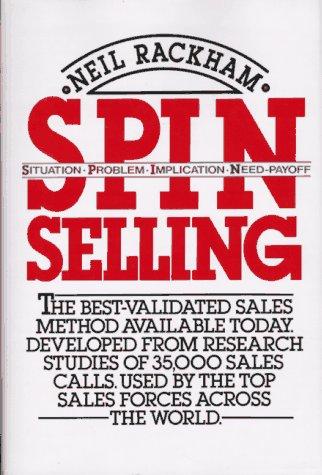
  • Cover: SPIN Selling

    SPIN Selling

    Book

    N. Rackham · 1988

    Grounded in the analysis of thousands of sales calls, the SPIN method structures customer discovery through four types of question (Situation, Problem, Implication, Need-payoff) for complex sales.

  • Cover: The Negotiating Game

    The Negotiating Game

    Book

    C. L. Karrass · 1970

    A pragmatic classic of business negotiation: tactics, power balance and preparation. Karrass sums up his motto, you get what you negotiate, not what you deserve.

  • Cover: Secrets of Power Negotiating

    Secrets of Power Negotiating

    Book

    R. Dawson · 1987

    An arsenal of opening, middle and closing "gambits" to gain the upper hand in commercial negotiation, explained step by step.

C. Karrass, R. Dawson, H. Cohen, N. Rackham (SPIN), T. Gordon (DESC / active listening).

On video

See the technique in action

Videos to picture The Columbo Close and anchor it through examples.

A verified video selection is being enriched; the search above already surfaces the best videos on the topic.

Technique map

Where this technique sits

Every technique sits within a network: what it draws on, what it combines with, where it applies, and how to defend against it.

Levers engaged

biases & emotions

Countered by

Spot its signals, neutralise it and turn it around with the defensive playbook on this page.

See the counter-techniques

Key takeaways

  • En une phrase

    The Columbo close takes its name from the famous television detectivei: at the very moment the other party lowers their guard, you drop a « just one more thing… » that reopens the crucial subject. The apparent casualness disarms their vigilance and brings out the real objection, or the real decision.

  • The right reflex

    Set your own closing condition: "I'll sign if…"

  • Never do this

    Signing so as not to "miss" the offer.

7.0/10 tactical potential Moderate vigilance School grounded in research and field practice

Master this technique in real situations?

Our programmes turn theory into a concrete advantage.

Explore our programmes
Call Book a call