NEGOCOACH
383
Origin : Methods & tactics

🛠️ Methods & tactics

Anglo-Saxon schools of negotiation

C. Karrass, R. Dawson, H. Cohen, N. Rackham (SPIN), T. Gordon (DESC / active listening).

Full detail in the “Origin & history” section below.

383

Socratic Questioning

Communication tactics Technique 383 / 360
Alexandre Baumberger

Author of the library

Alexandre Baumberger

Negotiation lecturer at KEDGE Business School

A rare threefold background serving negotiation: teaching, commercial justice and audit, backed by experience as a company director in Bordeaux.

  • Teaching, KEDGE Business School Negotiation lecturer since 2014 (12 years).
  • Commercial justice, Commercial Court Judge from 2018 to 2026: litigation, then insolvency proceedings.
  • Audit & advisory, over 20 years Tax, employment and financial audit in major firms, for large groups.
In brief

Socratic questioning, or maieutics, consists in helping the other party's thinking to "give birth" to itself through a series of open, logically linked questions, rather than hammering them with arguments. In negotiation, it shifts the power dynamic from the register of a clash of opinions to that of co-construction: it is the other party who, in answering, brings to light the weaknesses of their position or the interests they share with you. The technique draws on a well-established principle of the psychology of influence: we resist what is imposed on us, but we buy into what we have formulated ourselves. Well conducted, it lowers defences, reveals underlying interests and increases ownership of the final agreement.

Reading level

At a glance

Its family profile at a glance

Effectiveness Psychologicalimpact Discretion Preparation Relationalrisk Ethics
6.7 / 10 Tactical potential

Vigilance: low (3.5/10) · Preparation required: 4/10

Grounding in the source school School grounded in research and field practice

Indicative profile: it situates the “Communication tactics” family as the Methods & tactics school practises it, not this technique taken in isolation. Techniques from the same family and school therefore share the same profile. NEGOCOACH editorial rating out of 10, non-experimental · the higher the “relational risk” value, the more costly the technique is to the relationship.

NEGOCOACH assessment

How to read this rating

Tactical potential 6.7/10 (effectiveness, impact, discretion) and vigilance low (relational and ethical risk): two distinct readings, deliberately never merged into a single score that would reward risk. NEGOCOACH editorial rating calibrated from the “Communication tactics” family and the “Methods & tactics” school. Each criterion is rated out of 10; click to understand what it measures.

  • Effectiveness 7/10 · High

    How far the technique can carry the negotiation in the intended direction when it is well executed.

  • Psychological impact 6/10 · High

    Strength of the effect produced on the counterpart's perceptions, emotions and decisions.

  • Discretion 7/10 · High

    How hard it is for the other party to notice the technique is being used. A high value = very discreet.

  • Preparation 4/10 · Moderate

    The information, analysis and rehearsal required upfront to use it effectively.

  • Relational risk 3/10 · Low

    Potential cost to the relationship and to trust if the technique is spotted, refused or fails. A high value = riskier.

  • Ethics 7/10 · High

    Moral acceptability: fairness, transparency and respect for the counterpart's autonomy. A high value = more defensible.

Level of evidence

School grounded in research and field practice

The school this technique stems from combines academic work with long field practice. This indicator qualifies the school, not this technique taken in isolation.

Indicative NEGOCOACH editorial rating, for teaching purposes. For “Relational risk”, a high value signals a cost to the relationship, not a quality.

Overview: Socratic Questioning


Origin & history

The method goes back to Socrates (Athens, 470-399 BC), who practised it through dialogue and wrote nothing himself; it has been handed down to us through Plato's dialogues, in particular the Theaetetus, where Socrates compares himself to a midwife (his mother Phaenarete was a midwife) "delivering" minds of the truth they carry without knowing it: hence the term maieutics (from the Greek maieutikê, the art of delivery). Its explicit transposition to modern negotiation is theorised notably by Alain Pekar Lempereur ("Le questionnement, comme philosophie fondatrice de la négociation", Négociations, 2009), and connects with the tradition of sales and interview methods based on questioning (Neil Rackham and the SPIN method, 1988).


Definition and principle

A technique of communication and influence by which the negotiator, instead of asserting their thesis, poses a structured sequence of questions (clarification, surfacing of assumptions, request for evidence, exploration of consequences, examination of alternatives) that leads the interlocutor to examine their own position, to discover its limits or contradictions, and to formulate conclusions or concessions of their own accord. Operationally, it combines: open, non-directive questions, active listening to the answers, follow-ups that build on the other's exact words, and an apparent suspension of one's own judgement (the Socratic "feigned ignorance") to let the other unfold their reasoning.


Objectives of the technique

  • Surface the other party's real interests, needs and constraints, often hidden behind their stated positions
  • Lead the interlocutor to identify the flaws or limits of their own demand, without antagonising them through a frontal contradiction
  • Obtain buy-in and ownership of the solution: what the other has formulated, they defend instead of fighting
  • Gather information and test hypotheses while keeping the initiative in the conversation
  • Defuse emotional escalation by turning a clash of assertions into a joint exploration of the problem

Concrete examples of application

Application by context

The same technique, across every negotiation settings

Context 1 / 8

Sales negotiation

Faced with a customer who objects "it's too expensive", the seller does not defend their price but asks "Too expensive compared with what exactly?" then "What, in your business, is costing you today because of the problem this product solves?", letting the customer quantify the value themselves.
Context 2 / 8

Procurement negotiation

The buyer who wants a discount does not demand it but questions the supplier: "On which items of your offer do you have the most room for manoeuvre?" and "If we committed to an annual volume, how would that change your cost structure?", getting the seller to build the concession.

Context 3 / 8

Labour negotiation

In collective bargaining, management, rather than rejecting the pay demand, asks the representatives "What concrete problem are your colleagues trying to solve first?" and "At constant budget, which measure would have the most impact in your view?", to refocus on interests and prioritise the demands.

Context 4 / 8

Crisis management

Faced with a hostage-taker or an employee threatening to bring everything to a halt, the negotiator asks calm, open questions ("What needs to change for you to feel heard?", "What happens for you if this continues?") to slow the escalation and get the person to voice a way out themselves.

Context 5 / 8

Political negotiation

In a debate or a coalition-agreement negotiation, a leader gets the opponent to specify their position ("Concretely, how would your proposal apply to this case?") until the audience, or the interlocutor, perceives the limits of the measure for themselves.

Context 6 / 8

Real-estate negotiation

A buyer who finds the price high asks the seller "What makes you set this amount?" and "How long has the property been on the market, and what matters most to you, the price or the speed?", letting the seller reveal their degree of urgency and their true zone of agreement.

Context 7 / 8

Cross-cultural negotiation

With a partner from a culture where direct contradiction causes loss of face, the negotiator favours open, respectful questions ("Could you help me understand how this works in your context?") that get the constraints made explicit without confrontation, while taking care not to appear inquisitorial in contexts that value the implicit.

Context 8 / 8

Family negotiation

During a division or a family conflict, instead of imposing one's solution, one asks each person "What is really important to you in this matter?" and "How would you see a split that would seem fair to you?", leading loved ones to formulate a compromise themselves that they will accept more readily.


Counter-techniques

Spot and neutralise this technique

Negotiation is also played on defence. Here is how to recognise this technique when it is used against you, and turn it around.

Detect

The signals that give it away

  • Long, heavy silences
  • Rapid-fire questions
  • Reformulations that distort what you said

Neutralise

The counters that defuse it

  • Tolerate silence without filling it
  • Take the lead with a question
  • Immediately correct abusive reformulations

Turn around

Turn it into an advantage

Use silence in turn: whoever speaks first often concedes.

The trap to avoid

Filling the void by giving up a concession.

Strengths and weaknesses

Strengths: the technique makes the other party do the work and produce the argument or the concession, which maximises their buy-in (we defend what we have said ourselves); it gathers highly valuable information about real interests; it defuses confrontation by avoiding frontal contradiction; it places the questioner in discreet control of the conversation; and it is perceived as respectful and a mark of listening. Weaknesses: it is slow and demands preparation and emotional mastery; badly calibrated, it turns into an interrogation or a rhetorical trap ("tunnel questions") that antagonises the interlocutor as soon as they sense the manipulation; it assumes a minimum of good faith and cooperation from the other; faced with an interlocutor in a hurry, in a crushing position of strength or not very talkative, it can be experienced as evasion; finally, it exposes one to giving the impression of not taking a stand.


When to use this technique?

Particularly effective when the relationship must last, when the real interests are poorly known or hidden behind positions, when the other party is dug in on a demand and a direct contradiction would antagonise them, and when one is seeking ownership of a solution rather than a one-off victory. Also useful in the discovery phase (gathering information) and to slow an emotional escalation. To avoid or use very sparingly in situations of extreme urgency, when facing an interlocutor who has already spotted the manoeuvre, or when a simple direct anchor would suffice.


Famous cases

Diplomatic · Socrates and the slave in the Meno, In Plato's dialogue Meno, Socrates argues that to learn is to recollect, and demonstrates it by questioning a young slave who has never studied geometry. Without ever giving him the answer, Socrates poses a succession of questions about doubling the area of a square; the slave first makes mistakes, becomes aware of his error, then reaches the correct solution by himself. The passage is the canonical illustration of maieutics: the "truth" is not imposed but delivered through questioning. Transposed to negotiation, it shows that a conclusion discovered by the interlocutor is infinitely better accepted than a conclusion hammered home.

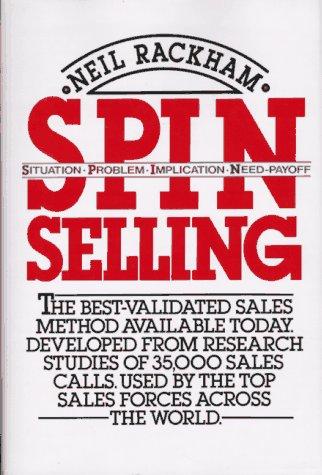
Sales · Selling through questioning (the SPIN method), Analysing several thousand sales interviews, the researcher Neil Rackham (Huthwaite, 1970s-80s) established that the best-performing salespeople in complex sales talk little and question a lot: they get the customer to describe the Situation, the Problem, its Implications (the cost of the status quo), then the expected benefit (Need-payoff). It is the customer themselves who, in answering, quantifies the value of the problem and convinces themselves to act. This approach, popularised by SPIN Selling (1988), is a direct commercial application of the Socratic principle: it is the buyer's answers, not the seller's arguments, that carry the decision.


Common mistakes

  • Stringing together closed or leading questions that betray the expected answer: the other senses the trap and digs in ("you do agree that...?")
  • Turning the questioning into a one-way interrogation, without listening or building on the answers, which gives an impression of policing or condescension
  • Asking the question then answering it oneself or cutting in, which destroys the ownership effect
  • Using maieutics to humiliate the interlocutor by exhibiting their contradictions (a "lecturer" posture) instead of helping them move forward
  • Multiplying questions without ever taking a stand or concluding, leaving the negotiation spinning in circles and appearing evasive or manipulative

How to recognise and counter this technique

Recognising the manoeuvre: a succession of open questions that systematically make you unfold your reasoning, follow-ups that pick up your own words to lead you step by step toward a conclusion you would not have accepted straight away, an interlocutor who never takes a stand themselves. Defending yourself: answer with a question in return ("Where are you going with this?", "What is your concrete proposal?") to shift the burden of proof back and rebalance; reject the biased premises of a question instead of answering it ("the question is badly framed, here is how I see things"); make the game explicit ("I sense you are trying to make me say something, say it directly"); and, if needed, state your own conditions through clear assertions to step out of the questioned party's posture.


Limits and ethics

Limits: the technique loses all effectiveness against an interlocutor acting in bad faith, locked onto their positions or in a position of strength such that they have no interest in playing along; it takes time and real skill, otherwise it backfires into irritation. Ethics: the line is thin between making someone think and manipulating them. Socratic questioning is legitimate when it helps the other clarify their own interests and decide with full knowledge of the facts; it becomes disloyal when it is merely a rhetorical dressing to extract a "yes" or to trap the interlocutor through rigged questions. The ethical criterion is the genuine intention of co-construction and respect for the other's decision-making autonomy: one must not simulate listening the better to impose a predetermined conclusion.


Variants and related techniques

Related techniques: active listening and reformulation (reflecting the other's words back to lead them to be more precise); open and calibrated questions ("how", "what") popularised by crisis negotiation (Chris Voss); Neil Rackham's SPIN method (Situation, Problem, Implication, Need-payoff) in sales; the "staircase of questions" or funnel technique (from the general to the specific); reframing through questions; Fisher and Ury's interest-based approach ("Getting to Yes"), which invites asking "why?" and "why not?"; and, in interviewing, pedagogical maieutics and motivational interviewing.


Going further

  • Plato, Theaetetus and Meno, the founding dialogues where Socrates describes and puts into practice maieutics (the delivery of minds)
  • Alain Pekar Lempereur, "Le questionnement, comme philosophie fondatrice de la négociation", Négociations journal, 2009
  • Neil Rackham, SPIN Selling (McGraw-Hill, 1988), application of structured questioning to complex sales
  • Roger Fisher & William Ury, Getting to Yes (1981), the use of questions to move from positions to interests

Scientific foundations

  • Plato (c. 369 BC) Theaetetus Dialogue by Plato (numerous editions, e.g. GF-Flammarion), the maieutics passage where Socrates compares himself to a midwife
  • Lempereur, Alain Pekar (2009) Le questionnement, comme philosophie fondatrice de la négociation Négociations, 2009/2 (no. 12), pp. 67-78, De Boeck Supérieur / Cairn.info
  • Rackham, Neil (1988) SPIN Selling McGraw-Hill, New York

Quick exercise

Test yourself before answering

Answer in your head, then reveal the solution. Memory is built through active recall.

1 Quels signaux doivent vous alerter ?
  • Long, heavy silences
  • Rapid-fire questions
  • Reformulations that distort what you said
2 Quelles parades appliquer ?
  • Tolerate silence without filling it
  • Take the lead with a question
  • Immediately correct abusive reformulations

Frequently asked questions

The questions we get most

What is the "Socratic Questioning" technique?

Socratic questioning, or maieutics, consists in helping the other party's thinking to "give birth" to itself through a series of open, logically linked questions, rather than hammering them with arguments. In negotiation, it shifts the power dynamic from the register of a clash of opinions to that of co-construction: it is the other party who, in answering, brings to light the weaknesses of their position or the interests they share with you. The technique draws on a well-established principle of the psychology of influence: we resist what is imposed on us, but we buy into what we have formulated ourselves. Well conducted, it lowers defences, reveals underlying interests and increases ownership of the final agreement.

Is the "Socratic Questioning" technique ethical?

Yes. Used in good faith it stays within a fair negotiation: it structures the exchange without deceiving the other party. Being transparent about your intentions strengthens the long-term relationship.

How do you defend against "Socratic Questioning"?

Filling the void by giving up a concession. The right reflex: tolerate silence without filling it.

What is the "Socratic Questioning" technique based on?

NEGOCOACH does not assess the experimental validation of this technique in isolation. What we document is the grounding of its source school (Methods & tactics): school grounded in research and field practice. Full detail is in the "At a glance" section of this page.

Practise with AI

Three ready-to-use prompts

Copy, paste into your assistant, replace the [brackets]. Works with ChatGPT, Claude, Gemini, Mistral, Perplexity.

Prepare

Build your plan before the meeting

You are an expert negotiation coach. Help me prepare to use the "Socratic Questioning" technique in the following situation: [describe your situation]. Give me: the conditions for success, a 3-step script, my counterpart's likely objections and how to answer them.

Simulate

Rehearse against an AI counterpart

Play the role of my counterpart in a negotiation. I am going to test the "Socratic Questioning" technique. React realistically and with resistance, do not give in too quickly, then at the end analyse my performance and suggest 3 concrete improvements.

Debrief

Analyse a past negotiation

Here is how my negotiation went: [paste the exchanges]. Analyse whether the "Socratic Questioning" technique was used well, what worked, the mistakes made, and spell out precisely what I could have done better.

References

Bibliography & credible sources

Founding works of the 🛠️ Methods & tactics school this technique belongs to.

  • Cover: SPIN Selling

    SPIN Selling

    Book

    N. Rackham · 1988

    Grounded in the analysis of thousands of sales calls, the SPIN method structures customer discovery through four types of question (Situation, Problem, Implication, Need-payoff) for complex sales.

  • Cover: The Negotiating Game

    The Negotiating Game

    Book

    C. L. Karrass · 1970

    A pragmatic classic of business negotiation: tactics, power balance and preparation. Karrass sums up his motto, you get what you negotiate, not what you deserve.

  • Cover: Secrets of Power Negotiating

    Secrets of Power Negotiating

    Book

    R. Dawson · 1987

    An arsenal of opening, middle and closing "gambits" to gain the upper hand in commercial negotiation, explained step by step.

C. Karrass, R. Dawson, H. Cohen, N. Rackham (SPIN), T. Gordon (DESC / active listening).

On video

See the technique in action

Videos to picture Socratic Questioning and anchor it through examples.

A verified video selection is being enriched; the search above already surfaces the best videos on the topic.

Technique map

Where this technique sits

Every technique sits within a network: what it draws on, what it combines with, where it applies, and how to defend against it.

Key takeaways

  • En une phrase

    Socratic questioning, or maieutics, consists in helping the other party's thinking to "give birth" to itself through a series of open, logically linked questions, rather than hammering them with arguments. In negotiation, it shifts the power dynamic from the register of a clash of opinions to that of co-construction: it is the other party who, in answering, brings to light the weaknesses of their position or the interests they share with you. The technique draws on a well-established principle of the psychology of influence: we resist what is imposed on us, but we buy into what we have formulated ourselves. Well conducted, it lowers defences, reveals underlying interests and increases ownership of the final agreement.

  • The right reflex

    Use silence in turn: whoever speaks first often concedes.

  • Never do this

    Filling the void by giving up a concession.

6.7/10 tactical potential Low vigilance School grounded in research and field practice

Master this technique in real situations?

Our programmes turn theory into a concrete advantage.

Explore our programmes
Call Book a call