
NEGOCOACH
267
Origin : Methods & tactics

🛠️ Methods & tactics

Anglo-Saxon schools of negotiation

C. Karrass, R. Dawson, H. Cohen, N. Rackham (SPIN), T. Gordon (DESC / active listening).

Full detail in the “Origin & history” section below.

267

The Trial Close

Sales closing Technique 267 / 360
Alexandre Baumberger

Author of the library

Alexandre Baumberger

Negotiation lecturer at KEDGE Business School

A rare threefold background serving negotiation: teaching, commercial justice and audit, backed by experience as a company director in Bordeaux.

  • Teaching, KEDGE Business School Negotiation lecturer since 2014 (12 years).
  • Commercial justice, Commercial Court Judge from 2018 to 2026: litigation, then insolvency proceedings.
  • Audit & advisory, over 20 years Tax, employment and financial audit in major firms, for large groups.
In brief

The trial close consists of asking small questions throughout the meeting that test the degree of commitment of the other party without frontally asking them to sign. You take the temperature of the sale in real timei, which avoids reaching the final close blind. Each partial 'yes' accumulates a micro-commitment towards the decision.

Reading level

At a glance

Its family profile at a glance

Effectiveness Psychologicalimpact Discretion Preparation Relationalrisk Ethics
7.0 / 10 Tactical potential

Vigilance: moderate (5.0/10) · Preparation required: 4/10

Grounding in the source school School grounded in research and field practice

Indicative profile: it situates the “Sales closing” family as the Methods & tactics school practises it, not this technique taken in isolation. Techniques from the same family and school therefore share the same profile. NEGOCOACH editorial rating out of 10, non-experimental · the higher the “relational risk” value, the more costly the technique is to the relationship.

NEGOCOACH assessment

How to read this rating

Tactical potential 7.0/10 (effectiveness, impact, discretion) and vigilance moderate (relational and ethical risk): two distinct readings, deliberately never merged into a single score that would reward risk. NEGOCOACH editorial rating calibrated from the “Sales closing” family and the “Methods & tactics” school. Each criterion is rated out of 10; click to understand what it measures.

  • Effectiveness 8/10 · Very high

    How far the technique can carry the negotiation in the intended direction when it is well executed.

  • Psychological impact 7/10 · High

    Strength of the effect produced on the counterpart's perceptions, emotions and decisions.

  • Discretion 6/10 · High

    How hard it is for the other party to notice the technique is being used. A high value = very discreet.

  • Preparation 4/10 · Moderate

    The information, analysis and rehearsal required upfront to use it effectively.

  • Relational risk 4/10 · Moderate

    Potential cost to the relationship and to trust if the technique is spotted, refused or fails. A high value = riskier.

  • Ethics 5/10 · Moderate

    Moral acceptability: fairness, transparency and respect for the counterpart's autonomy. A high value = more defensible.

Level of evidence

School grounded in research and field practice

The school this technique stems from combines academic work with long field practice. This indicator qualifies the school, not this technique taken in isolation.

Indicative NEGOCOACH editorial rating, for teaching purposes. For “Relational risk”, a high value signals a cost to the relationship, not a quality.

The Trial Close in a Nutshell


Origin & History

The trial close is a cornerstone of the American school of selling of the 1960s-1980s, formalised in particular by Tom Hopkins and taken up by Zig Ziglar. It extends the insight of Frank Bettgeri that the sale is won through a succession of small agreements, not through one great final leap.


Definition and Principle

Where the classic close asks for the purchase decision, the trial close solicits only an opinion or a preference ('Would this finish suit you better?'). It closes nothing: it probes. The psychological value is twofold: it makes the buyer talk about the solution as if it were already theirs (projection effect), and it reveals to the seller the residual objections before they play their trump card. A 'yes' to the trial close authorises the real close; hesitation signals that a reluctance still needs to be handled.


Concrete Examples of Application

Application by context

The same technique, across every negotiation settings

Context 1 / 8

Sales negotiation

A software-solution salesperson slips in, mid-demonstration: 'If we were to roll this out, would you rather see a pilot on the marketing team or on support?' The client answers 'support', projecting themselves without realising it into using the product. The seller then knows the interest is ripe and that the objection will no longer be about the principle but about the terms.

How to apply it

Sow three to five trial closes spread across the meeting, phrased as questions of opinion or preference, never as a request to sign. Listen to the tone as much as the word: a drawn-out 'yes' amounts to a hidden objection. Move on to the real close only after a clearly positive trial close.

Strengths

Reveals the level of commitment continuously; brings objections out early; makes the final close almost a formality, as it has already been prepared by a series of agreements.

Weaknesses

Overdone, it becomes an interrogation that irritates; a seller who misreads a polite 'yes' closes too early and runs into a curt refusal.
Context 2 / 8

Procurement negotiation

On the buyer's side, a seasoned purchasing director spots the device: the seller multiplies projection questions ('would you rather take model A or B?'). The buyer understands that their commitment is being tested to speed things up, and systematically replies 'I'm not projecting yet, let's stay on the facts' so as not to reveal their buying temperature.

How to apply it

To foil the trial close, the buyer refuses to give a preference until the substance has been dealt with, and redirects each projection question towards a factual requirement (price, warranty, lead time).

Strengths

By remaining neutral, the buyer deprives the seller of their bearings and keeps the initiative on the timetable.

Weaknesses

Total neutrality can lengthen the negotiation and deprive the buyer of useful information that the seller would release in exchange for a signal of interest.

Context 3 / 8

Labour negotiation

In a collective negotiation, an HR director discreetly tests the union's openness: 'If we made progress on the bonus, would the question of working hours become secondary for you?' The answer measures the real hierarchy of demands before any firm proposal.

How to apply it

Use the trial close to rank the priorities of the other party without committing yourself; the answer guides the construction of the overall package.

Strengths

Maps the other side's real priorities at little cost, without revealing your own margin.

Weaknesses

Perceived as a manoeuvre, it can put off wary counterparts who refuse to rank their demands publicly.

Context 4 / 8

Crisis management

A negotiator, facing a barricaded individual, tests the opening of a channel: 'If I had some water brought over, would you agree to keep talking for a few minutes?' Agreement on this tiny point signals that de-escalation is under way.

How to apply it

In a crisis, the trial close bears on an innocuous micro-commitment; it tests the reversibility of the tension without demanding a substantive concession.

Strengths

Measures without risk whether the dialogue can progress, at a moment when any frontal demand would break everything.

Weaknesses

A trial close that is too ambitious or pressing in a crisis is read as manipulation and can ratchet the tension up a notch.

Context 5 / 8

Political negotiation

Behind the scenes of an agreement negotiation, an envoy probes: 'If we removed this clause from the text, could your group consider voting for it?' The answer tests the feasibility of a compromise before formally tabling it and risking a public disavowal.

How to apply it

The political trial close is done in private, to test a compromise without publicly committing the actors and without creating an official precedent.

Strengths

Allows areas of agreement to be explored without exposing the negotiators to a public setback.

Weaknesses

If the probe leaks, it can be presented as a concession already granted and box in its author.

Context 6 / 8

Real-estate negotiation

During a viewing, the agent ventures: 'Would you see the study rather in this room or in the one at the back?' The buyer who begins to lay out the space mentally is already projecting themselves as the owner: a strong buying signal.

How to apply it

Trigger the projection of use (layout, daily life): when the buyer mentally furnishes the property, the sale is ripe.

Strengths

Turns a passive viewing into active appropriation; reveals the real interest behind the politeness.

Weaknesses

Ineffective, even ridiculous, if the property clearly does not match the need: the projection falls flat.

Context 7 / 8

Cross-cultural negotiation

A Western seller applies their closely spaced trial closes to a Japanese partner; the latter responds with polite 'yeses' (aizuchi) that commit to nothing. The seller believes the sale is secured and runs into an unexpected deadlock, having failed to read an agreement of form.

How to apply it

Adapt the reading of signals: in high-context cultures, 'yes' marks listening, not agreement. Space out the trial closes and favour non-verbal cues.

Strengths

Well calibrated, it respects the slow decision rhythm of certain collective cultures.

Weaknesses

A Western trial close transposed as is produces false positives and causes one to miss the real moment of decision, often collective and deferred.

Context 8 / 8

Family negotiation

A parent tests a teenager's buy-in to a plan to move house: 'If you could choose your bedroom first, would that change how you see things?' The answer gauges the real openness without imposing the decision head-on.

How to apply it

Probe the emotional openness with a preference question before announcing a decision that commits the whole family.

Strengths

Spares the other's sensitivities and gives them a sense of control, which reduces resistance.

Weaknesses

Perceived as a tactic by a loved one, it can be experienced as an instrumentalisation of the relationship.


Counter-techniques

Spot and neutralise this technique

Negotiation is also played on defence. Here is how to recognise this technique when it is used against you, and turn it around.

Detect

The signals that give it away

  • A false "final offer"
  • A "only now" bonus
  • An assumed agreement ("shall we go with that?")

Neutralise

The counters that defuse it

  • Test the "final" offer by pretending to leave
  • Ignore the artificial bonus
  • Validate nothing by default

Turn around

Turn it into an advantage

Set your own closing condition: "I'll sign if…"

The trap to avoid

Signing so as not to "miss" the offer.

In Brief

  • Difficulty: Intermediate
  • Estimated effectiveness: High
  • Implementation time: Instant, distilled throughout the meeting
  • Fields of application: Sales, Collective bargaining, Real estate, Management
  • Synonyms: Test close, Test question, Temperature check
  • Tags: closing, trial close, micro-commitment, Tom Hopkins, projection

Strengths and Weaknesses

The trial close is the seller's radar: it gives a continuous reading of commitment and brings objections to the surface before the real close. It accumulates partial agreements that make the final decision almost self-evident. Its strength lies in its discretion: it demands nothing, it probes. Its limitation: it rests entirely on the ability to interpret the answers correctly, false positives included.


When to Use This Technique

To be distilled as soon as the meeting advances, to check before closing. To be avoided too early (before value has been created) or too often: a badly placed or repeated trial close turns the exchange into an interrogation and signals the seller's eagerness, which alerts the buyer and hardens their position. Pointless with a counterpart who has already decided.


How to Recognise and Counter This Technique

Recognise: your counterpart multiplies preference or projection questions ('would you rather take A or B?') without ever frankly asking for your decision. Neutralise: answer on the facts, refuse to project yourself ('I'm not there yet, let's talk about the terms'). Turn it around: redirect each trial close into a factual requirement, forcing the seller to release information and concessions without obtaining your buying temperature.


Limits and Ethics

The trial close remains ethical as long as it informs the seller without pressuring the buyer. The problematic slide occurs when a series of micro-commitments is used to lock the counterpart into a logic of agreement whose scope they do not perceive (escalation effect). Respect for informed consent and the right of withdrawal requires that each partial 'yes' remains reversible and is never presented as a definitive commitment.


Variants and Related Techniques

Comes in a direct trial close ('what do you think?'), a preference version (choice between two options) and a projection version (putting the buyer in a situation of use). It prepares and combines with the Assumptive Close and the Alternative Close. It is the opposite of the single frontal close, which stakes everything on one final request.


Going Further

  • Tom Hopkins, How to Master the Art of Selling, 1982.
  • Zig Ziglar, Secrets of Closing the Sale, 1984.
  • Frank Bettger, How I Raised Myself from Failure to Success in Selling, 1947.

Objectives of the Technique

  • Measure the counterpart's buying temperature at regular intervals, without demanding a definitive commitment or risking a 'no' that would close the discussion.
  • Bring hidden objections to the surface: a lukewarm or evasive answer to the test reveals the remaining sticking points while there is still time to handle them.
  • Gradually accustom the counterpart to projecting themselves into the decision (choice of colour, date, terms), exploiting the dynamic of commitment and consistency.
  • Choose the right moment for the real close: ask for the firm commitment only when the signals returned by the successive tests are positive.
  • Secure intermediate micro-agreements that mark the progress and make backing out psychologically more costly for the counterpart.

Famous Cases

Sales - The car saleswoman and the question of colour: A representative scenario: in a dealership, a customer has been hesitating for twenty minutes between two SUV models. Rather than asking frontally 'So, will you take it?', the saleswoman slips in: 'If you were to drive off in this one, would you see it rather in anthracite grey or midnight blue?' The customer spontaneously answers 'midnight blue, no hesitation', then asks about the delivery time in that shade. The saleswoman has just learned two things without ever having asked the purchase question: the customer already projects herself as the owner, and the remaining obstacle is not the price but the lead time. She can then deal with that precise point before proposing the real close. Had the customer answered 'I'm not there yet', the saleswoman would have known that substantive objections remained to be explored, without having suffered a definitive refusal.

Business - Testing an executive committee's buy-in before the vote: A representative scenario: a project director presents a software-overhaul plan to her executive committee. Before formally requesting the budget, she launches a trial close: 'If we went with this scenario, would you prefer a pilot roll-out on a single site or a simultaneous launch across all three?' The reactions around the table act as a thermometer: the CFO immediately debates the merits of the pilot, a sign that he is already reasoning within the hypothesis of an accepted project, while the operations director answers 'we haven't yet settled the question of the provider'. The director understands that the decision is not ripe on the operations side: she postpones the request for a vote, handles the provider objection bilaterally, and submits the budget only at the next meeting, where it passes without friction. The trial close spared her a refusal in session, far more costly politically than a postponement.

Everyday life - Probing a seller before making a property offer: A representative scenario: a couple views a house sold privately, owner to buyer. Before naming a price, the buyer tests the temperature: 'If we reached an agreement, would you be able to vacate the house by the start of the school year?' The owner replies that he has already signed for his next home and that August would even be preferable for him. This answer reveals a scheduling constraint, hence pressure to sell, which the owner would never have disclosed to a direct question about his room for negotiation. The couple then calibrates its offer, incorporating this information obtained without ever having committed to a figure.


Common Mistakes

  • Confusing the trial close with the close: turning the test question into a request for firm commitment ('So it's settled, we sign?') forfeits the technique's main advantage, which is precisely being able to probe without provoking a definitive refusal.
  • Firing off test questions in bursts: stringing trial closes together every two minutes gives the counterpart the feeling of being manipulated or harassed, and destroys the trust that the discovery phase had built.
  • Ignoring the negative answer: the trial close is a thermometer, not forceps. If the answer reveals a reluctance ('I'm not there yet'), you must return to exploring the objections, not push towards the close as if nothing had happened.
  • Asking the test too early, before value has been established: a trial close launched in the first few minutes, before the counterpart has perceived the value of the offer, measures nothing and above all signals the seller's impatience.
  • Framing binary closed questions ('Are you interested, yes or no?') instead of opinion or projection questions ('What appeals to you most in this option?'): the closed form recreates exactly the pressure the trial close is meant to avoid.

Scientific Foundations

  • Zig Ziglar (1984) Secrets of Closing the Sale Fleming H. Revell / Berkley Books
  • Neil Rackham (1988) SPIN Selling McGraw-Hill
  • Robert B. Cialdini (1984) Influence: The Psychology of Persuasion (chapter on commitment and consistency) HarperCollins

Quick exercise

Test yourself before answering

Answer in your head, then reveal the solution. Memory is built through active recall.

1 Quels signaux doivent vous alerter ?
  • A false "final offer"
  • A "only now" bonus
  • An assumed agreement ("shall we go with that?")
2 Quelles parades appliquer ?
  • Test the "final" offer by pretending to leave
  • Ignore the artificial bonus
  • Validate nothing by default

Frequently asked questions

The questions we get most

What is the "The Trial Close" technique?

The trial close consists of asking small questions throughout the meeting that test the degree of commitment of the other party without frontally asking them to sign. You take the temperature of the sale in real timei, which avoids reaching the final close blind. Each partial 'yes' accumulates a micro-commitment towards the decision.

Is the "The Trial Close" technique ethical?

It sits on the line: effective, but it can tip into manipulation if it exploits an information asymmetry. Use it with measure and without deliberate deceit.

How do you defend against "The Trial Close"?

Signing so as not to "miss" the offer. The right reflex: test the "final" offer by pretending to leave.

What is the "The Trial Close" technique based on?

NEGOCOACH does not assess the experimental validation of this technique in isolation. What we document is the grounding of its source school (Methods & tactics): school grounded in research and field practice. Full detail is in the "At a glance" section of this page.

Practise with AI

Three ready-to-use prompts

Copy, paste into your assistant, replace the [brackets]. Works with ChatGPT, Claude, Gemini, Mistral, Perplexity.

Prepare

Build your plan before the meeting

You are an expert negotiation coach. Help me prepare to use the "The Trial Close" technique in the following situation: [describe your situation]. Give me: the conditions for success, a 3-step script, my counterpart's likely objections and how to answer them.

Simulate

Rehearse against an AI counterpart

Play the role of my counterpart in a negotiation. I am going to test the "The Trial Close" technique. React realistically and with resistance, do not give in too quickly, then at the end analyse my performance and suggest 3 concrete improvements.

Debrief

Analyse a past negotiation

Here is how my negotiation went: [paste the exchanges]. Analyse whether the "The Trial Close" technique was used well, what worked, the mistakes made, and spell out precisely what I could have done better.

References

Bibliography & credible sources

Founding works of the 🛠️ Methods & tactics school this technique belongs to.

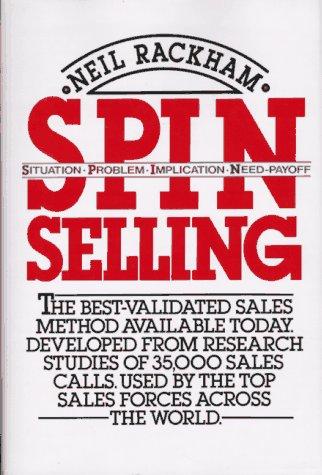
  • Cover: SPIN Selling

    SPIN Selling

    Book

    N. Rackham · 1988

    Grounded in the analysis of thousands of sales calls, the SPIN method structures customer discovery through four types of question (Situation, Problem, Implication, Need-payoff) for complex sales.

  • Cover: The Negotiating Game

    The Negotiating Game

    Book

    C. L. Karrass · 1970

    A pragmatic classic of business negotiation: tactics, power balance and preparation. Karrass sums up his motto, you get what you negotiate, not what you deserve.

  • Cover: Secrets of Power Negotiating

    Secrets of Power Negotiating

    Book

    R. Dawson · 1987

    An arsenal of opening, middle and closing "gambits" to gain the upper hand in commercial negotiation, explained step by step.

C. Karrass, R. Dawson, H. Cohen, N. Rackham (SPIN), T. Gordon (DESC / active listening).

On video

See the technique in action

Videos to picture The Trial Close and anchor it through examples.

A verified video selection is being enriched; the search above already surfaces the best videos on the topic.

Technique map

Where this technique sits

Every technique sits within a network: what it draws on, what it combines with, where it applies, and how to defend against it.

Levers engaged

biases & emotions

Countered by

Spot its signals, neutralise it and turn it around with the defensive playbook on this page.

See the counter-techniques

Key takeaways

  • En une phrase

    The trial close consists of asking small questions throughout the meeting that test the degree of commitment of the other party without frontally asking them to sign. You take the temperature of the sale in real timei, which avoids reaching the final close blind. Each partial 'yes' accumulates a micro-commitment towards the decision.

  • The right reflex

    Set your own closing condition: "I'll sign if…"

  • Never do this

    Signing so as not to "miss" the offer.

7.0/10 tactical potential Moderate vigilance School grounded in research and field practice

Master this technique in real situations?

Our programmes turn theory into a concrete advantage.

Explore our programmes
Call Book a call