
NEGOCOACH
221
Origin : Cognitive science

🧠 Cognitive science

Behavioural economics & social psychology

R. Cialdini ("Influence", 1984), D. Kahneman & A. Tversky, R. Thaler, D. Ariely.

Full detail in the “Origin & history” section below.

221

The Barnum Effect

Social influence Technique 221 / 360
Alexandre Baumberger

Author of the library

Alexandre Baumberger

Negotiation lecturer at KEDGE Business School

A rare threefold background serving negotiation: teaching, commercial justice and audit, backed by experience as a company director in Bordeaux.

  • Teaching, KEDGE Business School Negotiation lecturer since 2014 (12 years).
  • Commercial justice, Commercial Court Judge from 2018 to 2026: litigation, then insolvency proceedings.
  • Audit & advisory, over 20 years Tax, employment and financial audit in major firms, for large groups.
In brief

The Barnum effect is the tendency to accept as personally true vague, general descriptions that could apply to almost anyone. Horoscopes, personality tests, fortune-telling: their fuzzy formulas (“you have a strong need to be liked, yet you remain critical of yourself”) seem uncannily accuratei because we ourselves project meaning onto them.

Reading level

At a glance

Its family profile at a glance

Effectiveness Psychologicalimpact Discretion Preparation Relationalrisk Ethics
8.0 / 10 Tactical potential

Vigilance: high (6.0/10) · Preparation required: 4/10

Grounding in the source school School grounded in experimental research

Indicative profile: it situates the “Social influence” family as the Cognitive science school practises it, not this technique taken in isolation. Techniques from the same family and school therefore share the same profile. NEGOCOACH editorial rating out of 10, non-experimental · the higher the “relational risk” value, the more costly the technique is to the relationship.

NEGOCOACH assessment

How to read this rating

Tactical potential 8.0/10 (effectiveness, impact, discretion) and vigilance high (relational and ethical risk): two distinct readings, deliberately never merged into a single score that would reward risk. NEGOCOACH editorial rating calibrated from the “Social influence” family and the “Cognitive science” school. Each criterion is rated out of 10; click to understand what it measures.

  • Effectiveness 8/10 · Very high

    How far the technique can carry the negotiation in the intended direction when it is well executed.

  • Psychological impact 9/10 · Very high

    Strength of the effect produced on the counterpart's perceptions, emotions and decisions.

  • Discretion 7/10 · High

    How hard it is for the other party to notice the technique is being used. A high value = very discreet.

  • Preparation 4/10 · Moderate

    The information, analysis and rehearsal required upfront to use it effectively.

  • Relational risk 5/10 · Moderate

    Potential cost to the relationship and to trust if the technique is spotted, refused or fails. A high value = riskier.

  • Ethics 4/10 · Moderate

    Moral acceptability: fairness, transparency and respect for the counterpart's autonomy. A high value = more defensible.

Level of evidence

School grounded in experimental research

The school this technique stems from is grounded in replicated, peer-reviewed experimental work. This indicator qualifies the school, not the experimental validation of this technique taken in isolation.

Indicative NEGOCOACH editorial rating, for teaching purposes. For “Relational risk”, a high value signals a cost to the relationship, not a quality.

Barnum in a nutshell


Origin & history

The effect was demonstrated in 1949 by the psychologist Bertram Forer, who gave his students a “personality test” and then handed every one of them the same profile, compiled from horoscopes. Each believing they had received a personalised analysis, they judged it extremely accurate (4.3 out of 5). It is also known as the Forer effect; the name “Barnum” refers to the famous circus showman P. T. Barnum and his art of pleasing everyone. The studies by Snyder (in the 1970s) would go on to specify the conditions of the effect.


Definition and principle

Three ingredients make a statement “Barnumesque”: it is vague enough to be true for everyone, flattering (we more readily accept what puts us in a good light), and personally attributed by a source deemed credible. The subject then fills in the blanks with their own memories and feels an accuracy that comes from within, not from the message. The bias is reinforced by the desire to feel understood and the perceived authority of the source.


Concrete examples of application

Application by context

The same technique, across every negotiation settings

Context 1 / 8

Sales negotiation

A salesperson tells the client: “You’re someone who values quality but hates being pushed, and who makes decisions with full knowledge of the facts.” Flattered and recognising themselves, the client feels understood and lowers their guard.

How to apply it

Open with a flattering, universal portrait that almost any client will endorse; the sense of being “well read” establishes rapport.

Strengths

Quickly creates a rapport of complicity and trust without knowing anything about the client.

Weaknesses

Perceived as mechanical flattery if overdone or recited, it destroys credibility.
Context 2 / 8

Procurement negotiation

A buyer listens to a supplier claim to “understand their unique challenges” before rolling out a one-size-fits-all diagnosis that would apply to any client in their sector. The vagueness dressed up as bespoke aims to win their confidence.

How to apply it

Flush out the fake personalised diagnosis: demand elements specific to your situation that the seller could not have guessed.

Strengths

Spotting the effect avoids granting undeserved trust to a generic pitch.

Weaknesses

Flattering vagueness remains seductive even when you know it isn’t truly personalised.

Context 3 / 8

Labour negotiation

When a personality test is fed back within a company, every employee recognises themselves in their “profile” and buys into the scheme. The descriptions, general enough to suit everyone, create the illusion of a fine-grained, individual analysis.

How to apply it

Be aware that personality profiles draw much of their acceptance from the Barnum effect; useful for engagement, but not to be mistaken for an exact science.

Strengths

Eases collective buy-in to a tool and dialogue about differences.

Weaknesses

Risk of HR decisions based on fuzzy categories taken for truths.

Context 4 / 8

Crisis management

Faced with a team’s anxiety, a leader delivers a reassuring but vague message (“we are a resilient team, capable of bouncing back”) in which everyone recognises themselves and finds comfort, in the absence of concrete solutions available.

How to apply it

In uncertainty, a general rallying message that everyone can project into can bolster morale; provided it precedes, and does not replace, real action.

Strengths

Unites and soothes when precise information is still lacking.

Weaknesses

Tips into empty jargon if the vagueness lasts and is never followed by facts.

Context 5 / 8

Political negotiation

A campaign speech piles up phrases broad enough for every voter to hear their own expectations in them (“restore the country’s greatness”, “defend ordinary people”). Everyone projects their hope onto the vagueness.

How to apply it

The mirror speech, deliberately vague, allows diverse audiences to recognise themselves in it; a powerful unifier, to be handled with ethical discernment.

Strengths

Rallies heterogeneous electorates around all-encompassing phrases.

Weaknesses

Turns into an accusation of emptiness the moment concreteness is demanded.

Context 6 / 8

Real-estate negotiation

A listing describes a property with universal phrases (“bright, full of charm, ideal for recharging”) into which each viewer projects their own personal dream of a home, regardless of the property’s actual features.

How to apply it

Use evocative, open-ended wording that lets the buyer project their own life plan onto the property.

Strengths

Broadens a property’s appeal by letting everyone imagine it on their own terms.

Weaknesses

A painful mismatch at the viewing if the charm evoked never materialises.

Context 7 / 8

Cross-cultural negotiation

An international negotiator invokes universal values (“mutual respect”, “shared prosperity”) to which each party subscribes according to its own cultural reading, creating an apparent common ground before getting into the detail.

How to apply it

Open on values broad enough to be shared by all the cultures present; they create a common base before the concrete divergences.

Strengths

Establishes a positive relational foundation despite different cultural frameworks.

Weaknesses

The surface consensus cracks when each party interprets the value in its own way.

Context 8 / 8

Family negotiation

Over a meal, an uncle “reads” a nephew with universal observations (“deep down you’re more sensitive than you let on”). Recognising himself, the young man credits him with a perceptiveness he doesn’t really possess.

How to apply it

Recognise the illusion of perceptiveness fed by general truths; useful for creating a bond, deceptive if taken for genuine understanding.

Strengths

Creates a feeling of closeness and of being understood within the family.

Weaknesses

Can ground mistaken family judgements on seductive generalities.


Counter-techniques

Spot and neutralise this technique

Negotiation is also played on defence. Here is how to recognise this technique when it is used against you, and turn it around.

Detect

The signals that give it away

  • "Everyone does it"
  • An authority invoked to close the debate
  • A gift followed by a request (forced reciprocity)

Neutralise

The counters that defuse it

  • Check the real norm
  • Question the authority's legitimacy
  • Refuse the debt created by the gift

Turn around

Turn it into an advantage

Turn social proof around: "Actually, the best do the opposite."

The trap to avoid

Conforming for fear of being the only dissenter.

In brief

  • Difficulty: Easy
  • Estimated effectiveness: High
  • Time to implement: Instant
  • Fields of application: Sales, Marketing, Communication, Human resources, Politics
  • Synonyms: Forer effect, Personal validation, Subjective validation effect
  • Tags: Forer, generalities, flattery, horoscope, illusory personalisation

Strengths and Weaknesses

The Barnum effect creates a feeling of being understood at little cost, the bedrock of any rapport. It explains the persistence of astrology, fortune-telling and many a personality test, and serves persuasion in sales as much as in communication. Its practical strength: producing buy-in without real information. Its downside: as soon as it is exposed, it turns into distrust, for no one likes to discover they were the target of a one-size-fits-all formula.


When to use this technique?

Use it to quickly build rapport and a sense of understanding, at the opening of a relationship. Useful in unifying communication and emotional marketing. Avoid it as a substitute for real knowledge of the need: vagueness seduces for a moment but seals nothing solid. Ineffective, even counterproductive, with an interlocutor who demands concrete, verifiable, bespoke input.


How to recognise and counter this technique

Recognise it: a description strikes you as spot-on yet could apply to anyone, and it is flattering. Neutralise it: test it for refutability (“how would this NOT apply to someone?”) and demand specific, verifiable elements. Turn it around: ask for a precise, falsifiable diagnosis that proves genuine knowledge of your case.


Limits and ethics

Exploiting the Barnum effect verges on manipulation when it serves to simulate non-existent expertise or understanding, at the heart of the abuses of fortune-telling and fake coaches. The ethical limit is deception about the real value of the service. The rule: the sense of rapport it creates does not exempt you from delivering, afterwards, genuine understanding and value.


Variants and related techniques

Rests on subjective validation and confirmation bias. Combines with the halo effect (authority of the source) and flattery. A cousin of the cold reading practised by mentalists and fortune-tellers.


Going further

  • Bertram R. Forer, “The Fallacy of Personal Validation: A Classroom Demonstration of Gullibility”, Journal of Abnormal and Social Psychology, 1949.
  • C. R. Snyder & R. J. Shenkel, “The P.T. Barnum Effect”, Psychology Today, 1975.
  • Ray Hyman, “Cold Reading: How to Convince Strangers That You Know All About Them”, The Zetetic, 1977.

Objectives of the technique

  • Create in the interlocutor a feeling of being personally understood and acknowledged, to strengthen rapport and trust
  • Frame deliberately general observations that are perceived as bespoke, in order to establish quick rapport
  • Recognise and neutralise this technique when it is used against you (diagnostic flattery, fake profiling)
  • Adapt your discourse so that it resonates with a wide range of interlocutors without any precise factual commitment
  • Detect manipulations based on pseudo personality analyses (negotiators, salespeople, consultants)

Famous cases

Sales · The salesperson who “reads you” in three sentences: A salesperson opens the meeting with: “I sense you’re a demanding person, someone who likes to take the time to decide well, but who hates having their time wasted.” These statements, true for almost any buyer, give the client the impression of being finely understood. A climate of trust sets in before the offer is even presented. This scenario is representative of a common use of the Barnum effect in sales; it is not attributed to any real person or company.

Everyday life · The horoscope and the fake personality profile: A personality test hands every participant the same paragraph: “You have a great need to be liked, while sometimes being critical of yourself; you have unused potential.” Most readers judge the description “very accurate” for themselves. This mechanism, structurally identical to that of horoscopes, illustrates the Barnum effect and sheds light on why flattering, vague statements win acceptance in negotiation.


Common mistakes

  • Believing that an interlocutor who “understands you perfectly” actually holds precise information about you: confusing general flattery with a well-founded diagnosis
  • Overusing vague formulas to the point of sounding false or manipulative, which destroys trust the moment the interlocutor sees through the trick
  • Using the effect as a substitute for real preparation: generalities do not replace factual knowledge of the other party’s stakes
  • Underestimating that savvy interlocutors immediately spot statements that hold true for everyone
  • Basing a decision on a seductive but hollow profile, without verifiable data

Scientific foundations

  • Bertram R. Forer (1949) The fallacy of personal validation: A classroom demonstration of gullibility Journal of Abnormal and Social Psychology, 44(1), 118-123
  • Robert B. Cialdini (2009) Influence: Science and Practice (5th ed.) Pearson / Allyn & Bacon

Quick exercise

Test yourself before answering

Answer in your head, then reveal the solution. Memory is built through active recall.

1 Quels signaux doivent vous alerter ?
  • "Everyone does it"
  • An authority invoked to close the debate
  • A gift followed by a request (forced reciprocity)
2 Quelles parades appliquer ?
  • Check the real norm
  • Question the authority's legitimacy
  • Refuse the debt created by the gift

Frequently asked questions

The questions we get most

What is the "The Barnum Effect" technique?

The Barnum effect is the tendency to accept as personally true vague, general descriptions that could apply to almost anyone. Horoscopes, personality tests, fortune-telling: their fuzzy formulas (“you have a strong need to be liked, yet you remain critical of yourself”) seem uncannily accuratei because we ourselves project meaning onto them.

Is the "The Barnum Effect" technique ethical?

It sits on the line: effective, but it can tip into manipulation if it exploits an information asymmetry. Use it with measure and without deliberate deceit.

How do you defend against "The Barnum Effect"?

Conforming for fear of being the only dissenter. The right reflex: check the real norm.

What is the "The Barnum Effect" technique based on?

NEGOCOACH does not assess the experimental validation of this technique in isolation. What we document is the grounding of its source school (Cognitive science): school grounded in experimental research. Full detail is in the "At a glance" section of this page.

Practise with AI

Three ready-to-use prompts

Copy, paste into your assistant, replace the [brackets]. Works with ChatGPT, Claude, Gemini, Mistral, Perplexity.

Prepare

Build your plan before the meeting

You are an expert negotiation coach. Help me prepare to use the "The Barnum Effect" technique in the following situation: [describe your situation]. Give me: the conditions for success, a 3-step script, my counterpart's likely objections and how to answer them.

Simulate

Rehearse against an AI counterpart

Play the role of my counterpart in a negotiation. I am going to test the "The Barnum Effect" technique. React realistically and with resistance, do not give in too quickly, then at the end analyse my performance and suggest 3 concrete improvements.

Debrief

Analyse a past negotiation

Here is how my negotiation went: [paste the exchanges]. Analyse whether the "The Barnum Effect" technique was used well, what worked, the mistakes made, and spell out precisely what I could have done better.

References

Bibliography & credible sources

Founding works of the 🧠 Cognitive science school this technique belongs to.

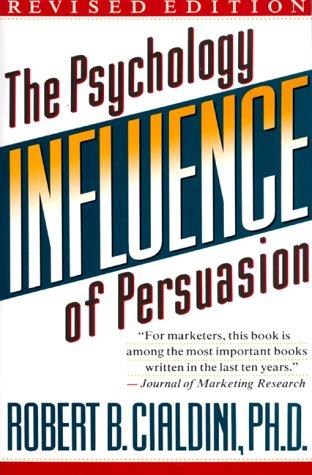
  • Cover: Influence, The Psychology of Persuasion

    Influence, The Psychology of Persuasion

    Book

    R. Cialdini · 1984

    The founding work on the mechanisms of persuasion: six universal principles (reciprocity, consistency, social proof, authority, liking, scarcity) illustrated with striking experiments. A landmark in social psychology.

  • Cover: Thinking, Fast and Slow

    Thinking, Fast and Slow

    Book

    D. Kahneman · 2011

    The sum of Kahneman's work on decision-making: two systems of thought, one fast and intuitive, the other slow and analytical, and the long list of biases that distort our judgements. Essential to understanding others... and yourself.

  • Cover: Nudge

    Nudge

    Book

    R. Thaler & C. Sunstein · 2008

    How to steer choices without constraint, by acting on the "choice architecture". The book popularised the nudge and behavioural economics applied to public policy as much as to management.

  • Judgment under Uncertainty: Heuristics and Biases (Science)

    Article

    A. Tversky & D. Kahneman · 1974

    The founding paper (Science, 1974) that uncovered the heuristics and biases of judgement, including anchoring. The starting point of the behavioural-economics revolution.

R. Cialdini ("Influence", 1984), D. Kahneman & A. Tversky, R. Thaler, D. Ariely.

On video

See the technique in action

Videos to picture The Barnum Effect and anchor it through examples.

Technique map

Where this technique sits

Every technique sits within a network: what it draws on, what it combines with, where it applies, and how to defend against it.

Levers engaged

biases & emotions

Countered by

Spot its signals, neutralise it and turn it around with the defensive playbook on this page.

See the counter-techniques

Key takeaways

  • En une phrase

    The Barnum effect is the tendency to accept as personally true vague, general descriptions that could apply to almost anyone. Horoscopes, personality tests, fortune-telling: their fuzzy formulas (“you have a strong need to be liked, yet you remain critical of yourself”) seem uncannily accuratei because we ourselves project meaning onto them.

  • The right reflex

    Turn social proof around: "Actually, the best do the opposite."

  • Never do this

    Conforming for fear of being the only dissenter.

8.0/10 tactical potential High vigilance School grounded in experimental research

Master this technique in real situations?

Our programmes turn theory into a concrete advantage.

Explore our programmes
Call Book a call