
NEGOCOACH
218
Origin : Cognitive science

🧠 Cognitive science

Behavioural economics & social psychology

R. Cialdini ("Influence", 1984), D. Kahneman & A. Tversky, R. Thaler, D. Ariely.

Full detail in the “Origin & history” section below.

218

The Golem Effect

Social influence Technique 218 / 360
Alexandre Baumberger

Author of the library

Alexandre Baumberger

Negotiation lecturer at KEDGE Business School

A rare threefold background serving negotiation: teaching, commercial justice and audit, backed by experience as a company director in Bordeaux.

  • Teaching, KEDGE Business School Negotiation lecturer since 2014 (12 years).
  • Commercial justice, Commercial Court Judge from 2018 to 2026: litigation, then insolvency proceedings.
  • Audit & advisory, over 20 years Tax, employment and financial audit in major firms, for large groups.
In brief

The Golem effect is the negative counterpart of the Pygmalion effect: low expectations of a person genuinely degrade their performance. Judging someone mediocre leads us to invest less in them, to monitor them, to limit their chances of succeeding, and they end up living down to this devalued image. It is a self-fulfilling prophecyi in reverse, where distrust sabotages the very person it targets.

Reading level

At a glance

Its family profile at a glance

Effectiveness Psychologicalimpact Discretion Preparation Relationalrisk Ethics
8.0 / 10 Tactical potential

Vigilance: high (6.0/10) · Preparation required: 4/10

Grounding in the source school School grounded in experimental research

Indicative profile: it situates the “Social influence” family as the Cognitive science school practises it, not this technique taken in isolation. Techniques from the same family and school therefore share the same profile. NEGOCOACH editorial rating out of 10, non-experimental · the higher the “relational risk” value, the more costly the technique is to the relationship.

NEGOCOACH assessment

How to read this rating

Tactical potential 8.0/10 (effectiveness, impact, discretion) and vigilance high (relational and ethical risk): two distinct readings, deliberately never merged into a single score that would reward risk. NEGOCOACH editorial rating calibrated from the “Social influence” family and the “Cognitive science” school. Each criterion is rated out of 10; click to understand what it measures.

  • Effectiveness 8/10 · Very high

    How far the technique can carry the negotiation in the intended direction when it is well executed.

  • Psychological impact 9/10 · Very high

    Strength of the effect produced on the counterpart's perceptions, emotions and decisions.

  • Discretion 7/10 · High

    How hard it is for the other party to notice the technique is being used. A high value = very discreet.

  • Preparation 4/10 · Moderate

    The information, analysis and rehearsal required upfront to use it effectively.

  • Relational risk 5/10 · Moderate

    Potential cost to the relationship and to trust if the technique is spotted, refused or fails. A high value = riskier.

  • Ethics 4/10 · Moderate

    Moral acceptability: fairness, transparency and respect for the counterpart's autonomy. A high value = more defensible.

Level of evidence

School grounded in experimental research

The school this technique stems from is grounded in replicated, peer-reviewed experimental work. This indicator qualifies the school, not the experimental validation of this technique taken in isolation.

Indicative NEGOCOACH editorial rating, for teaching purposes. For “Relational risk”, a high value signals a cost to the relationship, not a quality.

Golem in brief


Origin & history

The term refers to the Golem of the Jewish legend of Prague, a clay creature that turned uncontrollable and destructive. The effect was theorised by Babad, Inbar and Rosenthal in 1982 as the dark mirror of the Pygmalion effect: if high expectations raise, low expectations lower. It belongs to the same lineage as Merton's self-fulfilling prophecy (1948) and sheds light on the mechanisms that reproduce inequality at school and at work.


Definition and principle

The mechanism is symmetrical to that of Pygmalion, but harmful: believing someone incapable pushes us to grant them less attention, poor or discouraging feedback, low-stakes tasks, and to interpret their mistakes as proof of their incompetence. Perceiving this disengagement, the person loses confidence and motivation, and their performance falls, confirming the original prejudice in a downward spiral.


Concrete examples of application

Application by context

The same technique, across every negotiation settings

Context 1 / 8

Sales negotiation

A salesperson immediately judges a prospect as "not serious" and dispatches them without effort. Sensing this contempt, the customer closes up, does not buy, and the salesperson takes this as confirmation that they were right not to press.

How to apply it

Hunt down your hasty qualification biases: categorising a prospect as lost reduces your effort and brings about the very loss you anticipated.

Strengths

Becoming aware of the effect lets you recover sales killed off by a preconception.

Weaknesses

Hard to correct, because the salesperson cannot see their own disengagement, only the "predicted" failure.
Context 2 / 8

Procurement negotiation

A buyer regards a small supplier as necessarily unreliable and treats them with suspicion and finicky demands. Demoralised, the supplier stops going the extra mile and delivers the bare minimum, confirming the buyer's preconception.

How to apply it

Avoid boxing a supplier into a demeaning label from the outset; visible distrust snuffs out motivation and lowers the quality you receive.

Strengths

Spotting your own bias lets you unlock under-exploited suppliers.

Weaknesses

The bias is comfortable because it seems "prudent" and feeds on its own effects.

Context 3 / 8

Labour negotiation

A manager classifies a team member as "limited", entrusts them only with thankless tasks and ignores their ideas. Discouraged, the person withdraws and underperforms, which "proves" to the manager that the judgement was sound.

How to apply it

Beware of the lasting labels stuck onto members of a team; they steer your decisions and lock the person into a diminished role.

Strengths

Identifying the effect lets you reopen the potential of a colleague buried by a prejudice.

Weaknesses

Negative judgements, once made, harden into a reputation shared across the whole team.

Context 4 / 8

Crisis management

In the thick of difficulty, a leader treats their teams as incapable of holding firm and piles on controls and reproaches. Demoralised, the teams disengage and performance collapses, worsening the very crisis the leader feared.

How to apply it

Under stress, watch for the temptation of micro-managerial distrust: it conveys a message of incompetence that accelerates collective failure.

Strengths

Correcting the reflex restores commitment at the moment it is vital.

Weaknesses

Fear naturally drives towards control, which makes the effect especially active in a crisis.

Context 5 / 8

Political negotiation

A leader publicly sidelines a deputy deemed "not up to the job", strips them of their files and exposes them to doubt. Discredited in everyone's eyes and their own, the deputy indeed fails at the little they are left to do.

How to apply it

A public disqualification does not merely reflect a weakness: it manufactures it, by depriving the person of the means to succeed.

Strengths

Understanding the effect avoids destroying potential through premature sidelining.

Weaknesses

In politics, the label of incompetence spreads fast and becomes irreversible.

Context 6 / 8

Real-estate negotiation

An agent judges a couple to be "not real buyers" and gives them the bare-minimum service. Offended, they turn to a competitor who takes them seriously and close the deal there, wrongly confirming the first agent's prognosis.

How to apply it

Do not presume solvency or motivation from appearances; cut-price service drives real buyers away to the competition.

Strengths

Correcting the reflex recovers sales lost to snobbery or weariness.

Weaknesses

The negative prognosis validates itself, since it drives the customer away with no evidence to the contrary.

Context 7 / 8

Cross-cultural negotiation

A Western team assumes that partners from an emerging country are technically behind and cuts back on communication and training. Treated as subordinates, these partners disengage and deliver below their real capabilities.

How to apply it

Root out cultural competence prejudices; underestimating a foreign partner stifles collaboration and confirms an unfounded stereotype.

Strengths

Removing the bias reveals unsuspected skills and smooths the partnership.

Weaknesses

National stereotypes are stubborn and sustain themselves through a lack of real contact.

Context 8 / 8

Family negotiation

Parents keep telling a child that they are "the one who's hopeless at maths in the family". Internalising this verdict, the child stops trying, fails, and everyone sees it as proof of an incapacity that was in fact manufactured.

How to apply it

Banish definitive labels ("the lazy one", "the shy one"); they become etched into the child's identity and turn into destinies.

Strengths

Becoming aware of the effect lets you reopen possibilities that a single phrase had closed off.

Weaknesses

Family labels, uttered from childhood, are among the hardest to undo.


Counter-techniques

Spot and neutralise this technique

Negotiation is also played on defence. Here is how to recognise this technique when it is used against you, and turn it around.

Detect

The signals that give it away

  • "Everyone does it"
  • An authority invoked to close the debate
  • A gift followed by a request (forced reciprocity)

Neutralise

The counters that defuse it

  • Check the real norm
  • Question the authority's legitimacy
  • Refuse the debt created by the gift

Turn around

Turn it into an advantage

Turn social proof around: "Actually, the best do the opposite."

The trap to avoid

Conforming for fear of being the only dissenter.

In short

  • Difficulty: Intermediate
  • Estimated effectiveness: High (negative)
  • Implementation time: Gradual effect, over time
  • Areas of application: Management, Education, Human resources, Sales, Social psychology
  • Synonyms: Negative self-fulfilling prophecy, Low-expectation effect, Anti-Pygmalion
  • Tags: low expectations, prejudice, self-fulfilling prophecy, demotivation, labelling

Strengths and weaknesses

The Golem effect sheds light on a silent devastation: the inequalities and failures our prejudices manufacture without our noticing. Its diagnostic power is major, it explains the reproduction of dominated positions at school as at work. To know it is to gain the means to defuse one's own judgements before they condemn others. Its difficulty: the effect is largely unconscious and confirms itself.


When to use this technique?

This is not a technique to employ but a trap to avoid: you must watch for it in yourself the moment you are in a position to assess, supervise or categorise others. Maximum vigilance in management, recruitment and education, where a low preconception can seal a trajectory. Spotting it in others protects those who fall victim to it.


How to recognise and counter this technique

Recognise: you are systematically given low-stakes tasks, your suggestions are ignored, your mistakes are read as foregone conclusions. Neutralise: ask for measurable objectives and chances to prove otherwise, away from the biased gaze. Turn it around: document your factual successes to break the label and force a reappraisal.


Limits and ethics

Fighting the Golem effect does not mean denying all clear-eyed assessment: distinguishing a prejudiced low expectation from an objective observation of difficulty is delicate. Ethically, knowingly maintaining low expectations to keep someone in a dominated position is a serious wrong. The rule: make one's criteria explicit and give everyone the real means to succeed.


Variants and related techniques

Stands point for point against the Pygmalion effect (high expectations, increased performance). A cousin of the horn effect (one negative trait contaminates others) and of stereotype threat (Steele & Aronson, 1995). It sadly combines with confirmation bias, which locks in the prejudice.


Going further

  • Elisha Babad, Jacinto Inbar & Robert Rosenthal, "Pygmalion, Galatea, and the Golem: Investigations of Biased and Unbiased Teachers", Journal of Educational Psychology, 1982.
  • Claude Steele & Joshua Aronson, "Stereotype Threat and the Intellectual Test Performance of African Americans", Journal of Personality and Social Psychology, 1995.
  • Robert K. Merton, "The Self-Fulfilling Prophecy", The Antioch Review, 1948.

Objectives of the technique

  • Realise that negative expectations projected onto the other party (perceived as rigid, dishonest or incompetent) alter their actual behaviour and sabotage the negotiation
  • Neutralise the labels and prejudices that set off a vicious circle of distrust -> defensive treatment -> hardening of the other side -> confirmation of the prejudice
  • Preserve the other party's face and sense of effectiveness in order to maintain a cooperative climate conducive to value creation
  • Detect in yourself the non-verbal signals (condescending tone, interruptions, contempt) that betray low expectations and trigger the Golem spiral
  • Convert a stance of negative expectation into a realistic and demanding but respectful expectation, one that does not lock the other party into a devalued role

Famous cases

Business - The supplier boxed into the "unreliable" label: A buyer approaches a contract renegotiation convinced that their supplier is "disorganised and acting in bad faith". They pile on finicky checks, cut in mid-sentence, demand justification for every point and adopt a suspicious tone. The supplier, feeling treated as guilty, stops spontaneously proposing solutions, goes on the defensive and confines themselves to the strict letter of the contract. The result: the collaboration stiffens, exactly the attitude the buyer feared, their own negative expectation having produced the behaviour they dreaded. This representative scenario illustrates the Golem mechanism without referring to identifiable real people.

Everyday life - The estate agent who "knows" the buyer won't follow through: Convinced that a young couple cannot afford the property viewed, an agent treats them with distance, cuts the viewing short and neglects to present the financing options. Sensing this disinterest and disparagement, the buyers lose their motivation, dare not make an offer and leave. The prediction "they won't buy" comes true, not through any real lack of means, but because the demeaning treatment extinguished their commitment. A representative scenario of the mechanism.


Common mistakes

  • Confusing the Golem effect (degrading negative expectations) with the Pygmalion effect (valuing positive expectations): they are two opposite sides of the self-fulfilling prophecy
  • Believing that your prejudices about the other party remain invisible: non-verbal language (tone, gaze, interruptions) transmits them and triggers the spiral even without explicit words
  • Taking the other side's hardening as proof that you were right to be wary, when you provoked it yourself (circular reasoning)
  • Labelling the other party right from the opening ("aggressive negotiator", "incompetent"), which freezes both their room for manoeuvre and your own
  • Confusing a demanding expectation with a demeaning one: aiming high respectfully stimulates, whereas despising or patronising extinguishes cooperation

Scientific foundations

  • Babad, E. Y., Inbar, J., & Rosenthal, R. (1982) Pygmalion, Galatea, and the Golem: Investigations of biased and unbiased teachers Journal of Educational Psychology, 74(4), 459-474
  • Rosenthal, R., & Jacobson, L. (1968) Pygmalion in the Classroom: Teacher Expectation and Pupils' Intellectual Development Holt, Rinehart & Winston
  • Kahneman, D. (2011) Thinking, Fast and Slow Farrar, Straus and Giroux

Quick exercise

Test yourself before answering

Answer in your head, then reveal the solution. Memory is built through active recall.

1 Quels signaux doivent vous alerter ?
  • "Everyone does it"
  • An authority invoked to close the debate
  • A gift followed by a request (forced reciprocity)
2 Quelles parades appliquer ?
  • Check the real norm
  • Question the authority's legitimacy
  • Refuse the debt created by the gift

Frequently asked questions

The questions we get most

What is the "The Golem Effect" technique?

The Golem effect is the negative counterpart of the Pygmalion effect: low expectations of a person genuinely degrade their performance. Judging someone mediocre leads us to invest less in them, to monitor them, to limit their chances of succeeding, and they end up living down to this devalued image. It is a self-fulfilling prophecyi in reverse, where distrust sabotages the very person it targets.

Is the "The Golem Effect" technique ethical?

It sits on the line: effective, but it can tip into manipulation if it exploits an information asymmetry. Use it with measure and without deliberate deceit.

How do you defend against "The Golem Effect"?

Conforming for fear of being the only dissenter. The right reflex: check the real norm.

What is the "The Golem Effect" technique based on?

NEGOCOACH does not assess the experimental validation of this technique in isolation. What we document is the grounding of its source school (Cognitive science): school grounded in experimental research. Full detail is in the "At a glance" section of this page.

Practise with AI

Three ready-to-use prompts

Copy, paste into your assistant, replace the [brackets]. Works with ChatGPT, Claude, Gemini, Mistral, Perplexity.

Prepare

Build your plan before the meeting

You are an expert negotiation coach. Help me prepare to use the "The Golem Effect" technique in the following situation: [describe your situation]. Give me: the conditions for success, a 3-step script, my counterpart's likely objections and how to answer them.

Simulate

Rehearse against an AI counterpart

Play the role of my counterpart in a negotiation. I am going to test the "The Golem Effect" technique. React realistically and with resistance, do not give in too quickly, then at the end analyse my performance and suggest 3 concrete improvements.

Debrief

Analyse a past negotiation

Here is how my negotiation went: [paste the exchanges]. Analyse whether the "The Golem Effect" technique was used well, what worked, the mistakes made, and spell out precisely what I could have done better.

References

Bibliography & credible sources

Founding works of the 🧠 Cognitive science school this technique belongs to.

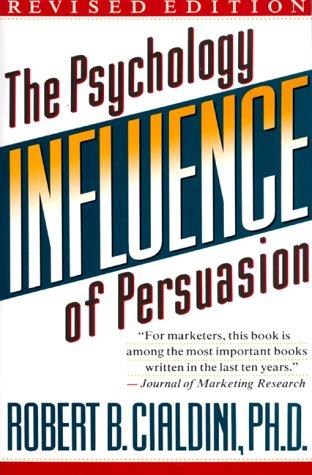
  • Cover: Influence, The Psychology of Persuasion

    Influence, The Psychology of Persuasion

    Book

    R. Cialdini · 1984

    The founding work on the mechanisms of persuasion: six universal principles (reciprocity, consistency, social proof, authority, liking, scarcity) illustrated with striking experiments. A landmark in social psychology.

  • Cover: Thinking, Fast and Slow

    Thinking, Fast and Slow

    Book

    D. Kahneman · 2011

    The sum of Kahneman's work on decision-making: two systems of thought, one fast and intuitive, the other slow and analytical, and the long list of biases that distort our judgements. Essential to understanding others... and yourself.

  • Cover: Nudge

    Nudge

    Book

    R. Thaler & C. Sunstein · 2008

    How to steer choices without constraint, by acting on the "choice architecture". The book popularised the nudge and behavioural economics applied to public policy as much as to management.

  • Judgment under Uncertainty: Heuristics and Biases (Science)

    Article

    A. Tversky & D. Kahneman · 1974

    The founding paper (Science, 1974) that uncovered the heuristics and biases of judgement, including anchoring. The starting point of the behavioural-economics revolution.

R. Cialdini ("Influence", 1984), D. Kahneman & A. Tversky, R. Thaler, D. Ariely.

On video

See the technique in action

Videos to picture The Golem Effect and anchor it through examples.

Technique map

Where this technique sits

Every technique sits within a network: what it draws on, what it combines with, where it applies, and how to defend against it.

Levers engaged

biases & emotions

Countered by

Spot its signals, neutralise it and turn it around with the defensive playbook on this page.

See the counter-techniques

Key takeaways

  • En une phrase

    The Golem effect is the negative counterpart of the Pygmalion effect: low expectations of a person genuinely degrade their performance. Judging someone mediocre leads us to invest less in them, to monitor them, to limit their chances of succeeding, and they end up living down to this devalued image. It is a self-fulfilling prophecyi in reverse, where distrust sabotages the very person it targets.

  • The right reflex

    Turn social proof around: "Actually, the best do the opposite."

  • Never do this

    Conforming for fear of being the only dissenter.

8.0/10 tactical potential High vigilance School grounded in experimental research

Master this technique in real situations?

Our programmes turn theory into a concrete advantage.

Explore our programmes
Call Book a call