
NEGOCOACH
219
Origin : Cognitive science

🧠 Cognitive science

Behavioural economics & social psychology

R. Cialdini ("Influence", 1984), D. Kahneman & A. Tversky, R. Thaler, D. Ariely.

Full detail in the “Origin & history” section below.

219

The Halo Effect

Social influence Technique 219 / 360
Alexandre Baumberger

Author of the library

Alexandre Baumberger

Negotiation lecturer at KEDGE Business School

A rare threefold background serving negotiation: teaching, commercial justice and audit, backed by experience as a company director in Bordeaux.

  • Teaching, KEDGE Business School Negotiation lecturer since 2014 (12 years).
  • Commercial justice, Commercial Court Judge from 2018 to 2026: litigation, then insolvency proceedings.
  • Audit & advisory, over 20 years Tax, employment and financial audit in major firms, for large groups.
In brief

The Halo effect is the bias whereby a positive impression of one trait spills over onto the overall judgement of a person or thing. Someone attractive, articulate or well dressed will also be judged more competent, honest or intelligent, with no evidence. A single favourable attribute colours the whole perceptioni, creating a bright 'halo' that masks detailed analysis.

Reading level

At a glance

Its family profile at a glance

Effectiveness Psychologicalimpact Discretion Preparation Relationalrisk Ethics
8.0 / 10 Tactical potential

Vigilance: high (6.0/10) · Preparation required: 4/10

Grounding in the source school School grounded in experimental research

Indicative profile: it situates the “Social influence” family as the Cognitive science school practises it, not this technique taken in isolation. Techniques from the same family and school therefore share the same profile. NEGOCOACH editorial rating out of 10, non-experimental · the higher the “relational risk” value, the more costly the technique is to the relationship.

NEGOCOACH assessment

How to read this rating

Tactical potential 8.0/10 (effectiveness, impact, discretion) and vigilance high (relational and ethical risk): two distinct readings, deliberately never merged into a single score that would reward risk. NEGOCOACH editorial rating calibrated from the “Social influence” family and the “Cognitive science” school. Each criterion is rated out of 10; click to understand what it measures.

  • Effectiveness 8/10 · Very high

    How far the technique can carry the negotiation in the intended direction when it is well executed.

  • Psychological impact 9/10 · Very high

    Strength of the effect produced on the counterpart's perceptions, emotions and decisions.

  • Discretion 7/10 · High

    How hard it is for the other party to notice the technique is being used. A high value = very discreet.

  • Preparation 4/10 · Moderate

    The information, analysis and rehearsal required upfront to use it effectively.

  • Relational risk 5/10 · Moderate

    Potential cost to the relationship and to trust if the technique is spotted, refused or fails. A high value = riskier.

  • Ethics 4/10 · Moderate

    Moral acceptability: fairness, transparency and respect for the counterpart's autonomy. A high value = more defensible.

Level of evidence

School grounded in experimental research

The school this technique stems from is grounded in replicated, peer-reviewed experimental work. This indicator qualifies the school, not the experimental validation of this technique taken in isolation.

Indicative NEGOCOACH editorial rating, for teaching purposes. For “Relational risk”, a high value signals a cost to the relationship, not a quality.

Halo in brief


Origin & history

The psychologist Edward Thorndike named and documented the effect in 1920, observing that military officers rated highly on one quality (bearing, for example) were also, suspiciously, rated highly on all the others (intelligence, loyalty, leadership). The overly perfect correlations revealed a judgement contaminated by an overall impression. Later work by Nisbett and Wilson (1977) would show that subjects are entirely unaware they are subject to this bias.


Definition and principle

The brain, being economical, generalises from a salient cue rather than assessing each dimension separately. Physical beauty is the most studied trigger ('what is beautiful is good'), but the effect also operates with confidence, status, voice or a prestigious brand. The judgement forms quickly and holistically, after which the details are interpreted in line with the initial impression, which makes the bias highly resistant.


Concrete examples of application

Application by context

The same technique, across every negotiation settings

Context 1 / 8

Sales negotiation

A polished salesperson, with a measured voice and fluent delivery, immediately inspires confidence. The client credits them with competence and seriousness before any examination of the offer, and grants their arguments a credibility they have not yet earned.

How to apply it

Invest in the first impression (attire, delivery, materials): it generates a halo that pre-legitimises everything you say afterwards.

Strengths

Speeds up trust and smooths over objections; a powerful multiplier of credibility.

Weaknesses

The halo dissipates abruptly if the substance disappoints, leaving a sense of having been deceived.
Context 2 / 8

Procurement negotiation

A buyer receives two technically similar proposals. The one presented in an immaculate dossier, by a reputable brand, strikes them as more reliable, and they prefer it even though nothing in substance sets it apart from the other.

How to apply it

Neutralise the halo by building a grid of objective criteria scored before any meeting; compare on the facts, not on the look of the dossier.

Strengths

Guarding against the halo avoids overpaying for the prestige of a brand at the expense of real value.

Weaknesses

Hard to detect: the buyer believes they are judging the substance while in fact being swayed by the form.

Context 3 / 8

Labour negotiation

In a recruitment interview, a candidate who graduated from a leading school and is at ease speaking is judged brilliant across the board. Their gaps are downplayed, their vague answers perceived as breadth of vision.

How to apply it

Structure the assessment around independent criteria and score each competency in isolation; this is the proven counter to the halo in recruitment.

Strengths

Awareness of the bias markedly improves the quality and fairness of hiring.

Weaknesses

The halo of academic prestige or social ease is particularly stubborn.

Context 4 / 8

Crisis management

In the thick of turmoil, an organisation calls in a consultant with an impressive aura (a big firm, eloquence, presence). Their perceived authority reassures, and their recommendations are adopted without the critical debate they deserve.

How to apply it

In a crisis, be wary of surface authority: the expert's halo reassures but can short-circuit examination of the facts.

Strengths

A well-placed halo quickly restores trust and order in a period of panic.

Weaknesses

It can lead to poor decisions being adopted solely on the strength of the prestige of whoever advances them.

Context 5 / 8

Political negotiation

A candidate with a warm voice, an attractive appearance and a presidential bearing is perceived as more honest and competent than their rivals. The halo of their charisma weighs more heavily, at the ballot box, than the detail of their programme.

How to apply it

On the public stage, an image of leadership (posture, voice, presence) generates a decisive halo; cultivating it shapes the overall perception of the person.

Strengths

A major lever of electoral and media influence, at low argumentative cost.

Weaknesses

A fragile halo: a highly visible misstep can turn it into a devastating Horn effect.

Context 6 / 8

Real-estate negotiation

A property enhanced by careful home staging and bright photographs appears of better quality overall. Buyers credit the home with strengths (soundness, upkeep) that the sheer care of the presentation suggests without proving.

How to apply it

Take care over the staging of the property: the first aesthetic impression creates a halo that enhances the whole and justifies the price.

Strengths

Speeds up the sale and supports the price at less cost than actual renovation work.

Weaknesses

The halo shatters at the technical viewing or survey, revealing the gap with reality.

Context 7 / 8

Cross-cultural negotiation

In an international negotiation, a delegation from a country renowned for its technical excellence (Germany, Japan) sees its proposals credited with superior seriousness, the national prestige reflecting onto each of its representatives.

How to apply it

Be aware that the halo of national origin pre-legitimises or devalues according to the stereotypes at play; capitalise on your own, correct the one imposed on you.

Strengths

A favourable national halo opens doors and lightens the burden of proof.

Weaknesses

It can tip into unfair prejudice (a positive or negative halo depending on nationality), a source of errors.

Context 8 / 8

Family negotiation

A well-behaved, smiling child is spontaneously judged more intelligent and honest by those around them. Their misdeeds are excused, whereas a more boisterous sibling, behaving no differently, is suspected and punished more harshly.

How to apply it

Spot the halo of the 'good image' among siblings; it distorts fairness and assigns virtues or faults on appearance rather than deeds.

Strengths

Becoming aware of it allows a fairer family judgement to be restored.

Weaknesses

The childhood halo durably shapes family roles ('the serious one', 'the rebel').


Counter-techniques

Spot and neutralise this technique

Negotiation is also played on defence. Here is how to recognise this technique when it is used against you, and turn it around.

Detect

The signals that give it away

  • "Everyone does it"
  • An authority invoked to close the debate
  • A gift followed by a request (forced reciprocity)

Neutralise

The counters that defuse it

  • Check the real norm
  • Question the authority's legitimacy
  • Refuse the debt created by the gift

Turn around

Turn it into an advantage

Turn social proof around: "Actually, the best do the opposite."

The trap to avoid

Conforming for fear of being the only dissenter.

In brief

  • Difficulty: Easy to spot, hard to neutralise
  • Estimated effectiveness: Very high
  • Implementation time: Instant
  • Fields of application: Sales, Recruitment, Marketing, Politics, Communication
  • Synonyms: Contamination effect, Halo bias, Positive generalisation
  • Tags: first impression, Thorndike, cognitive bias, beauty, credibility

Strengths and Weaknesses

The Halo effect is a formidable accelerator of credibility: well exploited, it pre-sells the person before the argument, at low cost. It structures persuasion in sales, marketing and politics, where image carries the substance. Its downside for those subject to it: it causes the form to be overvalued at the expense of the content. Knowing it means being able both to use it and to defend against it through objective criteria.


When to use this technique?

To be exploited whenever a first impression counts: interview, pitch, market launch, public speaking. Conversely, to be neutralised as soon as an objective assessment is required (recruitment, purchasing, expert appraisal): there the halo produces costly errors. No point forcing it where judgement rests on measured and verified data.


How to recognise and counter this technique

Recognise it: you feel won over by someone or something without being able to cite any precise substantive argument. Neutralise it: assess each criterion separately, in writing, before forming an overall impression, and actively look for the facts that contradict the halo. Turn it around: take care over your own first impression so as to benefit from the halo in turn.


Limits and ethics

The Halo effect is unconscious and conceals itself under the illusion of a rational judgement, which makes it very difficult to correct. Ethically, deliberately exploiting the halo to pass off mediocre substance amounts to deception; the line is lying about the substance. The rule: image may open the door, but the substance must keep the promise it suggests.


Variants and related techniques

The mirror image of the Horn effect (a negative trait contaminates the overall judgement). Close to the notoriety effect and the physical attractiveness bias. Combines with the Barnum effect and anchoring to reinforce a favourable first impression.


Going further

  • Edward L. Thorndike, 'A Constant Error in Psychological Ratings', Journal of Applied Psychology, 1920.
  • Richard Nisbett & Timothy Wilson, 'The Halo Effect: Evidence for Unconscious Alteration of Judgments', Journal of Personality and Social Psychology, 1977.
  • Daniel Kahneman, Thinking, Fast and Slow, 2011 (chapter on the halo effect).

Objectives of the technique

  • Create a favourable overall impression from the outset (attire, preparation, setting, punctuality) so that it reflects onto the credibility of your arguments.
  • Anchor one or two strong signals of competence or status (references, demonstrated expertise) so that they enhance the perception of your whole offer.
  • Neutralise the other party's halo effect by assessing each element (price, guarantees, clauses) on its own merits rather than on the general impression.
  • Detect the negative halo (an unfavourable detail that contaminates the entire judgement) so as to correct a botched first impression before it sets.
  • Align form and substance to avoid the reverse effect: a fine wrapper masking a hollow offer produces, once discovered, a durable negative halo effect.

Famous cases

Sales · The first impression that sells the rest: An independent consultant arrives at a tender meeting perfectly prepared: a structured dossier, relevant questions about the client's precise context, impeccable punctuality. This initial impression of rigour rubs off on what follows: when their fee, higher than a competitor's, comes up, the buyer spontaneously perceives it as 'the price of seriousness' rather than as an overcharge. The halo effect did not change the offer, but it steered the reading of each of its elements in a favourable direction.

Everyday life · The negative halo of one detail: During the negotiation of a tenancy, a solvent and reliable prospective tenant turns up with an incomplete file and twenty minutes late, without warning. The landlord, struck by this first impression of disorganisation, then interprets each of the candidate's requests (payment deadline, minor repairs) as a further sign of a lack of seriousness, whereas these requests are objectively reasonable. One unfavourable detail contaminated the assessment of the whole.


Common mistakes

  • Confusing the halo effect with manipulation: betting on appearance while neglecting substance creates, once discovered, a negative halo that durably destroys trust.
  • Believing the halo is permanent: it steers the first impression but erodes as soon as contradictory facts pile up; you must then keep your promises.
  • Being subject to the other's halo without realising it: letting yourself be impressed by the counterpart's status, brand or confidence and underestimating the concrete weaknesses of their offer.
  • Betting everything on a single signal (a title, a prestigious logo): too thin a halo does not withstand a serious examination of the real conditions.
  • Ignoring the channel of the first impression: taking care over the delivery but neglecting punctuality, the clarity of the documents or the quality of the setting, all powerful triggers of the halo.

Scientific foundations

  • Edward L. Thorndike (1920) A constant error in psychological ratings Journal of Applied Psychology, 4(1), 25-29, DOI: 10.1037/h0071663
  • Richard E. Nisbett & Timothy D. Wilson (1977) The halo effect: Evidence for unconscious alteration of judgments Journal of Personality and Social Psychology, 35(4), 250-256, DOI: 10.1037/0022-3514.35.4.250
  • Daniel Kahneman (2011) Thinking, Fast and Slow Farrar, Straus and Giroux

Quick exercise

Test yourself before answering

Answer in your head, then reveal the solution. Memory is built through active recall.

1 Quels signaux doivent vous alerter ?
  • "Everyone does it"
  • An authority invoked to close the debate
  • A gift followed by a request (forced reciprocity)
2 Quelles parades appliquer ?
  • Check the real norm
  • Question the authority's legitimacy
  • Refuse the debt created by the gift

Frequently asked questions

The questions we get most

What is the "The Halo Effect" technique?

The Halo effect is the bias whereby a positive impression of one trait spills over onto the overall judgement of a person or thing. Someone attractive, articulate or well dressed will also be judged more competent, honest or intelligent, with no evidence. A single favourable attribute colours the whole perceptioni, creating a bright 'halo' that masks detailed analysis.

Is the "The Halo Effect" technique ethical?

It sits on the line: effective, but it can tip into manipulation if it exploits an information asymmetry. Use it with measure and without deliberate deceit.

How do you defend against "The Halo Effect"?

Conforming for fear of being the only dissenter. The right reflex: check the real norm.

What is the "The Halo Effect" technique based on?

NEGOCOACH does not assess the experimental validation of this technique in isolation. What we document is the grounding of its source school (Cognitive science): school grounded in experimental research. Full detail is in the "At a glance" section of this page.

Practise with AI

Three ready-to-use prompts

Copy, paste into your assistant, replace the [brackets]. Works with ChatGPT, Claude, Gemini, Mistral, Perplexity.

Prepare

Build your plan before the meeting

You are an expert negotiation coach. Help me prepare to use the "The Halo Effect" technique in the following situation: [describe your situation]. Give me: the conditions for success, a 3-step script, my counterpart's likely objections and how to answer them.

Simulate

Rehearse against an AI counterpart

Play the role of my counterpart in a negotiation. I am going to test the "The Halo Effect" technique. React realistically and with resistance, do not give in too quickly, then at the end analyse my performance and suggest 3 concrete improvements.

Debrief

Analyse a past negotiation

Here is how my negotiation went: [paste the exchanges]. Analyse whether the "The Halo Effect" technique was used well, what worked, the mistakes made, and spell out precisely what I could have done better.

References

Bibliography & credible sources

Founding works of the 🧠 Cognitive science school this technique belongs to.

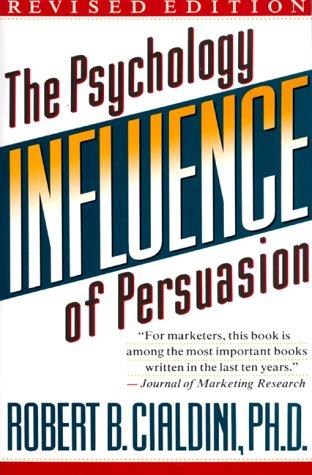
  • Cover: Influence, The Psychology of Persuasion

    Influence, The Psychology of Persuasion

    Book

    R. Cialdini · 1984

    The founding work on the mechanisms of persuasion: six universal principles (reciprocity, consistency, social proof, authority, liking, scarcity) illustrated with striking experiments. A landmark in social psychology.

  • Cover: Thinking, Fast and Slow

    Thinking, Fast and Slow

    Book

    D. Kahneman · 2011

    The sum of Kahneman's work on decision-making: two systems of thought, one fast and intuitive, the other slow and analytical, and the long list of biases that distort our judgements. Essential to understanding others... and yourself.

  • Cover: Nudge

    Nudge

    Book

    R. Thaler & C. Sunstein · 2008

    How to steer choices without constraint, by acting on the "choice architecture". The book popularised the nudge and behavioural economics applied to public policy as much as to management.

  • Judgment under Uncertainty: Heuristics and Biases (Science)

    Article

    A. Tversky & D. Kahneman · 1974

    The founding paper (Science, 1974) that uncovered the heuristics and biases of judgement, including anchoring. The starting point of the behavioural-economics revolution.

R. Cialdini ("Influence", 1984), D. Kahneman & A. Tversky, R. Thaler, D. Ariely.

On video

See the technique in action

Videos to picture The Halo Effect and anchor it through examples.

Technique map

Where this technique sits

Every technique sits within a network: what it draws on, what it combines with, where it applies, and how to defend against it.

Levers engaged

biases & emotions

Countered by

Spot its signals, neutralise it and turn it around with the defensive playbook on this page.

See the counter-techniques

Key takeaways

  • En une phrase

    The Halo effect is the bias whereby a positive impression of one trait spills over onto the overall judgement of a person or thing. Someone attractive, articulate or well dressed will also be judged more competent, honest or intelligent, with no evidence. A single favourable attribute colours the whole perceptioni, creating a bright 'halo' that masks detailed analysis.

  • The right reflex

    Turn social proof around: "Actually, the best do the opposite."

  • Never do this

    Conforming for fear of being the only dissenter.

8.0/10 tactical potential High vigilance School grounded in experimental research

Master this technique in real situations?

Our programmes turn theory into a concrete advantage.

Explore our programmes
Call Book a call